
Domestic firms make efforts to dominate energy technology sector

 |
What do you consider the key difference between a rapidly growing economy and a developed economy?
The difference doesn't simply lie in the GDP growth rate, but in the factors that generate that growth.
An economy can grow quickly thanks to capital, labour, natural resources, or foreign investment capital. However, to become a developed economy, we must shift from participating in the value chain to mastering (leading) a major part of the value chain.
This means that Vietnamese businesses should not only produce products based on available designs, but must gradually master technology, products, standards, brands, markets, and the ability to create added value. I believe that it is the challenge for Vietnam at this stage.
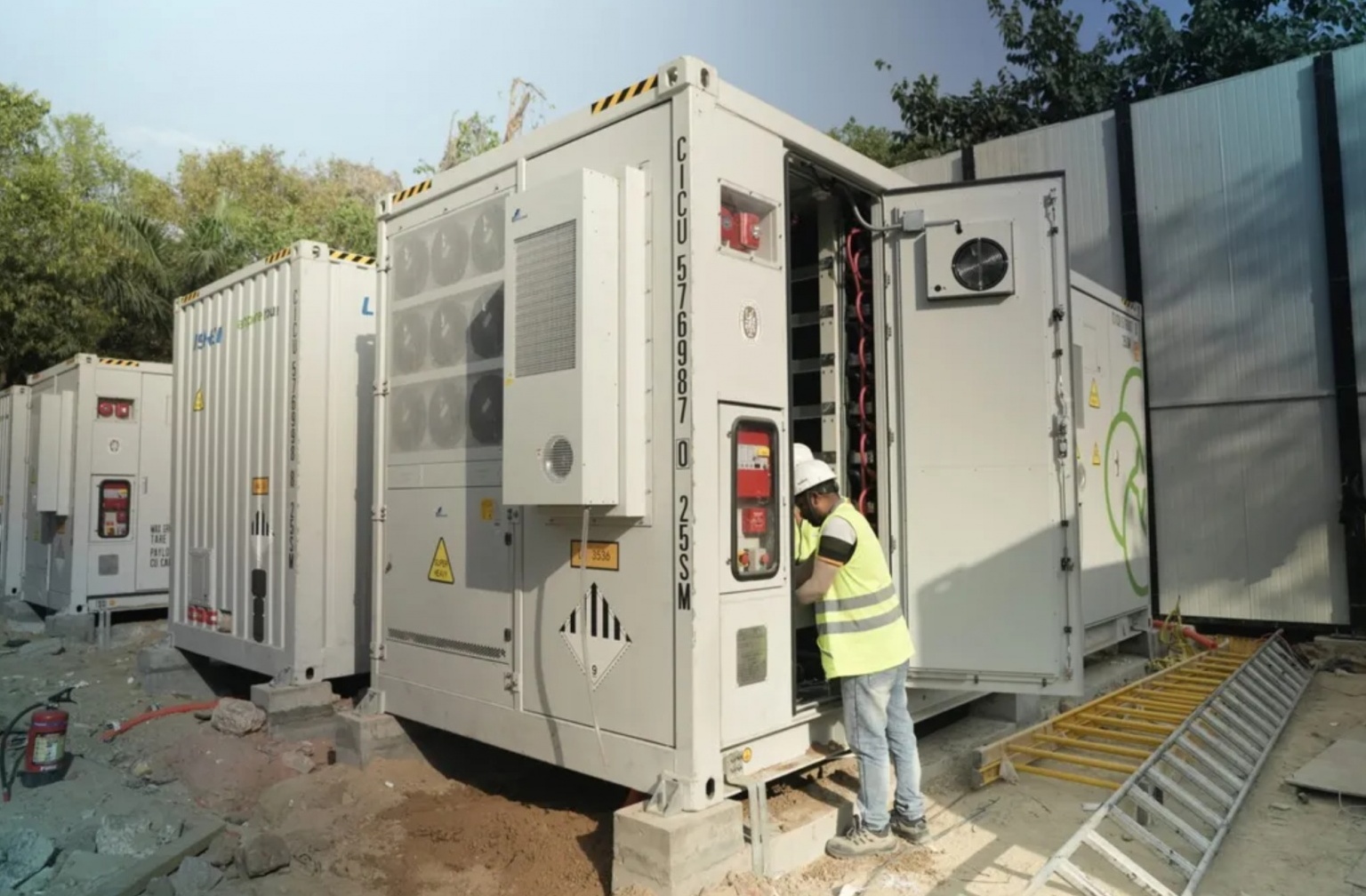
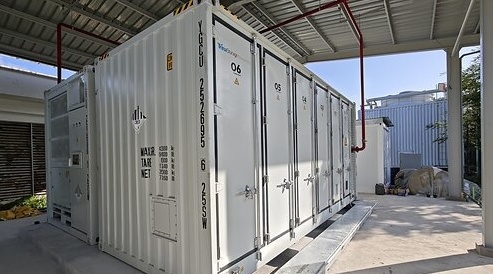
Looking at the battery energy storage system (BESS) industry, it is easy to see that Vietnam can import batteries, inverters, PCS, and BMS and assemble them into a completed system. However, assembling a BESS system does not automatically mean the existence of a domestic BESS industry.
The industry will be formed when domestic firms have the capacity to design systems, integrate hardware and software, master energy management system (EMS)/battery management system (BMS), control quality, establish standards, develop products according to market needs, and ultimately create brands capable of competing in the international market.
How will the BESS industry help Vietnam to develop?
I believe the energy storage industry is a rare opportunity for Vietnam to enter the high-tech industry, but opportunities don't just appear out of nowhere.
BESS is located at the intersection of many industries, including power, power electronics, batteries, software, AI, control, automation, mechanics, thermal, materials, and IT. Therefore, if it is developed in a correct way, BESS can create a broad industrial ecosystem.
Vietnam currently has a huge demand for electricity as industrialisation continues, while the proportion of renewable energy is increasing. BESS will become one of the important tools to balance power generation and demand, enhance the integration of renewable energy, and increase the flexibility of the power system.
I want to emphasise that the opportunity depends on how much technological capacity Vietnam can build around BESS, rather than how many BESS containers Vietnam can assemble. If we only import cells, import all the equipment, and assemble them, the value retained domestically will be limited. If we gradually cover the system design, BMS, EMS, power conversion system (PCS) integration, thermal management, safety systems, software, control, and lifecycle services, the story will be entirely different.
What impact will BESS have on the domestic power industry, manufacturing industry, and industrial supply chain?
The impact will be much greater than just selling more batteries. For the power industry, BESS helps increase load adjustment capabilities, integrate renewable energy, and enhance system flexibility.
For manufacturing businesses, BESS helps businesses be more proactive in energy management, reduce costs, and increase the use of renewable energy.
But I am most interested in the third impact, which is the formation of a new industrial supply chain. A BESS system requires cells, modules, packs, BMS, PCS, inverters, EMS, control systems, HVAC (an integrated thermal energy storage air conditioning system), fire protection, containers, mechanical components, cables, switchgear, software, and operational services. If Vietnam develops a sufficiently large market, many domestic firms can participate in this value chain. Then, BESS will no longer be just a story for one company; it will become the story of a new industry.
What are the most significant changes you expect in the business environment to enable Vietnamese technology companies to grow?
What Vietnamese technology companies like ours most desire is for the market to be one step ahead, and policies must create long-term confidence for investment. Technology companies cannot invest in factories, R&D, and personnel without knowing how the market will operate in the next 5–10 years.
With BESS, the question is not just "whether or not it can be installed," but also how the system will operate, how the value of stored energy will be recorded, how the services that BESS provides to the power system will be priced, and what investment model can attract capital.
When regulations are clearer, banks can assess project cash flows, investors can calculate the IRR, and manufacturing companies can decide on long-term investments. A technology industry can only grow rapidly when businesses see a market that is large and stable enough to invest in first.
What makes you believe that Vietnam can create their own technologies and brands?
I believe Vietnamese businesses can participate in global value chains, creating their own technologies and brands. Previously, the common question was: "Does this technology already exist in the world?" However, the current question is beginning to shift to: "How much of that technology can Vietnam master?" And even further to: "What technologies can we create that the world needs?"
BESS is a good example. Vietnam doesn't necessarily have to compete with the world's largest corporations in terms of capital size or cell production from the outset. We can start with our strengths, namely understanding the market, system integration, product and service development, software, energy solutions, and rapid response capabilities. Then, we can gradually increase the localisation rate, master the technology, and expand into the region.
I believe that "Made in Vietnam" shouldn't just be understood as a product manufactured in Vietnam. Beyond that, it should be a product designed by Vietnamese people, solving domestic problems, creating value in Vietnam, and ultimately being able to compete in the international market.
That's also how we built GG Power. We didn't simply aim to become a BESS manufacturing plant in Vietnam. Our bigger goal is to build a Vietnamese energy technology enterprise, starting in the Vietnamese market but not stopping in Vietnam. And if we achieve that, the BESS story will be more than just a story about a type of battery. It will be a story about Vietnam's ability to transform technology into a competitive advantage, transform competitiveness into businesses, and transform businesses into part of the national industrial strength.
What the stars mean:
★ Poor ★ ★ Promising ★★★ Good ★★★★ Very good ★★★★★ Exceptional
 Tag:
Tag:Related Contents

Latest News



More News
- Expanding education partnerships to drive mutual growth (October 06, 2026 | 16:04)
- VTG 2026 to showcase textile and footwear innovation in Ho Chi Minh City (October 06, 2026 | 16:00)
- Infineon boosts Vietnam footprint with Ho Chi Minh City office (October 06, 2026 | 10:02)
- Vietnam Customs expands priority enterprise scheme to 74 firms (October 03, 2026 | 08:00)
- ASL Law opens Danang office (October 02, 2026 | 22:12)
- Project ACTIVE 2.0 launches in Vietnam to boost cervical cancer care (October 02, 2026 | 22:02)
- Vietnam launches first embodied AI conference to advance robotics ecosystem (October 02, 2026 | 17:00)
- DKSH Performance Materials – A trusted partner in Vietnam’s evolving personal care landscape (October 02, 2026 | 14:28)
- Ghanaian delegation reviews PSL Machinery’s cashew factory-management and implementation roadmap (October 02, 2026 | 10:18)
- People living with chronic kidney disease and diabetes should be aware of infectious disease risks (September 30, 2026 | 18:00)


Latest News



 Mobile Version