

Hanoi scales up training on humane euthanasia standards for dogs and cats

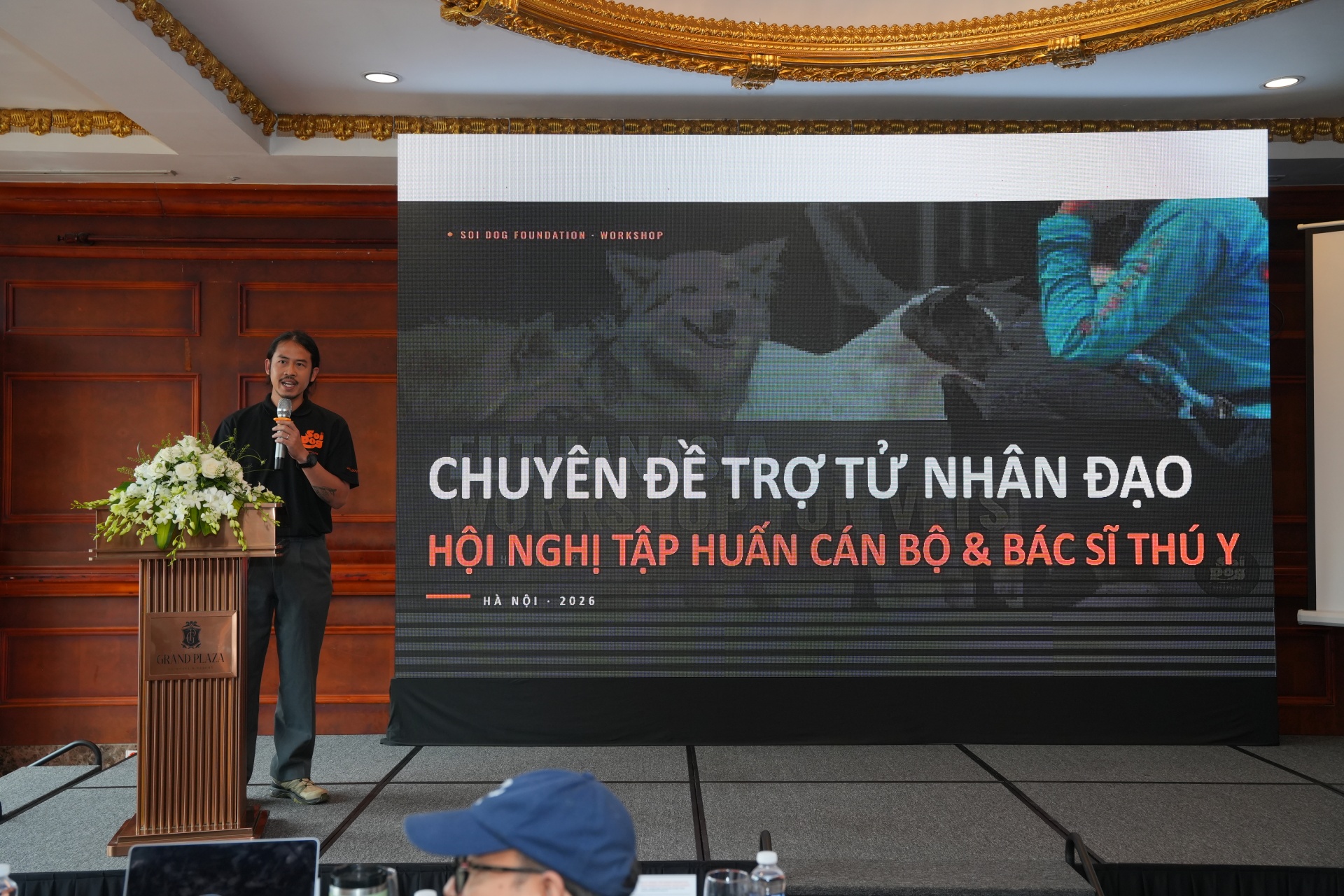 |
| Winn Ularn Kanyook, senior veterinarian, Soi Dog Foundation. Photo: Soi Dog Foundation |
The second Technical Training Conference on International Standards for the Humane Euthanasia of Dogs and Cats took place in Hanoi on September 18.
The conference was held by the Hanoi Sub-Department of Livestock Production, Aquaculture, and Veterinary Services (under the Hanoi Department of Agriculture and Environment), in collaboration with Soi Dog Foundation and SBCC Vietnam. Building on the first conference in May – the first of its kind within Vietnam's public veterinary system – this second edition expanded to 120 participants, including ward People's Committee officials, ward veterinary staff, and representatives of private veterinary clinics across the city's 14 pilot wards.
What set this second conference apart was the bringing together of three groups: ward-level government officials, grassroots veterinary staff, and private veterinary clinics. This approach shifts the focus from building individual skills to establishing an integrated, coordinated procedure – and lays the first foundations of a public-private humane and animal friendly veterinary network in the capital.
"What we are looking forward to most at this conference is private veterinary clinics working alongside public services," said Bui Thi Duyen, director of SBCC Vietnam. "When a veterinarian offers their clinic after hours for sterilisation and care, humane standards become a professional value. SBCC Vietnam will connect these clinics into a public-private veterinary network, laying the groundwork for the project's next steps in 2027."
"With many clinics committed, severe cases requiring euthanasia will decline significantly, supporting the goal of zero human rabies deaths by 2030 and the livelihood transition of households trading dog and cat meat," she added.
The conference forms part of a project approved by the Hanoi People's Committee in July, which aims to pilot rabies prevention and phased-transition away from the dog and cat meat trade in selected wards of the city. It targets zero human rabies deaths by 2030, supports sustainable livelihood transitions for affected households, and progressively raises animal welfare standards in line with international practice.
Building on this foundation, the project is expanding towards long-term animal welfare goals under a One Health approach. It promotes responsible pet ownership, population registration and management, and scales up rabies vaccination and sterilisation to humanely control free-roaming dogs, progressively reducing the need for euthanasia.
The event featured three sessions. In the first, a representative of the Hanoi Sub-Department of Livestock Production, Aquaculture, and Veterinary Services presented updates on the legal framework and animal management in Hanoi. In the second, Winn Ularn Kanyook, senior veterinarian at Soi Dog Foundation, delivered training on animal welfare in population management, covering the Five Freedoms, dog population management procedures, and field protocols. In the third, Dang Huu Anh of the Vietnam National University of Agriculture discussed linking animal welfare standards with biosecurity and infectious disease control in clinics and the community.
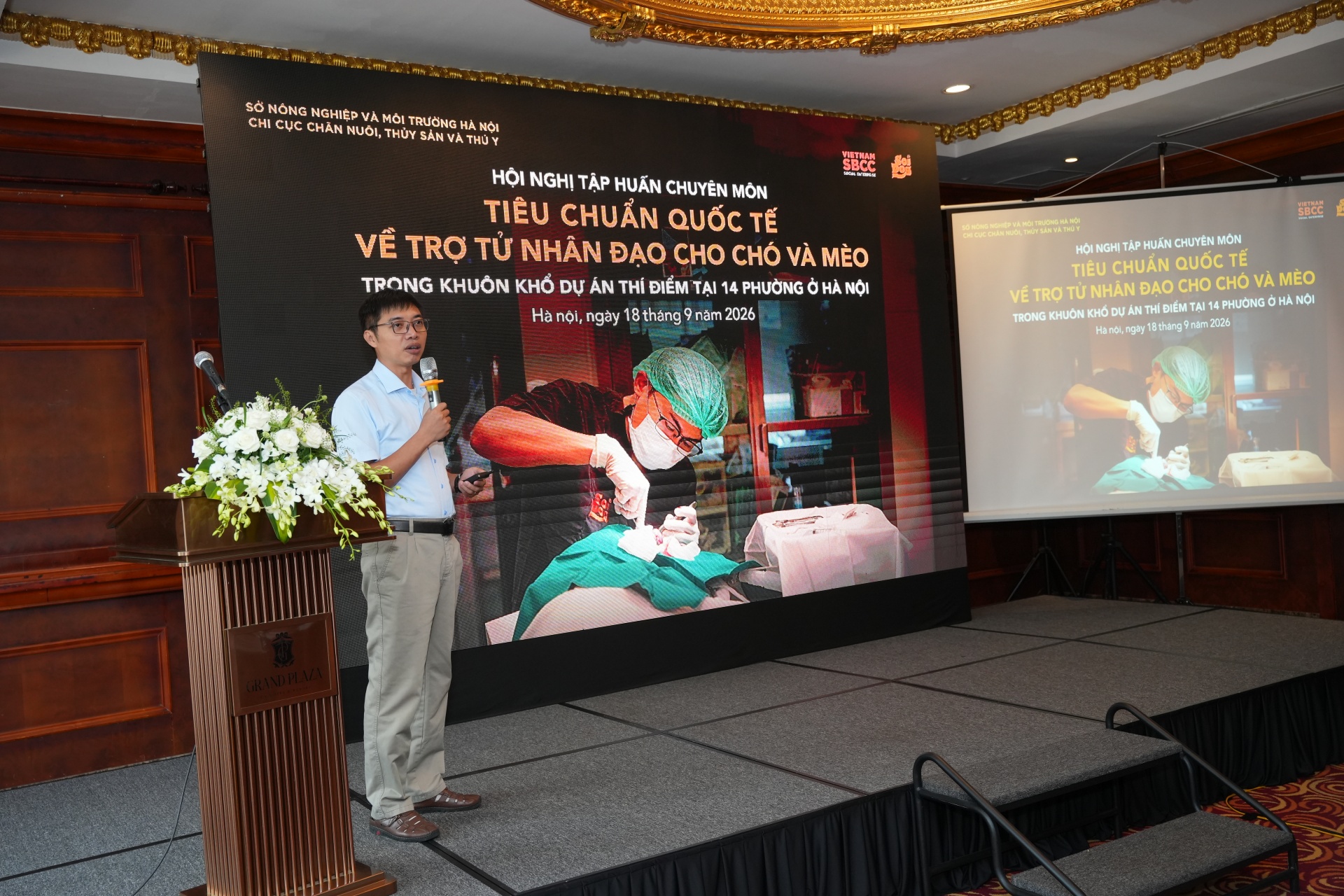 |
| Dang Huu Anh, lecturer, Vietnam National University of Agriculture. Photo: Soi Dog Foundation |
"Humane euthanasia is never the first solution, nor a population management tool. It is a last resort, and only appropriate within a system that includes vaccination, sterilisation, care, and transparent decision-making," said Kanyook. "This training goes beyond technique to focus on decision-making – assessing the animal's condition, selecting the right drug and dose, confirming death, handling the carcass to standard, and keeping complete records. Soi Dog Foundation is committed to supporting Hanoi through the most important phase – putting this into practice on the ground."
Each session was followed by interactive discussion between the Sub-Department, international experts, the university lecturer, and participants on specific Hanoi issues – including space, staffing, and implementation practices; information-sharing mechanisms for suspected rabies cases among free-roaming dog catching teams, ward veterinary staff, and health centres; and the adequacy of forms recording euthanasia reasons, drug dosages, and methods.
"If the first conference answered how to approach animal welfare in line with international practices and which forces would lead implementation, this time we want to be more specific and practical for local veterinary staff and clinics," said Ngo Dinh Loat, deputy director of the Hanoi Sub-Department of Livestock Production, Aquaculture, and Veterinary Services.
"Inviting ward-level management officials, local veterinary staff, and clinics was aimed at helping them gradually gain access, conduct communications, and implement the practices once conditions are met," he added.
Nguyen Van Hoan, veterinarian and technical lead at VIET PET Veterinary Clinic, said, "I used to think of humane euthanasia as a last resort and a matter for each clinic. Today's training helped me see it as part of an overall animal welfare and rabies control strategy, where vaccination, sterilisation, and proper care play the key role. That is why I have registered my clinic to support the project outside working hours – providing sterilisation for dogs and cats from disadvantaged households, receiving animals for care and treatment, and offering technical support to local veterinary teams."
Following the conference, organisers will help each pilot ward finalise its standard operating procedures and recording forms, establish a network of volunteer veterinary clinics, monitor how the training is applied, and continue researching a legal framework for humane euthanasia in urban veterinary management. The pilot model across Hanoi's 14 wards is expected to serve as a reference for other cities developing animal welfare standards and controlling zoonotic diseases.
 |
| Photo: Soi Dog Foundation |
 | Conference highlights animal welfare ambitions stemming from dog and cat meat trade The third training conference on a phased transition from dog and cat meat trading and slaughter to a more civilised livelihood took place in Hanoi on May 19. |
 | Hanoi trains veterinary officers in humane euthanasia standards A first-of-its-kind training conference on international standards for humane euthanasia of cats and dogs has been held within Vietnam's public veterinary system. |
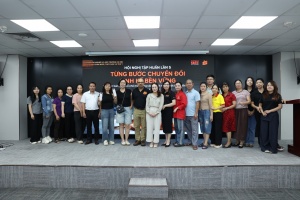 | Training conference helps workers transition out of dog and cat meat trade A training conference was held in Hanoi on September 16 to facilitate the transition of workers from the trading and slaughter of dogs and cats. |
What the stars mean:
★ Poor ★ ★ Promising ★★★ Good ★★★★ Very good ★★★★★ Exceptional
 Tag:
Tag:Related Contents






Latest News
More News
- Training conference helps workers transition out of dog and cat meat trade (September 16, 2026 | 18:36)
- Ho Chi Minh City's 50th celebrated through community stories (September 16, 2026 | 11:52)
- Mia Luxury Collection reimagines Vietnamese heritage (August 17, 2026 | 10:36)
- IKI launches multisensory experience and symphony series (August 15, 2026 | 20:00)
- Sedona SkyRun concludes latest race above Ho Chi Minh City (August 11, 2026 | 08:00)
- What propelled East West Barbershop into world's Top 10 grooming brands? (August 06, 2026 | 09:22)
- Livelihood Transition Training Conference contributes to rabies prevention and food safety development (July 24, 2026 | 17:14)
- Muong Thanh group launches 2026 mooncake collection (July 24, 2026 | 10:52)
- Pan Pacific launches 2026 mooncake collection (July 24, 2026 | 10:51)
- Vietnamese women step up as drivers of national development (July 15, 2026 | 11:54)







 Mobile Version