
VCCI releases 2025 competitiveness index with major upgrade

 |
| Photo: Tan Hiep Phat |
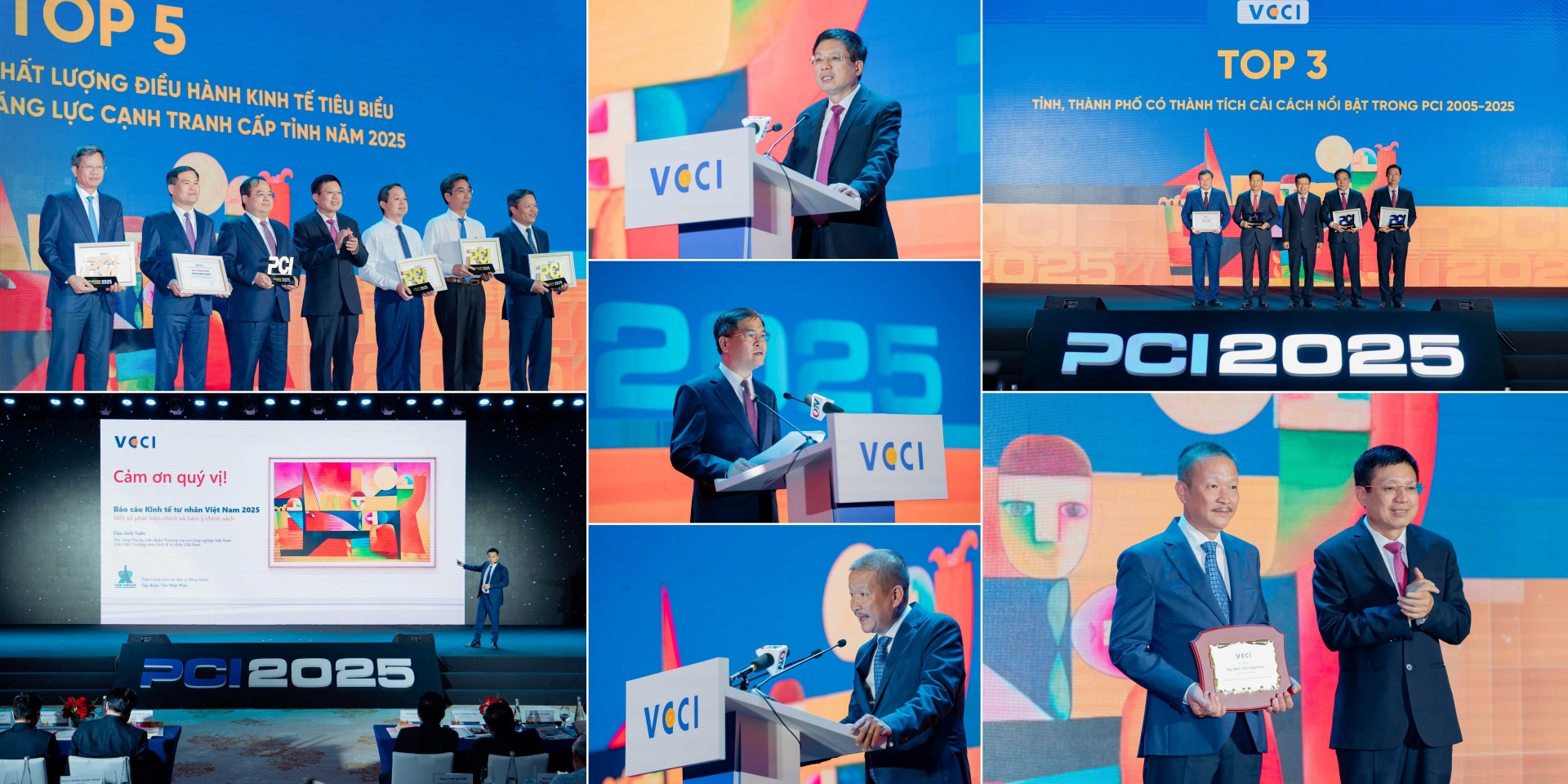
On May 15, the Vietnam Chamber of Commerce and Industry (VCCI) released the Private Sector Economic Report and the Provincial Competitiveness Index (PCI) 2025, marking a major methodological upgrade after more than two decades of implementation. The report reflects the voices of 5,128 businesses across 34 localities. Notably, for the first time, 1,001 business households were included in the survey. The survey is shifting its focus to the enabling environment that fosters business competitiveness.
PCI 2.0 has been redesigned around nine component indices and 98 indicators. Among them, Business Performance Index (BPI) was introduced with 23 indicators. At the same time, provinces and cities were grouped into six categories of governance quality.
Ho Sy Hung, chairman of VCCI, said, “More than two decades ago, the PCI established an unprecedented channel connecting businesses with the government. Today, PCI 2.0 is taking a step further: transforming the business voice into data to facilitate more dialogue and reform.”
Five localities were rated “Good” in governance quality including Bac Ninh, Danang, Haiphong, Phu Tho and Quang Ninh. These localities recorded relatively consistent improvements across many areas.
These results indicate that PCI data can be translated into concrete changes in administration, rather than stopping at general reform declarations.
Building internal strength through institutional reform
While the PCI measures the quality of the business environment, the BPI reflects the performance of the private sector. A prime example is Tan Hiep Phat, which illustrates the relationship between institutional reform and the accumulation of internal capabilities among Vietnamese private enterprises.
In 1994, Tan Hiep Phat was established just a few years after the Law on Enterprises were enacted. Since its early days, the company opted for a development path based on long-term investment: boldly adopting modern technologies, promoting innovation, accelerating digitalisation, and building quality-management systems in line with international standards.
 |
| Photo: Tan Hiep Phat |
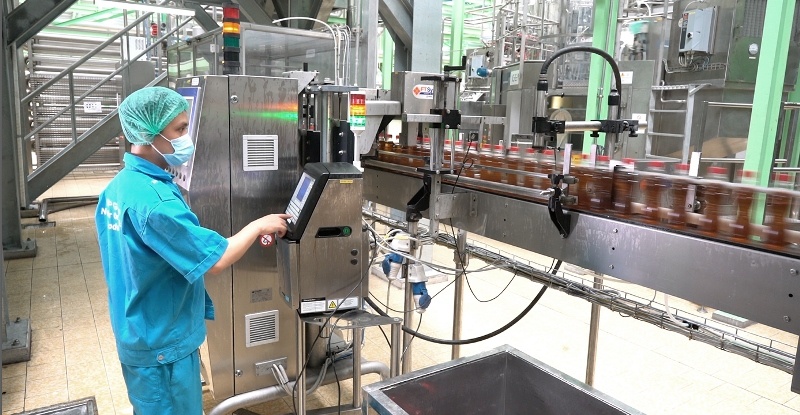
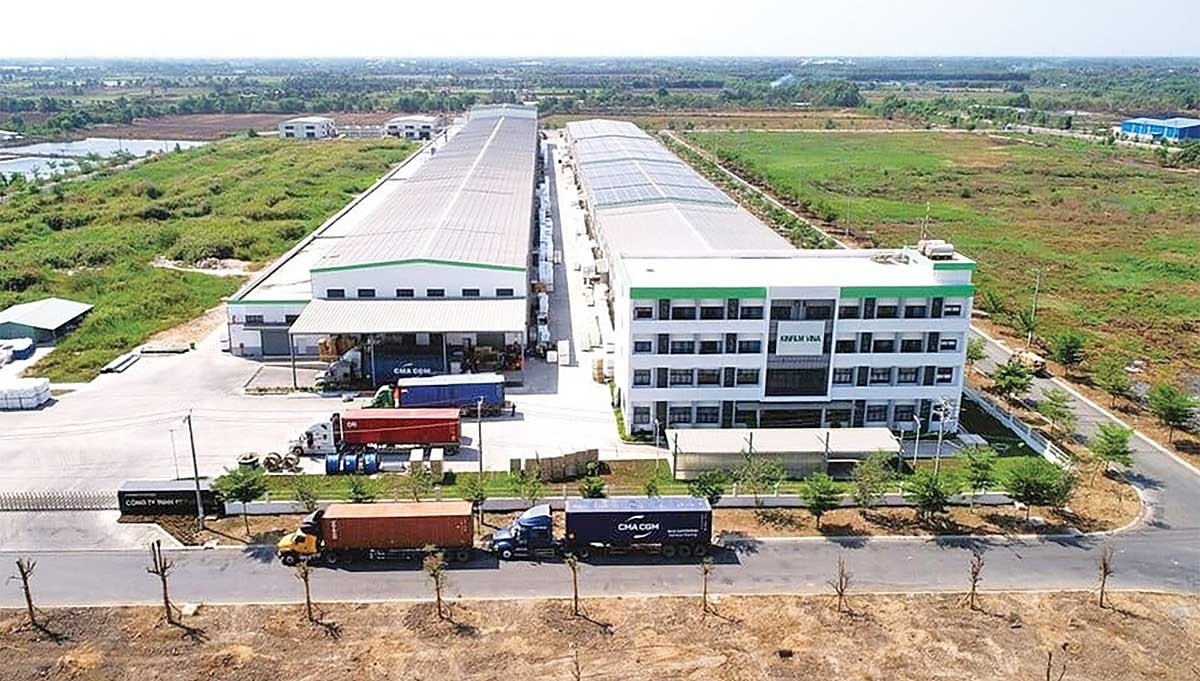
After 32 years of operation, Tan Hiep Phat has transformed from a small beverage production facility into one of Vietnam’s major beverage companies. The corporation currently operates four factory clusters and 12 aseptic lines in key economic zones.
By accumulating technology, management, and quality over decades, Tan Hiep Phat has met the product requirements of international markets such as France, the Netherlands, Australia, and Canada, with standards and certifications including the US Food and Drug Administration, Halal, ISO, and HACCP.
Tan Hiep Phat made heavy investment in factories and production lines while leading a transformation from experience-based production to management based on technology, data, and quality systems; and from competing on cost to competing on quality, innovation, and operational capabilities.
Nguyen Duy Hung, board member of Tan Hiep Phat, said, “We have seized opportunity from institutional reform to make ongoing investment in technology, innovation, quality, and people, thereby enhancing our competitiveness.”
“Data from the Private Sector Economic Report is valuable for regulatory bodies in perfecting institutions. It also serves as a basis for enterprises to reflect on themselves, enhance management quality, and become more confident in making long-term investment decisions,” Hung said.
The Tan Hiep Phat story shows that the relationship between institutional reform and business capabilities is not one-way. Institutions create space and confidence for investment. Businesses, in turn, must transform that space into production, technology, management, and innovation capabilities.
From the voice of business to national competitiveness
At the local level, PCI 2.0 and BPI are tools that reflect governance quality and the health of the private sector. At the national level, based on these two tools, Vietnam can identify obstructions hindering the upgrading of competitiveness in a global marketplace.
This is particularly significant as Vietnam pursues the goal of becoming a developed, high-income country by 2045.
Data from the report strongly suggests that the gap between Vietnam and the region and the world remains significant.
Only 8.8 per cent of businesses conducting product innovation activities, far below Malaysia, Thailand, and the regional average. Regarding access to capital, the proportion of loans requiring collateral in Vietnam is also significantly higher than in some other economies in the region.
These are the areas where reform needs to focus. To enhance its competitiveness, Vietnam needs to shift from a growth model that relies heavily on labour and low costs towards one driven by productivity, technology, and innovation.
According to the analysis by the research team of the 2025 Private Sector Economic Report, competitiveness can be viewed through four layers.
First is institutional competitiveness, determined by the transparency, stability, and predictability of policies. The report shows that only 6–8 per cent of businesses can regularly anticipate policy changes, while almost 52 per cent have to seek legal information through social media rather than official channels.
Second is productivity competitiveness, linked to businesses’ ability to scale up, professionalise management, and optimise supply chains, thereby generating greater added value for tens of millions of workers in the private sector.
Third is innovation competitiveness. This is an area that PCI 2.0 has incorporated as an official assessment component. Only 6.8 of Vietnamese businesses holding international quality certifications, compared with close to 18 per cent in Malaysia and 12 per cent in Thailand.
Finally is competitiveness in attracting high-quality investment. It is vital to build a transparent, stable, and predictable business environment to retain long-term capital flows, rather than relying solely on tax incentives or cost advantages.
These four layers of competitiveness are intertwined. A locality that successfully reforms its institutions but lacks enterprises capable of absorbing technology will struggle to translate those reforms into productivity growth. Conversely, an enterprise with the ambition to innovate but lacking a stable policy environment will find it difficult to pursue long-term investment strategies.
A new chapter in public–private dialogue
After more than two decades, PCI is entering a new phase. The question is no longer simply which locality governs better, but what changes those reforms are creating in business capabilities and the health of the private sector. This also serves as a key starting point for the next Private Sector Economic Report and PCI.
New data will allow a closer look at a chain of impacts: Do reforms create greater confidence? Does confidence translate into investment? Does investment generate innovation and productivity? and ultimately, do these capabilities help Vietnamese businesses compete more effectively in the region and global markets? These are more important questions than any ranking.
Beyond evaluating provincial governance quality, PCI has become a tool for the government and businesses to look towards a larger shared goal: building a business environment where confidence creates investment, investment creates internal strength, internal strength creates competitiveness, and competitiveness creates the strength of the economy.
This may be the most important measure of a new reform cycle: not simply how much better the business environment has become, but how much Vietnamese businesses have grown.
 | VCCI launches PCI 2.0 and first Business Performance Index The Vietnam Chamber of Commerce and Industry has launched the Provincial Competitiveness Index 2025, along with the first-ever Business Performance Index. |
 | Tan Hiep Phat - three decades of serving society Since its inception in 1994, beverage-maker Tan Hiep Phat has contributed to the prosperity of society and aspired to be the pride of Vietnam. |
 | Hanoi High School Student Football Tournament kicks off The opening ceremony of the 24th Hanoi High School Student Football Tournament – Capital Security Newspaper Cup 2025, Number 1 Active Cup kicked off on October 26. |
What the stars mean:
★ Poor ★ ★ Promising ★★★ Good ★★★★ Very good ★★★★★ Exceptional
 Tag:
Tag:Related Contents



Latest News





More News
- A broader platform for France-Vietnam cooperation (October 16, 2026 | 17:51)
- AEON to open 13th general merchandise store in Vietnam (October 14, 2026 | 17:56)
- Three international exhibitions open to boost industrial supply chain links (October 14, 2026 | 17:37)
- Garment and textile industry transitions towards high-value production (October 14, 2026 | 17:30)
- French business delegation meets MoF to discuss investment cooperation (October 14, 2026 | 11:37)
- Friso promotes global scientific collaboration on children’s gut health in Vietnam (October 13, 2026 | 16:18)
- Germany and Vietnam look to expand strategic cooperation and investment (October 13, 2026 | 16:14)
- Vietnam-Australia forum boosts AI and digital technology cooperation (October 13, 2026 | 11:30)
- Digital transformation shifts focus to added value (October 09, 2026 | 18:00)
- Melatec Dental Clinic - accompanying international clients on their smile care journey (October 09, 2026 | 17:25)



Latest News






 Mobile Version