

BESS poised to drive next phase of Vietnam's energy development

 |
Over the past decade, Vietnam has rapidly scaled its renewable energy capacity, particularly in solar and wind. This expansion has reshaped the country's energy mix and positioned Vietnam as a reference point for clean energy development across Southeast Asia.
The context is also shifting. Across Southeast Asia, energy demand is projected to account for around 25 per cent of global growth by 2035. ASEAN has committed to raising the share of renewable electricity to 45 per cent by 2030, a target that demands more clean capacity and grids capable of managing it reliably at scale. Vietnam, as one of the region's most dynamic economies, sits at the centre of that challenge.
Minh Nguyen, Vietnam country manager of Global Energy Alliance (GEA), said, “The next phase of Vietnam's energy transition will be defined by how well battery storage, digitalisation, and grid modernisation function as a single system. Treating these as separate priorities risks missing what the transition requires: coordinated transformation that turns renewable capacity into reliable, affordable power.”
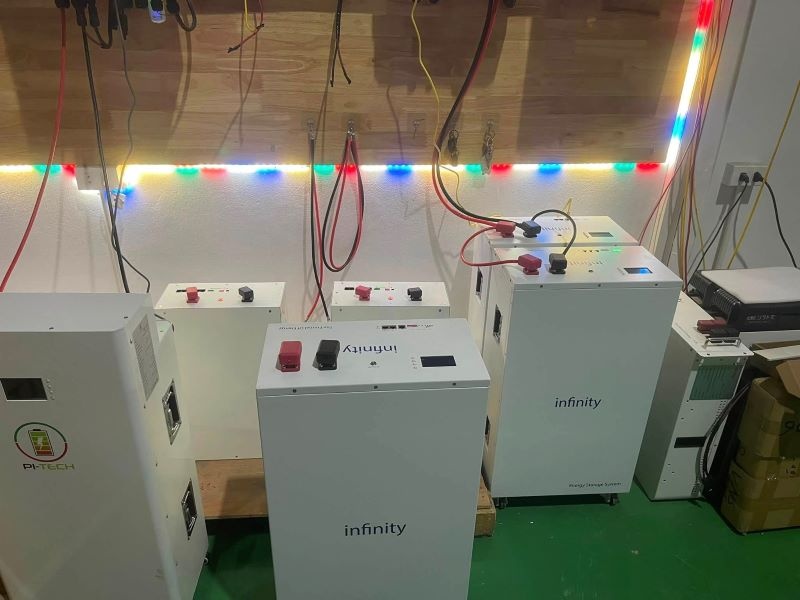
She noted that Battery Energy Storage Systems (BESS) are central to that integration. They support renewable absorption, provide essential grid services, and allow operators the flexibility to manage variability at scale. Their value depends on how they are deployed alongside grid modernisation and digitalisation as part of a unified approach.
“The stakes extend beyond the grid,” she said. “As energy systems become more integrated with essential services such as healthcare and disaster response, their reliability directly affects how communities withstand climate shocks.”
Under the revised Power Development Plan VIII, Vietnam is targeting between 10 and 16.3 GW of battery storage by 2030. In the near term, around 1.2 GW of grid-connected BESS is being prioritised, with early deployments focused on system balancing and operational learning. These steps signal both progress and the scale of what comes next.
Reaching this level of deployment requires progress across regulatory frameworks, technical standards, market mechanisms, and investment readiness. Early projects are generating insights, but translating these into system-wide outcomes requires structured alignment and clear pathways for scale.
Tuong Do, Just Energy Transition Partnership (JETP) Energy project development specialist, said, “Deploying storage at this level is as much an institutional challenge as a technical one. Utilities are looking for support in commissioning, system configuration, and long-term asset management. Interest in digital tools, including digital twins, is also growing as a way to improve system visibility and performance across the asset lifecycle.”
This shift moves the transition from isolated pilots to integrated system transformation. The Grids of the Future approach reflects this, placing distribution-level modernisation, digitalisation, and storage at the centre, with a focus on how they enable utilities to plan, operate, and scale effectively.
A key part of operationalising this in Vietnam is the BESS Task Force, led in coordination with the GEA, which bridges early implementation with longer-term policy and market development. By drawing on EVN-led pilots and technical studies, it helps ensure that initial deployments contribute to scalable outcomes.
Do from JETP Energy noted that parallel efforts supported by the United Nations Development Programme demonstrate how these system-level investments translate on the ground. Distributed solar PV systems integrated with battery storage are being deployed in public health facilities, supporting uninterrupted care during power disruptions and strengthening local resilience.
“These initiatives are expected to directly benefit around 2,800 people and indirectly support approximately 64,000, with a focus on equitable access, including women and vulnerable groups in climate-sensitive areas. This approach reflects a broader effort to align energy systems with development outcomes, including stronger healthcare delivery, improved disaster preparedness, and more inclusive pathways for communities most exposed to climate risks,” he added.
According to experts, there is growing focus on how BESS participates in the broader power system, including ancillary services and integration into Vietnam's evolving wholesale electricity market. Clear participation models, pricing mechanisms, and revenue streams will be critical to building a bankable market for storage.
Capacity building remains a priority as utilities prepare to operate more complex systems. The proposed Battery Energy Storage Centre of Excellence reflects the need to strengthen technical expertise across stakeholders.
Institutional readiness depends on strong environmental and social governance. Structured stakeholder engagement, grievance mechanisms, and transparent benefit-sharing are increasingly integrated into project design to support long-term sustainability and trust.
This transition will be defined by how systems are planned, coordinated, and built to last. It requires alignment between policy and execution, and sustained collaboration between government, utilities, and partners, working alongside national institutions.
Vietnam has demonstrated what is possible when ambition is matched with coordinated action. The opportunity now is to build on that foundation, advancing storage, digitalisation, and grid modernisation as parts of a single system. Done well, this transition strengthens reliability, supports essential services, and reinforces community resilience within a broader agenda of long-term development and inclusion.
 | Coro Energy to launch BESS Pilot in Vietnam Coro Energy PLC, a Southeast Asian renewable energy developer, on December 3 announced that it has signed a deal with Mobile World Group (MWG) for the delivery of a co-located Battery Energy Storage System Pilot (BESS Pilot) at one of Coro's existing rooftop solar sites in Ho Chi Minh City. |
 | ACCV signs BESS - rooftop solar MoUs with Korean manufacturers Asia Clean Capital Vietnam is partnering with South Korean manufacturers to advance battery energy storage and rooftop solar integration in Vietnam’s industrial sector. |
 | Ministry backs local BESS production to boost renewable energy use Deputy Minister of Industry and Trade Nguyen Hoang Long has said the ministry will support local firms in developing products for battery energy storage systems to help promote renewable energy. |
What the stars mean:
★ Poor ★ ★ Promising ★★★ Good ★★★★ Very good ★★★★★ Exceptional
 Tag:
Tag:Related Contents



Latest News



More News
- Vietnam maps out renewable energy hubs to build green supply chains (September 09, 2026 | 12:05)
- AFRY awarded design contract for LNG project (September 03, 2026 | 16:21)
- 11 innovations showcased plastic waste management solutions in Vietnam (August 30, 2026 | 10:36)
- Vietnam urged to turn sustainability plans into action (August 28, 2026 | 15:03)
- Workshop advances low-carbon innovation in Vietnam’s cement sector (August 28, 2026 | 14:30)
- Legal amendments on agriculture and environment to take effect on January 1 (August 26, 2026 | 08:00)
- Vietnam Petroleum Institute and TÜV SÜD Vietnam to co-develop energy transition solutions (August 25, 2026 | 18:26)
- Petrovietnam and AFD advance cooperation on energy transition projects (August 21, 2026 | 17:20)
- 92 organisations and businesses register for carbon exchange system (August 21, 2026 | 09:24)
- Trinasolar powers 10 MWh solar and storage project in Phu Quoc (August 20, 2026 | 09:46)








 Mobile Version