
Vietnam’s supporting industries breaking barriers in ASEAN supply chains

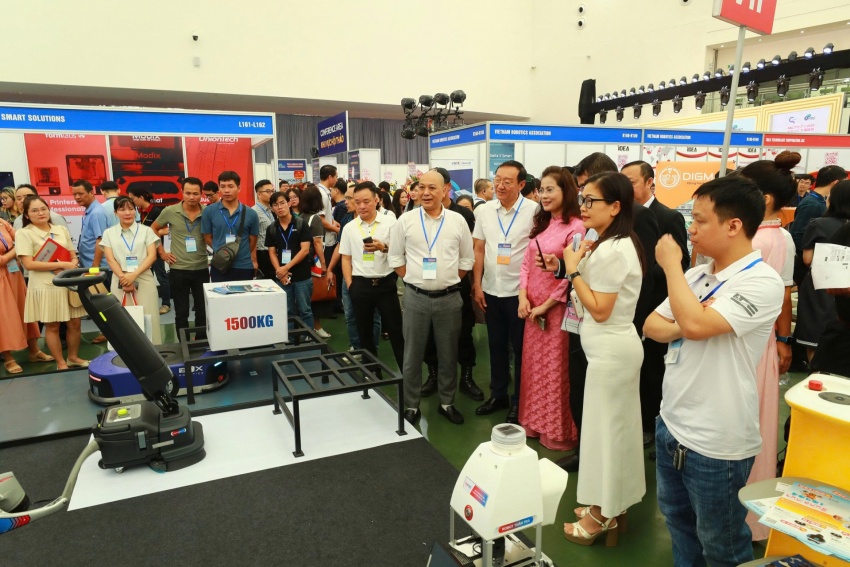 |
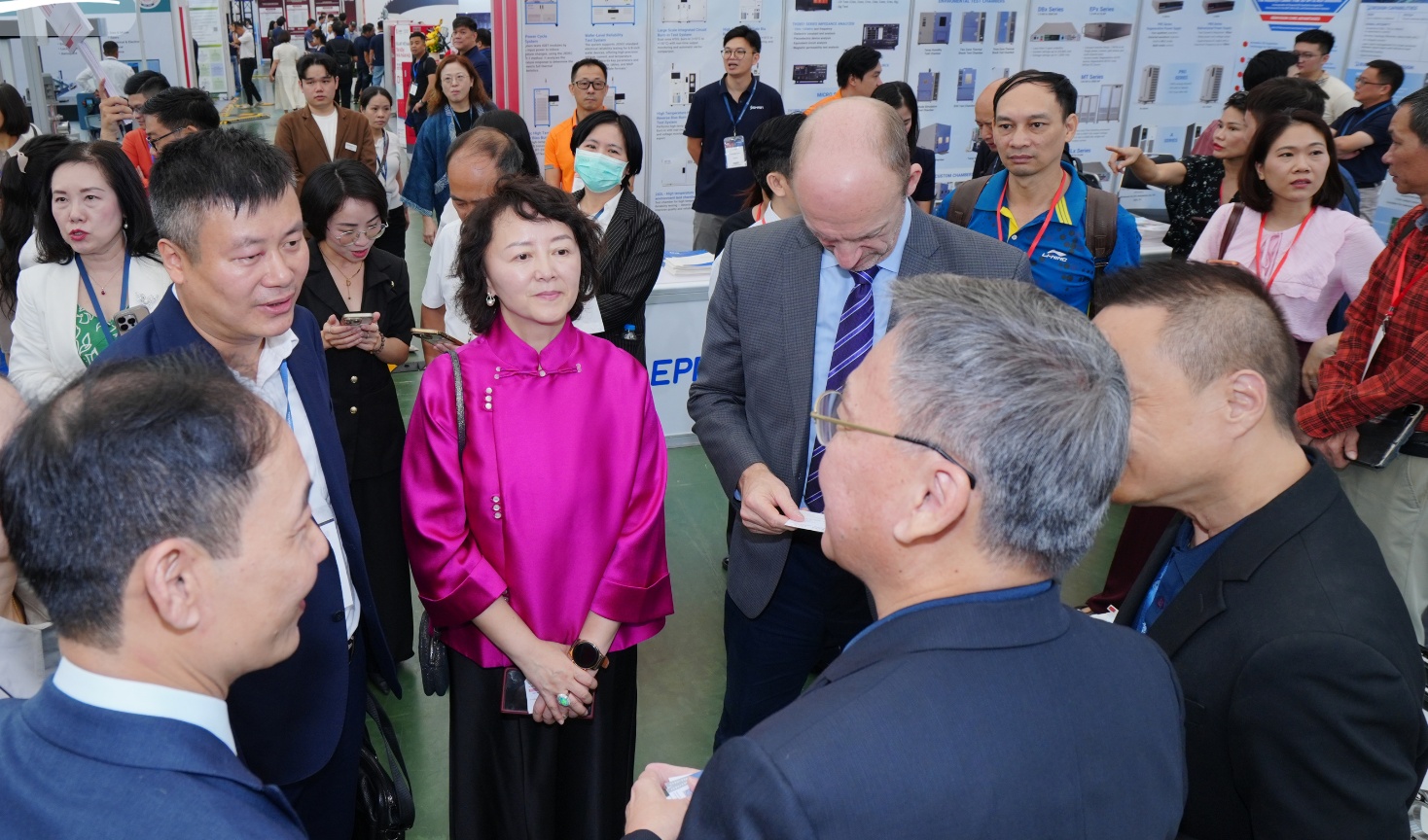
On September 18, the International Manufacturing Business Fair (FBC ASEAN 2025) opened at the Vietnam Exhibition Centre in Hanoi, marking a milestone in positioning Vietnam as a leading manufacturing and supply hub in Southeast Asia.
More than a trade fair, FBC ASEAN 2025 has been designed as a forum to shape the future of Vietnam's manufacturing industry amid far-reaching global supply chain realignments. Nearly 400 exhibitors from Japan, Germany, Italy, South Korea, and Thailand joined over 20 global buyers such as Mitsubishi Electric, Panasonic, Samsung, Toto, and Fujifilm. The event drew more than 15,000 visitors, 80 per cent of whom were manufacturers, offering Vietnamese suppliers rare direct access to multinational corporations that normally transact through regional intermediaries.
“Vietnamese firms lack independent testing centres and shared pilot plants, leaving them at a disadvantage in global supply chains,” noted Phan Dang Tuat, chairman of the Vietnam Association for Supporting Industries (VASI). “Yet nearly 90 per cent of Vietnam's leading manufacturers are now VASI members, and many aspire to move from supplying components to producing complete modules and finished products.”
Global manufacturing networks are being reshaped by geopolitical conflicts, US-China trade frictions, new tariff regimes in the US and EU, and prolonged post-pandemic uncertainties. Multinationals are diversifying production, and ASEAN is emerging as a strategic alternative hub. Vietnam stands out with competitive labor costs, political stability, and an extensive network of free trade agreements. Yet opportunities alone are not enough. Supporting industries, the backbone of manufacturing, remain the weakest link.
“After nearly 20 years supplying Japanese, American, and European firms, the toughest barriers remain access to capital, tax incentives, and quality standards,” said Dang Thanh Binh, general director of TCI. “Small enterprises are still heavily dependent on imported inputs and cannot match Chinese competitors on cost.”
Global market rules are also tightening. The EU has launched its Carbon Border Adjustment Mechanism, requiring traceable emissions, while the US enforces stricter tariffs and origin requirements. Vietnamese firms must now demonstrate compliance on both price and sustainability, while competitors in Thailand and Malaysia benefit from national testing and research and development centres that fast-track international certification.
VASI is drafting a product list across electronics, mechanical parts, plastics and rubber, and auxiliary materials, aiming to guide collaborative strategies and secure government support. Initiatives such as joint procurement, reducing input costs by 5-10 per cent, are already underway, alongside digital platforms like the J-TECH showroom that extend trade connections beyond physical fairs.
Analysts argue that such efforts must be matched by structural policy shifts. Vietnam needs national testing and certification centres, specialised tax and credit measures for supporting industries, shared facilities for small- and medium-sized enterprises, and stronger domestic material production. Investment in skilled labour and R&D is equally critical if Vietnamese firms are to master core technologies rather than remain subcontractors.
Deeper integration with ASEAN supply chains is also essential. By leveraging intra-ASEAN trade agreements and learning from regional peers, Vietnam can aspire not only to serve foreign-invested plants domestically but also supply factories across the bloc.
FBC ASEAN 2025 underscores that the door is open. Whether Vietnam's supporting industries seize the moment depends on decision policy support and private sector initiative. Without reform, the sector risks remain locked into low-value roles. With them, Vietnam can rise as a genuine value-adding node in the global supply chain reshuffle.
What the stars mean:
★ Poor ★ ★ Promising ★★★ Good ★★★★ Very good ★★★★★ Exceptional
 Tag:
Tag:
Related Contents



Latest News



More News
- Vietnam-Australia forum boosts AI and digital technology cooperation (October 13, 2026 | 11:30)
- Digital transformation shifts focus to added value (October 09, 2026 | 18:00)
- Melatec Dental Clinic - accompanying international clients on their smile care journey (October 09, 2026 | 17:25)
- 12 localities achieve double-digit growth in first nine months (October 09, 2026 | 17:00)
- CYE 2026 announces top 5 finalists (October 09, 2026 | 16:55)
- Robotics inspires Vietnam’s next generation of engineers (October 08, 2026 | 15:18)
- Vietnam among fastest AI adopters, Pearson-AWS study finds (October 07, 2026 | 12:26)
- Ho Chi Minh City Oncology Hospital signs MoU with Novartis Vietnam (October 07, 2026 | 10:36)
- Expanding education partnerships to drive mutual growth (October 06, 2026 | 16:04)
- VTG 2026 to showcase textile and footwear innovation in Ho Chi Minh City (October 06, 2026 | 16:00)






 Mobile Version