
Vietnam-Japan ties deepen as Tokyo expands skilled labour access

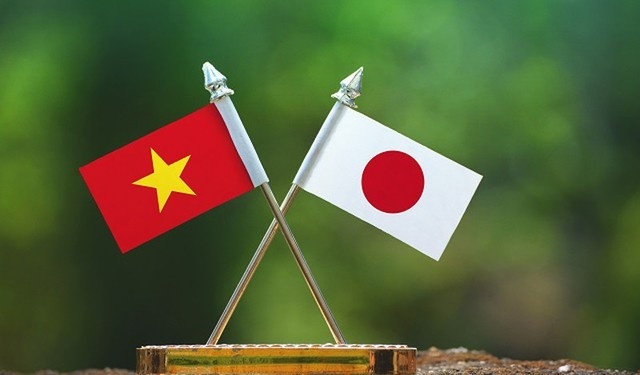 |
| Vietnam-Japan ties deepen as Tokyo expands skilled labour access |
Under the revised framework, Japan has expanded the number of eligible sectors within the Specified Skilled Worker (SSW) programme. In addition to the existing 16 fields, three new sectors have been added: linen supply services, logistics warehousing, and resource circulation.
Several existing sectors are also being restructured to better reflect labour market demand. Starting from April 2027, certain industries will be divided into more specialised categories to improve workforce matching and skills development.
The vehicle maintenance sector will be split into two distinct occupations: general car inspection and maintenance, and vehicle body repair. Similarly, the food and beverage production sector will be divided into food and beverage manufacturing, and processed seafood production.
These adjustments signal Japan’s effort to refine its labour import framework, ensuring that foreign workers are more effectively aligned with industry-specific needs while enhancing professional development prospects.
In parallel, Japan is set to launch the Employment for Skill Development (ESD) programme in April 2027. The scheme will cover 17 sectors, largely overlapping with those under the SSW scheme, and is designed to provide an additional pathway for foreign workers to enter and develop their careers.
By introducing the ESD programme, Japan aims to diversify its approach to foreign labour, offering more structured opportunities for skills development while addressing persistent labour shortages across key industries.
In terms of intake, Japan has slightly revised its targets for foreign workers. The total number of workers expected to be accepted under the SSW programme between April 2024 and March 2029 has been reduced from 820,000 to 805,700.
Meanwhile, the ESD programme is projected to receive approximately 426,200 workers from April 2027 to March 2029.
These policy shifts come at a time when Vietnam-Japan relations are continuing to deepen across multiple dimensions.
Amid increasing global uncertainties, Japan has consistently expressed its commitment to supporting Vietnam as it plays an active role in encouraging peace, stability, and prosperity worldwide.
The two countries held their first Vice-Ministerial “2+2” Foreign Affairs and Defence Dialogue in Tokyo late last year. Around the same time, the Vietnamese Navy frigate Tran Hung Dao made its first port call to Japan in seven years. More recently, vessels from the Japan Maritime Self-defence Force, including the destroyer Onami, visited Vietnam, with another goodwill visit by the destroyer Asahi scheduled.
Economic ties have also continued to strengthen under the Comprehensive Strategic Partnership. Japanese investment in Vietnam reached $3.1 billion last year, marking a 20 per cent increase on-year and bringing cumulative investment to approximately $80 billion. Bilateral trade has expanded significantly over the past decade, reaching around $50 billion.
As Vietnam enters a new phase of reform under the leadership of General Secretary To Lam, improvements in the investment environment are expected to create better conditions for Japanese businesses to expand their presence. High-level dialogues between the Vietnamese government and Japanese enterprises have reinforced expectations for growth in trade and investment.
Both countries are prioritising cooperation in emerging sectors such as semiconductors, digital transformation, green transformation, and disaster prevention. These areas are increasingly seen as key pillars for sustaining long-term economic growth and resilience.
In the semiconductor sector, Vietnam has set an ambitious goal of training 500 doctoral graduates by 2030. Japan has pledged to support this effort by hosting around half of these students through joint research initiatives. Several collaborative projects between universities in both countries are already underway, with more expected.
Energy cooperation is also gaining momentum, particularly in the context of global uncertainties affecting supply chains. Through initiatives such as the Asia Zero Emission Community, Japan has proposed a series of investment projects in Vietnam, including renewable energy and liquefied natural gas power development, with a total estimated value of around $20 billion.
In addition, Japan has recently committed $600 million in yen loans to support Vietnam’s green transformation and climate resilience efforts. These projects aim not only to provide financing but also to leverage advanced Japanese technologies in areas such as artificial intelligence, satellite observation, and disaster management.
Infrastructure development remains another important area of cooperation. New assistance schemes are expected to support the construction of transport systems, irrigation facilities, and river embankments across several northern provinces, helping to strengthen resilience against natural disasters and improve living conditions.
While both countries continue to deepen their Comprehensive Strategic Partnership, labour cooperation, supported by evolving programmes, is likely to play a more important role.
Meanwhile, as stated recently by Prime Minister Takaichi Sanae, Vietnam is an indispensable partner for the realisation of a Free and Open Indo-Pacific (FOIP). Japan remains committed to supporting Vietnam’s economic development while strengthening cooperation in diplomacy and security spheres, as Vietnam increases its presence in the international arena.
 | Vietnam pushes green transition with Japan’s $320 million ODA support On March 18, the Japan International Cooperation Agency Vietnam office and the Ministry of Finance co-organised a signing ceremony for a $320 million green loan programme. |
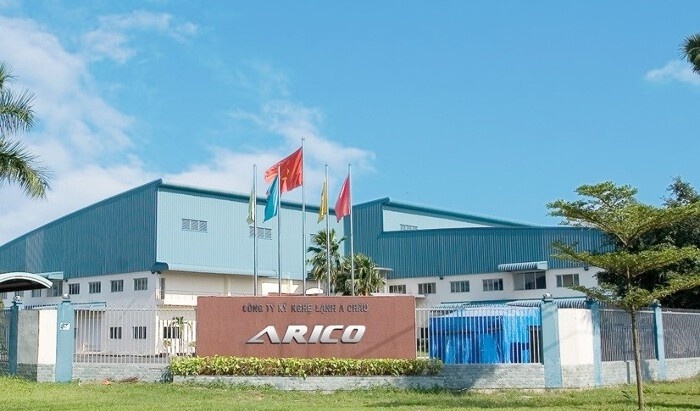
 | Searefico completes full divestment in Arico to Japanese partner On March 26, the Board of Directors of Searefico Corporation approved the resolution to divest its remaining 48.616 per cent stake in Asia Refrigeration Industry JSC (Arico) to its strategic partner, Hoshizaki. |
 | Japan extends ¥50 billion loan for green transformation programme The Japan International Cooperation Agency (JICA) on March 30 signed a ¥50 billion loan agreement with Vietnam to provide official development assistance for its green transformation programme and climate change adaptation. |
What the stars mean:
★ Poor ★ ★ Promising ★★★ Good ★★★★ Very good ★★★★★ Exceptional
 Tag:
Tag:Related Contents






Latest News



More News
- Expanding education partnerships to drive mutual growth (October 06, 2026 | 16:04)
- VTG 2026 to showcase textile and footwear innovation in Ho Chi Minh City (October 06, 2026 | 16:00)
- Infineon boosts Vietnam footprint with Ho Chi Minh City office (October 06, 2026 | 10:02)
- Vietnam Customs expands priority enterprise scheme to 74 firms (October 03, 2026 | 08:00)
- ASL Law opens Danang office (October 02, 2026 | 22:12)
- Project ACTIVE 2.0 launches in Vietnam to boost cervical cancer care (October 02, 2026 | 22:02)
- Vietnam launches first embodied AI conference to advance robotics ecosystem (October 02, 2026 | 17:00)
- DKSH Performance Materials – A trusted partner in Vietnam’s evolving personal care landscape (October 02, 2026 | 14:28)
- Ghanaian delegation reviews PSL Machinery’s cashew factory-management and implementation roadmap (October 02, 2026 | 10:18)
- People living with chronic kidney disease and diabetes should be aware of infectious disease risks (September 30, 2026 | 18:00)


Latest News



 Mobile Version