
Vietnam gains popularity as Asia-Pacific tourists prioritise familiarity, flexibility: Visa report

 |
Drawing on insights from more than 47,000 respondents, surveying over 17,000 across Asia-Pacific, including more than 1,000 Vietnamese respondents, the study shows that while travel demand remains strong, behaviour is shifting.
Tourists are becoming more intentional – favouring trusted destinations closer to home, planning with greater care, and placing greater importance on ease, security, and confidence throughout the journey, including how they pay.
This shift is evident in Vietnam’s strong tourism growth trajectory. The Vietnam National Authority of Tourism reported 10.6 million international arrivals in the first five months of 2026 – the highest on record for the period and already 42 per cent of its 25 million full-year target.
Regional travel patterns are reinforcing this momentum. As travellers opt for short-haul trips that offer value and ease of access, destinations like Vietnam are benefiting from stronger intra-regional flows.
At the same time, the recovery of Chinese outbound travel is expected to accelerate demand, with Vietnam forecast to rank among the top three destinations for Chinese travellers this year, alongside South Korea and Thailand. With Chinese outbound traveller numbers projected to reach 165 to 175 million in 2026, this shift presents a significant opportunity for Vietnam to capture a larger share of regional travel demand.
Policy measures are also supporting this growth. Vietnam’s expansion of its e-visa scheme to allow stays of up to 90 days for travellers of all nationalities is enabling more flexible trip planning and longer stays across multiple destinations.
Across Asia-Pacific, travellers are gravitating towards destinations that offer familiarity, convenience, and confidence – particularly as global conditions remain dynamic.
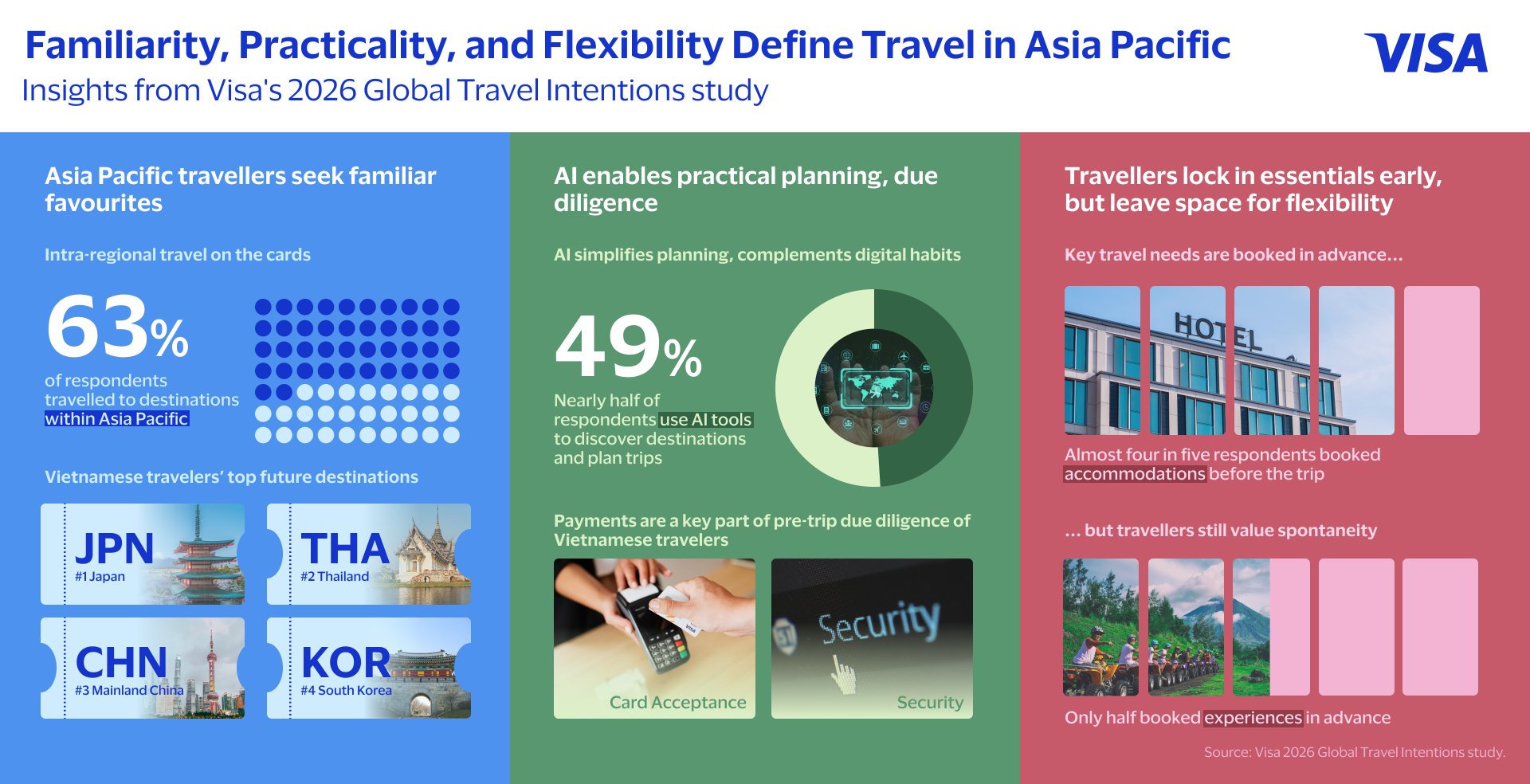
According to the study, 63 per cent of respondents travelled within Asia-Pacific, significantly ahead of travel to Central Europe, the Middle East and Africa (16 per cent), Europe (13 per cent), and North America (6 per cent).
Among Vietnamese travellers, Japan remains the most visited destination (18 per cent), followed by Thailand at 12 per cent, Mainland China at 10 per cent, South Korea at 9 per cent, and Hong Kong at 7 per cent. Looking ahead, Vietnamese travellers continue to show strong interest in Japan, with 26 per cent of tourists planning visits to Japan in the next 12 months.
Within this broader shift, tourists are also placing greater emphasis on meaningful and immersive experiences. 37 per cent plan trips around local experiences such as food and culture – well above the global average of 29 per cent. One in four travellers are motivated by major live entertainment and sporting events such as the FIFA World Cup 2026, Formula 1, and K-Pop.
In Vietnam, this is reflected in rising demand for food-led travel, heritage exploration, and locally rooted experiences. Travellers are increasingly seeking food tours, cultural districts, and destinations beyond major hubs – including coastal cities such as Danang and Nha Trang, alongside Hanoi and Ho Chi Minh City.
As the official partner of the MICHELIN Guide 2026 in Vietnam, Visa continues to support the country’s vibrant dining scene through affluent dining propositions and strategic partnerships that connect cardholders to memorable culinary experiences.
With more spontaneous exploration at the destination, how tourists pay becomes an enabler of these experiences. Widely accepted, secure digital payments allow visitors to engage more freely with local businesses – from small eateries and markets to cultural attractions – without the friction of cash dependency.
As travellers become more intentional, planning has become more structured and informed. Beyond flights and accommodation, tourists are increasingly assessing insurance, visa requirements, and local conditions before departure.
Digital tools are playing a growing role in this process. Nearly half (49 per cent) of respondents use AI to discover destinations and ideas, while others use it to curate reviews (41 per cent) and identify local experiences (35 per cent). Vietnamese tourists ranked the highest in Asia-Pacific in saying they were very likely to use AI to plan their next trip.
According to the GTI study, payment considerations are also a key part of pre-trip planning for Vietnamese tourists. Card acceptance is the top concern for 30 per cent of tourists, followed by security at 25 per cent. These priorities highlight the growing expectation for seamless, reliable payment experiences across every stage of travel – from booking and reservations to everyday spending abroad.
In markets like Vietnam, where digital payment adoption continues to expand across urban centres and tourism hubs, this is helping tourists plan with greater certainty. The ability to pay seamlessly and securely – whether through cards or mobile wallets – reduces friction, supports informed decision-making, and enables smoother experiences across the journey.
Overall, 73 per cent of Asia-Pacific tourists bring cards or mobile wallets when travelling, reinforcing their role as essential travel companions.
While tourists are locking in key elements of their trips earlier, they are deliberately leaving room for flexibility once they arrive. 79 per cent book accommodations in advance, while only 51 per cent book experiences ahead of time. 72 per cent of dining decisions and 65 per cent of transport choices are made in-destination. This balance reflects a shift towards more adaptable travel, where structure provides reassurance while flexibility allows for spontaneity and discovery.
“The latest Global Travel Intentions study shows that travel across Asia-Pacific is evolving. Tourists are becoming more intentional in how they choose destinations, plan their journeys, and spend. As they seek both familiarity and flexibility, seamless and secure payments play an increasingly important role – helping tourists move with confidence while supporting destinations like Vietnam in delivering more connected and rewarding experiences,” said Danielle Jin, chief marketing officer at Visa Asia-Pacific.
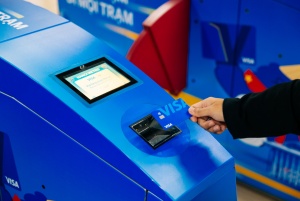 | Visa and Trip launch global virtual travel card programme Visa and Trip.com entered into a new global agreement designed to make booking and paying for travel more seamless for consumers and partners worldwide on March 17. |
 | Visa Working Capital Index: Asia-Pacific CFOs call for flexible digital finance solutions Findings from the 2025–2026 Visa Growth Corporates Working Capital Index reveal a significant gap between Asia-Pacific companies' working capital needs and the financial tools available. |
 | Visa backs Digital Finance Day 2026 to promote safe digital payments Visa has shown its support for Digital Finance Day, an annual event organised by Tuoi Tre Newspaper under the direction of the State Bank of Vietnam, reinforcing its commitment to advancing safe and inclusive digital payments across the country. |
What the stars mean:
★ Poor ★ ★ Promising ★★★ Good ★★★★ Very good ★★★★★ Exceptional
 Tag:
Tag:Related Contents

Latest News



More News
- Spalba makes foray into Vietnamese market (August 20, 2026 | 09:41)
- CAAV signs deal with Turkey to strengthen aviation cooperation (August 10, 2026 | 15:15)
- Major Asian airlines survey Long Thanh International Airport (August 10, 2026 | 08:51)
- Vietnam ranks in top four Asian destinations for European tourists (August 07, 2026 | 08:00)
- Vietnam's commercial aircraft fleet expands to 251 planes (August 03, 2026 | 23:13)
- LOT Polish Airlines is set to launch Warsaw–Hanoi route (July 31, 2026 | 11:22)
- Vietnam tops Saudi tourists' summer holiday searches (July 30, 2026 | 12:41)
- Ninh Binh province steps up mission to acquire UNESCO landscape nomination (July 17, 2026 | 14:02)
- Vietnamese tourists gain easier access to Dubai (July 13, 2026 | 14:59)
- Vietnam reshaping Southeast Asia's tourist map (July 08, 2026 | 14:17)







 Mobile Version