
Vietnam's regional aviation sector yet to take off

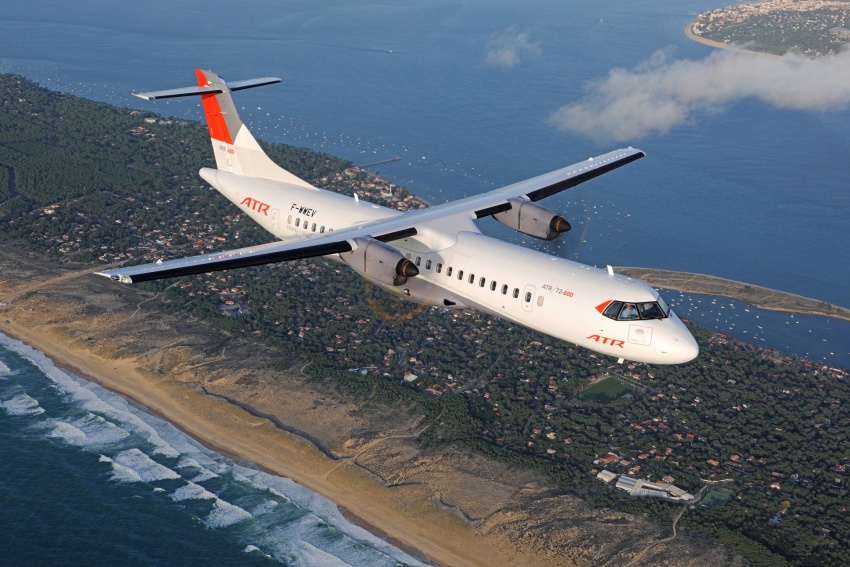
Vietnam is one of only two countries in Asia, alongside South Korea, that has yet to establish a dedicated regional aviation sector using aircraft with fewer than 80 seats on short-haul routes connecting secondary destinations, ATR noted. Most other countries in the region have developed such networks for decades.
At a press conference on June 9 in Ho Chi Minh City, Dan Zou, ATR’s airline marketing manager, said around 70 airlines across the Asia-Pacific region, including India, currently operate ATR aircraft on regional routes.
“Across the region, only Vietnam and South Korea have yet to fully develop regional aviation. South Korea has already begun moving in that direction with ATR 72-600 operations. That shows the market exists, and the demand is real,” he said.
ATR’s assessment is based on previous studies indicating that Vietnam has around 87 potential routes that remain either unserved or underserved by regional aircraft. Many of these routes are not only domestic services, but also connections linking tourism and economic centres across Southeast Asia.
 |
One of the paradoxes of Vietnam’s aviation sector is that many local airports remain underutilised, while major gateways continue to face congestion pressures.
According to ATR, Vietnam’s 10 largest airports account for approximately 90 per cent of the country’s passenger traffic. As a result, aviation activity remains heavily concentrated around major hubs such as Hanoi, Ho Chi Minh City, Danang and Cam Ranh.
Meanwhile, new airports in destinations such as Phan Thiet, Sa Pa, Quang Tri and Mu Cang Chai are being planned or developed. The challenge is how these airports can be operated efficiently and sustainably.
Zou argued that not every province requires a 3,000-m runway designed for larger jet aircraft. “An ATR aircraft only requires a runway of around 1,300 to 1,500 metres. That significantly reduces infrastructure investment costs and shortens project implementation timelines,” he said.
ATR representatives also believe that public-private partnerships could play an increasingly important role in airport development. Instead of relying entirely on public funding, private investors can participate in building and operating smaller airports, a model that is already emerging in Vietnam.
The development of Long Thanh International Airport, plans for a second airport serving Hanoi, and the expansion of regional airport infrastructure are all expected to create new opportunities for regional aviation in the coming years.
One of the key reasons regional aviation has flourished globally is its ability to optimise costs on short sectors. According to ATR, regional aviation typically focuses on routes below 555km, operated by aircraft with fewer than 80 seats and serving secondary airports.
On such routes, narrow-body jets are not always the most efficient solution. Jean-Daniel Kosowski, ATR’s Aircraft sales director, believes travel time is the most important factor.
“If travelling from point A to point B takes only two hours by road, there may be no need for an aircraft. But if the journey takes four hours or more by road while a flight takes just 45 minutes, the benefits become obvious,” he said.
He cited destinations in mountainous regions such as Dien Bien as examples. Although Vietnam’s road infrastructure continues to improve, travel times to certain areas remain significantly longer than by air.
Many countries across Asia have adopted this model to improve connectivity between provinces and cities without waiting for the full development of road networks. Cambodia provides one of the clearest examples of how smaller aircraft can support regional connectivity.
Air Cambodia currently deploys ATR aircraft on most domestic routes linking Phnom Penh, Siem Reap and Sihanoukville, while also serving destinations with relatively limited demand such as Ratanakiri.
According to Eng Molina, Chief Commercial Officer of Air Cambodia, the airline’s strategy is built around matching the right aircraft to the right market. “We chose ATR because it is the right aircraft for our market. With 68 to 72 seats, it is easier to fill flights and allows us to offer higher frequencies,” he said.
Today, ATR aircraft account for around 94 per cent of Air Cambodia’s domestic operations and approximately 62 per cent of its short-haul international services departing from Cambodia.
The same model is increasingly being applied on routes between Vietnam and Cambodia. According to Air Cambodia, the short distance between the two countries makes turboprop aircraft a highly efficient solution from an operational cost perspective. Their smaller capacity enables airlines to offer multiple departures throughout the day, rather than concentrating demand on one or two larger jet services.
“Because we are smaller, we can fly more often. Passengers can choose morning, afternoon or evening departures,” Molina said.
The airline currently connects Phnom Penh with Ho Chi Minh City and links Vietnamese destinations such as Dalat and Phu Quoc with Cambodian cities, while additional routes remain under consideration.
Vietnam’s rapidly expanding motorway network has raised questions about whether regional aviation still has room to grow. Industry observers argue that the answer depends on passenger segments and travel purposes.
Price-sensitive travellers may continue to choose coaches or private vehicles. However, for business travellers, short-stay tourists and passengers seeking same-day return trips, aviation retains a significant advantage in terms of time savings.
Molina cited the Ho Chi Minh City-Phnom Penh route as an example. Flight time is only around 30 to 40 minutes, allowing passengers to travel for medical treatment, business meetings or personal errands and return on the same day.
Meanwhile, Dan Zou believes the biggest advantage of smaller aircraft lies in frequency. He referred to a South Korean operator that uses a single ATR aircraft on the Gimpo-Sacheon route, operating up to eight flights per day.
“Previously, another airline operated a jet on the same route but only once a day. When ATR entered the market with eight daily flights, the jet operator eventually withdrew. On short-haul routes, frequency is often the deciding factor,” he said.
Higher frequencies provide passengers with greater flexibility while allowing airlines to better match capacity with demand. According to ATR, regional aircraft currently account for only around 2-3 per cent of Vietnam’s domestic fleet, far below the global average of approximately 25 per cent.
With new airports under development, aviation policies under review and growing demand for inter-regional connectivity, many industry participants believe the conditions are increasingly favourable for the emergence of a dedicated regional aviation sector in Vietnam.
The main challenge may not be technology or infrastructure, but rather developing an operational ecosystem tailored to short-haul routes, one where success is driven not by larger aircraft, but by better connectivity, higher frequencies and greater flexibility.
After years of focusing primarily on major routes, Vietnam’s aviation industry may now be approaching a new phase of growth, one centred on shorter flights connecting provincial cities, tourism destinations and neighbouring countries across Southeast Asia.



What the stars mean:
★ Poor ★ ★ Promising ★★★ Good ★★★★ Very good ★★★★★ Exceptional
 Tag:
Tag:Related Contents




Latest News






More News
- Russian and Indian tourists drive international arrivals (September 08, 2026 | 09:03)
- Beaches drive Vietnam’s domestic tourism boom (August 20, 2026 | 12:07)
- Spalba makes foray into Vietnamese market (August 20, 2026 | 09:41)
- CAAV signs deal with Turkey to strengthen aviation cooperation (August 10, 2026 | 15:15)
- Major Asian airlines survey Long Thanh International Airport (August 10, 2026 | 08:51)
- Vietnam ranks in top four Asian destinations for European tourists (August 07, 2026 | 08:00)
- Vietnam's commercial aircraft fleet expands to 251 planes (August 03, 2026 | 23:13)
- LOT Polish Airlines is set to launch Warsaw–Hanoi route (July 31, 2026 | 11:22)
- Vietnam tops Saudi tourists' summer holiday searches (July 30, 2026 | 12:41)
- Ninh Binh province steps up mission to acquire UNESCO landscape nomination (July 17, 2026 | 14:02)



Latest News







 Mobile Version