
ATR sees strong potential for regional air connectivity in Vietnam

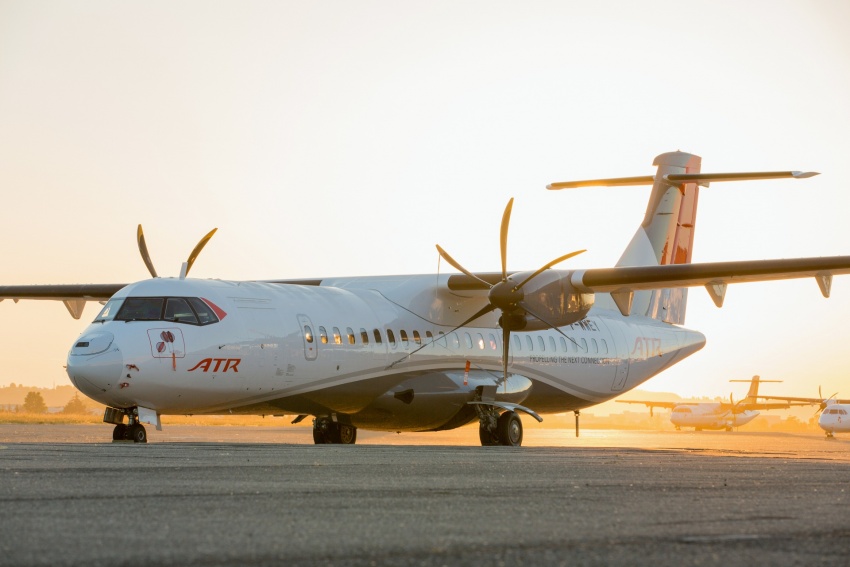 |
At a press briefing in Ho Chi Minh City on June 9, ATR noted that a joint study with Vietnamese transport consultancy Transport Engineering Design Inc. (TEDI) last year identified 87 unserved domestic routes with viable traffic potential. Since then, new cross-border services and ATR's latest cabin concepts have opened up new possibilities for regional connectivity in and around Vietnam.
Vietnam's aviation market is largely concentrated on major routes, yet the country's long, narrow shape – stretching from north to south with coastal cities, highland communities, and island destinations – points to a much broader potential network of routes that could support regular air service with ATR 72-600 aircraft.
ATR and TEDI's research identified 149 potential domestic routes under 555km, of which 87 remain unserved. Connecting them would require around 25 ATR 72-600 aircraft.
Jean-Pierre Clercin, head of Region Asia-Pacific at ATR, believes Vietnam has strong fundamentals for growth in regional aviation. There is growing passenger demand, an expanding airport network and many city pairs that are better suited to regional turboprop aircraft.
"The ATR 72-600’s lower operating costs allow airlines to serve routes profitably at demand levels where narrowbody jets may not be economically viable. The ATR 72-600 burns 45 per cent less fuel than similar-sized regional jets. The ATR’s frugality, when it comes to fuel consumption, means it is a natural hedge against volatile fuel prices," he added.
The economic and social impact of regional aviation is also profound: studies indicate that a 10 per cent increase in regional flights can lead to a 5 per cent rise in local tourism, a 6 per cent boost in regional GDP and an 8 per cent increase in foreign direct investment. ATR’s success in markets such as Japan and New Zealand demonstrate how regional aviation can drive connectivity and economic development.
Beyond Vietnam's domestic market, Air Cambodia's ATR 72-600 service on the Ho Chi Minh City–Phnom Penh route demonstrates how ATR aircraft can serve short-haul international sectors efficiently, supporting international tourism and business links in the region.
The latest generation ATR 72-600 equipped with Pratt & Whitney Canada engines, operated by Air Cambodia, delivers a three-percentage-point fuel burn reduction compared with older generation ATRs.
The ATR 72-600 is also ideal for connecting Vietnam to neighbouring Laos and Thailand, markets where ATR aircraft are already active. ATR sees cross-border turboprop connectivity, especially to tier-two and tier-three cities, as an important and underdeveloped part of Southeast Asia's wider air transport network, and one that complements rather than competes with larger airline operations.
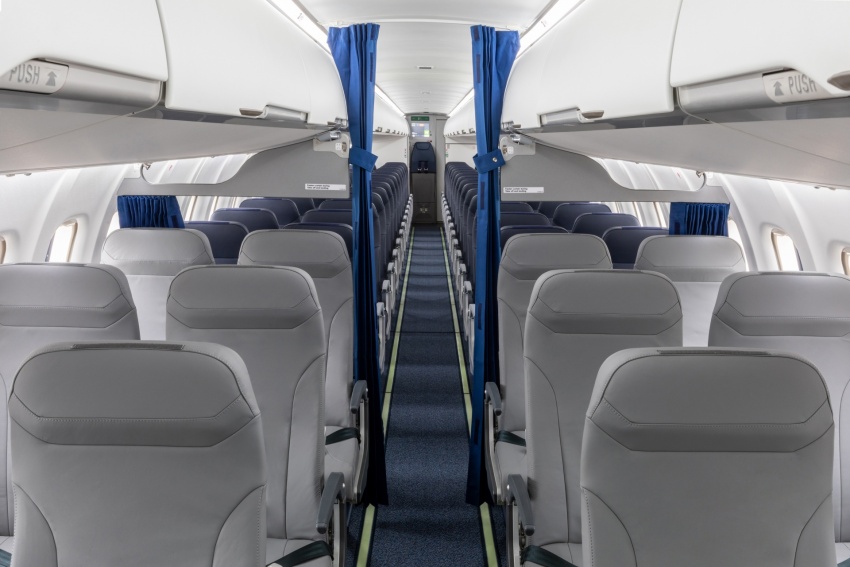 |
One of the enhancements introduced with the ATR 72-600 series is an upgraded passenger cabin, Armonia, designed in collaboration with the renowned Italian design firm Giugiaro Design. The Armonia cabin has much larger overhead bins than the earlier -500 model, and LED lighting throughout.
Both ATR models are compliant with the most stringent external noise standards, and internal noise is comparable to that of regional jets of the same capacity.
The ATR 72-600 also has an ‘all-glass’ cockpit by Thales that has five large-format LCD screens. The intuitive user-interface reduces pilot workload and provides greater situational awareness. The aircraft’s avionics system also makes use of satellite-based navigation for more efficient flight paths and precision approaches.
For further comfort, ATR developed ATR HighLine, a wide offering of premium cabin configurations. The world’s first ATR HighLine-equipped aircraft was delivered to Malaysian airline Berjaya Air in May 2026.
The ATR 72-600 can seat 26 passengers in a 1-1 all business class configuration. Berjaya Air will be using the aircraft to serve high-end resorts in Malaysia, Thailand and Vietnam, including resorts in Phu Quoc.
 | Vietnam’s aviation authority pushes shift to greener operations The Civil Aviation Authority of Vietnam has instructed aviation stakeholders to study alternative fuels and gradually deploy sustainable aviation fuel, aiming to reduce greenhouse gas emissions and accelerate the sector’s energy transition. |
 | Vietnam’s business aviation growth fuels rising demand for MRO support Vietnam’s business aviation market may still be modest in size, but it is emerging as the fastest-growing segment in Southeast Asia, creating new momentum for maintenance, repair and overhaul providers across the region. |
 | Government weighs higher foreign investment limit for local airlines The Ministry of Construction has renewed a proposal to lift the foreign ownership cap in domestic airlines to 49 per cent, aiming to expand capital access while maintaining local control over aviation businesses. |
What the stars mean:
★ Poor ★ ★ Promising ★★★ Good ★★★★ Very good ★★★★★ Exceptional
 Tag:
Tag:Related Contents



Latest News






More News
- Russian and Indian tourists drive international arrivals (September 08, 2026 | 09:03)
- Beaches drive Vietnam’s domestic tourism boom (August 20, 2026 | 12:07)
- Spalba makes foray into Vietnamese market (August 20, 2026 | 09:41)
- CAAV signs deal with Turkey to strengthen aviation cooperation (August 10, 2026 | 15:15)
- Major Asian airlines survey Long Thanh International Airport (August 10, 2026 | 08:51)
- Vietnam ranks in top four Asian destinations for European tourists (August 07, 2026 | 08:00)
- Vietnam's commercial aircraft fleet expands to 251 planes (August 03, 2026 | 23:13)
- LOT Polish Airlines is set to launch Warsaw–Hanoi route (July 31, 2026 | 11:22)
- Vietnam tops Saudi tourists' summer holiday searches (July 30, 2026 | 12:41)
- Ninh Binh province steps up mission to acquire UNESCO landscape nomination (July 17, 2026 | 14:02)



Latest News







 Mobile Version