
Vietnam advances ASEAN qualifications framework

The International Organization for Migration (IOM), in partnership with the Department of Vocational and Continuing Education under the Ministry of Education and Training (MoET), convened a national workshop on August 21 to advance understanding of the ASEAN Qualifications Reference Framework (AQRF) and introduce Vietnam's AQRF Referencing Report and action plan.
The event brought together more than 80 representatives from government agencies, education and training departments from all 34 provinces and cities, universities, vocational education institutions, enterprises, and business associations.
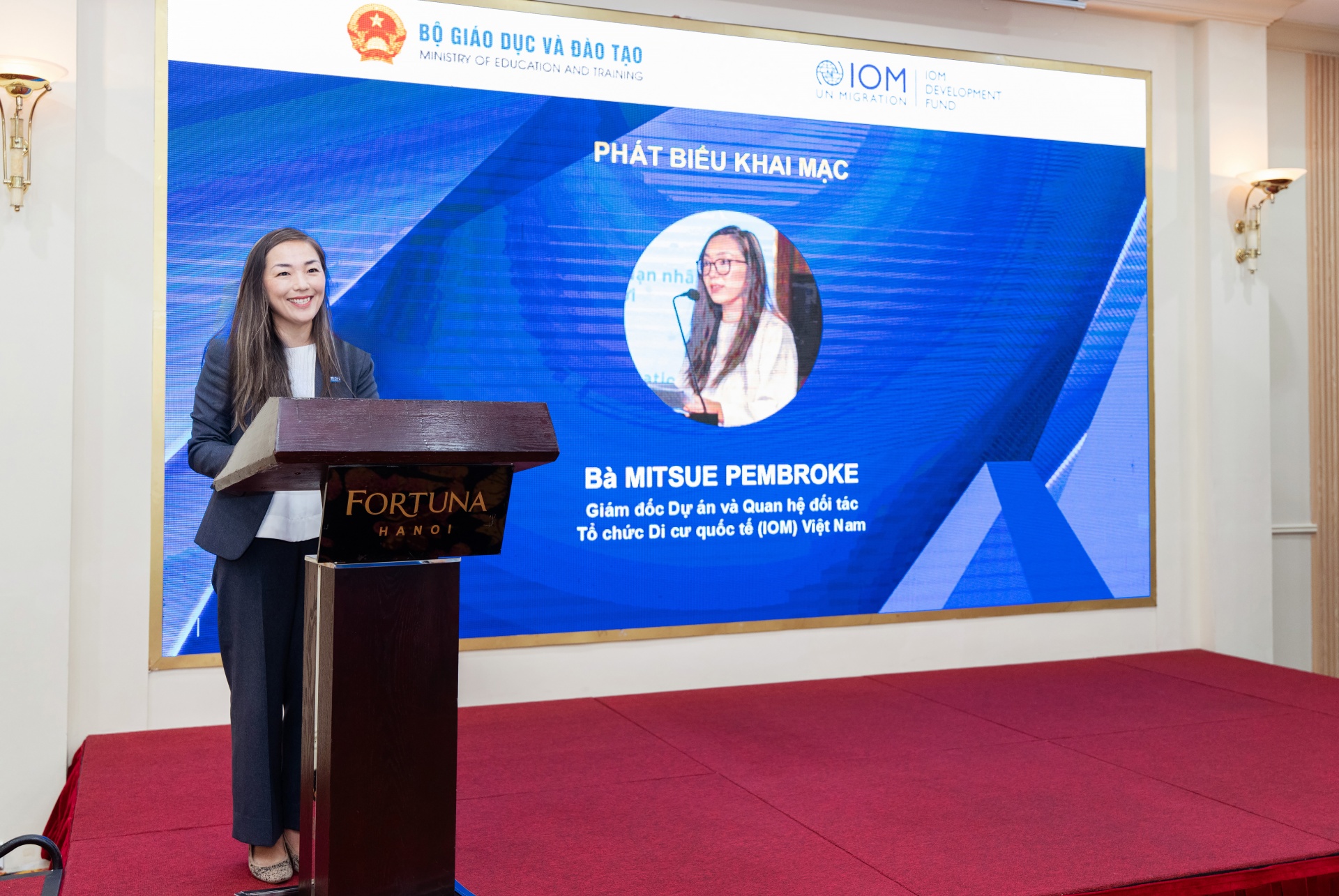 |
| Mitsue Pembroke, Officer-in-Charge at IOM Vietnam, speaks at the workshop on qualifications recognition and labour mobility. Photo: IOM |
The AQRF provides a common regional framework for comparing qualifications across ASEAN member states. By building mutual understanding and trust in national education and skills systems, it supports the mobility of students and workers while encouraging lifelong learning through formal, non-formal, and informal pathways.
Endorsed by the AQRF Committee in October 2025 and published by MoET in December 2025, Vietnam's AQRF Referencing Report marks an important step towards making Vietnamese qualifications more transparent, comparable, and trusted across ASEAN and beyond. It is expected to support qualifications recognition, labour mobility, and safe, regular, and skills-based migration pathways.
Vu Thi Tu Anh, deputy director-general of the Department of Vocational and Continuing Education, said the endorsement of the report provided an important foundation for enhancing the transparency, comparability, and recognition of qualifications.
“However, referencing alone does not automatically result in recognition. For recognition to be meaningful and effective, we must continue strengthening our education and training system, including curricula, learning outcomes, assessment approaches, quality assurance arrangements, and consistency in the recognition of qualifications,” Anh said.
Participants discussed Vietnam's post-referencing implementation plan, exchanged regional experiences, and identified recommendations for benchmarking Vietnam's education and training system against those of other countries in the region. They also highlighted the need for stronger coordination among education and training, labour migration, and industry stakeholders.
The workshop examined how Vietnam could build on AQRF referencing by benchmarking competency assessment and certification systems against the ASEAN Guiding Principles, helping move from greater transparency and comparability towards stronger trust in skills standards, assessment, certification, and quality assurance.
Thailand, for example, has aligned its national quality assurance and workforce verification systems to enable employers and authorities to better assess the competencies and skills of migrant professionals.
Thunyamart Limugsorn, a Thai expert, said the experience highlights the importance of linking qualification recognition with competency assessment and certification to support skilled labour mobility.
“Effective recognition requires not only transparent qualifications frameworks, but also trusted assessment and certification systems that allow employers to understand and value workers’ competencies,” she said.
Meanwhile, the Philippines has used the AQRF to strengthen trust in the skills and educational qualifications of its workers and graduates, making them more readily recognised when seeking opportunities elsewhere in ASEAN.
These experiences demonstrate how the AQRF can strengthen institutional coordination, improve quality assurance and certification systems, boost lifelong learning, and better connect qualifications and skills with labour mobility.
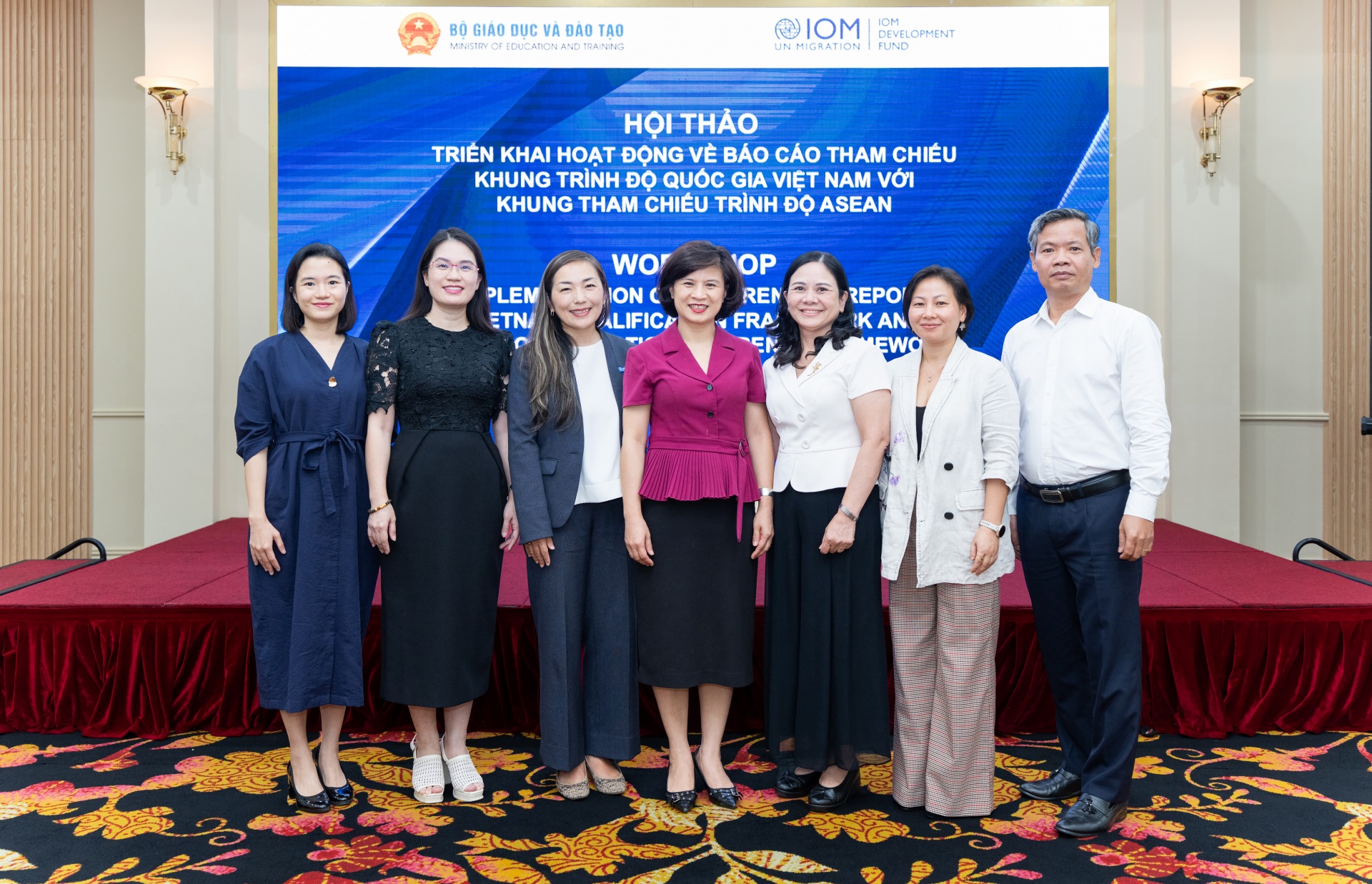 |
| Photo: IOM |
For Vietnam, greater recognition of workers' qualifications and skills in destination countries could improve job matching, labour migration outcomes, and worker protection. Recognition of prior learning (RPL) acquired overseas could also help returning migrant workers reintegrate into the domestic labour market, access suitable employment, and continue their learning pathways.
“Workers’ skills and qualifications must be visible, transferable, and matched with labour market needs if labour mobility is to deliver meaningful benefits,” Mitsue Pembroke, officer-in-charge at IOM Vietnam said.
“Effectively referencing Vietnam’s Qualifications Framework with the AQRF can help Vietnamese migrant workers access decent jobs that better reflect their competencies and offer equal benefits, while reinforcing the government's efforts to develop high-quality human resources that meet industry requirements both at home and abroad,” she added.
The issue is particularly important as Vietnam seeks to improve the quality and international competitiveness of its workforce. The country has a labour force of more than 53 million people, while fewer than one-third hold formal training certificates.
Vietnam also sends approximately 150,000 workers overseas under contract each year and aims to increase the proportion of skilled workers among them to 40 per cent by 2030.
More portable and widely recognised qualifications could help Vietnamese workers demonstrate their competencies, access better-matched jobs, and meet certification requirements in destination markets, while RPL could help returning workers transfer skills gained overseas to employment opportunities in Vietnam.
IOM will continue working with the MoET, the Ministry of Home Affairs, other government agencies, education and training institutions, employers, and development partners to translate Vietnam's AQRF referencing into practical action and support regular, fair, and skills-based labour mobility within ASEAN and beyond.






What the stars mean:
★ Poor ★ ★ Promising ★★★ Good ★★★★ Very good ★★★★★ Exceptional
 Tag:
Tag:Related Contents



Latest News



More News
- Regional cooperation crucial as Southeast Asia’s AI boom accelerates (August 13, 2026 | 17:50)
- Vietnam wins first-ever Super Gold Award at World Youth Economic Forum (August 04, 2026 | 17:12)
- MoF minister outlines priorities for international integration to support growth (August 03, 2026 | 23:24)
- AI adoption reshapes marketing across Southeast Asia (July 16, 2026 | 16:37)
- Vietnam leads region in using AI in academia (July 15, 2026 | 15:51)
- ADB maintains Vietnam's growth outlook amid Southeast Asia downgrades (July 10, 2026 | 14:48)
- ASEAN steps up digital push for agriculture MSMEs to boost competitiveness (July 08, 2026 | 12:00)
- Slovak Embassy directs applicants to VFS after alternate provider suspension (July 06, 2026 | 16:22)
- CPHI South East Asia 2026 to drive pharma partnerships across ASEAN (July 05, 2026 | 18:22)
- Vietnam, Singapore aim to shape ASEAN's future through AI and green growth (June 26, 2026 | 16:26)










 Mobile Version