
ASEAN steps up digital push for agriculture MSMEs to boost competitiveness

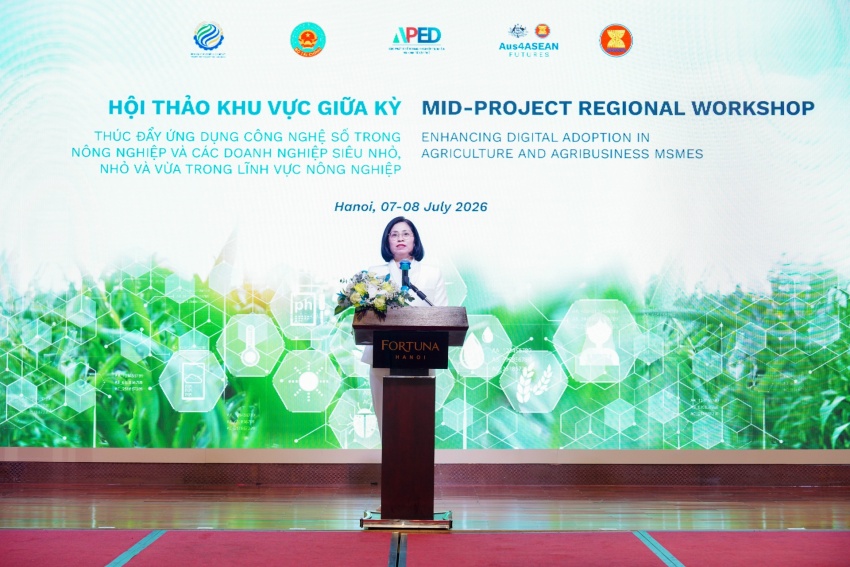 |
| Trinh Thi Huong, deputy director-general of APED |
Digital transformation is creating new opportunities for agriculture micro, small and medium-sized enterprises (MSMEs) across the region to improve productivity and access wider markets. However, policymakers warned that many businesses, particularly those in rural areas, continue to face significant barriers to adopting digital technologies that can enhance their competitiveness.
These challenges were at the centre of the Mid-Project Regional Workshop on 'Enhancing Digital Adoption in Agriculture and Agribusiness MSMEs', held in Hanoi on July 7–8.
The workshop was jointly organised by the Agency for Private Enterprise and Cooperative Development (APED) under Vietnam's Ministry of Finance and the Ministry of Industry and Commerce of Laos. It brought together government officials, MSME promotion agencies, business associations and business support organisations from Cambodia, Laos, Myanmar, Timor-Leste and Vietnam, alongside representatives from the ASEAN Secretariat, the Australia for ASEAN Futures (Aus4ASEAN Futures) initiative and international development partners.
"MSMEs are the backbone of ASEAN's economies," said Trinh Thi Huong, deputy director-general of APED. "They play a vital role in economic growth, job creation, and rural livelihoods. Agriculture and agribusiness MSMEs are particularly important in strengthening food security, reducing poverty, and promoting inclusive development across the region."
Despite their economic contribution, many of these businesses continue to struggle with limited market access and participation in regional and global value chains.
"Many of these enterprises continue to face challenges in participating effectively in markets and integrating into regional and global value chains. These challenges include informality, limited access to market information, inadequate infrastructure, low levels of digital literacy, and insufficient access to finance, training, and business development services," Huong said.
She said digital transformation offers a practical solution to many of these constraints. By adopting digital technologies, agriculture MSMEs can improve productivity, strengthen business management, expand market opportunities, improve supply chain connectivity and become more resilient in an increasingly competitive business environment.
"However, we recognise that digital adoption remains uneven, particularly among enterprises in rural and remote areas. Addressing these gaps requires stronger regional cooperation, practical and evidence-based policy recommendations, and continued exchange of experiences and good practices among ASEAN Member States," she said.
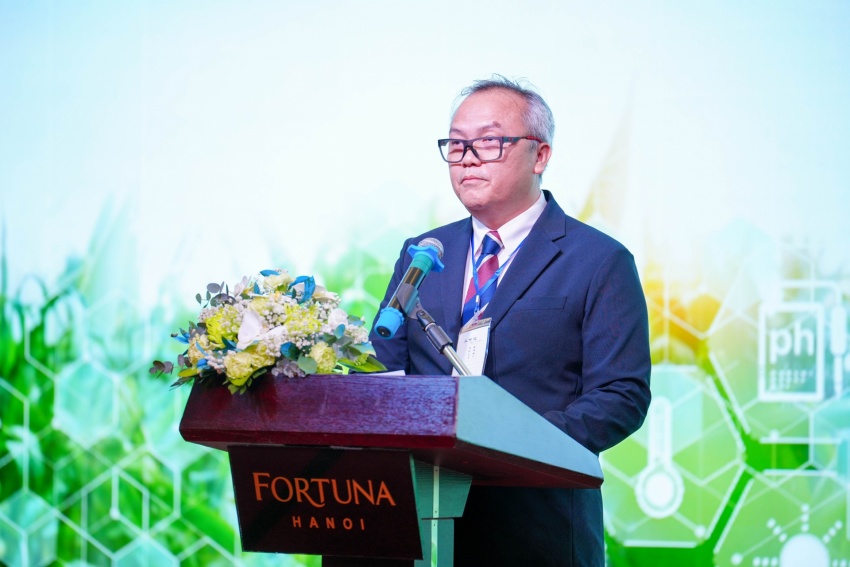 |
| Vithoune Sithimolada, deputy director-general of Laos' Department of MSME Promotion |
Vithoune Sithimolada, deputy director-general of the Department of MSME Promotion under the Ministry of Industry and Commerce of Laos, stressed that agriculture remains the economic foundation of many ASEAN countries, where smallholder farmers, cooperatives and rural enterprises continue to drive local growth.
He pointed to businesses processing coffee, exporting tea and cocoa, and cultivating traditional agricultural products as examples of enterprises creating substantial value. However, many are struggling to keep pace with the digital economy.
The project's Comprehensive Assessment found that while agriculture MSMEs across Cambodia, Laos, Myanmar, Timor-Leste and Vietnam are increasingly using digital tools, most have yet to integrate digital technologies into their core business operations. "Our MSMEs are digitally active, but they are not digitally integrated," Sithimolada said.
Many businesses already use social media platforms and messaging applications to communicate with customers and facilitate sales. However, he argued that this represents only the first stage of digitalisation.
"True digital integration means using tech to track inventory, verify product origins for export, get digital loans, and join the formal economy through a national business registration database. That deeper integration is what actually cuts costs. It is what boosts productivity. And it is what we are currently missing."
He warned that digital transformation has become essential rather than optional for businesses seeking to compete in international markets. "Going digital is no longer a luxury or a convenience. It is a baseline requirement for survival and export competitiveness," he said.
Although ASEAN countries have made progress in areas such as cross-border digital payments, e-commerce platforms and trade infrastructure, Sithimolada cautioned that many of these advances have yet to reach rural communities where agriculture MSMEs operate.
"If we do not deliberately build systems that are simple, accessible, and designed for them, we will leave them behind," he said, adding that women entrepreneurs, ethnic communities and farmers in remote areas stand to benefit the most from more inclusive digital ecosystems.
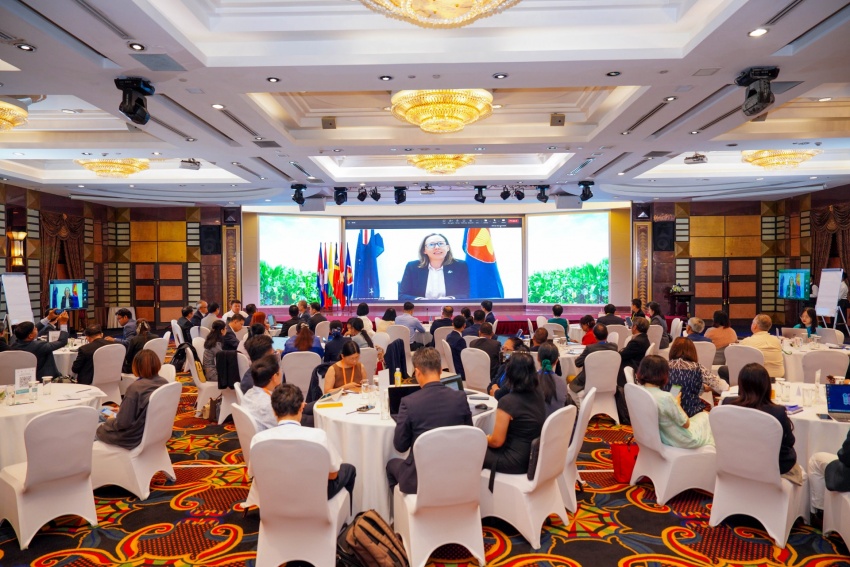 |
The workshop is part of a project led by Laos to boost digital adoption among agricultural and agribusiness MSMEs, supported by the ASEAN Secretariat and Aus4ASEAN Futures.
Developed under the Initiative for ASEAN Integration Work Plan IV for the 2021–2025 period, the project aims to accelerate digital transformation among agricultural MSMEs in Cambodia, Laos, Myanmar, Timor-Leste, and Vietnam. It also supports the ASEAN Strategic Action Plan for SME Development 2026–2030, with a focus on digital transformation, technological innovation, business resilience, and MSME integration into regional and global value chains
Over the two-day workshop, participants reviewed findings from the project's Comprehensive Assessment, validated stakeholder engagement plans and discussed policy recommendations aimed at strengthening digital adoption across the five focus countries. Delegates also identified priority partnerships, agreed on revisions to project outputs, and discussed capacity-building and training activities for the next phase of implementation.
Beyond reviewing research findings, discussions focused on shifting from raising awareness of digital technologies to enabling businesses to adopt them in practical and sustainable ways. Particular attention was given to women-led enterprises, ethnic minority communities, people with disabilities and MSMEs operating in rural and remote areas, with policymakers emphasising that inclusive digital transformation will be essential to ensuring agriculture businesses across ASEAN can fully participate in the region's growing digital economy.
 | Vietnam, Singapore aim to shape ASEAN's future through AI and green growth Business executives, policymakers and experts from Vietnam and Singapore gathered on June 26-27 for the 2026 Vietnam-Singapore Business Forum, where discussions centred on how companies can balance profitability with long-term sustainability. |
 | Vietnamese groups expand their footprint across Southeast Asia Vietnamese businesses are actively extending their reach into neighbouring countries as part of their regional expansion strategies. |
 | Strong fundamentals to keep Vietnam at the top of ASEAN growth rankings Maybank forecasts Vietnam’s GDP growth of 7.8 per cent in 2026 and 7.9 per cent in 2027, making it the fastest-growing major economy in ASEAN. |
What the stars mean:
★ Poor ★ ★ Promising ★★★ Good ★★★★ Very good ★★★★★ Exceptional
 Tag:
Tag:Related Contents







Latest News



More News
- MoF minister outlines priorities for international integration to support growth (August 03, 2026 | 23:24)
- AI adoption reshapes marketing across Southeast Asia (July 16, 2026 | 16:37)
- Vietnam leads region in using AI in academia (July 15, 2026 | 15:51)
- ADB maintains Vietnam's growth outlook amid Southeast Asia downgrades (July 10, 2026 | 14:48)
- Slovak Embassy directs applicants to VFS after alternate provider suspension (July 06, 2026 | 16:22)
- CPHI South East Asia 2026 to drive pharma partnerships across ASEAN (July 05, 2026 | 18:22)
- Vietnam, Singapore aim to shape ASEAN's future through AI and green growth (June 26, 2026 | 16:26)
- Skellefteå: A magnet for global talent (June 25, 2026 | 15:35)
- SunAsia Energy, VinEnergo launch Solar on Water portfolio in the Philippines (June 24, 2026 | 08:37)
- Southeast Asia needs to tackle energy security vulnerabilities amid Strait of Hormuz crisis (June 18, 2026 | 15:51)








 Mobile Version