

Citi report: Corporates prioritise liquidity as supply chains mature

 |
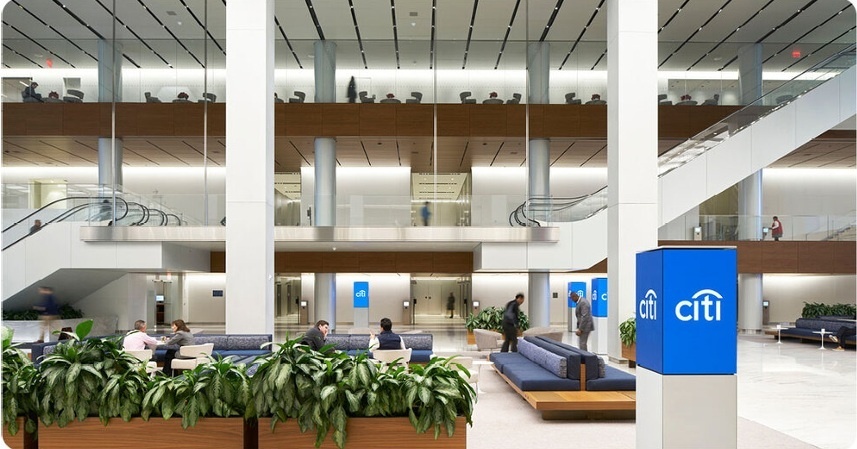
| Photo: Citi |
Released on September 17, the report titled 'The World Rewired: Shifts in Global Trade and Foreign Direct Investment' finds that corporates are placing greater emphasis on working capital, liquidity, and cash visibility while trade routes and sourcing relationships continue to change.
According to the data, the conflict in the Middle East as well as elevated oil and refined product prices have kept Citi's Global Supply Chain Pressure Index at its highest sustained level since 2021-2022. Against that backdrop, corporate treasurers are increasingly focused on extracting the cash that is embedded in their supply chains, creating a liquidity advantage that actively strengthens resilience-building.
72 per cent of global corporates identify releasing trapped liquidity as their top strategic priority for the next 12 months, up from 66 per cent at the start of 2026. For 64 per cent of respondents, discovering how much liquidity is trapped in their supply chains has become a key driver of working capital strategy, compared to 55 per cent earlier in the year.
"For several years the conversation was dominated by resilience through diversification," said Adoniro Cestari, global head of Trade and Working Capital Solutions at Citi Services. "Companies diversified their supplier base and redesigned sourcing strategies to strengthen their operations. Now treasury teams are turning to a related question: where is our cash sitting, and how quickly can it be put to work?"
Citi's payment and receivable flows data show global trade continuing to grow despite disruption. Overall payment flows rose 40 per cent on-year in the first half of 2026, with growth recorded across every major region that Citi tracks.
Growth in technology payments led the way at a time when the global AI infrastructure buildout continues to reshape capital flows. Globally, these flows grew by 50 per cent on-year, with Asia and Latin America flows increasing by 60 per cent and 58 per cent, respectively. Domestic US flows increased by 37 per cent while cross-border flows from Taiwan to Singapore grew 90 per cent and flows from the US to Taiwan increased by 36 per cent. These domestic and cross-border flows were responsible for a significant portion of the technology sector’s overall growth.
Trade routes are shifting alongside these payment flows. China's vehicle and parts exports illustrate the pattern clearly: North America once absorbed roughly a third of these shipments, but its share has decreased to about 13 per cent by mid-2026. Africa, by contrast, has emerged as one of the fastest-growing destinations, nearly doubling its share from around 8 per cent in 2022 to above 15 per cent today, while Latin America has become the largest overall gainer in the category.
A similar reorientation is underway in agriculture. Brazil and Argentina have helped Latin America cement itself as China's dominant agricultural supplier, capturing between a third and nearly half of total import share in recent quarters, respectively.
Cost pressures continue to be a key influence on attitudes towards working capital management. Globally, 68 per cent of corporates said increasing input costs was a key factor in shaping their working capital decisions and 59 per cent said elevated interest rates were an influence on their attitudes towards working capital management. Combined, these factors highlight how elevated costs now represent structural rather than cyclical challenges.
Tariff exposure follows a similarly uneven pattern. It is a leading motivator for relocating supply chains among corporates in Asia-Pacific (46 per cent) and Latin America (44 per cent), yet it barely registers in North America, cited by just 2 per cent of respondents – a reminder of how differently this environment is being felt across regions.
Interest in digital tools to support working capital performance is also rising. Nearly half of corporates said they are evaluating distributed ledger technology and blockchain solutions, and the share using AI in trade operations has nearly tripled, from 16 per cent in 2024 to 45 per cent today.
"There's a tendency to read every shock as evidence that globalisation is going into reverse," Cestari said. "The report tells a more nuanced story. Trade, investment and payments flows are still growing, just through different markets and corridors than they did a decade ago. Companies are adapting to that reality while looking for ways to operate more efficiently amid ongoing uncertainty and make better use of their liquidity."
Taken together, the findings suggest that the next stage of supply chain decision-making will be shaped as much by treasury priorities as operational ones, with companies strengthening cash flow and doubling down on resilience.
The report draws on Citi's proprietary payments network data, spanning tens of thousands of corporate clients across every major region, together with Citi's own mid-year survey of more than 700 large corporates and 150 suppliers alongside economic analysis from Citi Research.
 | Citi raises Vietnam’s 2026 GDP forecast to 8 per cent Citi Research has raised its forecast for Vietnam’s full-year GDP growth in 2026 to around 8 per cent, according to its latest report. |
 | Citi releases 2025 Sustainability Report Citi has published its 2025 Sustainability Report, outlining progress on the bank’s longstanding sustainability goals and commitments. |
 | Citi Foundation launches fourth Global Innovation Challenge The Citi Foundation has launched its fourth Global Innovation Challenge to help equip young people with skills for an economy increasingly shaped by AI. |
What the stars mean:
★ Poor ★ ★ Promising ★★★ Good ★★★★ Very good ★★★★★ Exceptional
 Tag:
Tag:Related Contents

More News
- Hanoi to host AAAP 2026 animal science congress in October (September 15, 2026 | 14:17)
- Vietnam advances ASEAN qualifications framework (August 21, 2026 | 17:23)
- Regional cooperation crucial as Southeast Asia’s AI boom accelerates (August 13, 2026 | 17:50)
- Vietnam wins first-ever Super Gold Award at World Youth Economic Forum (August 04, 2026 | 17:12)
- MoF minister outlines priorities for international integration to support growth (August 03, 2026 | 23:24)
- AI adoption reshapes marketing across Southeast Asia (July 16, 2026 | 16:37)
- Vietnam leads region in using AI in academia (July 15, 2026 | 15:51)
- ADB maintains Vietnam's growth outlook amid Southeast Asia downgrades (July 10, 2026 | 14:48)
- ASEAN steps up digital push for agriculture MSMEs to boost competitiveness (July 08, 2026 | 12:00)
- Slovak Embassy directs applicants to VFS after alternate provider suspension (July 06, 2026 | 16:22)


Latest News







 Mobile Version