
Vietnam records fastest automotive sales growth among ASEAN-6 markets

 |
| Photo courtesy of PwC |
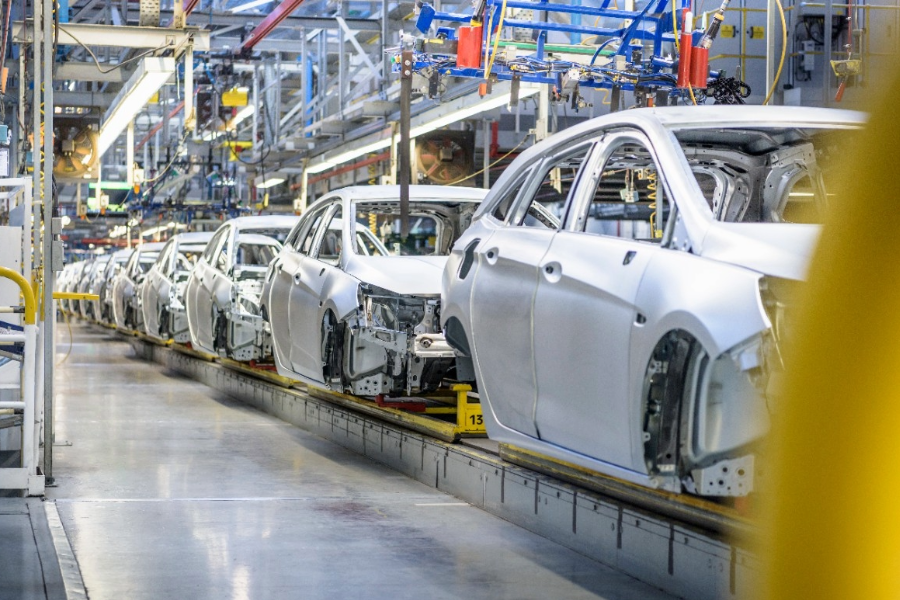
PwC on September 24 released the overview of the ASEAN-6 automotive market: 6th market snapshot, which looks at automotive sales, electrification, competitive dynamics, and production across Indonesia, Malaysia, Thailand, Vietnam, the Philippines, and Singapore.
The report shows that regional growth remains resilient but is concentrating in leading markets. Across ASEAN-6, total industry volume increased by 11.1 per cent on-year in H1/2026, with the strongest growth recorded in Vietnam (31.1 per cent). The regional analysis also points to widening differences between individual markets, reflecting variations in purchasing power, consumer preferences, infrastructure, regulation, and domestic automotive capabilities.
Mohammad Mudasser, partner of deals – transformation at PwC Vietnam, said, “Vietnam is not just growing fast – it is growing up. A few years ago, buying an EV was a statement. Now it is a practical choice, and that changes everything. The winners will not be the ones who sold the most cars this year. They will be the ones who built the charging networks, the financing options, and the aftersales trust that keep customers coming back. That is the harder job, and it is the one that actually matters.”
ASEAN-6 automotive sales reached approximately 1.76 million vehicles in H1 2026. Growth momentum varied sharply by market: Vietnam led with 31.1 per cent, followed by Indonesia at 15.9 per cent, and Thailand at 15.1 per cent. By contrast, growth was significantly slower in Singapore (6.9 per cent) and Malaysia (2.6 per cent), while the Philippines contracted by 6.1 per cent. In Vietnam, growth was supported by robust GDP momentum, driving 83 per cent rise in hybrid sales and 23 per cent growth in imported-vehicle demand.
This divergence reinforces that ASEAN can no longer be approached as one uniform automotive market. Affordability, product preferences, infrastructure, regulation, and consumer behaviour are creating distinct national trajectories. Regional ambition therefore needs to translate into market-specific strategies on products, pricing, production, distribution, and aftersales.
Across ASEAN-6, electrified vehicles, including battery-electric and hybrid vehicles, accounted for 32 per cent of vehicle sales in H1 2026, more than double the 14 per cent recorded in 2024. However, adoption remains highly uneven across the region, ranging from 86 per cent in Singapore to 13 per cent in both Malaysia and the Philippines. At the same time, the market's growth engine is gradually shifting away from traditional internal combustion engine vehicles.
Vietnam's transition is being shaped not only by battery-electric vehicles, but also by growing demand for hybrids. Hybrid sales increased by 83 per cent in the first six months of 2026, highlighting the role of hybrids as a practical transition technology for consumers seeking improved fuel efficiency and lower operating costs.
Vietnam's transition also differs from many ASEAN markets in that electrification remains highly concentrated. VinFast delivered approximately 116,000 vehicles in the first half of 2026 and captured around 40 per cent market share during the period. This has helped accelerate EV adoption but also means the next phase of market development will depend on greater participation from more diverse manufacturers, technologies, and business models.
The competitive landscape is shifting alongside EV adoption. Within the ASEAN-6 EV segment, VinFast and Chinese brands have overtaken the sales volumes of traditional Japanese, US, European, and South Korean manufacturers. Chinese brands accounted for 47 per cent of regional EV sales, while VinFast ranked first among individual EV brands, followed by BYD and Toyota.
Electrification is reshaping competition in Vietnam's automotive market. Growth in H1/2026 was supported by three key factors: fleet demand, rapid hybrid adoption, and more accessible vehicle models. Hybrid sales increased by 83 per cent, while imported-vehicle demand rose by 23 per cent. More affordable models such as the VinFast VF3 and VF5 expanded the entry-level SUV segment, while the fleet-oriented Limo Green became the country's top-selling model.
China also became Vietnam's fastest-growing major source of vehicle imports by value, reflecting the growing presence of new brands and offerings. Tesla’s recent establishment of a local legal entity in September 2026 adds a competitive signal, although the company has yet to announce its sales launch or operating plans.
For electrification scales, the next phase of competition will not be determined by vehicle technology and specifications alone. Charging access, financing, insurance, aftersales support, battery services, total cost of ownership, and residual value are becoming part of the product proposition itself.
Markets across ASEAN-6 are already moving in this direction. Indonesia aims to build a fully integrated EV battery ecosystem by 2027–2028, attracting major original equipment manufacturer and battery investment. Partnerships in Thailand are linking electric vehicles with residential solar and energy storage. In Vietnam, VinFast’s ecosystem reportedly includes approximately 150,000 charging ports across the country, while other providers are investing in high-power charging networks.
“For the automotive sector, the opportunity is not simply more roads or more charging stations. The benefits will depend on coverage, compatibility, grid capacity, reliability, and viable charging economics. As Vietnam’s market matures, competitive advantage will increasingly go to businesses that can deliver a reliable and accessible ownership experience across brands, locations, and the full vehicle lifecycle,” Mudasser said.
 | Vietnam second fastest growing automotive market in ASEAN‑6 Vietnam’s automotive market ranked as the second‑fastest growing market in ASEAN‑6, according to a report by PwC Vietnam on April 20. |
 | VinFast deliveres over 58,000 EVs globally in Q1 VinFast delivered 58,577 electric vehicles globally in the first quarter, a 61 per cent increase on-year. |
 | Vietnam's auto sector to benefit from Hyundai, KOICA training deal Hyundai Motor Group has signed a trilateral agreement to develop a skilled technical workforce for Vietnam's automotive sector. |
What the stars mean:
★ Poor ★ ★ Promising ★★★ Good ★★★★ Very good ★★★★★ Exceptional
 Tag:
Tag:Related Contents





Latest News
More News
- Citi report: Corporates prioritise liquidity as supply chains mature (September 18, 2026 | 10:34)
- Hanoi to host AAAP 2026 animal science congress in October (September 15, 2026 | 14:17)
- Vietnam advances ASEAN qualifications framework (August 21, 2026 | 17:23)
- Regional cooperation crucial as Southeast Asia’s AI boom accelerates (August 13, 2026 | 17:50)
- Vietnam wins first-ever Super Gold Award at World Youth Economic Forum (August 04, 2026 | 17:12)
- MoF minister outlines priorities for international integration to support growth (August 03, 2026 | 23:24)
- AI adoption reshapes marketing across Southeast Asia (July 16, 2026 | 16:37)
- Vietnam leads region in using AI in academia (July 15, 2026 | 15:51)
- ADB maintains Vietnam's growth outlook amid Southeast Asia downgrades (July 10, 2026 | 14:48)
- ASEAN steps up digital push for agriculture MSMEs to boost competitiveness (July 08, 2026 | 12:00)








 Mobile Version