
Vietnam, Singapore aim to shape ASEAN's future through AI and green growth

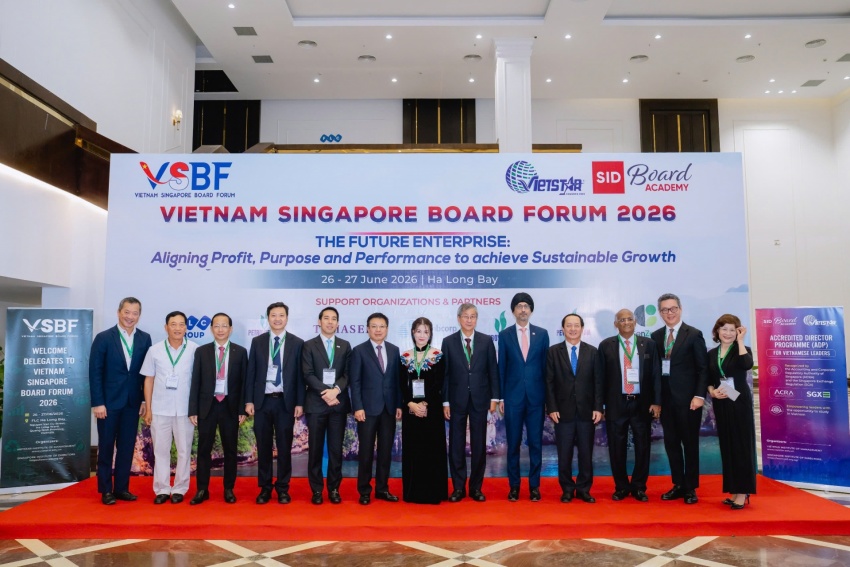 |
This year's forum focused on three strategic priorities: unlocking investment capital, developing carbon markets, and accelerating the adoption of AI.
Together, these areas were presented as essential pillars for businesses seeking to remain competitive while navigating economic volatility and the global green transition.
Pham Thi Thu Hang, CEO of VIETSTAR Institute of Management and Consulting, said the forum was designed to move beyond discussions of sustainability and provide businesses with practical solutions that can be implemented immediately.
"Our objective is to equip enterprises with practical strategies in three core areas: building new business models, advancing sustainable finance and carbon market capabilities through real-world experiences of leading corporations, and accelerating green energy and AI adoption for sustainable growth," she said. "These practical lessons will become strategic leverage for shaping the enterprises of the future."
Singapore reaffirms confidence in Vietnam
Addressing the forum, Singapore's Ambassador to Vietnam, Rajpal Singh, declared confidence in Vietnam's long-term economic prospects despite increasing geopolitical and economic uncertainties. He noted that Vietnam had demonstrated remarkable resilience against external shocks and continued to pursue ambitious development targets, including high GDP growth. Singapore, he said, remained committed to supporting Vietnam's development through mutually beneficial cooperation.
The ambassador identified three priority areas where bilateral collaboration could be strengthened. The first is reinforcing economic resilience. He noted that the recent upgrade of bilateral relations reflects the shared commitment of both countries to free trade, investment and sustainable development.
During the recent state visit between the two countries, Vietnam and Singapore also adopted a joint statement on supply chain resilience, committing to cooperate in maintaining open trade, energy flows and supply chains despite rising protectionism.
"This is the first such statement Singapore has concluded with an ASEAN country," he said, describing it as an important signal of the two countries' shared vision for regional economic growth.
The second priority is accelerating green growth by leveraging each country's comparative advantages. While Vietnam possesses abundant renewable energy resources, Singapore contributes financial expertise and serves as a major regional investment hub.
Ambassador Singh highlighted carbon trading as one of the most promising areas for future cooperation, noting that the two governments have already signed an implementation agreement on carbon credits and are working towards making the market more accessible.
The third area focuses on emerging industries, particularly digital technologies and AI. As Vietnam seeks to increase the digital economy's contribution to 20 per cent of GDP by 2030, Singapore hopes to remain a key partner in technology investment and innovation.
Singaporean technology companies already maintain a significant presence in Vietnam, while the Vietnam-Singapore Industrial Parks are being upgraded into the next-generation "VSIP 2.0" model, featuring smarter and more sustainable industrial ecosystems.
Ambassador Singh also proposed expanding cooperation under the Triple Helix model, bringing together governments, universities and industry to accelerate technology development and commercialisation.
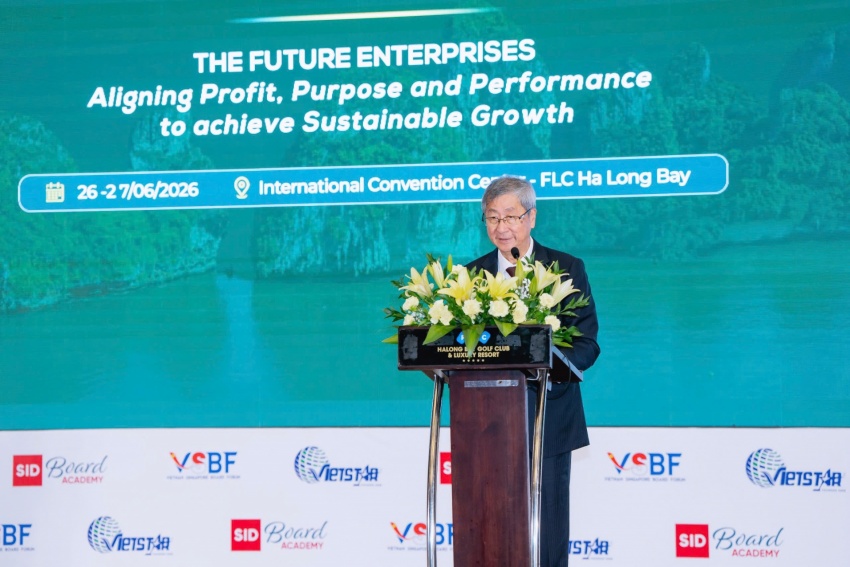 |
| Former Singapore Cabinet Minister and former Temasek Holdings chairman Lim Boon Heng |
Technology and innovation reshape business competitiveness
Former Vietnamese Minister of Science and Technology Huynh Thanh Dat said businesses had entered a new stage where sustainable development commitments must be translated into concrete corporate strategies, governance models and business operations.
He argued that competitiveness is increasingly determined not by traditional resources such as capital or scale, but by a company's ability to innovate, master technology and adapt to rapid changes.
According to Dat, Vietnam's experience highlights three major trends that will shape the future enterprise.
The first is the convergence of digital and green transformation. Rather than separate processes, digitalisation and decarbonisation increasingly reinforce one another. Digital technologies generate data, connectivity and better decision-making, while green transformation improves resource efficiency, reduces emissions and encourages sustainable production models. Together, they enhance productivity, operational efficiency and business resilience.
Advanced technologies such as big data, cloud computing, the Internet of Things and intelligent management platforms are enabling enterprises to transition towards knowledge- and innovation-driven growth models, he said.
Secondly, AI is emerging as the strategic core of future businesses. If data represents the key resource of the digital economy, AI is the tool that converts data into knowledge, forecasting capability and competitive advantage.
Beyond improving productivity, AI can help companies strengthen environmental, social and governance (ESG) performance by monitoring emissions across supply chains, measuring sustainability indicators and assessing the environmental and social impacts of business decisions. However, Dat stressed that AI deployment must remain responsible, secure and human-centred.
Thirdly, innovation is creating new opportunities for Vietnam-Singapore cooperation. Since the two countries upgraded bilateral ties to a Comprehensive Strategic Partnership, cooperation in science, technology, innovation and digital transformation has expanded significantly.
Singapore remains one of Asia's leading innovation hubs, while Vietnam offers a young and dynamic workforce capable of supporting rapid technological development. Combining these complementary strengths could generate substantial long-term value for both economies, he said.
Building ASEAN's future together
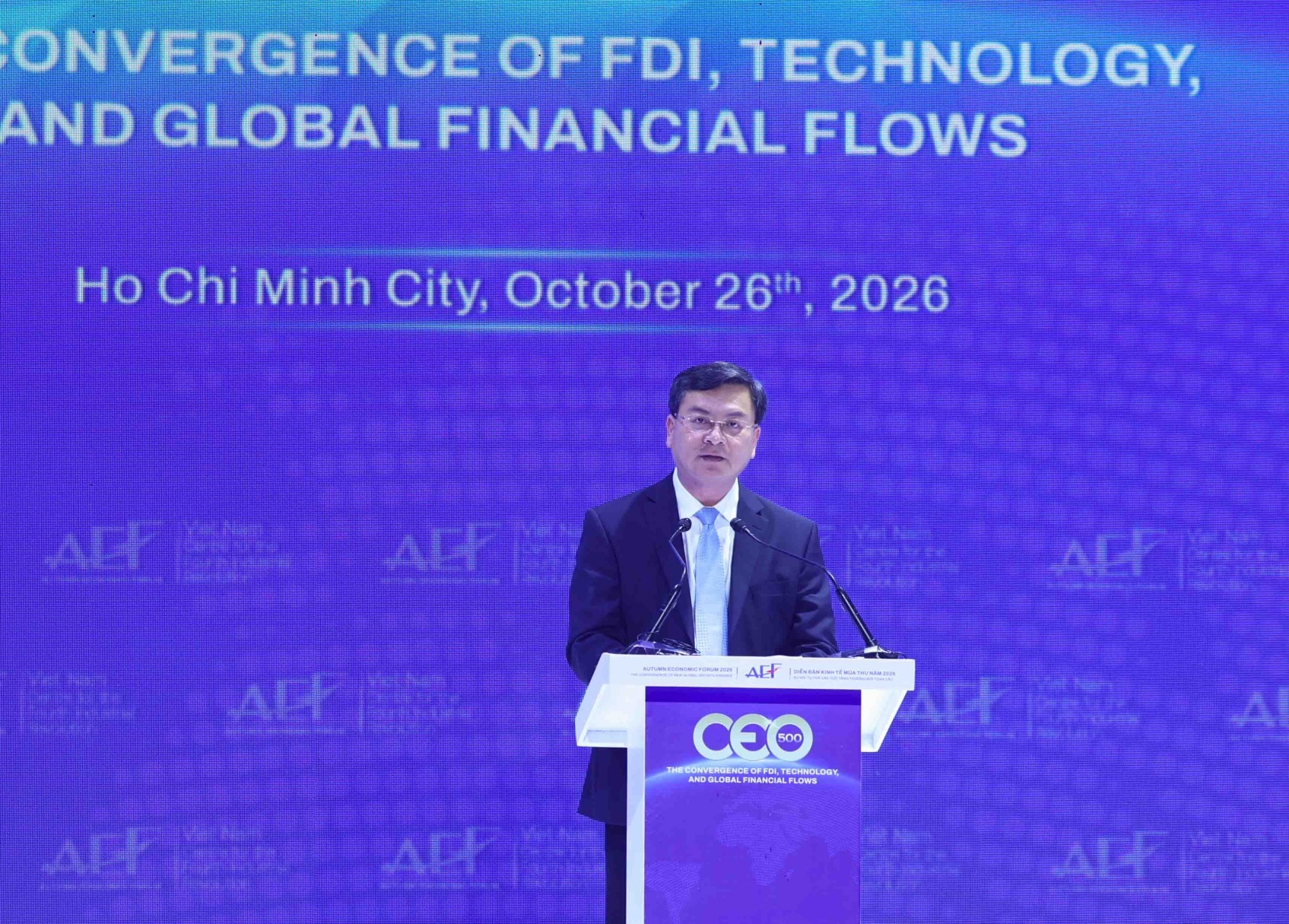
Former Singapore Cabinet Minister and former Temasek Holdings chairman Lim Boon Heng said ASEAN's centrality presents a major strategic advantage, with Vietnam and Singapore well positioned to lead the region's innovation agenda.
He proposed three priorities for deeper cooperation. The first is harmonising regulatory standards, particularly in ESG reporting, green investment frameworks and cross-border carbon credit markets. Although regulatory alignment remains challenging, closer collaboration between governments and businesses could create a more integrated regional market built upon shared values.
Secondly, he called for VSBF to evolve into a platform that nurtures a new generation of ASEAN business leaders committed to innovation, sustainability and regional cooperation.
Finally, he stressed the importance of investing in talent development. Vietnam's young workforce, combined with Singapore's strengths in technology and AI, could provide the human capital needed to operate the enterprises of the future.
"Without this talent, we will not succeed," he said.
Reflecting on the recent elevation of Vietnam-Singapore relations to a Comprehensive Strategic Partnership, Lim said both countries have demonstrated a shared determination to lead Southeast Asia's transition towards a greener, more innovative and digitally connected future.
"In a fractured and fragile world, sustainable development and resilience cannot be achieved alone," he said. "They require courage, trust and deep cooperation. As businesses from both countries work together, they will not simply adapt to the future – they will help shape the future of enterprise and cooperation across ASEAN."
What the stars mean:
★ Poor ★ ★ Promising ★★★ Good ★★★★ Very good ★★★★★ Exceptional
 Tag:
Tag:Related Contents




Latest News



More News
- Vietnam advances ASEAN qualifications framework (August 21, 2026 | 17:23)
- Regional cooperation crucial as Southeast Asia’s AI boom accelerates (August 13, 2026 | 17:50)
- Vietnam wins first-ever Super Gold Award at World Youth Economic Forum (August 04, 2026 | 17:12)
- MoF minister outlines priorities for international integration to support growth (August 03, 2026 | 23:24)
- AI adoption reshapes marketing across Southeast Asia (July 16, 2026 | 16:37)
- Vietnam leads region in using AI in academia (July 15, 2026 | 15:51)
- ADB maintains Vietnam's growth outlook amid Southeast Asia downgrades (July 10, 2026 | 14:48)
- ASEAN steps up digital push for agriculture MSMEs to boost competitiveness (July 08, 2026 | 12:00)
- Slovak Embassy directs applicants to VFS after alternate provider suspension (July 06, 2026 | 16:22)
- CPHI South East Asia 2026 to drive pharma partnerships across ASEAN (July 05, 2026 | 18:22)









 Mobile Version