
ADB maintains Vietnam's growth outlook amid Southeast Asia downgrades

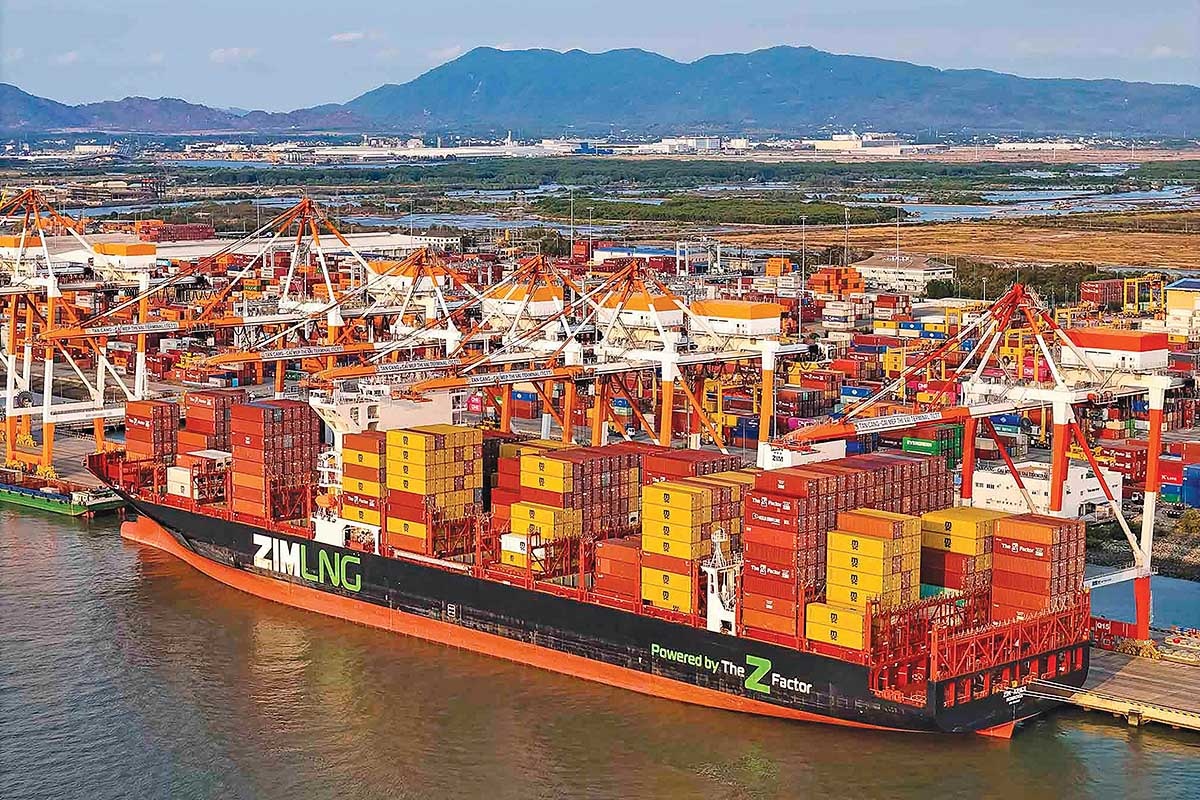 |
| Photo: Le Toan |
According to the Asian Development Outlook report released on July 9, the region's growth forecast was downgraded to 4.6 per cent for 2026, a modest 0.1 percentage point reduction from April projections, due to weaker external demand and higher input costs.
Inflation forecasts for developing Southeast Asia are revised up from 3.2 per cent in April to 3.9 per cent in 2026 and from 2.8 per cent to 2.9 per cent in 2027. The upward revisions reflect higher global energy and food prices linked to the Middle East crisis, as well as exchange rate pressures that have raised import costs across the subregion.
Among them, Vietnam remains the region’s fastest-growing economy, with growth forecasts maintained at 7.2 per cent for 2026 and 7 per cent for 2027. Robust performance across these economies reflects sustained growth in manufacturing, resilient exports and investment, and steady domestic demand.
In addition, ADB has lowered its growth forecast for developing Asia-Pacific economies to 4.9 per cent for 2026 compared to 5.5 per cent growth in 2025. This is a reduction of 0.2 percentage points from April projections. Prolonged disruptions to energy markets caused by the Middle East conflict have weighed more heavily on the region’s prospects than anticipated.
With impacts extending beyond energy to fertilisers, other commodity prices, and supply chains, inflationary pressures are likely to persist. Regional inflation is now forecast at 4.3 per cent this year compared to 3 per cent in 2025 – an upward revision of 0.7 percentage points from April. The inflation forecast for 2027 remains at 3.4 per cent.
The report warns that renewed conflict escalation and prolonged geopolitical uncertainty remain key risks to the region’s outlook. These could further tighten energy markets, raise risk premiums, and intensify inflationary and external pressures.
Tighter global financial conditions pose additional risks, with sovereign bond yields and borrowing costs rising, and fiscal deficits projected to widen in several economies. Higher tariffs and elevated trade policy uncertainty could also weigh on activity, while rising fertiliser prices continue to threaten agricultural output and food security.
 | ADB and HDBank sign $100 million loan targeting women-owned businesses On July 7, the Asian Development Bank signed a $100 million loan with Ho Chi Minh City Development Joint Stock Commercial Bank to expand access to finance for micro, small, and medium-sized enterprises in Vietnam, with a focus on those that are women-owned. |
 | Southeast Asia needs to tackle energy security vulnerabilities amid Strait of Hormuz crisis Southeast Asian governments are taking steps to strengthen energy security, but bolder action and stronger regional cooperation are necessary as energy demand continues to grow. |
 | Manufacturing sector ends the first half of 2026 on a positive note Vietnam's manufacturing sector remained in growth territory in June, supported by rising demand in new orders and easing inflationary pressures. |
What the stars mean:
★ Poor ★ ★ Promising ★★★ Good ★★★★ Very good ★★★★★ Exceptional
 Tag:
Tag:Related Contents




Latest News





More News
- MoF minister outlines priorities for international integration to support growth (August 03, 2026 | 23:24)
- AI adoption reshapes marketing across Southeast Asia (July 16, 2026 | 16:37)
- Vietnam leads region in using AI in academia (July 15, 2026 | 15:51)
- ASEAN steps up digital push for agriculture MSMEs to boost competitiveness (July 08, 2026 | 12:00)
- Slovak Embassy directs applicants to VFS after alternate provider suspension (July 06, 2026 | 16:22)
- CPHI South East Asia 2026 to drive pharma partnerships across ASEAN (July 05, 2026 | 18:22)
- Vietnam, Singapore aim to shape ASEAN's future through AI and green growth (June 26, 2026 | 16:26)
- Skellefteå: A magnet for global talent (June 25, 2026 | 15:35)
- SunAsia Energy, VinEnergo launch Solar on Water portfolio in the Philippines (June 24, 2026 | 08:37)
- Southeast Asia needs to tackle energy security vulnerabilities amid Strait of Hormuz crisis (June 18, 2026 | 15:51)










 Mobile Version