
Five tech predictions for 2026 and beyond: new era of AI

"We have entered an era where technology increasingly addresses profound human challenges. From AI companions to quantum computing advancements, we are witnessing technology augment human capabilities in meaningful ways," he said. “In the coming years, using technology for positive impact will redefine the way we think about success, and ourselves.”
"In the coming year, we will begin the transition into a new era of AI in the human loop, not the other way around. This cycle will create massive opportunities to solve problems that truly matter. And it starts by addressing one of the unintended consequences of our hyperconnected world, loneliness and a lack of companionship, by turning the very force that creates the problem into the solution," he added.
 |
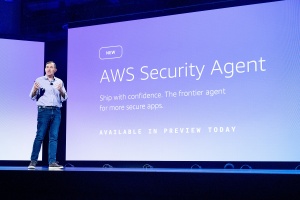
| Dr. Werner Vogels, CTO of Amazon. |
According to Vogels, there are five tech predictions for 2026 and beyond. The first is companionship being redefined for those who need it most.
Loneliness has reached epidemic proportions, affecting one in six people worldwide and designated as a public health crisis by the World Health Organisation. Social isolation increases death risk by 32 per cent, comparable to smoking, while loneliness increases dementia risk by 31 per cent.
“As MIT researcher Kate Darling discovered, we're biologically hardwired to project intent and life onto autonomous movement, which is why people tend to treat robots more like animals than devices,” Vogels said.
“At Amazon, our Astro team has documented people building genuine relationships with companion robots. Rather than replacing human caregivers, these robots create a collaborative model where technology and people work together to fight the loneliness epidemic,” he shared.
The second is the dawn of the renaissance developer.
According to the CTO, as generative AI reshapes how people build software, a familiar trope has reemerged, that developers will become obsolete. But this is not the end of the development; it's the dawn of the renaissance developer.
GenAI lets people generate code in seconds, but it doesn't sit in budget meetings where leadership debates cost versus performance. The core attributes of great developers remain constant. Creativity, curiosity, and systems thinking have continued to define the craft throughout every technological revolution.
Developers who thrive in this AI-augmented world must become modern polymaths who understand that systems are living, dynamic environments.
The third is quantum-safe becomes the only safe
Personal data, financial records, and state secrets are already being harvested by adversaries betting on quantum's arrival to decrypt later. Advances in error correction have compressed timelines, and the window for proactive defence is closing.
Organisations need to act on three fronts: deploying post-quantum cryptography now, planning to update physical infrastructure, and developing quantum-ready talent.
The fourth is defence technology changing the world.
Military investment in technology is surging, both by governments and the private sector.
Innovation has accelerated and software updates for autonomous systems happen weekly, not annually. Algorithms learn from real-world data and improve overnight. Civilian organisations will be able to take advantage of these advances in defence technology and apply them to solve critical problems: from disaster response and food security to healthcare access in remote regions.
The fifth is personalised learning meets infinite curiosity
Every student deserves an educator who engages their curiosity and nurtures creativity. But for most of human history only the wealthy could afford a personal tutor. That's about to change.
AI-powered personalised tutoring changes education fundamentally.
Khan Academy's Khanmigo reached 1.4 million students in its first year. According to a UK survey, the proportion of students using any AI tool jumped from 66 per cent last year to 92 per cent this year.
Teachers are NOT going away. What's changing is what teachers do. AI is freeing them from administrative tasks while enabling more creativity and individualised education.
The rise of AI
In his keynote at AWS re:Invent 2025 in Las Vegas on December 4, the Amazon CTO stressed that the rise of AI has made human participation in code development even more important, especially when it comes to code reviews. In a blog post prior to his keynote appearance, Vogels noted that while GenAI can provide code in seconds, “if you put garbage in, you get really convincing garbage out”.
In Vogels' view, the AI-defined world has made the code review process more important than ever. “We all hate code reviews, it's like being a 12-year-old and standing in front of the class,” Vogels said. “The review becomes the control point to restore balance. It is where we bring human judgment back into the loop.”
Vogels acknowledges a key distinction in today's AI era compared with previous episodes of significant technological change. As new tools are introduced, they are having a ripple effect across other parts of the tech industry, spurring an even faster pace of innovation.
According to Vogels, much as in the Renaissance, a cultural movement that swept across Europe in the 15th and 16th centuries, capturing the transition from the Middle Ages to modernity, the impact of AI could now do the same in 2026.
“We are again in a time of renaissance, and you are the new renaissance developer,” Vogels shared. “Creativity and technology evolve together. Curiosity leads to learning and invention.”
“What makes this moment different is how these breakthroughs strengthen each other,” Vogels noted. “Progress in one field accelerates progress in other fields.”
Building for the future
At AWS re:Invent 2025, AWS unveiled new services for frontier model reasoning and frameworks to facilitate the building of AI agents, underscoring Vogels' point.
The company launched Graviton5, next-generation custom silicone that will offer up to 25 per cent improved computer performance than its predecessor, according to AWS. Instances for cloud computing using the new chip are already in use by Adobe Inc., Airbnb Inc., Epic Games Inc., Formula One Group, Pinterest Inc., and SAP SE.
For his final keynote at the event, Vogels returned to a theme that has been a common element over his 14 years of appearances: the developer's hidden role. His view is that the work of developers is masked behind the technological machinery that drives today's global economy, including the very engine that has propelled Amazon to become the second largest retailer in the world.
Wearing a t-shirt with the words, “Open mind for a different view, And nothing else matters,” taken from a song by the heavy metal band Metallica, Vogels emphasised the importance of taking pride in what developers create as they toil in anonymity.
“Most of what we build, nobody will ever see,” Vogels said. “The only reason we do this well is our own professional pride in operational excellence. That is what defines the best builders.”
 | AWS unveils major AI innovations at re:Invent 2025 Amazon Web Services (AWS) announced a wave of new AI innovations on December 2 at its annual re:Invent conference in Las Vegas, focusing on helping organizations adapt to the rapidly evolving AI landscape through advances in autonomous AI agents, cloud infrastructure, and foundation models. |
 | LPBank Securities accelerates AI and data innovation with AWS LPBank Securities (LPBS) is setting a new standard for digital finance, aligning with the country's wider push towards innovation and sustainable growth. Nguyen Duy Khoa, chairman and CEO of LPBS, spoke to VIR's Bich Thuy about how data and AI have become the foundation of operational efficiency and delivering better customer experiences. |
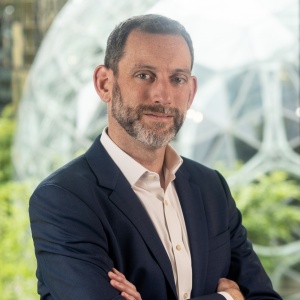 | How AI and cloud are reshaping the factory floor Steve Blackwell, Product Engineering & Services CoE lead at AWS, spoke with VIR's Bich Thuy on how AI and advanced cloud technologies are set to transform the future of manufacturing. |
 | How AWS is powering the next-gen data era As data and AI converge to power next-generation experiences, Mai-LanTomsen Bukovec, vice president of technology at Amazon Web Services (AWS), told VIR's Bich Thuy how integrated data architectures and cloud services are reshaping innovation. |
What the stars mean:
★ Poor ★ ★ Promising ★★★ Good ★★★★ Very good ★★★★★ Exceptional
 Tag:
Tag:Themes: Digital Transformation
- Vietnam transforming AI ambitions into business impact
- Work on digital technology building begins in Hanoi
- Vietnam-Australia forum boosts AI and digital technology cooperation
- Digital transformation shifts focus to added value
- Amazon Kuiper licensed for private satellite telecommunications network in Vietnam
Related Contents








Latest News




More News
- DKSH's blueprint for resilient supply chains (September 14, 2026 | 14:00)
- Vietnam’s challenge to turn market reform into long-term capital (September 08, 2026 | 09:16)
- Smarter infrastructure design key to Vietnam’s AI ambitions (August 24, 2026 | 16:27)
- Strategic vision key to high-speed rail success in Vietnam (August 07, 2026 | 10:03)
- DSV backs Vietnam's push for more sustainable logistics (August 04, 2026 | 17:10)
- Roche Pharma Vietnam appoints new general manager, reinforcing commitment to Vietnam healthcare (July 23, 2026 | 15:41)
- Constant Energy on Vietnam solar power and policy hurdles (July 22, 2026 | 08:00)
- Key points when drafting a company charter to reduce disputes in Vietnam (July 20, 2026 | 08:00)
- AkzoNobel executive on sustainability as a manufacturing growth driver (July 10, 2026 | 14:53)
- LivWell expands holistic health ecosystem for businesses and communities in Vietnam (July 09, 2026 | 16:43)








 Mobile Version