
Improving traceability capacity with Zebra Technologies

How important is understanding product origin for Vietnamese enterprises aiming to expand abroad?
It’s becoming more critical now. Many European markets and other advanced countries, especially after the pandemic, want to know the source and origin of products. If businesses can demonstrate traceability, then when a problem occurs, they can identify and resolve it much faster.
 |
| Photo: Zebra Technologies |
For example, if we use radio frequency identification (RFID) for chickens or pigs, then once the animals are processed into packaged meat, you can determine the exact origin: the farm name, location, and other details. With end-to-end traceability, you can isolate the problem quickly and conduct an effective product recall.
This applies to food, but also to other high-value or high-risk goods. For example, in the automotive industry, when there was an airbag problem, car owners received notifications if their cars were part of the affected batch and needed to be recalled. That is only possible because there is traceability down to the final product. Without it, companies would be left guessing: “We bought maybe three million airbags, where are they now?” That’s not a smart approach.
Globally, safety expectations are increasing. And if a problem arises, people want the issue identified, isolated, and resolved quickly. That’s why traceability is becoming critical across sectors, especially for food, high-value items, high-risk goods, and even to combat counterfeit products.
Counterfeits are another serious problem. I’ve even heard of people dying from drinking fake whiskey. They thought it was a genuine brand, but it was counterfeit - maybe 90 per cent alcohol. One sip, and the person collapses. Traceability also helps address the counterfeit issue.
As part of its acceleration of digital transformation, Vietnam is attempting to improve traceability capacity. What challenges does the country face in implementing end-to-end traceability across industries such as agriculture, manufacturing, and retail?
The first challenge is the direction and support from the government, providing clear standards for the business community. I'm not sure how common it is in Vietnam, but in some other countries, the government also provides incentives or funding to help kickstart adoption.
Another major challenge is awareness and understanding of the technology among business leaders. We want to partner with the media to educate industries through use cases and case studies we already have. When businesses understand real examples, they feel more secure and confident about investing in technology.
A further challenge, as mentioned earlier, is that business owners often focus more on cost rather than long-term benefits. Being too cost-conscious may limit opportunities to adopt accessibility and sustainability solutions. Hopefully, they can overcome this concern and look more at the long-term value.
The cost of implementing accessibility technologies has dropped significantly, first with barcodes, then RFID, and now moving towards AI and other technologies.
The cost has fallen dramatically because we implemented a simple RFID solution with a reader and a tag. The label that used to cost $2 now costs 100 times cheaper. That’s why many companies and organisations are adopting RFID on a large scale. By 2033, the RFID sensor market is estimated to reach $50 billion.
Another challenge is ensuring companies aren’t just aware, but also ready. Training may be required, and as the largest RFID solution provider, Zebra can support that if needed.
What is the role of the Vietnamese government in supporting the market and enterprises by providing incentives and favourable regulatory frameworks to enhance traceability capacity across industries?
The government plays a very critical role in setting the direction for the industry and providing support. This includes establishing the regulatory framework, giving clear guidance on which technologies to adopt and why, and offering incentives, such as grants, to help companies get started.
There is also the government-to-government aspect. If the Vietnamese government has set a clear framework and tracks which companies are adopting the international standards, then when another government asks, Vietnam can immediately share the list. This helps boost Vietnamese enterprises internationally.
 |
| Photo: Zebra Technologies |
For example, the Vietnamese ambassador to Singapore, whom I’ve met, knows exactly what Vietnam is doing and actively promotes these initiatives abroad. He also knows which companies are already implementing the standards.
The government’s role is to communicate, both domestically and internationally, to provide support, and to partner with reputable technology providers. This helps protect Vietnamese enterprises from being misled or scammed by vendors who claim to have the right technology but actually don’t. In digital transformation, there are many such cases.
I’ve heard many stories where companies were promised that a certain technology could deliver specific outcomes. But after buying and implementing it, it simply didn’t work. Then they had to change systems, which cost them money, time, and even more losses. Therefore, the government has an important role in selecting reputable partners.
Where do you see the biggest breakthroughs coming in traceability and digital transformation over the next decade?
The biggest one will be in food sustainability and food traceability. That’s massive because the food supply chain is long. For example, if a school receives a meal package, they should know exactly where it was produced, by whom, and at what time, ensuring it’s not contaminated before it reaches children.
Right now, the biggest use case of RFID traceability is in apparel. With apparel, RFID enables recycling and reuse, which supports sustainability. Traceability and sustainability are two sides of the same coin. You cannot achieve sustainability without traceability. And once you build traceability, you naturally move towards sustainability because you can measure how much you reuse, recycle, or discard.
The main driver is profit and cost. Without RFID, inventory checks take a lot of time and resources. With RFID, they can do it in half the time, and control inventory much better.
I once visited a shoe store in Indonesia. They said they wished to use RFID because doing stock checks takes forever. They have to take one pair of shoes, scan the barcode, put it back, take the next one, over and over. They can’t do that every day. But with RFID, they just sweep the reader across the shelf, and it’s done.
We can read hundreds of RFID tags in one second. At the Digital Future Forum 2025, we demonstrated that in two seconds, I could read 232 tags. The speed is incredible.
Therefore, the biggest breakthroughs will come in apparel first, and then, more in manufacturing and retail. We can expect to see many new traceability use cases emerging there.
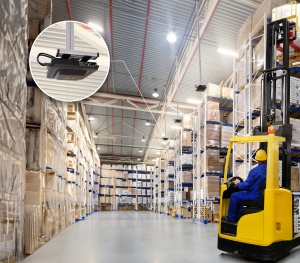 | Warehousing sector embraces advanced technologies to enhance operational efficiency The warehousing sector in Vietnam and globally is rapidly embracing advanced technologies to enhance operational efficiency and reduce costs amid growing demand from e-commerce and global trade. |
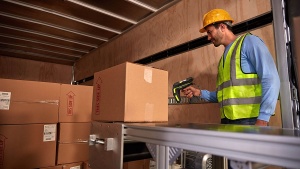 | US Postal Service recognises Zebra Technologies with supplier performance award Digital solutions' provider Zebra Technologies Corporation has been recognised by the United States Postal Service (USPS) with a prestigious Supplier Performance Award. The honour highlights Zebra's vital role in enhancing USPS operations and ensuring the seamless delivery of essential services nationally. |
 | Driving supply chain integrity through Zebra’s traceability solutions Vietnamese businesses are adopting new approaches to improve traceability and consumer trust, even as global markets demand more modernised supply chains. Tran Thi Bao Tran, Zebra Technologies’ newly appointed country manager, spoke with VIR’s Bich Thuy about how smart, connected solutions can help local firms stay competitive and compliant. |
What the stars mean:
★ Poor ★ ★ Promising ★★★ Good ★★★★ Very good ★★★★★ Exceptional
 Tag:
Tag:
Themes: Digital Transformation
- Vietnam transforming AI ambitions into business impact
- Work on digital technology building begins in Hanoi
- Vietnam-Australia forum boosts AI and digital technology cooperation
- Digital transformation shifts focus to added value
- Amazon Kuiper licensed for private satellite telecommunications network in Vietnam
Related Contents






Latest News




More News
- DKSH's blueprint for resilient supply chains (September 14, 2026 | 14:00)
- Vietnam’s challenge to turn market reform into long-term capital (September 08, 2026 | 09:16)
- Smarter infrastructure design key to Vietnam’s AI ambitions (August 24, 2026 | 16:27)
- Strategic vision key to high-speed rail success in Vietnam (August 07, 2026 | 10:03)
- DSV backs Vietnam's push for more sustainable logistics (August 04, 2026 | 17:10)
- Roche Pharma Vietnam appoints new general manager, reinforcing commitment to Vietnam healthcare (July 23, 2026 | 15:41)
- Constant Energy on Vietnam solar power and policy hurdles (July 22, 2026 | 08:00)
- Key points when drafting a company charter to reduce disputes in Vietnam (July 20, 2026 | 08:00)
- AkzoNobel executive on sustainability as a manufacturing growth driver (July 10, 2026 | 14:53)
- LivWell expands holistic health ecosystem for businesses and communities in Vietnam (July 09, 2026 | 16:43)








 Mobile Version