
CEO shares insights on Phu My 3 IP’s journey to green industrial growth

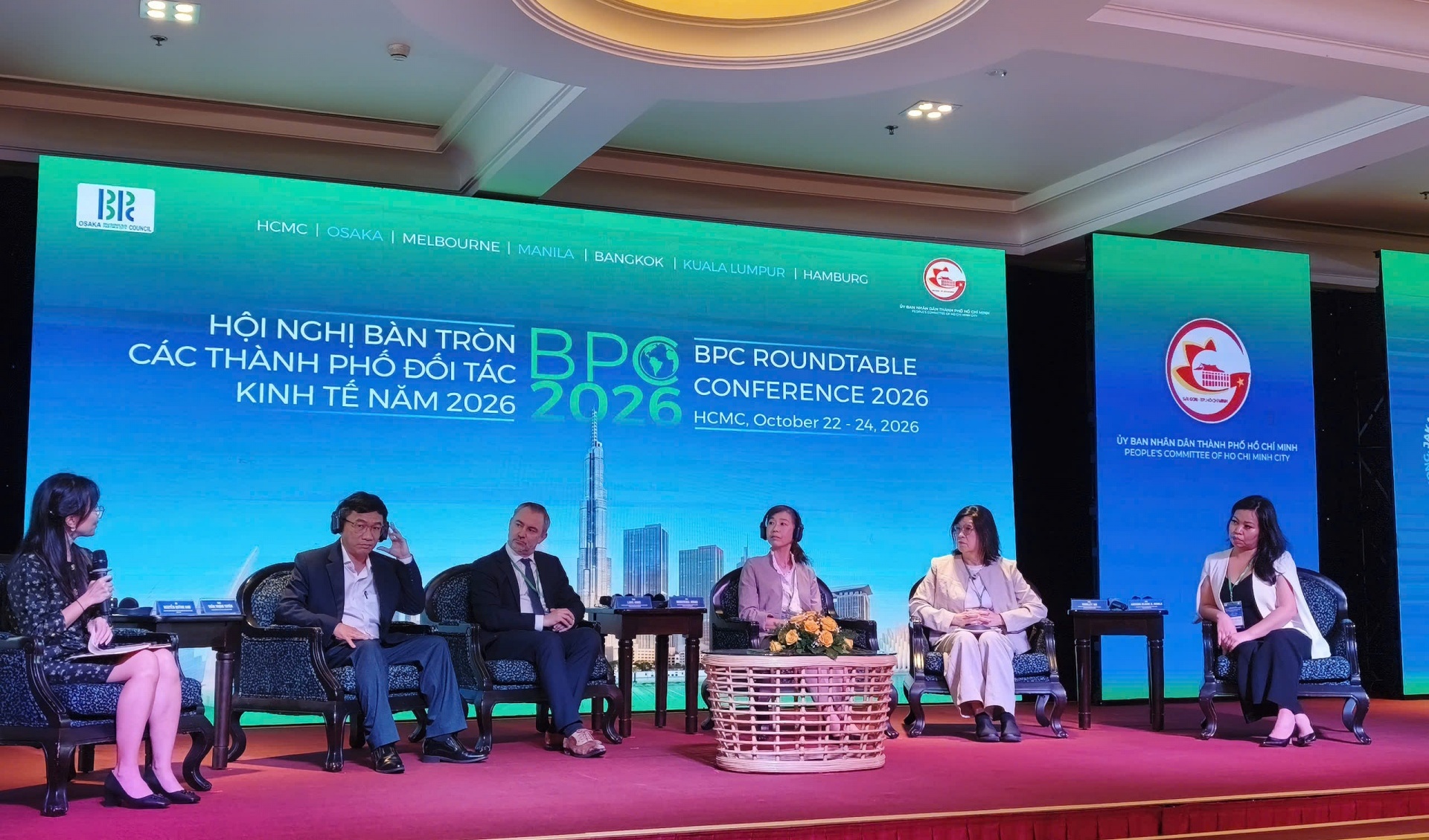
On November 14 in Ho Chi Minh City, Nguyen Thi Thao Nhi, chairwoman and CEO of Thanh Binh Phu My JSC, shared the company’s practical experiences in developing a sustainable industrial park (IP). Thanh Binh Phu My is the investor behind Phu My 3 Specialised Industrial Park, a key hub designed to attract high-tech and knowledge-intensive industries while promoting modern infrastructure and efficient logistics. The company has also completed its application for recognition as an eco-industrial park, underscoring its commitment to environmentally responsible practices.
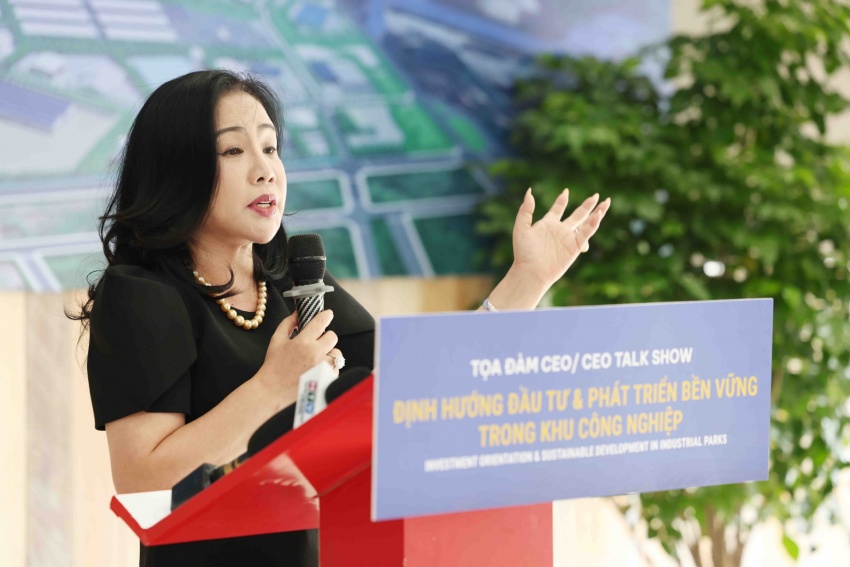 |
| Nguyen Thi Thao Nhi, chairwoman and CEO of Thanh Binh Phu My JSC |
“Meeting the criteria for an eco-industrial park is not just thanks to support from the Japan International Cooperation Agency (JICA). Our company has fulfilled all 21 standards outlined in Decree No.35/2022/ND-CP and Circular No.05/2025/TT-BKHDT,” Nhi said at the event.
She added that the process has been far from easy. Building an eco-industrial park requires a combination of a correct initial vision, strong commitment from the infrastructure developer, and the participation of tenant businesses that must also transition towards greener operations.
“The criteria to determine whether an IP is ‘green’ already exist. However, for individual factories within the park, the government has yet to issue specific criteria defining what constitutes green or eco-friendly operations. As a result, most factories pursue green and eco-friendly practices due to pressure from markets and export partners. It is unrealistic to expect a business to ‘go green’ immediately, criteria must be adopted selectively,” she said.
She added that the transition poses significant challenges, especially for existing IPs.
“When we speak with factories, they often do not fully disclose their difficulties, but in reality, countless issues arise during the process of greening and moving towards sustainability,” she said.
One of the key pillars of the eco-industrial park model is industrial symbiosis, which is closely linked to circular economy requirements. To be recognised as an eco-industrial park, businesses must demonstrate how they utilise each other’s resources, reduce waste, and create closed-loop production systems.
“However, circular economy criteria remain among the most difficult aspects to implement in practice. Many projects use clean technologies suitable for circular models but face regulatory obstacles related to the classification of waste, by-products, and recycling activities, which are still considered sensitive and therefore not eligible for approval under standard investment procedures. This prevents businesses from participating in symbiotic chains even when their technologies meet environmental requirements,” she explained.
Inconsistencies in interpreting and applying regulations mean that many activities involving the reuse of by-products, fundamentally aimed at reducing emissions and saving resources, are instead classified as ‘waste treatment,’ creating legal barriers. This slows down the development of symbiosis models in IPs, despite the clear demand from businesses.
In such a context, the role of the infrastructure developer becomes particularly crucial. Only when the developer has a deep understanding of ecology, circular economy principles, and the ability to support businesses through legal processes can an eco-industrial park operate as intended.
“It took us more than 15 years of persistent effort to meet the criteria of an eco-industrial park. We are grateful to JICA for accompanying us throughout, from green infrastructure and support for green business practices to the upcoming smart IP model. They are now guiding us through the upgrade process so that by 2027 we will meet smart IP standards,” Nhi said.
She stressed that for an IP to truly become 'green' and eco-friendly, the foundation must be sustainable development, covering the environment, community, and transparent governance aligned with environmental, social, and governance principles.
When defining operational criteria, the IP understands that some businesses will be a good fit and others will not. Therefore, alongside mandatory requirements, the developer must also explain, guide, and create better conditions for businesses to understand, choose, and commit long-term.
“Strict environmental standards may lead some to think the IP is ‘difficult,’ but these high standards are precisely what help attract clean, modern technology projects,” she said.
A common tension in investment attraction arises from businesses wanting to accelerate construction progress, while administrative procedures often take time. Thus, the infrastructure developer must act as a bridge, coordinating with authorities to shorten licensing time and create a real competitive advantage.
“To entice high-tech factories, infrastructure must meet international standards, from electricity, water, and waste treatment to fire safety. When infrastructure is of high quality, businesses are willing to accept higher initial costs in exchange for faster project implementation and stable operations,” Nhi added.
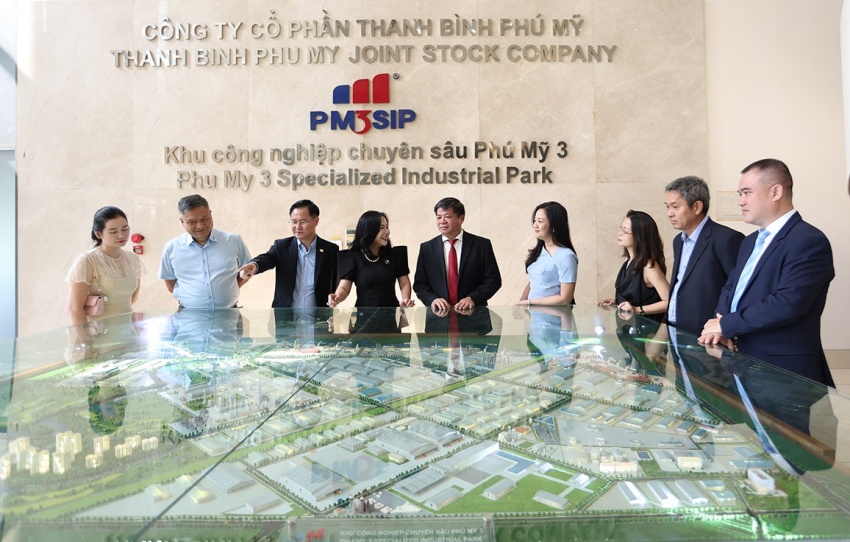 |
| Phu My 3 Specialised IP is set to become the first eco-industrial park in Ho Chi Minh City |
 | Trelleborg forms strategic cooperation with Phu My 3 Specialised IP Trelleborg Group, a world leader in engineered polymer solutions from Sweden, signed a cooperation agreement with Phu My 3 Specialised Industrial Park in early September to lease a 60,000 square metre plot of land to build a factory in Ba Ria-Vung Tau, one of the eight cities and provinces and belonging to the southern key economic region of Vietnam. |
 | Quality transport links spurs investment in Ba Ria-Vung Tau Ba Ria-Vung Tau's transportation advantages appeal to domestic and foreign investors looking to develop their businesses in industrial parks in the southern province. |
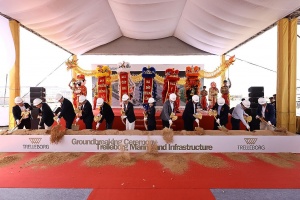 | Trelleborg breaks ground on manufacturing facility in Phu My 3 Specialised IP On January 16, Trelleborg Marine & Infrastructure broke ground on a new manufacturing facility in the Phu My 3 Specialised Industrial Park (IP) in the province of Ba Ria-Vung Tau. |
What the stars mean:
★ Poor ★ ★ Promising ★★★ Good ★★★★ Very good ★★★★★ Exceptional
 Tag:
Tag:Related Contents

Latest News


More News
- DKSH's blueprint for resilient supply chains (September 14, 2026 | 14:00)
- Vietnam’s challenge to turn market reform into long-term capital (September 08, 2026 | 09:16)
- Smarter infrastructure design key to Vietnam’s AI ambitions (August 24, 2026 | 16:27)
- Strategic vision key to high-speed rail success in Vietnam (August 07, 2026 | 10:03)
- DSV backs Vietnam's push for more sustainable logistics (August 04, 2026 | 17:10)
- Roche Pharma Vietnam appoints new general manager, reinforcing commitment to Vietnam healthcare (July 23, 2026 | 15:41)
- Constant Energy on Vietnam solar power and policy hurdles (July 22, 2026 | 08:00)
- Key points when drafting a company charter to reduce disputes in Vietnam (July 20, 2026 | 08:00)
- AkzoNobel executive on sustainability as a manufacturing growth driver (July 10, 2026 | 14:53)
- LivWell expands holistic health ecosystem for businesses and communities in Vietnam (July 09, 2026 | 16:43)





 Mobile Version