
New generation of CEOs and 'Think Big' mindset: thinking ahead to go the distance

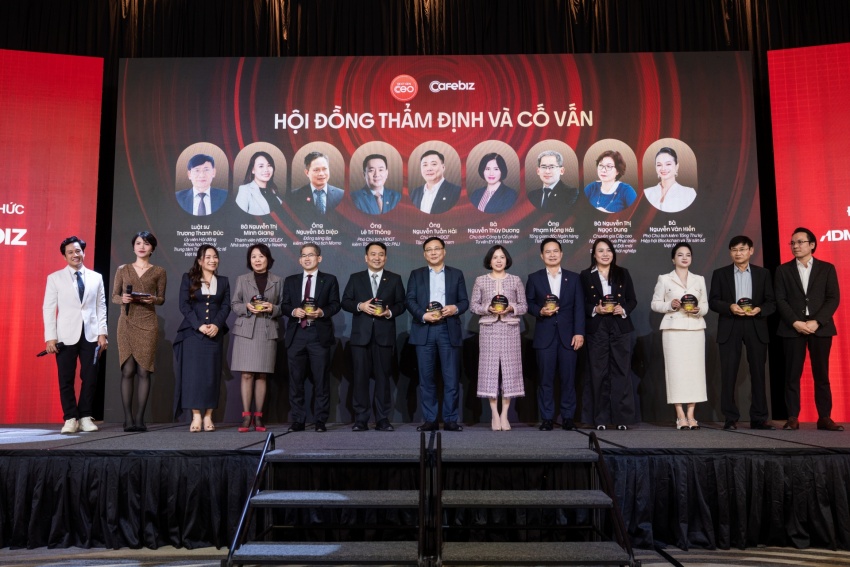 |
| Nguyen Tuan Hai, chairman of Alphanam Group, in the middle of the Appraisal and Advisory Council of the Next Gen CEO programme |
The forum also honored the top 36 and top nine next gen CEOs of 2025, leaders widely regarded as shaping the future direction of Vietnamese enterprises in the decade ahead.
As global economic conditions grow more volatile, competition intensifies, and traditional industry boundaries continue to blur, the discussion around the new generation of CEOs has moved beyond succession alone. Increasingly, attention is focused on leadership standards, governance capability, and, above all, the ability to think big, while remaining grounded in reality, to secure sustainable growth.
Greater advantages, greater pressure
From the perspective of the Appraisal and Advisory Council of the Next Gen CEO organised by CafeBiz , Nguyen Tuan Hai, chairman of Alphanam Group, believes that investing in future leaders cannot be measured simply in capital or material resources. What matters most is time, intellectual commitment and genuine companionship from experienced leaders.
For many years, Hai has actively participated in mentoring leadership and development programmes, driven by a desire to “train, encourage and create conditions for young leaders to develop comprehensively”, thereby contributing to the formation of a high-quality leadership pool for Vietnamese enterprises.
Reflecting on the evolution of Vietnam's entrepreneurial innovations, Hai highlights a fundamental difference between the first-generation entrepreneurs and today's young CEOs. Entrepreneurs who started businesses in the 1990s entered the market with a very clear objective: escaping poverty and survival. "At that time, long-term vision was limited, but thinking was extremely practical. The priority was to stay afloat in a market that offered few favourable conditions," he said.
By contrast, today's young CEOs enter the market with significant advantages in technology, access to information, and global connectivity. Yet, these advantages come with far greater competitive pressure. “Market entry is easier, but competition is far more intense,” Hai noted. “Young entrepreneurs must compete from day one with large domestic corporations and international players that already possess capital, experience, and established ecosystems.”
As a result, to survive and break through, the new generation of CEOs must demonstrate a higher level of discipline, resilience, and endurance than any generation before them.
Drawing on his experience working alongside multiple generations of leaders, Hai identified three critical factors for new-generation CEOs navigating today's environment.
The first is mental strength and perseverance. No successful leader avoids adversity. “You overcome one challenge only to face another. What matters is not giving up halfway,” he emphasised.
The second is continuous learning. Leaders who believe they already know enough are the most vulnerable. Learning, Hai stressed, does not come solely from books, but from people, lived experience, and personal failure. “I always say: learn from everyone, every situation and even the smallest details.”
The third is clear and responsible direction. Only when leaders possess both resilience and learning capability can they choose a path that aligns business development with broader social value.
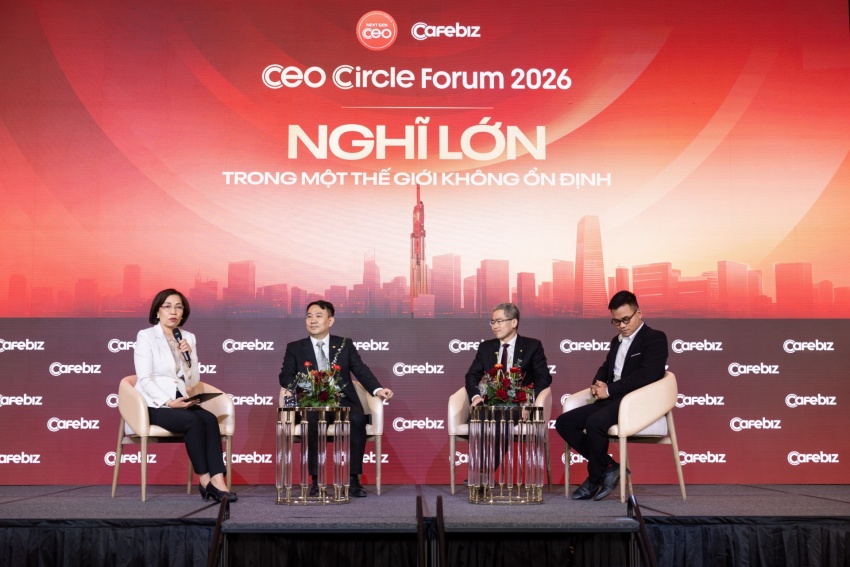 |
| Panel discussion on Think Big |
Thinking ahead to lead sustainably
During a dialogue session on Think Big, senior business leaders offered diverse perspectives, reinforcing the idea that thinking big is not a slogan, but a core governance capability.
For Pham Hong Hai, CEO of Orient Commercial Joint Stock Bank, the most important keyword is thinking far. Day-to-day management often pulls leaders into operational details, causing them to lose sight of the bigger picture. “When we ask ourselves where the company will be in five or 10 years, what it will become, what it will do, and where it will stand, we begin to redefine our path and build confidence within the organisation,” he said. In this sense, thinking big means thinking far enough to secure sustainable direction.
Offering a multidimensional view, Le Tri Thong, vice chairman and CEO of Phu Nhuan Jewelry JSC, argued that thinking big must be understood across several dimensions. It is about length, or longevity, ensuring long-term survival through sound risk management. It is about height, as the scale of an enterprise reflects the ambition and stature of its leader. It is also about breadth, referring to openness in mindset and governance that welcomes diverse people and values. Most importantly, it is about fit.
“Thinking big must be aligned with the organisation’s resources and core capabilities. Otherwise, ambition becomes unrealistic,” Thong cautioned.
In the banking sector, Hai stressed that ambition must always rest on solid foundations. Banking is built on trust, with capital and liquidity serving as two non-negotiable pillars. In Vietnam, many domestic enterprises set highly ambitious growth targets, often 30-50 per cent annually, yet their governance foundations remain fragile.
“Thinking big means building a strong platform to go the distance, rather than chasing quick wins,” he warned. “If growth is pursued without sustainability, the business will collapse at the first major shock.”
For Y Pot Nie, founder and CEO of E De Coffee, thinking big begins with a single word: dare. Dare to leave a medical career and return to his hometown when he saw his community trapped in cycles of debt. Dare to build a coffee brand from scratch. Dare to take responsibility for nearly 1,000 hectares of coffee farming through guaranteed purchasing schemes. Dare to speak honestly about his journey to earn the trust of banks, partners, and customers.
“Without daring, I would not be where I am today,” he said. For new-generation CEOs, daring to think and daring to act form the starting point of every meaningful vision.
Addressing why CEOs must think big, Hai described it as a matter of survival. In banking, failing to reach a certain scale inevitably leads to elimination or forced consolidation. More broadly, thinking big helps leaders decide what not to do, enabling limited resources to be concentrated on the most critical objectives.
For Thong, thinking big is fundamentally a responsibility. A responsibility to shareholders, who need to see long-term growth potential, and to employees, who seek inspiration and a better future alongside the enterprise. “If a CEO thinks small, he is failing in his leadership duty,” Thong stated. “Thinking big is the lighthouse that guides the organization forward.”
Ha Thu Thanh, chairwoman of the Vietnam Institute of Directors, shared a formative moment from 1995, when she became the first Vietnamese to study auditing in the United States. Her thinking at the time was simple: “Why can foreigners do this while Vietnamese cannot?” That mindset helped pave the way for Vietnamese professionals to later assume leadership roles at Deloitte and across the Big Four. To her, thinking big represents the vision and aspiration for Vietnamese leaders to take ownership and compete globally.
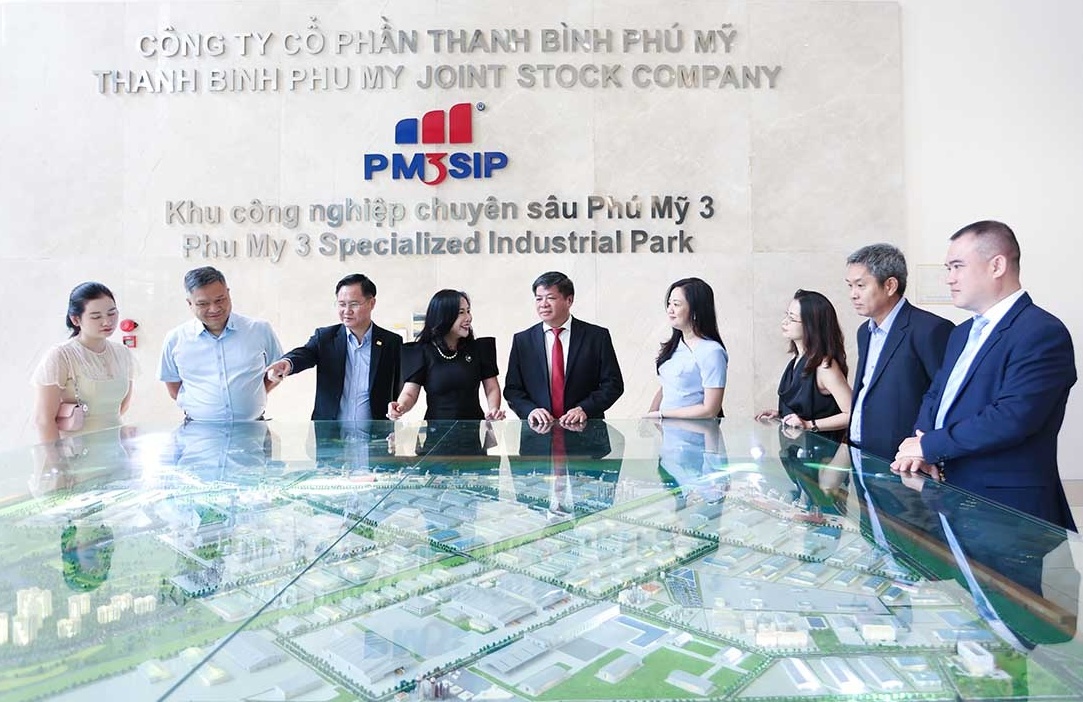
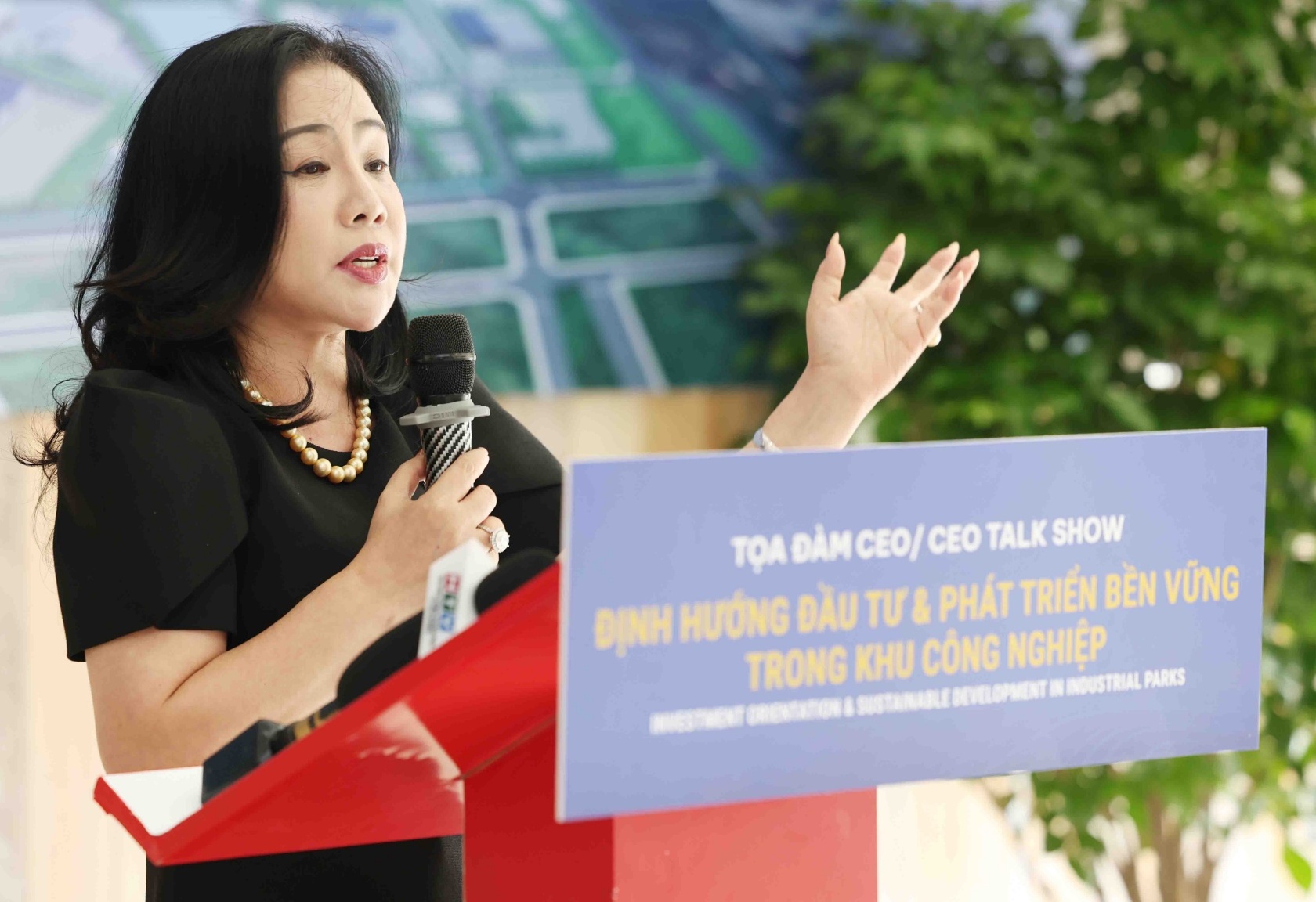
 | CEO talkshow spotlights industrial park investment trends Nearly 100 business leaders, experts, and company representatives gathered at Phu My 3 Industrial Park for a CEO talkshow exploring investment trends and models for modern industrial park development. |
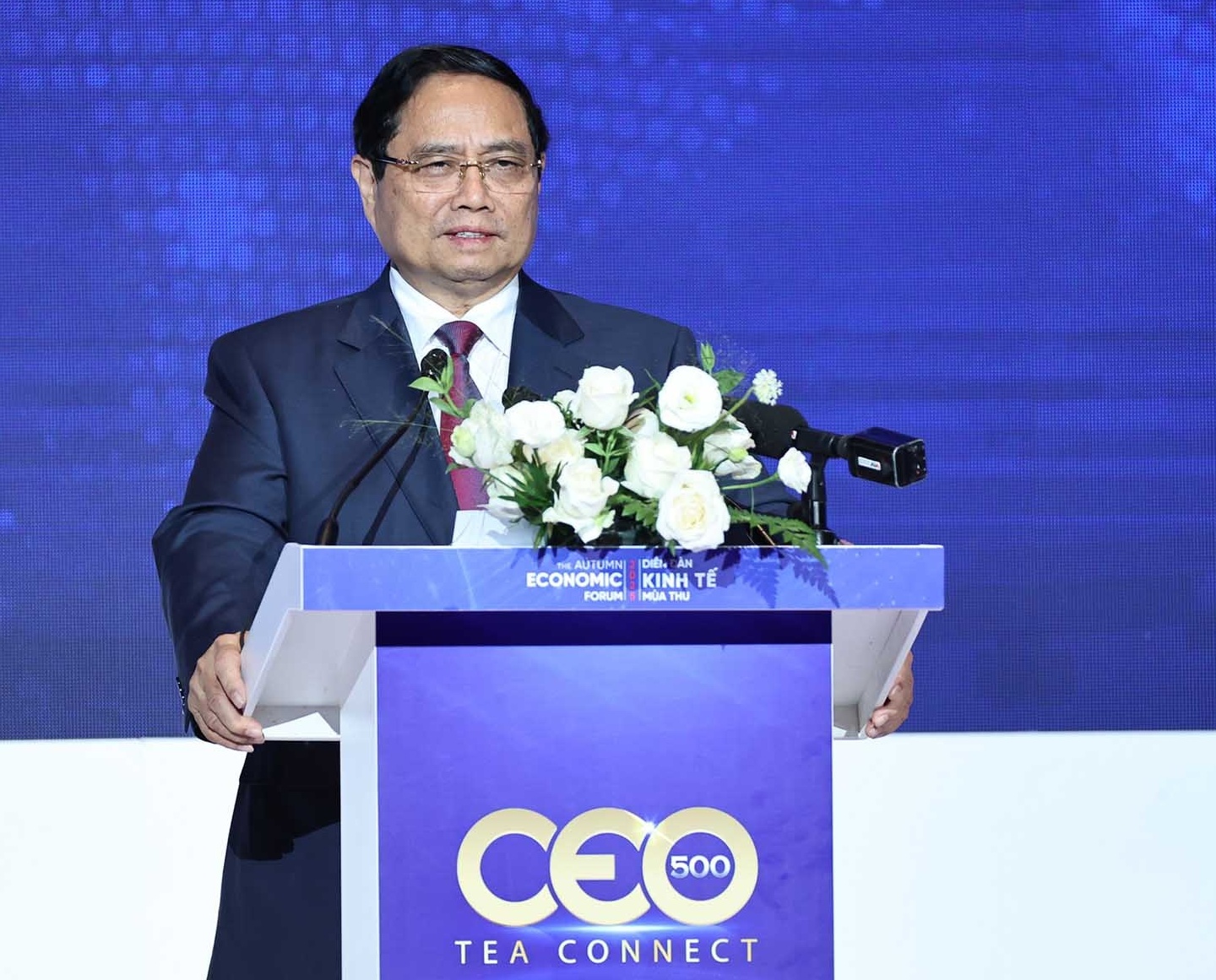
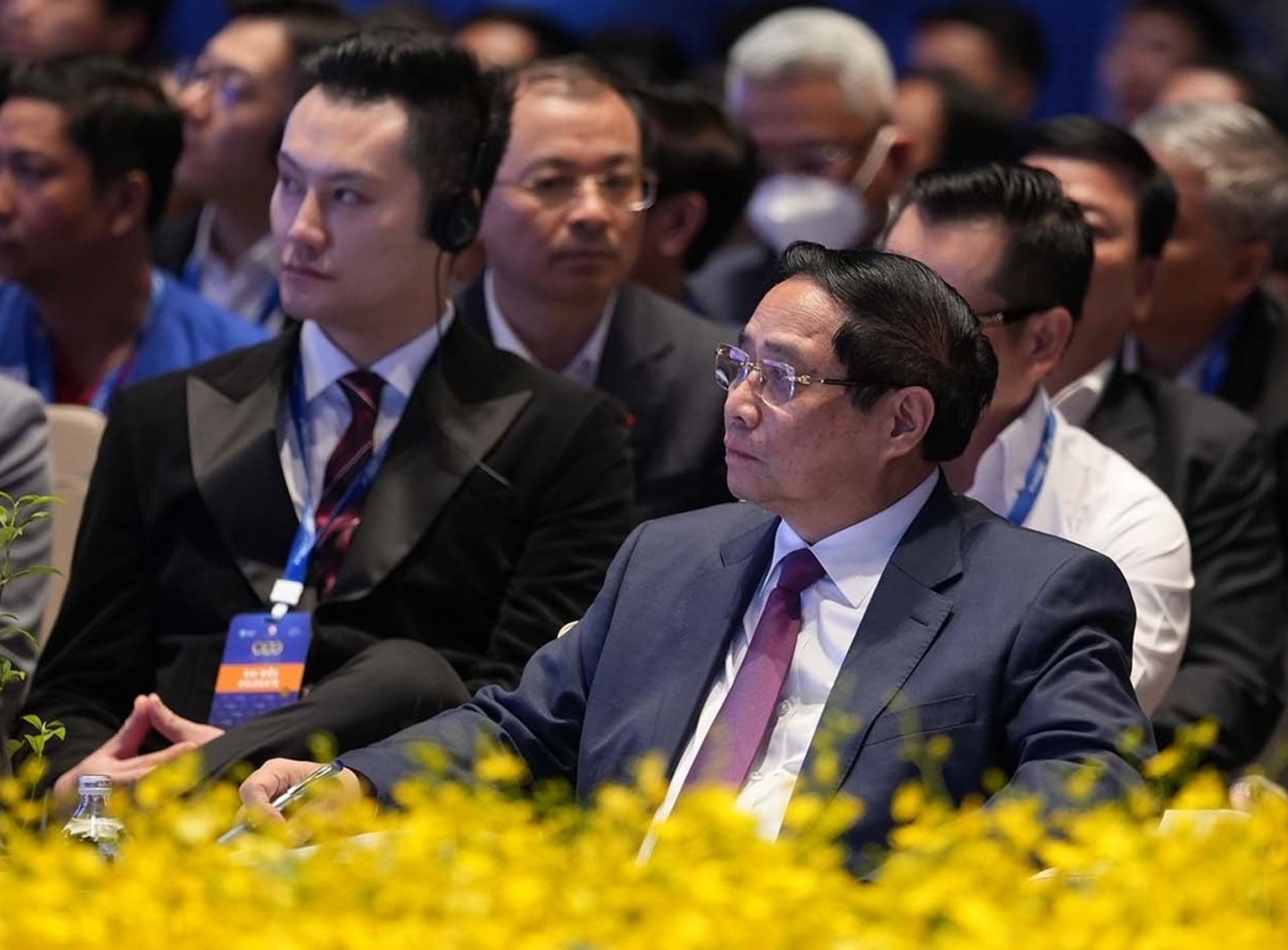
 | Ho Chi Minh City engages 500 CEOs in dialogue on building global megacity The "CEO 500 - TEA Connect" meeting, the first event of the 2025 Autumn Economic Forum, took place in Ho Chi Minh City on November 25 under the theme “Ho Chi Minh City - Progressing towards a global megacity in the digital era”. |
What the stars mean:
★ Poor ★ ★ Promising ★★★ Good ★★★★ Very good ★★★★★ Exceptional
 Tag:
Tag:
Related Contents





Latest News

More News
- DKSH's blueprint for resilient supply chains (September 14, 2026 | 14:00)
- Vietnam’s challenge to turn market reform into long-term capital (September 08, 2026 | 09:16)
- Smarter infrastructure design key to Vietnam’s AI ambitions (August 24, 2026 | 16:27)
- Strategic vision key to high-speed rail success in Vietnam (August 07, 2026 | 10:03)
- DSV backs Vietnam's push for more sustainable logistics (August 04, 2026 | 17:10)
- Roche Pharma Vietnam appoints new general manager, reinforcing commitment to Vietnam healthcare (July 23, 2026 | 15:41)
- Constant Energy on Vietnam solar power and policy hurdles (July 22, 2026 | 08:00)
- Key points when drafting a company charter to reduce disputes in Vietnam (July 20, 2026 | 08:00)
- AkzoNobel executive on sustainability as a manufacturing growth driver (July 10, 2026 | 14:53)
- LivWell expands holistic health ecosystem for businesses and communities in Vietnam (July 09, 2026 | 16:43)






 Mobile Version