
Ho Chi Minh City engages 500 CEOs in dialogue on building global megacity

The event was attended by Prime Minister Pham Minh Chinh, Ho Chi Minh City Party Secretary Tran Luu Quang, Deputy Prime Minister Bui Thanh Son, and chairman of the Ho Chi Minh City People's Committee Nguyen Van Duoc, as well as leaders of ministries, central agencies, and city departments.
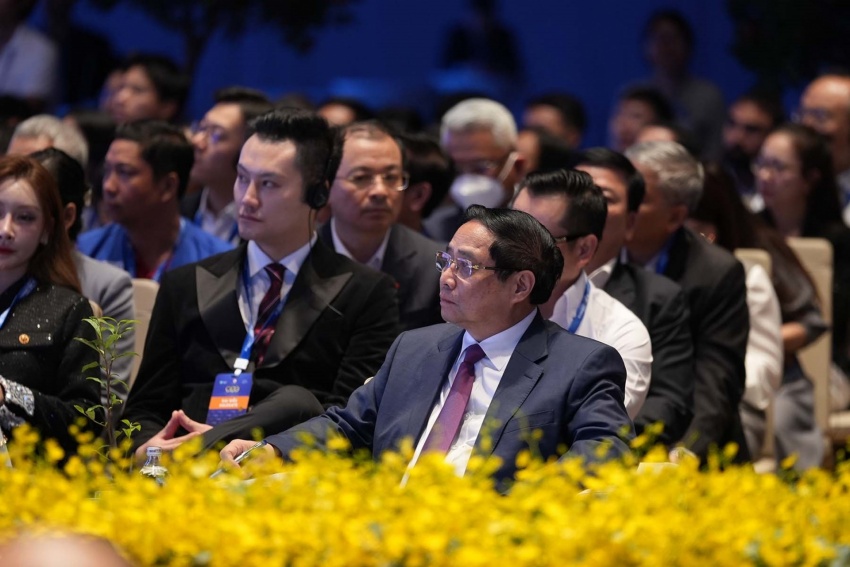 |
| Prime Minister Pham Minh Chinh took part in CEO 500 – TEA Connect |
This formed a high-level dialogue between the government, Ho Chi Minh City, and more than 500 domestic and international business leaders. Discussions focused on public private partnership models, green investment strategies, technological innovation, and modern urban governance.
The event also created major opportunities for Vietnamese businesses to deepen their participation in regional and global supply chains, and gain access to capital, technology, knowledge, and advanced management models, thereby enhancing competitiveness and international integration.
In his opening speech, Ho Chi Minh City Party Secretary Tran Luu Quang said that post-merger, Ho Chi Minh City is entering a new phase of development with a broader vision and greater aspirations, aiming to become a modern, dynamic, liveable city with global competitiveness.
"Ho Chi Minh City now has a population of over 14 million and contributes nearly 25 per cent of Vietnam's GDP. The city is continuing to strengthen its role as the nation's economic engine and a major hub for commerce, finance, industry, education, healthcare, and international trade," Quang said.
However, the city's global urban stature depends not only on population scale or economic contribution, but also on growth quality, connectivity, governance capabilities, international competitiveness, and its ability to create a creative, high-quality environment for living and working, he added.
"For this reason, the city is restructuring its development space with a new multipolar, integrated, and connected approach, guided by a framework of three zones, three corridors, five pillars, and one special district," Quang added.
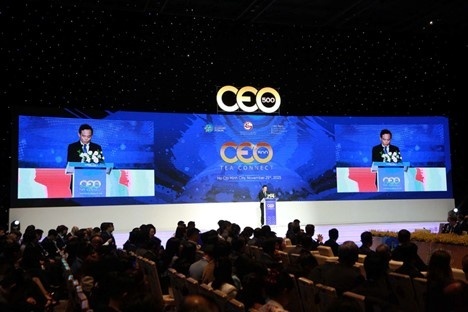 |
| Secretary of Ho Chi Minh City Party CommitteeTran Luu Quang said that post-merger, Ho Chi Minh City is entering a new phase of development with a broader vision and greater aspirations, aiming to become a modern, dynamic, liveable city with global competitiveness |
The five strategic pillars are high-tech industries and innovation (with digital technologies, AI, semiconductors, and big data as core drivers); logistics and free trade (linked to seaports, airports, and free-trade zones); development of an international financial centre; tourism and cultural industries (creating added value from culture, creativity, arts, entertainment, and international events); and education, healthcare, science, and technology.
At the same time, the city acknowledges the profound challenges it must address strategically including the governance pressures of a fast-growing megacity; shortages in financial, technological, and human resources and infrastructure; a logistics and transportation system still under development; the urgent need to improve public services, administrative procedures, and digital governance; and intensifying competition among regional and global economic hubs.
“Therefore, beyond the city's internal reform, expanding cooperation and attracting experts and enterprises, both domestic and international, is crucial,” Quang added.
In that spirit, the CEO 500 - TEA Connect programme was organised to create a strategic, open, and trusted dialogue space between city leaders and experts, scholars, and CEOs of major domestic and global corporations, focusing on the five strategic pillars mentioned above.
One of the highlights of the programme's opening was the infusion of Vietnamese cultural identity into the business networking space.
The event began with an artistic performance titled “Vietnamese Tea - Fragrance of the earth, colours of the sky, and the soul of the Vietnamese people”, incorporating a ceremonial tea offering and serving ritual by tea artisans.
Using the art of tea in event diplomacy not only provides an aesthetic experience but also conveys warmth and openness, key elements in building business cooperation and policy dialogue.
A presentation by the Ho Chi Minh City Institute for Development Studies offered a comprehensive overview of the city's strategic planning and spatial development for 2026-2030, with a vision to 2045, along with key ongoing and upcoming projects that will play central roles in shaping the city's future growth structure.
The session also included presentations from global organisations and corporations such as Foxconn Technology Group, Qualcomm, Siemens, and Amazon, as well as leading Vietnamese enterprises such as Nam A Bank and Techcombank.
Discussions focused on pressing issues of business interest as Ho Chi Minh City repositions itself as a dynamic megacity. Among those were collaboration on digital and green transformation; demand for digital and strategic infrastructure; developing an international financial centre and attracting high-quality capital flows; and building an innovation ecosystem.
The event helped shape the image of Ho Chi Minh City as a dynamic, innovative, and technology-embracing economic centre that proactively attracts global resources, while providing businesses with early access to strategic directions to adjust their investment plans, talent needs, and market expansion strategies.
 | Vietnam urges to elevate standards to advance IFC ambitions Vietnam is well-positioned to develop an International Financial Center (IFC), supported by its fast-growing economy, youthful talent pool, and strong manufacturing base. However, experts note that significant legal, regulatory, and administrative reforms are still needed to turn this potential into reality. |
 | CEEC marks 10th anniversary in Ho Chi Minh City The Central and Eastern European Chamber of Commerce in Vietnam (CEEC) marked its 10th anniversary with a gala event in Ho Chi Minh City. |
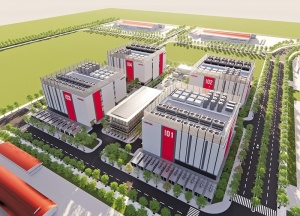 | Ho Chi Minh City establishes working group on data centers Ho Chi Minh City People's Committee has established a working group to support and address hindrances for hyperscale data centers. |
What the stars mean:
★ Poor ★ ★ Promising ★★★ Good ★★★★ Very good ★★★★★ Exceptional
 Tag:
Tag:Related Contents

Latest News
More News
- Strategic vision key to high-speed rail success in Vietnam (August 07, 2026 | 10:03)
- DSV backs Vietnam's push for more sustainable logistics (August 04, 2026 | 17:10)
- Roche Pharma Vietnam appoints new general manager, reinforcing commitment to Vietnam healthcare (July 23, 2026 | 15:41)
- Constant Energy on Vietnam solar power and policy hurdles (July 22, 2026 | 08:00)
- Key points when drafting a company charter to reduce disputes in Vietnam (July 20, 2026 | 08:00)
- AkzoNobel executive on sustainability as a manufacturing growth driver (July 10, 2026 | 14:53)
- LivWell expands holistic health ecosystem for businesses and communities in Vietnam (July 09, 2026 | 16:43)
- Thai beverage group sees Vietnam as long-term growth partner (July 02, 2026 | 08:30)
- AstraZeneca chief on Vietnam's healthcare financing shift (June 30, 2026 | 16:47)
- Vietnam emerges as one of VistaJet’s fastest-growing markets (June 18, 2026 | 16:21)






 Mobile Version