
Skellefteå: A magnet for global talent

Visiting Skellefteå in the early days of June to attend the Society Expo 2026, the cool weather in the area made us feel healthy.
Skellefteå has emerged as one of Europe’s most closely watched examples of green transition, talent attraction and regional transformation. Once known primarily for its mining, forestry, and energy industries, the city has become a focal point of the global green transition. Large-scale investments in battery manufacturing, renewable energy, sustainable construction, and advanced technology have created an unprecedented demand for skilled workers and international talent.
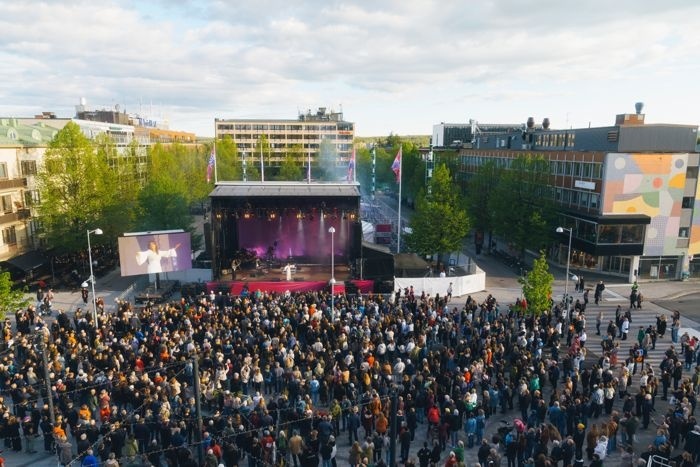 |
| The Society Expo 2026 attracted great global attention. Photo: SI |
The stories of choice
Skellefteå has been focusing on creating an environment where people can build long-term careers and enjoy a high quality of life.
The municipality has invested heavily in housing, schools, transportation infrastructure, cultural amenities, and urban development. New residential neighbourhoods, expanded public services, and modern community facilities have been developed to support population growth.
Such investments help strengthen the city’s brand and contribute to a sense of place that appeals to both domestic and international talent. Many stories of choice have been lengthened here.
Kritika Narang Landström, project leader at Smurfit westrock, now decided to settle down in Skellefteå after years of going around the world. She now also has her own company called Nordic Career Boost which helps internationals with the Swedish job market.
On the sideline of the Society Expo, she told VIR, “When I first came here, I faced a culture shock because it is different from where I came from - New Delhi. There is the language gap and cultural gap. But my love and I decided to look for jobs in the north of Sweden, just because it's very calm, friendly, and peaceful, close to nature, and its core value is to help people, and for the people. I don't see this in other cities.”
“Moreover, this city’s healthcare system is good. I do not pay anything while giving birth. If you live here, you have health insurance with the government.
Sarah Wulan, an Indonesian neuroscientist in mental health for children and a paediatric occupational therapist, has a similar story.
Wulan came to Sweden in January 2026, and then shortly decided to buy a house in Skellefteå. She told VIR that her and husband had already lived in different parts of the world, including Indonesia, the UK, Finland, and Ireland.
“We decided to buy a house in Skellefteå as we thought we had finally found a perfect place. Although it is challenging for me to be fluent in Swedish, I am trying to overcome by taking a Swedish course to participate in many local activities and initiatives,” she added.
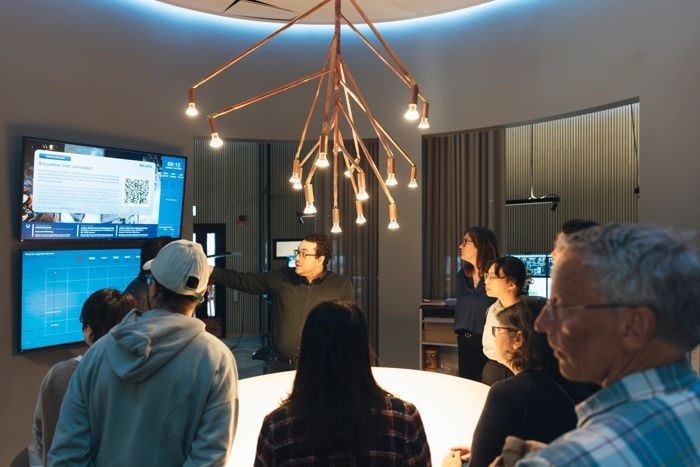 |
| Photo: Swedish Institute |
These stories highlight the successful integration of international talent into northern Sweden's industrial transformation. By combining high-level engineering careers with purpose-driven side businesses, these professionals not only benefit from the region's strong social infrastructure, including healthcare and community support, but also contribute to its continued development by helping other internationals establish careers in Sweden.
According to the Swedish Institute, the rapid expansion of green industries has created strong demand for skilled labour across northern Sweden. Industrial investment and business growth are expected to generate thousands of jobs in manufacturing, engineering, technology, education, healthcare, construction, and public services.
A key catalyst has been the establishment of large-scale battery manufacturing, which drew global attention and accelerated the municipality's growth ambitions. At the same time, wider investment in renewable energy, mining innovation, forestry, digitalisation, and sustainable infrastructure has further strengthened the region's long-term development.
"Skellefteå has successfully attracted international talent for many years, although we also experienced a turbulent period following the Northvolt bankruptcy. Fortunately, demand for international skills has now returned. Other regions undergoing rapid industrial growth and social transformation can learn from our experience," said Helena Renström, project manager at Skellefteå Municipality.
Magnet for global talent
According to Elin Larsson, international talent attraction strategist at the Swedish Institute, Sweden is working to position itself as a leading destination for skilled professionals to help meet the country's growing labour needs.
"One of the key success factors is increasing global awareness that Sweden welcomes international talent and offers excellent career opportunities. Ultimately, we want companies in Sweden to find the skilled people they need," Larsson said. "We're inviting some of the world's brightest minds to come to Sweden and help build the future we're creating here."
 |
| Photo: Swedish Institute |
According to the 2026 Global Soft Power Index (GSPI), Sweden continues to rank among the world’s strongest nations in reputation and influence. The GSPI assesses the soft power of all 193 UN Member States, measuring reputation, influence and perceptions across key areas.
This year, Sweden ranks 13th overall and seventh worldwide in global reputation, performing particularly well in matters of governance, people and values, business and trade, international relations, education and science, and sustainable development.
Christian Biller, Sweden Brand manager, Swedish Institute, said that Sweden’s brand strength varied across markets. For instance, for the Vietnamese, Sweden has the strongest profile, led by low corruption, education, stability, sustainability, and investment appeal. Meanwhile, in Indonesia’s view, Sweden has strength in climate and governance.
“Sweden is more admired than known or influential. Across all the five markets like Vietnam, Indonesia, Mexico, Brazil, and India, reputation is stronger than familiarity, which suggests untapped potential if Sweden becomes more visible,” he said.
To meet the growing need for skilled labour, the Swedish Institute launched the Team Sweden Talent Attraction network, aiming to strengthen Sweden's position as a career destination for international talent and increase our global competitiveness. Skellefteå municipality takes a place in the expert group that will contribute with strategic guidance.
 |
| Photo: Swedish Institute |
"We want to share what we've learned from this period of extraordinary population growth and from the challenges that followed when many people lost their jobs. That includes both our successes and the areas where we could have done things differently," said Renström.
While Skellefteå continues to face significant challenges–including pressure on housing, infrastructure, public services, transport networks, and ongoing competition for skilled worker–its transformation demonstrates how a relatively small city can become a global talent hub by combining economic opportunity with a compelling long-term vision.
By placing itself at the forefront of the green transition, investing in quality of life, and embracing international recruitment, the municipality has fundamentally reshaped its demographic and economic trajectory.
What the stars mean:
★ Poor ★ ★ Promising ★★★ Good ★★★★ Very good ★★★★★ Exceptional
 Tag:
Tag:Related Contents






Latest News



More News
- Vietnam advances ASEAN qualifications framework (August 21, 2026 | 17:23)
- Regional cooperation crucial as Southeast Asia’s AI boom accelerates (August 13, 2026 | 17:50)
- Vietnam wins first-ever Super Gold Award at World Youth Economic Forum (August 04, 2026 | 17:12)
- MoF minister outlines priorities for international integration to support growth (August 03, 2026 | 23:24)
- AI adoption reshapes marketing across Southeast Asia (July 16, 2026 | 16:37)
- Vietnam leads region in using AI in academia (July 15, 2026 | 15:51)
- ADB maintains Vietnam's growth outlook amid Southeast Asia downgrades (July 10, 2026 | 14:48)
- ASEAN steps up digital push for agriculture MSMEs to boost competitiveness (July 08, 2026 | 12:00)
- Slovak Embassy directs applicants to VFS after alternate provider suspension (July 06, 2026 | 16:22)
- CPHI South East Asia 2026 to drive pharma partnerships across ASEAN (July 05, 2026 | 18:22)







 Mobile Version