
Southeast Asia needs to tackle energy security vulnerabilities amid Strait of Hormuz crisis

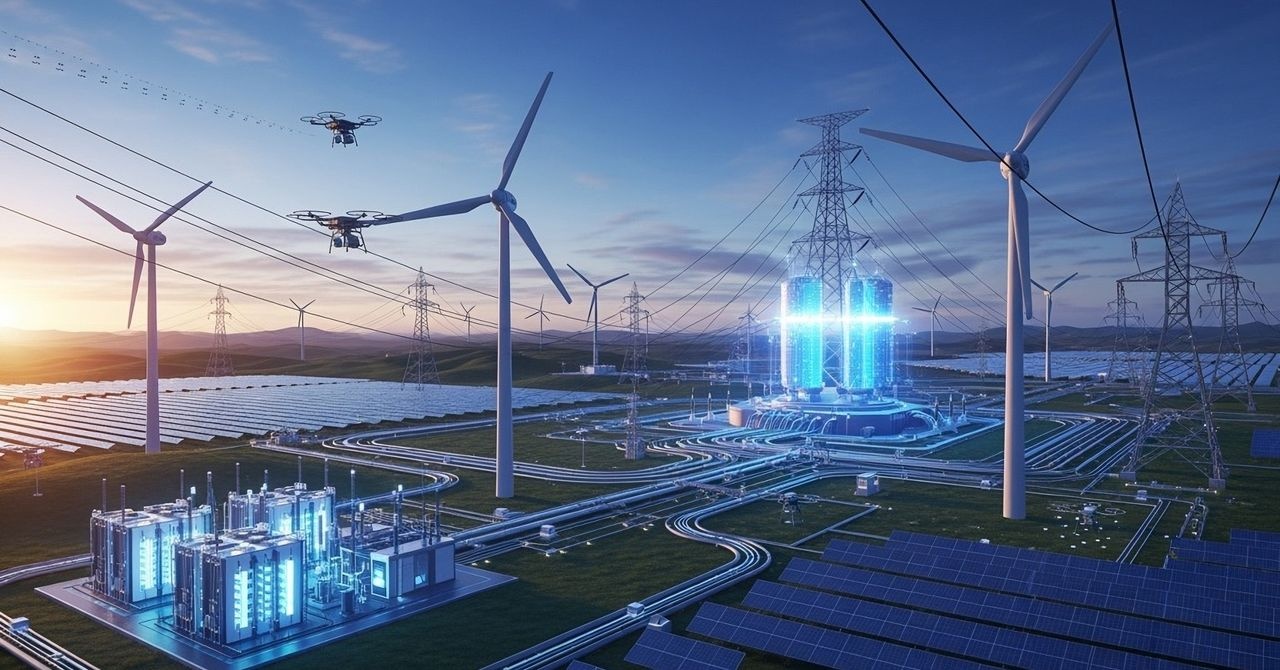 |
| Photo: Shutterstock |
According to the 2026 edition of the Southeast Asia Energy Outlook released by International Energy Agency (IEA) on June 16, disruptions to oil and gas flows through the Strait of Hormuz have exposed major structural risks in Southeast Asia’s energy sector, with stronger action needed to bolster energy security and affordability as the region’s energy use soars.
As energy security concerns move ever higher on the policy agenda for countries in Southeast Asia and beyond, this year’s report explores the trajectory that the region was on prior to the current energy crisis triggered by the conflict in the Middle East – and considers the potential implications of the crisis for policy priorities and investment strategies.
The report highlights the extent to which Southeast Asia is exposed to the current crisis. The Middle East accounts for 60 per cent of the region’s crude oil imports, and almost half of the oil products that are refined or consumed in Southeast Asia come from Middle East crude oil.
As a result, the virtual shutdown of energy shipments through the Strait of Hormuz has had major consequences for countries across the region – leading to shortages of petrochemical feedstocks, chemical products and the liquefied petroleum gas that many households use for cooking.
For now, governments, including Vietnam, are focused on managing short-term impacts by instituting emergency measures to curb demand, such as encouraging residents to work from home and use public transport. Yet based on the region’s pre-crisis trajectory, the report finds it will be equally important to address the deeper energy system vulnerabilities the crisis has laid bare.
Southeast Asia’s energy import bill is projected to reach $160 billion this year. This is set to increase in the decades ahead, potentially rising to $400 billion, or 5 per cent of its economy, by mid-century based on current policy.
“Southeast Asia is a crucial region shaping global energy trends and set to account for 20 per cent of the growth in the world’s energy demand over the next decade, second only to India. The energy crisis has exposed structural weaknesses in its energy sector that need to be addressed rapidly and robustly,” said IEA executive director Fatih Birol. “Diversification of energy sources and supply routes is now a central priority, with deployment of different fuels and technologies, electrification and efficiency serving as important levers to reduce import exposure and strengthen resilience. Stronger regional cooperation would also deliver major benefits.”
Renewable energy investment is estimated to have reached $17 billion across the region in 2025, surpassing the previous peak in 2019, which was primarily driven by rapid solar deployment in Vietnam. Indeed, Vietnam’s revised Power Development Plan 8 raises ambitions for wind, solar, storage and nuclear power.
Coal, which continues to play a major role in the region’s energy sector, could also receive some additional support from the renewed focus on energy security. Indonesia remains the region’s largest coal producer, accounting for nearly 90 per cent of output, followed by Vietnam. Both countries have increased coal consumption alongside power sector expansion
In addition, nuclear power represents a longer-term diversification option in Southeast Asia and there is growing interest in several countries, but its role will depend on accelerating deployment and reining in long construction lead times. In Vietnam, the revised Power Development Plan VIII envisages having 4-6.4 GW of nuclear capacity between 2030 and 2035, rising to 10.5-14 GW by 2050. To facilitate the goal, Vietnam has signed an agreement with Russia in March 2026 to construct its first two reactors.
Electricity is becoming increasingly central in Southeast Asia’s energy future, with power demand already growing twice as fast as overall energy use. This growth is being driven by the expansion of populations and economies, which underpin growth in light industries, and increasing cooling demand. Electricity is making up around 30 per cent of total final consumption in Vietnam and Brunei Darussalam, the countries with the highest shares in Southeast Asia.
The report highlights growing electric vehicle uptake. Fuel price spikes have prompted countries such as Vietnam to expand EV incentives, highlighting the role of electrification in improving resilience. In Vietnam, electric car sales more than doubled between 2024 and 2025 to reach nearly 180,000.
Against this backdrop, the report emphasises the scope for stronger policy action on energy efficiency, a cost-effective way to strengthen resilience both during the current crisis and in the longer term. It also stresses that a more coordinated regional response to the energy challenges at hand could deliver substantial benefits. This applies to electricity – where the ASEAN Power Grid project could deliver cost savings and enhance electricity security – and to oil security and industrial strategies, where greater dialogue can help countries build on their respective strengths.
 | Petrovietnam starts O Mon IV plant to power energy future Petrovietnam has started work on a flagship power project in the Mekong Delta city of Can Tho, pushing forward Vietnam’s gas-to-power development. |
 | EVN and PV GAS agree to supply LNG for Quang Trach power plants Vietnam Electricity (EVN) and Petrovietnam Gas (PV GAS) signed a framework agreement on the supply of liquefied natural gas (LNG) from the Vung Ang LNG terminal in Ha Tinh to the Quang Trach II and III power plants on April 3 in Hanoi. |
 | MoIT to ensure power supply security for 2026 The Ministry of Industry and Trade (MoIT) has reaffirmed that Vietnam’s power supply in 2026 will be fully secured, supported by proactive planning scenarios and synchronised solutions across generation, transmission, and demand management. |
What the stars mean:
★ Poor ★ ★ Promising ★★★ Good ★★★★ Very good ★★★★★ Exceptional
 Tag:
Tag:Related Contents




Latest News



More News
- Vietnam wins first-ever Super Gold Award at World Youth Economic Forum (August 04, 2026 | 17:12)
- MoF minister outlines priorities for international integration to support growth (August 03, 2026 | 23:24)
- AI adoption reshapes marketing across Southeast Asia (July 16, 2026 | 16:37)
- Vietnam leads region in using AI in academia (July 15, 2026 | 15:51)
- ADB maintains Vietnam's growth outlook amid Southeast Asia downgrades (July 10, 2026 | 14:48)
- ASEAN steps up digital push for agriculture MSMEs to boost competitiveness (July 08, 2026 | 12:00)
- Slovak Embassy directs applicants to VFS after alternate provider suspension (July 06, 2026 | 16:22)
- CPHI South East Asia 2026 to drive pharma partnerships across ASEAN (July 05, 2026 | 18:22)
- Vietnam, Singapore aim to shape ASEAN's future through AI and green growth (June 26, 2026 | 16:26)
- Skellefteå: A magnet for global talent (June 25, 2026 | 15:35)










 Mobile Version