
Preventive measures for pneumococcal disease in adults

The symposia brought together over 1,000 healthcare professionals in respiratory medicine, preventive care, and epidemiology from Vietnam and abroad.
The events served as a scientific forum to update colleagues on the burden of pneumococcal disease in adults over 50 years of age and in adults with non-communicable chronic conditions, The attendees also shared international experiences, while a public health tool for prevention, a new, multi-pneumococcal serotype vaccine based on a foundation of conjugate technology, was introduced.
 |
| Over 1,000 healthcare professionals from Vietnam and abroad attended the events. Photo: Pfizer Vietnam |
In Vietnam, infection by the pneumococcus (Streptococcus pneumoniae) is a leading cause of community-acquired pneumonia, which is the most common infectious disease and a top cause of mortality nationwide. Beyond pneumonia, pneumococcal infections also contribute to life-threatening invasive infections like meningitis and bacteremia, which can carry a fatality rate of up to 40 per cent, as well as prevalent conditions like otitis media.
Highlighting the hidden dangers of pneumococcus, Assoc. Prof. Dr Cao Huu Nghia, head of the Department of Biomedical Sciences at the Pasteur Institute in Ho Chi Minh City, emphasised, “Pneumococcus is an unpredictable danger, with over 100 known serotypes, and an estimated 5 per cent to 90 per cent of healthy individuals carrying the bacteria in their nasopharynx. When the immune system weakens, either due to natural ageing or non-communicable chronic conditions such as kidney disease, cardiovascular disease, diabetes, or COPD, the body becomes more vulnerable. Once infected, pneumococcal diseases often progress rapidly, posing life-threatening risks, and placing a significant financial burden not only on patients but also on the healthcare system.”
Pneumococcus is estimated to cause approximately 14.5 million severe cases and around 826,000 deaths globally each year. Beyond its impact on individual health, the disease places a significant burden on patients' families and on the healthcare system.
In Vietnam, the population is ageing rapidly, while non-communicable chronic conditions are increasingly affecting younger age groups, thereby expanding the population at-risk for pneumococcus diseases. Notably, invasive and potentially fatal pneumococcal serotypes continue to circulate in the population. At the same time, antibiotic resistance among pneumococcal strains is compromising treatment options, even prolonging recovery and increasing healthcare costs.
In this context, experts warn that pneumococcal disease remains a major public health challenge and emphasise the urgent need for broader preventive solutions.
Assoc. Prof. Dr. Le Khac Bao, vice director of the University Medical Centre Ho Chi Minh City, emphasised, “Pneumococcus has been, and continues to be, the leading bacterial cause of lower respiratory tract infections in adults. While preventive measures are available, the disease burden continues to rise as the vulnerable population expands and serotypes outside the current protective scope become more prominent. Therefore, strengthening preventive capacity and updating pneumococcal disease control strategies, including the introduction of a new conjugated vaccine offering protective coverage against both existing vaccine serotypes and serotypes targeted by higher valency conjugate formulations, are crucial to safeguarding public health, alleviating pressure on healthcare systems, and ultimately enhancing the quality of life across our society.”
The need to prioritise pneumococcal prevention in high-risk populations
Recently, the World Health Organisation (WHO) included Streptococcus pneumoniae on its Bacterial Priority Pathogens List for targeted prevention among high-risk populations to protect global health and alleviate pressure on healthcare systems.
Specifically, Dr. Mark Fletcher, senior director, Pfizer Vaccines Research and Development, Medical Affairs, Emerging Markets (EM) region, stated, “Based on global experience, adult pneumococcal prevention strategies often include epidemiological surveillance of pneumococcal disease serotypes, raising public awareness of health promotion, of management of non-communicable chronic conditions, and of proactive prevention among high-risk groups. Vaccination offers both medical and economic benefits.”
To date, the Ministry of Health has authorised the use of five pneumococcal vaccines in Vietnam, differing in formulation, serotype coverage, and clinical development/post-introduction experience. Among them, four are conjugated vaccines, a technology known for inducing immunological memory and reducing pneumococcal carriage in the nasopharynx, thereby supporting long-term protection and contributing to herd immunity.
 |
| Prof. Dr. Phan Trong Lan, president of the Vietnam Association of Preventive Medicine. Photo: Pfizer Vietnam |
Speaking at the symposia, Prof. Dr. Phan Trong Lan, president of the Vietnam Association of Preventive Medicine, shared, "Vietnam is facing a rapidly ageing population, with many elderly individuals suffering from multiple health conditions. Therefore, preventing pneumococcal infections through vaccination is extremely necessary to reduce the burden of community-acquired pneumonia, which is one of the leading causes of death from infectious diseases, especially in people with pre-existing conditions.”
“Preventive measures are also continuously updated, incorporating medical advancements and disease control experiences from many countries around the world, particularly the use of broad-spectrum vaccines with a proven safety and efficacy record, coupled with increasing vaccination coverage. This plays a crucial role in preventing complications and deaths from pneumococcal disease, thereby contributing to the care, protection, and improvement of public health," he added.
Experts at the symposia also stressed that to advance pneumococcal disease prevention strategies and to ensure broader implementation among high-risk populations, close collaboration is essential among health authorities, medical experts, and leading innovators in biomedical technology.
 |
| Darrell Oh, general director of Pfizer Vietnam, gave the opening speech. Pfizer Vietnam |
Darrell Oh, general director of Pfizer Vietnam, shared, “With our global expertise in respiratory disease prevention, we are committed to supporting Vietnam’s healthcare landscape by introducing the latest scientific advancements, providing professional training for healthcare workers, and expanding access for vulnerable communities. Staying true to our global mission of delivering breakthroughs that change patients’ lives, Pfizer is proud to contribute to strengthening Vietnam’s preventive healthcare system. This symposia series is testament to the close collaboration between professional bodies, medical experts, and industry partners in building a sustainable, proactive, and practical disease prevention strategy for the community.”
 | Multinational pharma groups keen on robust partnerships After making gains in 2022, multinational corporations will prioritise strengthening local partnerships to support their ambition of transforming the treatment landscape – but they are also pleading for further legal clarity. |
 | Pfizer seeks to boost presence in Vietnam A business mission led by Anil Argilla, president of Emerging Markets Asia at Pfizer, worked with Deputy Minister of Health Do Xuan Tuyen and the heads of other departments on May 25 to discuss business opportunities in Vietnam. |
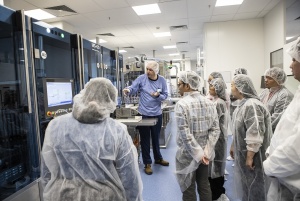 | Pfizer takes big steps with new vaccines Biopharmaceutical company Pfizer has announced that its two-in-one flu and COVID-19 jab will be moving into a final-stage trial in the coming months, along with the finalisation of the phase-three trials for its mRNA vaccine against influenza for adults. |
What the stars mean:
★ Poor ★ ★ Promising ★★★ Good ★★★★ Very good ★★★★★ Exceptional
 Tag:
Tag:Themes: Healthcare Platform
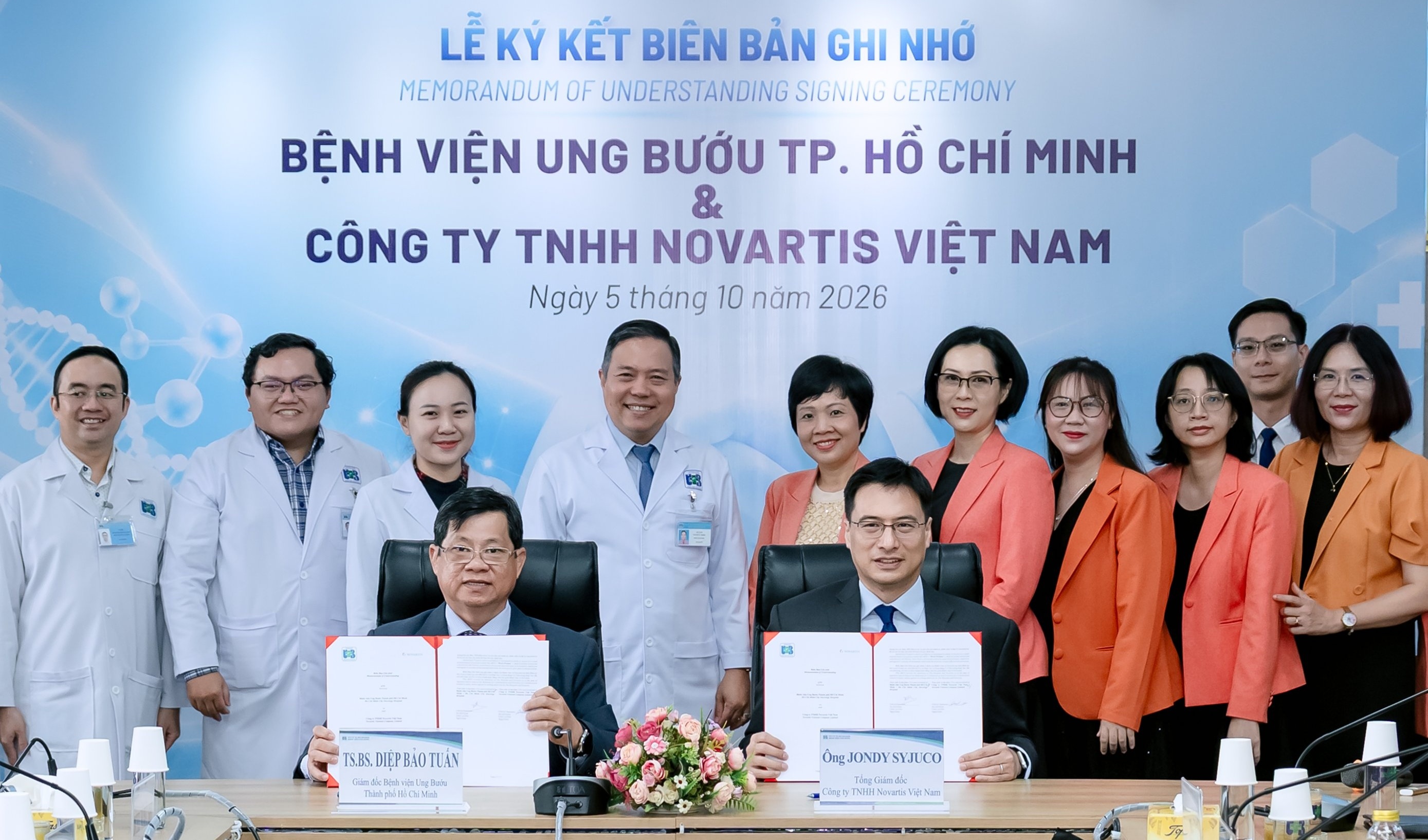
- Ho Chi Minh City Oncology Hospital signs MoU with Novartis Vietnam
- Driving early detection and integrated liver disease management
- Vaccinology training programme launched to boost preventive care capacity
- Opella and Hoan My Academy partner to advance medical education
- AstraZeneca Vietnam upgrades logistics system to support growing operations
Related Contents







Latest News



More News
- HER2+ breast cancer carries $3.71 billion productivity burden in Vietnam (July 30, 2026 | 14:32)
- Party Resolution charts Vietnam’s development model through 2045 and beyond (July 30, 2026 | 12:29)
- STEM education evolves for AI era (July 21, 2026 | 09:38)
- Vietnam’s workforce ready for AI era (June 26, 2026 | 16:04)
- Why child online safety is now a business imperative (June 24, 2026 | 11:00)
- Hybrid work is reshaping Vietnam’s labour market (June 17, 2026 | 16:24)
- World's children exposed to at least three overlapping climate threats (June 17, 2026 | 15:54)
- Thai Nguyen event promotes safer food systems for World Food Safety Day (June 11, 2026 | 14:08)
- Vietnam emerges as rising hub for wealth creation (June 02, 2026 | 18:31)
- Danang launches DIFF 2026 with world-class performances (May 31, 2026 | 08:00)


Latest News






 Mobile Version