
Novartis leveraging new policies to drive healthcare transformation

How do you assess the role and progress of innovation in Vietnam’s healthcare system? And what contributions has Novartis, along with other stakeholders, made to this journey?
When we came to Vietnam about 20 years ago, we brought our hypertensive and pain portfolios, as well as a medicine for patients with chronic myeloid leukaemia.
 |
| Photo: Novartis Vietnam |
One of our first impactful innovative approaches was the GIPAP Patient Assistance Programme. In Vietnam, GIPAP was one of the first large-scale patient access schemes, laying the foundation for many future community activities.
In 2012, we introduced the primary healthcare project, Cung Song Khoe which was a collaboration with the Ministry of Health (MoH) and different provinces across Vietnam to help with hypertension, diabetes screening for patients. Over the past three years, we have expanded the initiative from simple screening to also include treatment monitoring and follow-up visits.
Another important milestone was in 2019, when we established a legal entity here in Vietnam, becoming one of the first multinational corporations to take that step after Decree 54 was first published.
One of the things I’m most proud of is that Novartis has been conducting clinical trials in Vietnam for many years, reflecting our significant investments, and long-term commitment to bringing both innovation and impact to Vietnam’s healthcare ecosystem.
Through these trials, Vietnamese patients could have early access to potentially life-changing and innovative therapies. Since 2011, we have carried out a nearly 80 multicentre clinical trials in Vietnam, with a total investment of nearly $31.5 million.
Beyond trials, Novartis is working to accelerate patient access to new therapies. The company is leading efforts to introduce cutting-edge therapies in Vietnam, including cell and gene therapies for spinal muscular atrophy in children.
Today, Novartis is prioritising four main therapeutic areas: cardiovascular-renal-metabolic, oncology, immunology, and neuroscience.
Over the past few years, we have collaborated extensively with the healthcare ecosystem on many meaningful initiatives, proving us to be a trusted partner in Vietnam. For example, last year we started a partnership with the Vietnam Women's Union to help women be more aware of the risks of breast cancer.
We also work with the National Fund for Vietnamese Children on the children's rare disease, particularly for spinal muscular atrophy.
We also launched some major initiatives to help develop the local capabilities in Vietnam, such as partnering with healthcare organisations in enhancing of research and digital healthcare, and working with key partners like FPT Long Chau pharma chain to run training activities for their pharmacists.
How do you see Vietnam’s efforts to draw in investment for its innovative pharmaceutical industry, and what are the most significant benefits beyond foreign capital?
As countries worldwide vie to attract foreign investment into their pharmaceutical innovation ecosystems, Vietnam is emerging as a promising but still developing.
From the US to emerging markets, governments are leveraging policy, infrastructure, and regulatory reform to secure investments that align with long-term socioeconomic and sustainable development goals.
In this competitive global environment, Vietnam’s strengths lie in its high-quality medical professionals, strong work ethic, and growing interest in international-standard clinical research. We see great potential here, particularly in the quality of the people and their commitment to global best practices.
However, key gaps remain. The infrastructure, especially around digital health and data systems, is still lagging. More critically, speed and predictability must be improved.
Countries compete based on how quickly they can recruit the first patient once a trial is launched. In this regard, Vietnam still needs to accelerate timelines to remain competitive. Streamlined processes for trial approvals and patient recruitment could help position the country as a preferred destination for cutting-edge medical research.
Beyond foreign investment, hosting clinical trials brings high-impact socioeconomic benefits. These include upgrading local medical capacity through training and international collaboration, accelerating patient access to breakthrough therapies, boosting national healthcare standards through integration with global practices and enhancing scientific reputation and data credibility on the world stage.
Another pivotal factor is regulatory predictability. Long-term investments in innovative medicine rely on stable, transparent policy environments. When we make decisions, we plan for the next 10 or 15 years, not just the next fiscal quarter.
What key priorities should Vietnam focus on to expand space for health innovation and ensure patients gain timely access to breakthrough therapies?
To unlock greater potential for health innovation in Vietnam, the pharmaceutical industry emphasises one essential goal: ensuring patient access to innovative medicines.
For pharmaceutical companies like Novartis, access to medicine from patients is the single most important factor that drives investment in emerging markets.
 |
| Photo: Novartis |
Recent updates to drug registration regulations and the National Innovation Drug List have been seen as promising progress. However, industry leaders stress the need for predictable implementation.
The other important factor is the financing policy. With out-of-pocket health expenditure in Vietnam among the highest in Southeast Asia. We need new funding models, whether it’s public-private partnerships, outcome-based pricing, or dedicated innovation funds.
A strategic focus on healthcare financing would reduce the burden on patients while signalling to global investors that Vietnam values innovation and is prepared to support it sustainably.
Beyond infrastructure and regulation, attracting pharmaceutical innovation also depends on a country’s willingness to invest in innovation itself. Countries that prioritise innovation tend to be those where people have real access to it, and where policies reflect a commitment to supporting it.
Looking ahead, what role will the Politburo’s Resolution No.57-NQ/TW play in driving the sustainable development of Vietnam’s healthcare system?
Resolution 57, which sets out a national agenda for science, technology, innovation, and digital transformation, including in healthcare, is widely seen as a crucial and timely step towards sustainable development in Vietnam’s health sector.
Novartis welcomed the policy for providing a clear strategic direction for both the public sector and for private investment. We particularly support the plan to raise private sector participation in hospital infrastructure to 30 per cent.
Private-sector engagement is expected to play a vital role in expanding access to innovative therapies, enhancing treatment quality, and relieving pressure on the public health system. Novartis noted its ongoing collaboration with both public and private hospitals to help bridge this gap.
The Vietnamese government’s commitment to healthcare innovation is evident. Outperforming evidences includes Prime Minister Pham Minh Chinh’s active engagement at the World Economic Forum in Davos in January, where he personally invited global pharma leaders, including Novartis, to advise on Vietnam’s healthcare development strategy, and others.
We see alignment across stakeholders, from regulators to pharmacy chains, and from global companies to local institutions. There’s a shared commitment to elevate Vietnam’s healthcare ecosystem.
Importantly, Resolution 57 also signals a shift in national healthcare priorities, from a traditional focus on disease prevention to a broader vision of innovation-led development. This pivot includes embracing digital health solutions, AI-driven diagnostics, and faster access to cutting-edge therapies through a modernised regulatory framework.
 | Pharma initiatives to cure the needy Multinational pharmaceutical groups are seeking ways to support Vietnamese in accessing medical services, and widen their market share in the country in the face of drastic competition. |
 | Novartis Vietnam kicks off PPP project to strengthen primary healthcare Novartis Vietnam Ltd. on July 21 collaborated with Ha Tinh Department of Health and Center of Disease Control (CDC) to organise a workshop to officially kick off the project to strengthen primary healthcare in the province. |
 | Vietnam Heart Association, Novartis Vietnam partner to promote cardiovascular education Following a successful first phase in 2020, Novartis Vietnam and the Vietnam Heart Association (VNHA) have officially signed a collaboration agreement on implementing the second phase of the Tam Diem virtual talk show series on cardiology for healthcare professionals (HCPs) nationwide. |
What the stars mean:
★ Poor ★ ★ Promising ★★★ Good ★★★★ Very good ★★★★★ Exceptional
 Tag:
Tag:Themes: Healthcare Platform
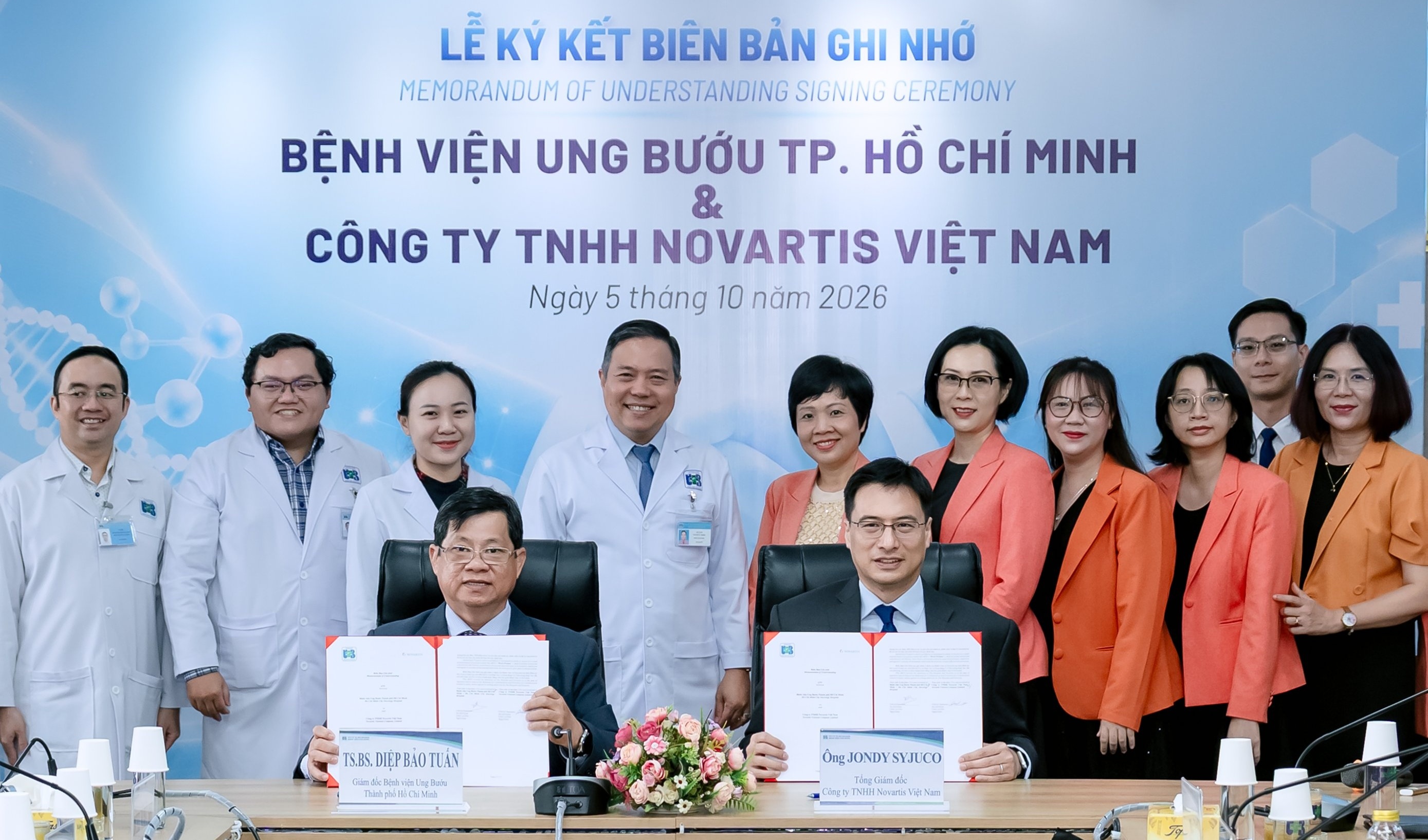
- Ho Chi Minh City Oncology Hospital signs MoU with Novartis Vietnam
- Driving early detection and integrated liver disease management
- Vaccinology training programme launched to boost preventive care capacity
- Opella and Hoan My Academy partner to advance medical education
- AstraZeneca Vietnam upgrades logistics system to support growing operations
Related Contents






Latest News






More News
- DSV backs Vietnam's push for more sustainable logistics (August 04, 2026 | 17:10)
- Roche Pharma Vietnam appoints new general manager, reinforcing commitment to Vietnam healthcare (July 23, 2026 | 15:41)
- Constant Energy on Vietnam solar power and policy hurdles (July 22, 2026 | 08:00)
- Key points when drafting a company charter to reduce disputes in Vietnam (July 20, 2026 | 08:00)
- AkzoNobel executive on sustainability as a manufacturing growth driver (July 10, 2026 | 14:53)
- LivWell expands holistic health ecosystem for businesses and communities in Vietnam (July 09, 2026 | 16:43)
- Thai beverage group sees Vietnam as long-term growth partner (July 02, 2026 | 08:30)
- AstraZeneca chief on Vietnam's healthcare financing shift (June 30, 2026 | 16:47)
- Vietnam emerges as one of VistaJet’s fastest-growing markets (June 18, 2026 | 16:21)
- Goldwind Asia chief on driving quality growth in wind sector (June 15, 2026 | 17:54)









 Mobile Version