
Vietnam charts path to mature smart cities with AI at the core

On December 23, the 2025 Vietnam-Asia Smart City Summit opened in Hanoi, organised by the Vietnam Software & IT Services Association (VINASA) in collaboration with the Hanoi People’s Committee and under the patronage of the Ministry of Science and Technology (MST). The summit marked a turning point for smart city development in Vietnam, ushering in a phase of implementation, standardisation, and effectiveness, driven by Decree No. 269/2025/ND-CP and accelerated AI adoption.
After nearly a decade of Project 950 (2018–2025), successes have been tempered by challenges such as fragmented data systems, scattered investment, and outcomes that fall short of the resources mobilised.
Hoang Huu Hanh, deputy director general of the National Digital Transformation Department under the MST, stated that a successful smart city does not begin with technology, but with institutions, data, and people.
“Resolution 57 has paved the way, and Decree 269 now provides the legal framework to dismantle digital fragmentation. It is time for localities to comprehensively review their smart city programmes, shifting away from trend-driven investment towards addressing the most pressing urban challenges in line with national data standards,” he said.
Sharing the same perspective, Dr. Tran Ngoc Linh, representing the Urban Development Agency under the Ministry of Construction, cautioned against separating technology from core urban planning.
“A smart city is not an independent technology project running parallel to urban planning. It is, in essence, a modern urban development model. By the end of this year, 37 localities had adopted smart city schemes, but quantity matters far less than quality. We must avoid chasing unsustainable models and instead use technology to directly tackle the most critical urban bottlenecks,” said Linh.
Nguyen Van Khoa, chairman of VINASA, highlighted a key shift shaping the future of cities: the move from connected cities to cognitive cities.
“Leading cities in the region are no longer stopping at passive Internet of Things connectivity. They are deploying AI as a true ‘operating system’ with the capacity to learn, adapt, and make decisions autonomously,” he said. “Cognitive cities leverage data and AI to proactively meet residents’ needs rather than merely reacting, aiming to use 90 per cent of data effectively. Vietnam’s smart cities must move towards genuine maturity: smarter, greener, and more humane.”
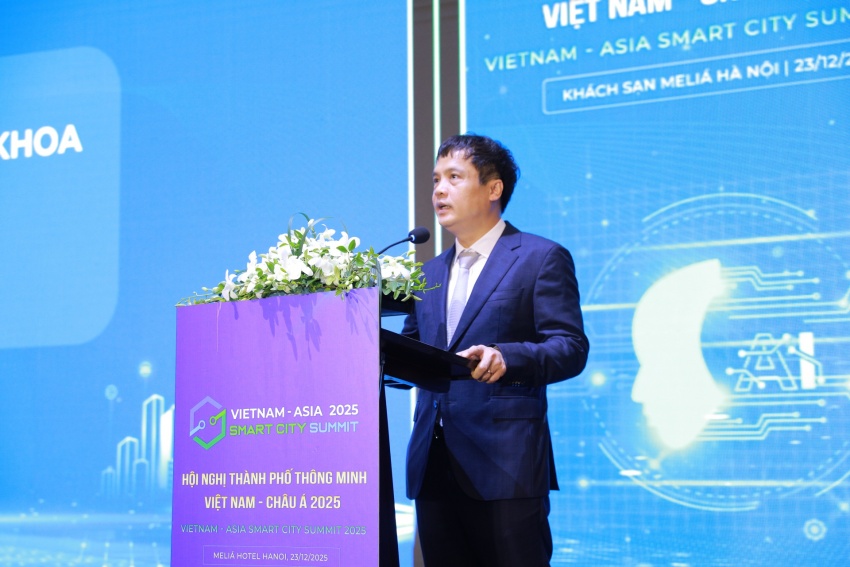 |
| Nguyen Van Khoa, chairman of VINASA |
Echoing this vision, Viettel Group announced its strategy to develop Vietnamese-made GPU infrastructure and AI cloud platforms to serve as the brain of cognitive city operations.
MobiFone shared plans for Smart City 3.0, emphasising that the core lies not in the number of smart devices or advanced sensors, but in how cities are operated: proactively, predictively, and continuously optimised based on real-world data.
At the summit, FPT also proposed AI solutions that directly address traffic and environmental challenges, expressing its ambition to help Hanoi become Vietnam’s first AI city.
VNPT introduced GEO AI technologies to proactively manage natural resources and mitigate flooding risks.
One of the most debated and closely watched themes at the summit was urban governance in the context of the two-tier government model being implemented in Hanoi, Ho Chi Minh City, and Danang, where district- and ward-level People’s Councils have been abolished to streamline administrative structures.
This raises a fundamental question: how can city leaders capture real-time grassroots realities and ensure effective oversight without being overwhelmed by multiple layers of administrative reporting?
Dr. Nguyen Nhat Quang, director of the VINASA Sci-Tech Institute, introduced the concept of the Federated Digital Twin as a governance solution.
“Under the two-tier model, the principle is that localities know, decide, act, and take responsibility. However, effective supervision requires a Digital Twin. Data generated at the commune or ward level is managed and updated locally, while being interconnected at the provincial level through a federated model,” said Quang.
“City leaders can observe real-time data flows from the grassroots via the digital replica. This is how technology enables governments to remain close to citizens, even with one fewer administrative layer,” he added.
Reinforcing this argument, Senior Colonel Vu Van Tan, Director of the Police Department of Social Order Administrative Management under the Ministry of Public Security, noted that social governance is fundamentally about governing people.
“When population data that is accurate, complete, clean, and live is integrated into urban digital maps, the root causes of public security and order issues can be addressed. Local police officers and ward officials act as living sensors, updating this data daily to create a living database for smart cities,” he said.
A key highlight elevating the stature of this year’s summit was the strong participation of international organisations, particularly regional connectivity initiatives.
At the plenary session, Hong Sin Kwek, chairwoman of ACXOA, announced the 'ONE ASEAN - 100 Digital Liveable Cities' initiative.
“The future of ASEAN lies not in individual countries, but in interconnected networks of megacities. Over the next five years, ACXOA aims to connect 100 leading cities where technology is leveraged to create inclusive prosperity. Vietnamese cities such as Hanoi, Danang, and Ho Chi Minh City, with their impressive digital transformation momentum, will serve as critical hubs in this network, attracting green capital and enabling regional data sharing,” said Kwek.
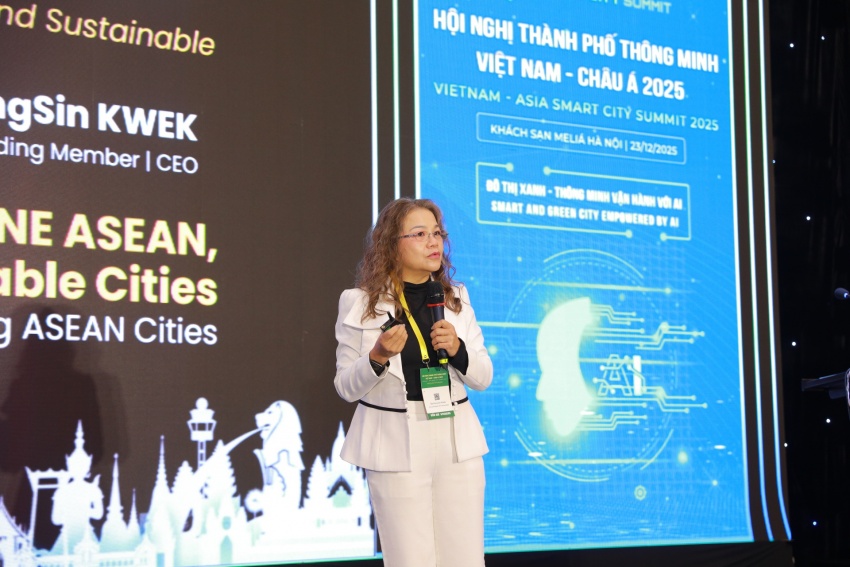 |
| Hong Sin Kwek, chairwoman of ACXOA |
This initiative opens significant opportunities for Vietnamese-made smart city solutions to extend beyond domestic deployment and enter the highly promising ASEAN market.
Representing the capital, Truong Viet Dung, Vice Chairman of Hanoi People’s Committee, reaffirmed the city’s strong commitment to a people-centred approach, positioning citizen satisfaction, perceived happiness, and quality of life as the most important benchmarks.
“Leveraging special policy mechanisms, Hanoi will decisively identify and implement solutions to address the city’s bottlenecks, while assuming a pioneering role in researching and piloting sandbox models. Practical implementation will provide valuable references for scaling up across other localities,” he added.
 | Sustainability in DNA of Keppel Vietnam's future urban development strategy At the Sustainable Development Conference 2025 held on November 27 in Hanoi, Lee Leong Seng, head of property development in Vietnam at Keppel Ltd., spoke about the company's environmental, social, and governance (ESG) journey and its sustainable urban development directions. His insights confirm Keppel's unwavering commitment to placing sustainability at the core of all its operations. |
 | Unlocking urban potential of smart cities The development of smart satellite cities is reshaping Hanoi's spatial structure. In Hoa Lac, where science, technology, and education converge, the Tien Xuan Smart City is envisioned as the urban core that connects research, production, and everyday life. |
 | Seven major projects launched to drive Hanoi’s next growth phase A new phase of development for the capital was signalled as a series of major investment and construction projects were simultaneously launched across Hanoi. |
What the stars mean:
★ Poor ★ ★ Promising ★★★ Good ★★★★ Very good ★★★★★ Exceptional
 Tag:
Tag:
Latest News
More News
- MIK Group launches House of MIK in Ho Chi Minh City (October 03, 2026 | 17:00)
- Vietnam hospitality shifts towards integrated mixed-use developments (October 03, 2026 | 10:00)
- Stavian IP accelerates its modern expansion (October 02, 2026 | 14:00)
- ESG for future-ready industrial success (October 02, 2026 | 09:00)
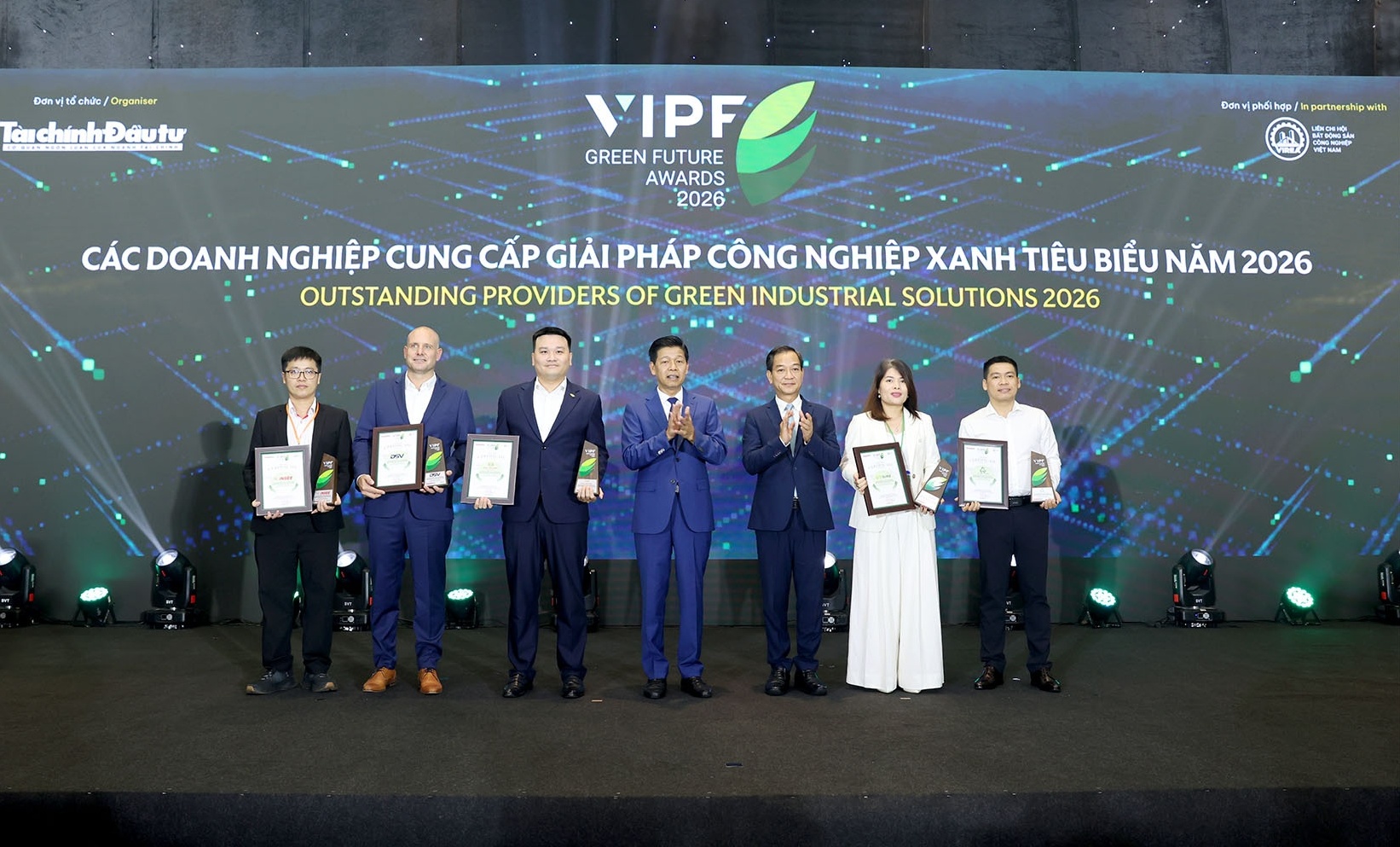
- Green Future Awards honour five leading industrial park developers (October 01, 2026 | 22:20)
- Green transition leaders honoured at Green Future Awards 2026 (October 01, 2026 | 22:10)
- Six developers honoured as Emerging Green Industrial Property Developers (October 01, 2026 | 22:00)
- Why logistics will define the next phase of growth (October 01, 2026 | 09:00)
- Urban Development Law takes effect on October 1 (September 30, 2026 | 17:49)
- Phu My Hung to demolish Lawrence S. Ting Building for new development (September 30, 2026 | 17:43)








 Mobile Version