
GE HealthCare backs Vietnam’s drive for digital transformation in hospitals

 |
Speaking at the Hospital Management Asia Conference (HMA 2025) held in Ho Chi Minh City on September 10–11, Yadav highlighted Vietnam’s growing role in advancing healthcare innovation and GE HealthCare’s efforts to help hospitals improve efficiency and patient outcomes through digital solutions.
What makes Vietnam well-placed to lead the next phase of digital health transformation in the region?
AI in healthcare is advancing at a breathtaking pace. Countries that can responsibly harness hospital data at scale that will unlock the greatest gains in access, quality, and efficiency. From this perspective, Vietnam has a real advantage: fewer legacy constraints mean it can invest in modern, interoperable systems from the outset.
Vietnam is also investing in the digital backbone needed for health data at scale. Recent developments include ground-up AI and data infrastructures such as FPT’s $174-million AI Center in Binh Dinh and plans for a $200-million AI factory with Nvidia technologies, alongside national efforts to establish a National Data Centre and expand certified hyperscale and telco data centres. Together, these moves strengthen the foundation for secure, real-time health data flows essential to AI-enabled care.
On the policy front, Vietnam passed two important laws: the Law on Digital Technology Industry and the Personal Data Protection Law, both effective from January 1, 2026. These set out incentives for digital industries and guardrails for data protection that are critical for trustworthy AI in health.
The market signals are strong. Healthcare expenditure in Vietnam is projected to reach about $33.8 billion by 2030, with growing demand from domestic patients and rising interest in medical travel. Ho Chi Minh City already attracts a significant share of international medical visitors each year, which is evidence of the country’s potential to serve both local and regional patients as quality and accreditation rise.
How is GE HealthCare collaborating with hospitals in Vietnam to bring its vision of limitless, patient-centred healthcare closer to reality?
Our vision is ambitious, but we believe it can be achieved through integration of three essential dimensions of care. These include using advanced imaging and diagnostics to detect diseases earlier and more accurately, supporting clinicians with data-driven insights to make more confident treatment decisions, and helping hospitals run more efficiently by streamlining operations and patient flow.
What makes this approach powerful is the way these elements work together. When digital tools, medical devices, and disease-specific expertise are combined, they create a connected ecosystem that supports every stage of the patient journey, from screening and diagnosis to treatment and follow-up.
In Vietnam, this means hospitals can build clinical capacity, reduce bottlenecks, and align with international standards, while patients benefit from faster access to care and better outcomes. Importantly, we don’t just provide technology, we co-design solutions with hospitals and invest in training activities that build local skills. That ensures transformation is not just effective but also sustainable, tailored to Vietnam’s healthcare needs today and in the future.
How does GE HealthCare tailor its partnerships to the different needs of Vietnam’s public and private hospitals?
Public and private hospitals share the same goal: better patient outcomes. Public facilities often face high volumes and staffing and resource constraints, while private systems are focused on international standards, patient experience, and medical tourism. We tailor our support to each, co-creating fit-for-purpose workflows, clinical protocols, and digital operating models.
We also encourage public-private collaboration where it can serve patients best. For example, pre-arrival data and ambulance-to-ED connectivity reduce handover time and support critical early decisions, inter-hospital data exchange ensures continuity when patients are transferred between facilities. These are the kinds of operational wins that unlock capacity without heavy capital expenditure.
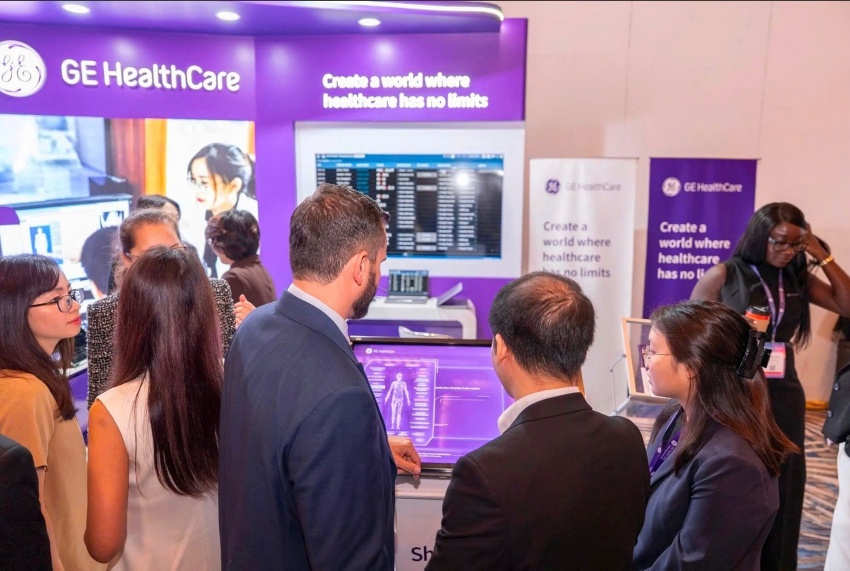 |
| GE HealthCare’s technologies drew strong interest at HMA 2025 in Ho Chi Minh City on September 10–11 |
What innovations did GE HealthCare highlight at HMA 2025 to improve hospital efficiency and patient outcomes?
At HMA 2025, we showcased how our portfolio of over 50 AI-enabled applications is expanding beyond traditional imaging to enhance overall hospital command and operations. Our Command Center platform helps leaders monitor patient flow and bed capacity in near-real time, integrating data from across systems to support safer, faster, more equitable care.
We also showcased imaging innovations that are directly relevant to Vietnam’s access and capacity needs. Sonic DL™, a deep-learning acceleration technology, has demonstrated up to 83 per cent faster MR acquisitions in specific use cases, helping sites scan more patients per day while improving patient experience.
Revolution Apex Elite CT brings high-end performance for advanced cardiac workups and has seen early deployments in the Asia-Pacific region. These innovations are about doing more, faster, and with consistent quality, all critical in high-throughput public hospitals.
How does GE HealthCare help hospitals balance the cost of AI investment with the need to improve efficiency and patient access?
Our approach is to improve throughput and quality using the systems hospitals already have, and to pair technology with training so benefits stick. Some examples include light-lift integration, in which the Command Center connects to existing monitors and information systems, helping teams orchestrate flow and staffing without wholesale replacement.
Throughput and access is another technology, in which the Sonic DL™ acceleration helps MR units complete more studies within the same scanner hours, easing backlogs and reducing delays for patients.
What else is the skills at scale: Alongside deployments, we support continuing medical education and hands-on training, for example, at the Advanced Imaging Education Center at VinUniversity and through CME courses with Vinmec/VinUni, so physicians, technologists, and biomedical engineers can realise the full value of digital tools.
The result is a sustainable pathway: better utilisation, consistent quality, and improved patient access, without imposing a heavy capital burden.
 |
| GE HealthCare's Command Center platform |
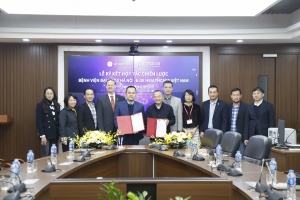 | Hanoi Medical University Hospital and GE HealthCare sign MoU Hanoi Medical University Hospital and GE HealthCare signed an MoU for the education sector on December 18, marking the beginning of a collaborative journey aimed at transforming healthcare education and fostering cutting-edge scientific research in Vietnam. |
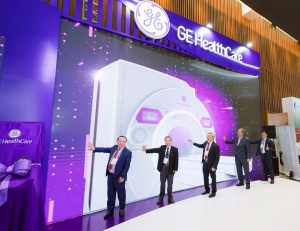 | GE HealthCare brings healthcare solutions to science congress On August 26, GE HealthCare launched cutting-edge technologies designed to enhance diagnostic and treatment efficiency for physicians in diagnostic imaging. |
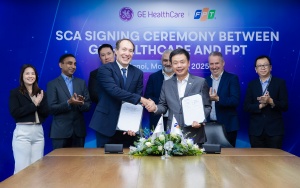 | FPT and GE HealthCare expand strategic partnership FPT and GE HealthCare announced a strategic cooperation agreement on April 2, expanding their commercial alliance to advance product strategy and development and establish an FPT Competency Centre in Vietnam. |
What the stars mean:
★ Poor ★ ★ Promising ★★★ Good ★★★★ Very good ★★★★★ Exceptional
 Tag:
Tag:Related Contents




Latest News





More News
- Strategic vision key to high-speed rail success in Vietnam (August 07, 2026 | 10:03)
- DSV backs Vietnam's push for more sustainable logistics (August 04, 2026 | 17:10)
- Roche Pharma Vietnam appoints new general manager, reinforcing commitment to Vietnam healthcare (July 23, 2026 | 15:41)
- Constant Energy on Vietnam solar power and policy hurdles (July 22, 2026 | 08:00)
- Key points when drafting a company charter to reduce disputes in Vietnam (July 20, 2026 | 08:00)
- AkzoNobel executive on sustainability as a manufacturing growth driver (July 10, 2026 | 14:53)
- LivWell expands holistic health ecosystem for businesses and communities in Vietnam (July 09, 2026 | 16:43)
- Thai beverage group sees Vietnam as long-term growth partner (July 02, 2026 | 08:30)
- AstraZeneca chief on Vietnam's healthcare financing shift (June 30, 2026 | 16:47)
- Vietnam emerges as one of VistaJet’s fastest-growing markets (June 18, 2026 | 16:21)








 Mobile Version