

Self-care signals shift towards sustainable healthcare

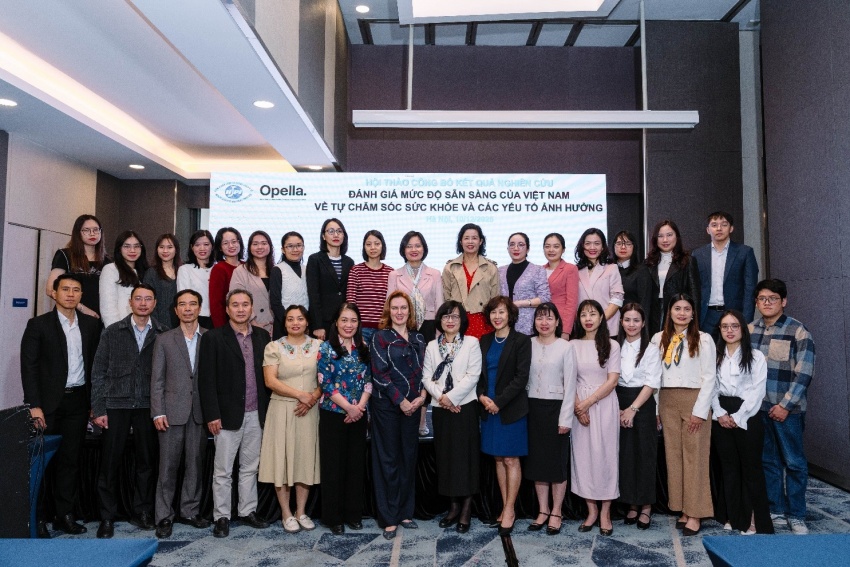
The Health Strategy and Policy Institute under the Ministry of Health, in collaboration with Opella Vietnam, announced on December 15 the results of a study of Vietnam’s readiness for self-care and its influence factors.
The study was conducted from June to December 2025, using the Global Self-Care Federation’s Self-Care Readiness Index, which comprises four key factors and fourteen component indicators. This assessment framework has been applied in 20 countries worldwide.
 |
| Photo: Opella |
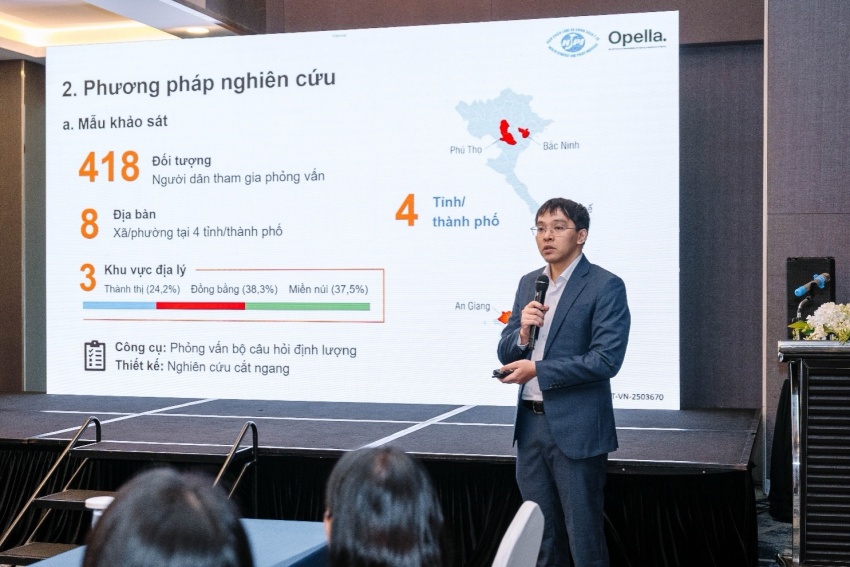
The research combined desk review and field studies conducted in Phu Tho, Bac Ninh and An Giang provinces as well as the city of Hue.
Field research applied both qualitative and quantitative approaches, including five in-depth interviews with policymakers, 28 focus group discussions with health officials, healthcare providers and the public, as well as structured questionnaire interviews with 171 healthcare providers and 418 consumers.
Vietnam achieved an overall score of 3.04 out of 4, ranking fourth in self-care readiness in international comparison, behind Singapore, Australia and Germany. Scores across the four key enablers include Stakeholder Support and Adoption (2.79); Consumer and Patient Empowerment (3.06); Self-Care Health Policy (3.05); and Regulatory Environment (3.26).
Overall, the results indicate varying levels of performance across the four key enablers, reflecting both areas of progress and aspects requiring further development. Specifically, the third key enabler is above the average but still lower than several countries in the 2022 assessment.
The indicator on policy actions conducted to raise awareness on the safe use of over-the counter (OTC) medicines and encourage the adoption of a healthier lifestyle (3.17) achieved the highest score, demonstrating Vietnam’s strong capacity in community-based health communication and education.
The indicator self-care in health policies (3.05) shows that while Vietnam has not yet issued a dedicated national self-care strategy, self-care content has been incorporated into key documents such as the National Strategy for Protection, Care and Improvement of People’s Health, and the Vietnam Health Programme.
In regard to the regulatory environment, which scored the highest among the four enablers (3.26), the indicator on Access and Distribution of Self-Care Products (3.75) shows very high availability through multiple channels. Current regulations allow consumers to purchase OTC medicines, health supplements and medical devices online.
Proactive care
Dr. Nguyen Khanh Phuong, director of the Health Strategy and Policy Institute, shared, “The findings highlight that Vietnam has established solid foundations to advance self-care, while also pointing to clear opportunities to further strengthen mainstream communication, healthcare counselling, and safe access to reliable information. This provides a strong basis for shaping practical models and national directions for self-care in Vietnam.”
The results reflect a positive shift in growing public perception in self-care, and the efforts to transform the healthcare system towards a people-centred approach, in line with the direction of Resolution No.72-NQ/TW, which promotes the nationwide movement for proactive healthcare, and other related documents.
According to a recent survey of The Frontierview about Vietnam’s healthcare market, there is a rising trend in self-care. Patients are looking for solutions that empower them to manage their own health through digital tools, apps, and over-the-counter products. Self-care is estimated to save the global healthcare system nearly $120 billion in costs and free up an estimated 1.8 million hours of healthcare professionals’ time each year.
This is a game-changer for a market like Vietnam, the survey report said, as it can ease the burden on hospitals and doctors, making the entire system more efficient and accessible for everyone.
In addition, on December 10, Vietnam passed the Law on Disease Prevention. The implementation of the National Target Programme on Healthcare, Population and Development for 2026-2035, approved in December, also plays a crucial role to ensure stable, long-term financial resources for the effective implementation of Resolution 72.
Experts said that the new issuances are important as Vietnam is facing a double burden of disease, having to control infectious diseases while also dealing with a sharp increase in non-communicable diseases (NCDs).
Dr. Angela Pratt, representative in Vietnam for the World Health Organisation, said, “I am confident that with continued support from international and domestic partners, we can scale up our actions to prevent and control NCDs and build a healthier Vietnam,” emphasised Dr. Angela Pratt.
Developing capacity
Despite the improvements, some issues still linger. In particular, the indicator on Access to personal health data (2.69) and the indicator on Digital tools for self-care (2.91) remain at an average level.
This highlights opportunities to accelerate implementation of electronic health records linked to VNeID, as well as to further develop and promote official digital platforms such as websites, applications and hotlines to support people in accessing information on disease conditions, prescriptions, care guidance, chronic disease management, medical information and OTC medicines to support self-care.
Moreover, 49 per cent of consumers reported that they need additional knowledge to practice self-care more proactively. This shows the need to strengthen communication and public health education.
 |
| Photo: Opella |
Although Vietnam’s readiness for self-care is relatively strong compared to the region, the study highlights the need to further enhance public awareness, strengthen healthcare workers’ counselling capacity, and improve access to reliable information.
According to the study, priority directions include expanding mainstream communication on self-care; accelerating the rollout of electronic health records integrated with VneID to enable people to access medical history, test results and medicines; promoting electronic labelling for medicines, particularly OTC products; and piloting community-based self-care models to serve as a foundation for a future national self-care strategy.
Dr. Valentina Belcheva, country head of Opella Vietnam and Cambodia, said the study offered for the first time in Vietnam a systematic views of the needs and barriers people face on their self-care journey.
"Opella is proud to partner with regulators to introduce and implement this research framework in Vietnam, and remains committed to advancing self-care by enhancing consumer awareness, ensuring access to high-quality products, and promoting responsible communication, so that health is truly in the hands of every Vietnamese person,” Belcheva said.
Deputy Minister of Health Tran Van Thuan noted, “The shift from a treatment model to a proactive health management model is considered a guiding principle for the future direction of the industry, linked to four key resolutions on science and technology and digital transformation, international integration, institutional reform, and private sector development.”
What the stars mean:
★ Poor ★ ★ Promising ★★★ Good ★★★★ Very good ★★★★★ Exceptional
 Tag:
Tag:Themes: Healthcare Platform
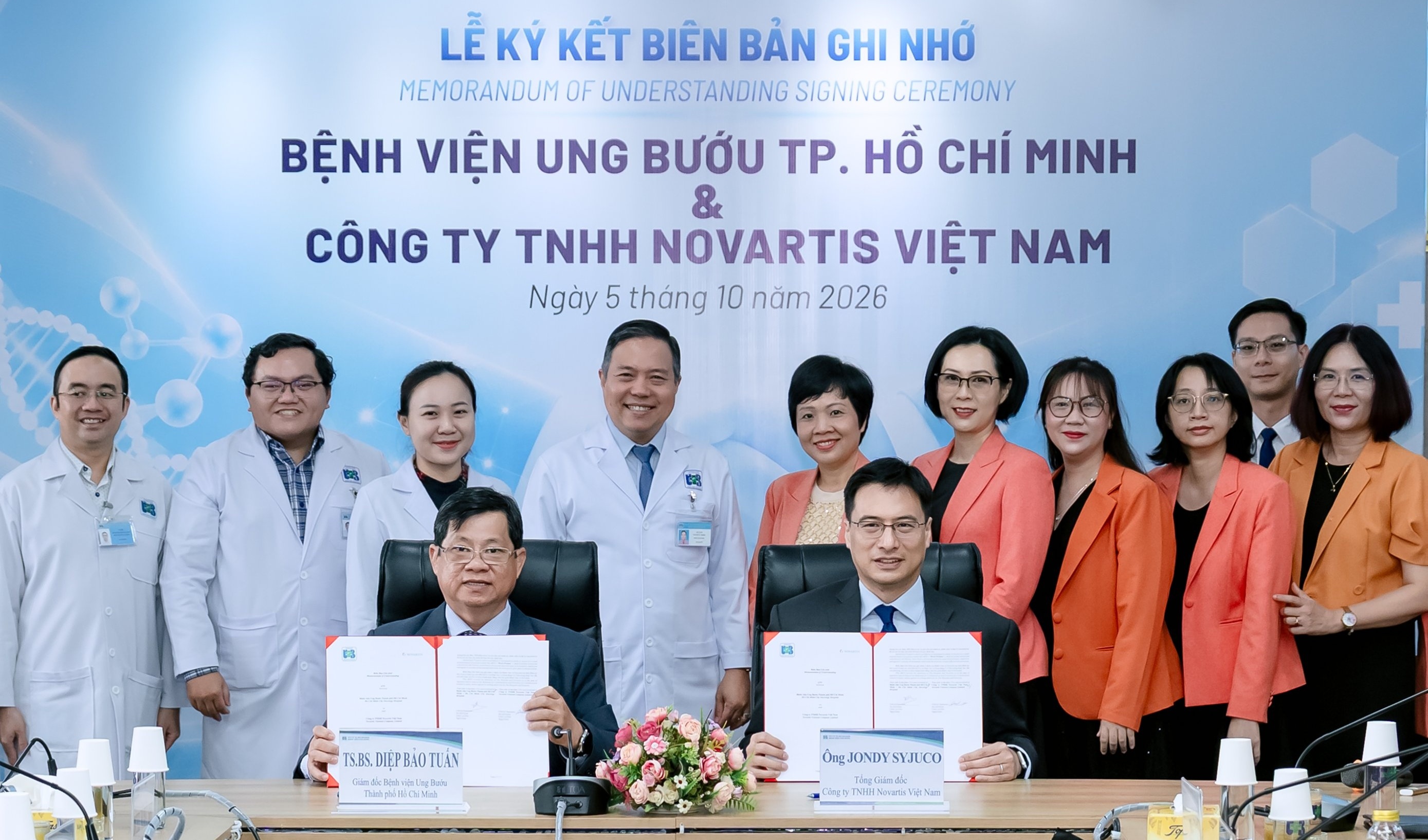
- Ho Chi Minh City Oncology Hospital signs MoU with Novartis Vietnam
- Driving early detection and integrated liver disease management
- Vaccinology training programme launched to boost preventive care capacity
- Opella and Hoan My Academy partner to advance medical education
- AstraZeneca Vietnam upgrades logistics system to support growing operations
Related Contents







Latest News



More News
- JBIC considers new financing options for Vietnam’s energy projects (October 03, 2026 | 08:00)
- Vestas to supply 16 turbines for two new Vietnam wind farms (October 01, 2026 | 07:00)
- Inter-sectoral cooperation on Montreal protocol (September 30, 2026 | 17:20)
- EV battery recycling rate proposed at 8 per cent from 2029 (September 29, 2026 | 16:00)
- Bankability remains hurdle for Vietnam's JETP projects (September 29, 2026 | 12:08)
- Binh Minh Plastics extends clean water project to border communities (September 29, 2026 | 10:57)
- Coca-Cola Vietnam expands packaging collection programme (September 25, 2026 | 08:15)
- Pacifico Energy secures sea survey licence for offshore wind project in Lam Dong (September 24, 2026 | 18:02)
- Vietnam secures $221 million in UN development programmes for 2027-2031 (September 23, 2026 | 17:39)
- Carlsberg Vietnam shows how resource efficiency can shape green industrial growth (September 18, 2026 | 09:03)


Latest News





 Mobile Version