
Vietnamese groups expand their footprint across Southeast Asia

 |
| The EraBlue chain has been developed in Indonesia by Vietnamese company Dien May Xanh. Photo: MWG |
In early July, Vietnam’s leading consumer electronics retailer, Dien May Xanh raised more than $500 million in its initial public offering. Part of the fresh proceeds will help fund the company’s regional expansion.
Dien May Xanh is targeting Indonesia's underpenetrated information and communications technology and consumer electronics (ICT/CE) market through the Erablue chain. Operating on the island of Java, which has a population of 150 million and lacks a modern retail presence, EraBlue's smaller store model has proven highly efficient.
EraBlue generates double the average revenue of similar domestic Dien May Xanh formats with a short 16-month store payback period. As of present, the chain has reached 245 stores, with revenue up 93 per cent on-year.
In late June, QHC Group secured a $5 million export contract with Malaysia’s Antah Global Ventures Sdn Bhd to supply its sorghum-based products to the Malaysian market, including syrup, resistant starch, protein, and other value-added products.
The two companies will also collaborate to develop a comprehensive sorghum value chain in Malaysia, covering raw material cultivation, technology transfer, manufacturing, quality control, and commercialisation.
VinEnergo, a member of Vingroup’s green ecosystem, and SunAsia Energy Inc., a pioneer in the Philippine solar energy sector, announced a strategic partnership in June to develop a portfolio of large-scale renewable energy projects utilising the Solar on Stilts model in the Philippines.
Between 2027 and 2028, VinEnergo and SunAsia Energy plan to bring three flagship projects into operation, with a combined installed capacity of 422MWp. The ventures will pave the way for VinEnergo to enter the Philippine market.
Viettel inaugurated its representative office in Singapore in February, marking an important step in the group’s international expansion.
According to the 2026 United Overseas Bank Business Outlook Study, 80 per cent of Vietnamese businesses intend to invest abroad within the next two years, with an average planned investment of more than $28 million. ASEAN remains the preferred destination, selected by 65 per cent of Vietnamese businesses for expansion, with Thailand, Singapore, and Indonesia emerging as top markets.
Findings by Alitium show that Vietnam's outbound investment is entering a new phase. For much of the past two decades, Vietnam has primarily been recognised as a destination for foreign direct investment. International companies entered Vietnam to establish manufacturing operations, access a skilled workforce, and participate in one of Asia's fastest-growing economies.
Today, that story is evolving. Vietnamese businesses are increasingly becoming regional investors in their own right. After years of building capability, strengthening balance sheets and developing competitive products and services, many have reached a scale where the next logical step is expansion beyond Vietnam's borders.
ASEAN is identified as a natural starting point for Vietnamese businesses, as it offers familiar business environments, strong trade connectivity, and a combined market of almost 700 million people. Importantly, it also allows Vietnamese businesses to diversify revenue, establish operations closer to customers, access specialist talent, and build regional brands.
The findings also highlight the diversity of businesses pursuing regional expansion. It is no longer limited to large conglomerates, as more manufacturers, technology companies, professional service firms, consumer brands, and renewable energy businesses are exploring opportunities across Southeast Asia.
According to the National Statistics Office, Vietnam’s outbound investment totalled $1.21 billion in the first six months of 2026, 2.5 times higher than the same period last year. Vietnamese companies invested in 33 countries and territories in the given period. Laos continued to top the ranking with $324.7 million, making up 26.9 per cent of the total sum. Cambodia trailed closely behind with $258.6 million, representing 21.6 per cent. These figures indicate that ASEAN continues to receive a significant share of Vietnam's outbound investment.
However, expanding into neighbouring countries differs significantly from exporting. Successful regional expansion requires a clear understanding of local regulations, taxation, employment laws, licensing requirements, and corporate governance, while careful planning and local expertise remain important to achieving sustainable long-term growth.
Commenting on this trend, Matthew Lourey, chairman of Alitium, said, “I believe we are only at the beginning of this next chapter for Vietnamese enterprises. Vietnam's economy has reached a level of maturity where outbound investment should become an increasingly important part of its growth story. As companies accumulate capital, management capability, and international experience, many will naturally look beyond a domestic market of more than 100 million people.”
Lourey further noted that Vietnamese business leaders are becoming far more strategic in how they approach regional growth. Rather than simply establishing a sales office overseas, many are considering regional holding structures, intellectual property ownership, financing arrangements, and governance frameworks that can support operations across multiple jurisdictions.
“These are conversations that, until relatively recently, were largely limited to multinational corporations investing in Vietnam,” he said. “This trend reflects the increasing sophistication of Vietnam's private sector and is a positive indicator of the country's long-term economic development. Vietnam is no longer just exporting products. Increasingly, it is exporting businesses, brands, and investment.”
As more Vietnamese companies seek opportunities across ASEAN, Alitium has expanded its operations into Singapore and Malaysia to support clients with cross-border structuring, market entry, and ongoing corporate advisory. The company expects this demand to continue growing as Vietnamese businesses become an increasingly important source of regional investment over the coming decade.
 | Vietnam records huge increase in outbound investment in first five months Vietnam’s outbound investment totalled $794.6 million in the first five months of 2026, 2.5 times higher than the same period last year. |
 | Vingroup explores $6.5 billion investment in India Vingroup is mulling $6.5 billion investment in the Indian state of Maharashtra across key ventures, including urban development, electric mobility, energy, and social and public infrastructure. |
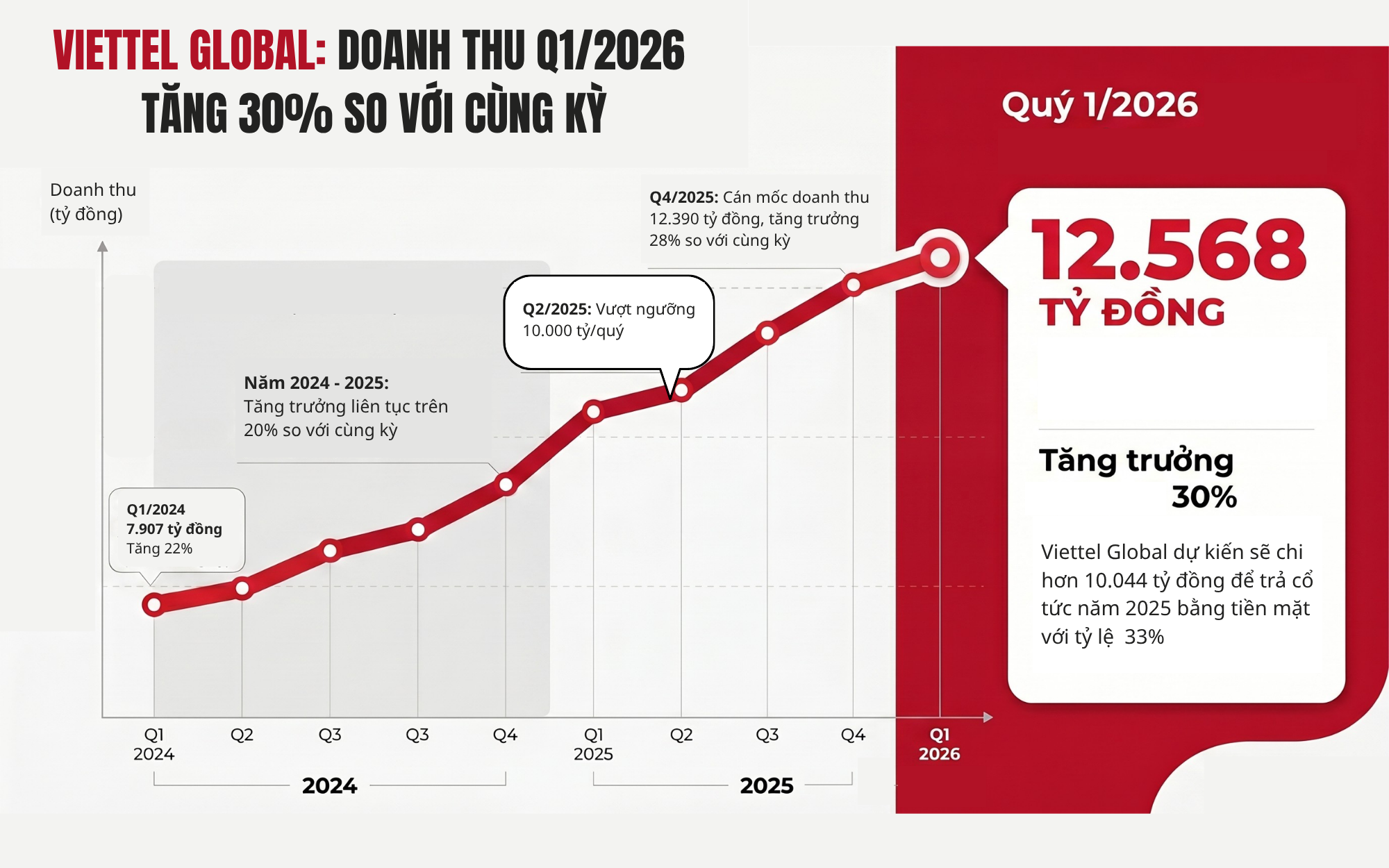 | Viettel Global posted 30 per cent revenue growth in Q1 On May 4, Viettel Global released its consolidated financial statements for the first quarter of 2026, reporting after-tax profit of VND2.33 trillion ($89.62 million), up nearly six times on-year. |
What the stars mean:
★ Poor ★ ★ Promising ★★★ Good ★★★★ Very good ★★★★★ Exceptional
 Tag:
Tag:Related Contents




Latest News




More News
- 100 entrepreneurs honoured with Thanh Giong Cup 2026 (October 12, 2026 | 08:00)
- Digital government push focuses on data connectivity and AI (October 10, 2026 | 08:00)
- VIR seminar focuses on taking domestic suppliers into global supply chains (October 08, 2026 | 14:50)
- Vietnam to foster links between foreign and domestic sector (October 08, 2026 | 11:00)
- Vietnam shifting focus to building high-quality FDI ecosystem (October 08, 2026 | 10:45)
- VIR seminar to explore innovative global supply chains in Hanoi (October 07, 2026 | 12:04)
- Vietnam’s registered FDI surpasses $50 billion in nine months (October 07, 2026 | 10:30)
- Vietnam’s GDP grows over 9 per cent in first nine months (October 05, 2026 | 18:45)
- Vietnam emerging as an industrial location of choice (October 05, 2026 | 16:21)
- Vietnam hospitality shifts towards integrated mixed-use developments (October 03, 2026 | 10:00)










 Mobile Version