

Small business ESG strategies unlocked

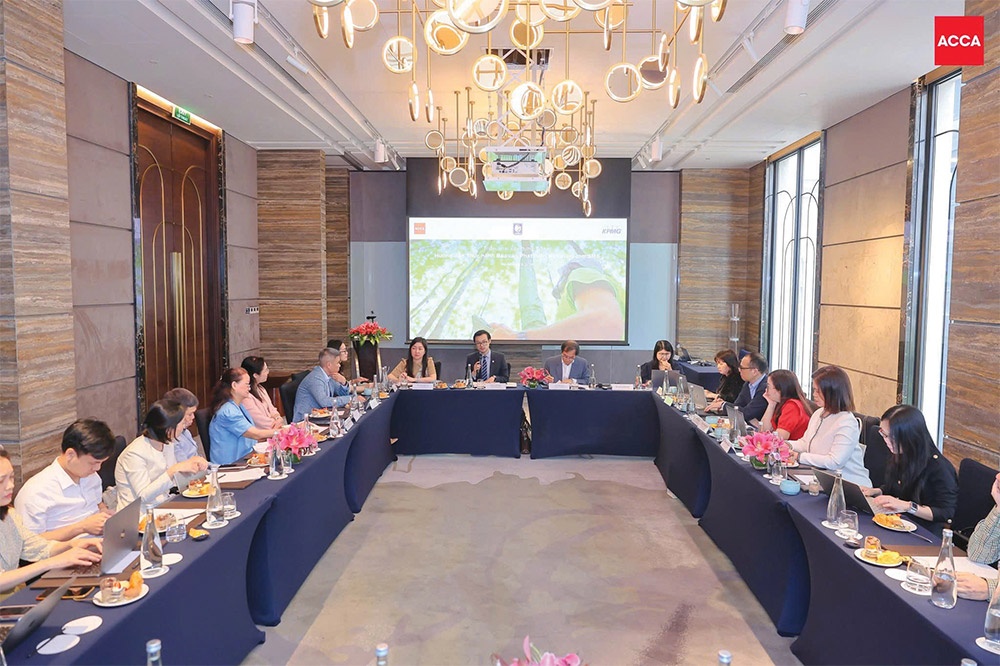 |
On March 30 in Hanoi, the Association of Chartered Certified Accountants (ACCA), the Vietnam Association of Small and Medium Enterprises (VINASME), and KPMG, jointly delivered a programme to kick-start the development of a handbook aimed at building a supportive ecosystem for small- and medium-sized enterprises (SMEs) on their sustainability journey.
Dr. To Hoai Nam, standing vice president and general secretary of the VINASME, noted that the handbook is expected to serve as a key tool to help businesses accelerate their transition.
“In the current context, transparency, corporate governance, and sustainability are becoming global, mission-critical standards for businesses. While the government has clearly defined sustainability at the national level, the biggest challenge remains how enterprises, particularly SMEs, can translate these goals into tangible outcomes,” he said.
Nam highlighted that Vietnam currently has around one million enterprises, yet only about 4.4 per cent participate in global supply chains, up from 2.2 per cent two decades ago.
“If effectively implemented, the handbook could help increase this ratio by at least 1 per cent, equivalent to roughly 10,000 additional enterprises,” he stated. “Many businesses still view environmental, social, and governance (ESG) as a formality, rather than recognising them as essential to survival, competitiveness, and growth. This handbook will not only improve understanding but also open doors for deeper integration into global value chains.”
Nam committed that the VINASME, with its network of 34 provincial associations and 39 affiliated units, is ready to work alongside the ACCA and KPMG to disseminate the handbook across the SME community.
He also outlined four priorities: aligning the handbook with an up-to-date legal framework; adopting a practice-first approach with simple, tiered guidance tailored to SMEs; positioning ESG as a gateway to supply chains and market expansion; and linking real-world case studies to improved access to finance, particularly green capital, in line with bank and investor requirements.
Truong Hanh Linh, partner and head of Risk & ESG Consulting at KPMG Vietnam, said the current phase focuses on setting direction based on practical business needs and the ACCA’s recommendations, rather than delving into technical complexity.
According to Linh, although SMEs are not yet mandated to publish sustainability reports, proactive adoption offers three core benefits: enhanced participation in supply chains through greater transparency, improved access to financing, particularly green credit, and stronger governance capacity to meet increasingly stringent standards.
“However, the diversity of international standards can be overwhelming for SMEs,” noted Linh. “The handbook is therefore expected to act as a filter, simplifying access while maintaining alignment with global frameworks. Developers will also work with the ACCA to design an implementation roadmap suited to Vietnamese SMEs, particularly in manufacturing.”
From the perspective of a consulting firm specialising in sustainable development, Nguyen Viet Thinh, CEO of CGS Vietnam and member of the jury for the Sustainable Development Reporting Award, emphasised that the guidelines should be simple, practical, and focused on quantitative metrics.
“Materiality assessments should prioritise environmental and social impacts, without necessarily applying double materiality at the initial stage, while focusing on one or two core sector-specific factors,” he added.
Dr. Nguyen Thi Thu Ha, director at Agribank Training School and deputy head of ESG at Agribank, said the bank is allocating significant resources to sustainable finance.
“In 2026 alone, Agribank plans to allocate over $15.4 billion in corporate lending, with SMEs as a key focus segment. In 2025, around 4,000 SMEs accessed priority credit packages, accounting for a substantial share of both client numbers and disbursement volumes,” she said. “However, SMEs’ access to green finance remains limited. Outstanding green credit at Agribank currently stands at around $1.2 billion, equivalent to 1.4–2 per cent of total loans, covering roughly 40,000 clients, mainly in agriculture, forestry, and energy.”
Ha cited data shared by Nguyen Duc Lenh, deputy director of the State Bank of Vietnam’s Region II branch on March 24, showing that system-wide green lending reached approximately $31.2 billion by end-2025, accounting for 4.1 per cent of total outstanding credit, up 14.6 per cent on-year.
To access green financing, Ha emphasised that businesses must first meet core ESG requirements.
“On the environmental front, firms need to comply with green taxonomies and certifications such as FSC in forestry or GlobalGAP and VietGAP in agriculture,” she said. “Socially, compliance with labour standards, occupational health and safety, and employee welfare is essential. From a governance perspective, transparency and clear sustainability commitments integrated into annual reporting are critical.”
Banks have already implemented environmental and social risk management systems in lending activities, with detailed criteria for project evaluation. However, many SMEs still fall short of minimum requirements, particularly in labour safety compliance and periodic training.
“To access green capital, businesses must start with basic compliance in environmental, labour, and disclosure requirements. This forms the foundation for tapping sustainable finance in the future,” said Ha.
Van Cong Binh, environmental and social director at HDBank, noted that many enterprises still lack a clear understanding of ESG and do not know where or how to begin.
“Many companies already have data but lack the ability to systematise and digitise it for management and reporting purposes,” he said. “Banks need to take a more proactive role in supporting SMEs, translating complex ESG standards into simple, practical processes, with clear roadmaps and actionable tools. Their role should go beyond financing to guiding businesses in building appropriate ESG frameworks and practices.”
| To Quoc Hung, country manager, ACCA Vietnam
The handbook on sustainability reporting for SMEs reflects a co-creation approach, bringing together SMEs, advisory and audit firms, financial institutions, multinational corporation and ESG experts. Rather than a theoretical document, it is designed to be practical, user-friendly, and immediately applicable. More importantly, this handbook is not an endpoint, but a starting point for building a broader ecosystem, one where SMEs can access guidance, connect with experts, and receive continuous support. Its success will ultimately depend on collective participation, shared insights, and sustained collaboration to deliver meaningful, long-term value for Vietnam’s SME community. SMEs today are navigating a more demanding business landscape. On one hand, rising expectations around transparency and governance are rapidly becoming non-negotiable standards across global value chains. On the other, SMEs continue to face very real constraints in terms of resources, skilled personnel, and access to internationally recognised frameworks. This creates a gap between what is required and what is practically achievable. For the handbook to be effective in practice, it must be supported by a robust enabling ecosystem, where global buyers recognise and accept it, banks align it with green financing frameworks, and tech firms leverage it to develop solutions that reduce implementation costs and make sustainability reporting accessible. When implemented effectively, it can enhance access to capital, particularly green and sustainable finance, deepen integration into global supply chains, strengthen corporate credibility, and, importantly, support better, data-driven decision-making. However, unlocking these benefits requires a more pragmatic and accessible approach tailored to the realities of SMEs. The ACCA is actively engaged in international initiatives such as the IFRS Sustainability Alliance. We are witnessing a clear convergence of global standards, alongside the growing inevitability of ESG transparency. The real challenge, therefore, is not the absence of standards, but how to translate them into practical, actionable guidance for SMEs. This is where the ACCA positions its role in Vietnam: bridging global frameworks with local context, and supporting businesses throughout their implementation journey. Dr. To Hoai Nam, standing vice chairman and secretary general, VINASME
The handbook will represent a practical and well-coordinated initiative, developed with the contribution of experienced experts and relevant stakeholders, to address a critical gap in SME implementation of sustainable practices. In line with Vietnam’s direction on the private sector as a key driver of the economy, advancing transparency, corporate governance, and sustainable development is no longer optional but essential. The challenge, however, lies in enabling SMEs to translate these orientations into measurable outcomes. Progress to date has been limited, and this Handbook is expected to serve as a practical tool to accelerate adoption. The VINASME observes that many SMEs still perceive ESG as a compliance requirement rather than a driver of competitiveness. By focusing on minimum, actionable criteria, the Handbook is designed to support immediate application, enabling businesses to enhance credibility with financial institutions, improve eligibility for green finance, meet international supply chain standards, and realise operational efficiencies through technology adoption. The potential impact is substantial. With nearly one million enterprises in Vietnam, 98 per cent of which are private, alongside millions of business households, even a modest improvement in ESG adoption would translate into tens of thousands of businesses strengthening their access to finance, meeting international standards, and integrating more deeply into global value chains. |


What the stars mean:
★ Poor ★ ★ Promising ★★★ Good ★★★★ Very good ★★★★★ Exceptional
 Tag:
Tag:Related Contents

Latest News




More News
- Sojitz in Vietnam: 40 years from individual projects to a business cluster 'KATAMARI' (October 08, 2026 | 09:00)
- Coteccons targets 'Quality Growth' with 25 per cent dividend plan (October 07, 2026 | 13:00)
- Vietnam Education Forum opens UK Education Mission's Hanoi visit (October 07, 2026 | 12:27)
- Tax authorities deactivate TINs of nearly 180,000 businesses (October 07, 2026 | 12:08)
- World Bank raises Vietnam's 2026 GDP growth forecast to 7.4 per cent (October 07, 2026 | 11:41)
- Vietstock 2026 to spotlight livestock innovation and green transition (October 07, 2026 | 09:00)
- Vietnam’s GDP grows over 9 per cent in first nine months (October 05, 2026 | 18:45)
- Vietnam earns $56.3 billion from agro-forestry-fishery exports (October 05, 2026 | 18:32)
- DSV balances resilience and decarbonisation in supply chains (October 05, 2026 | 18:20)
- Electronics exports reach $175.4 billion in the first nine months (October 05, 2026 | 18:12)



Latest News





 Mobile Version