
Vietnam urged to turn sustainability plans into action

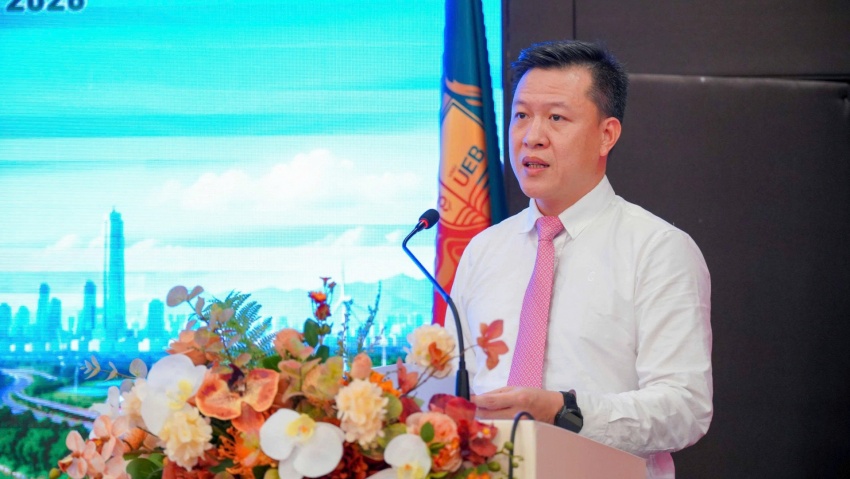 |
| Hoang Khac Lich, vice president of UEB-VNU. Photo: University of Economics and Business |
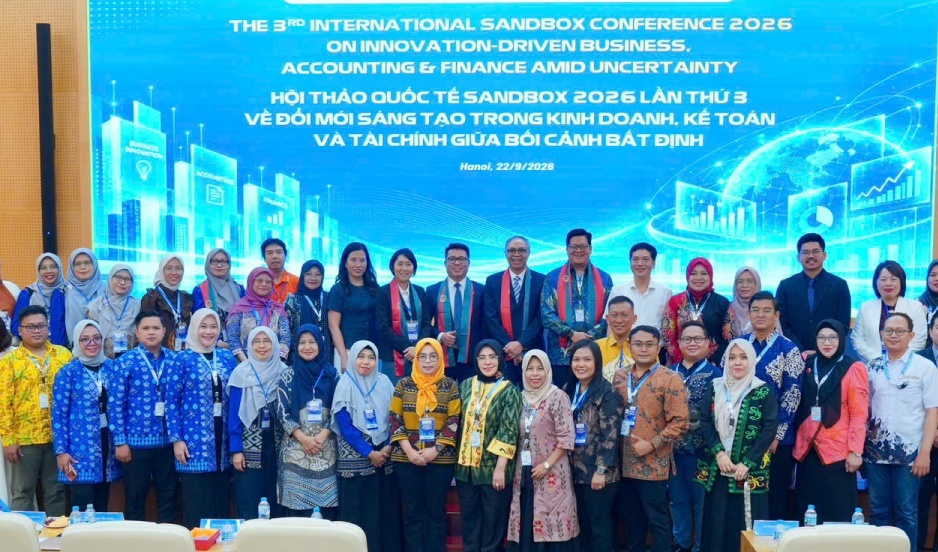
Opening the conference, Hoang Khac Lich, vice president of the university, said traditional concepts of development were being fundamentally reconsidered as countries faced climate change, natural resource and biodiversity loss, the energy transition, population ageing, rapid advances in technology and AI, and shifts in global trade and value chains.
For developing economies, he said, the central question was moving beyond “how to grow faster” towards “how to grow better and more sustainably”.
“Growth must be driven by labour productivity, innovation and high-quality human resources; make efficient use of natural resources; strengthen resilience to climate change; and, importantly, ensure that the benefits of development are broadly shared so that no one is left behind,” he said.
For Vietnam, this challenge is particularly significant after more than four decades of economic reforms. The country's ambition to become a developed, high-income economy by 2045, alongside its commitment to achieve net-zero emissions by 2050, requires fundamental changes to its growth model, economic structure, technology, human resources, resource governance and institutional quality.
A key theme at the conference was the gap between commitments, plans and practical action, particularly in transforming food systems.
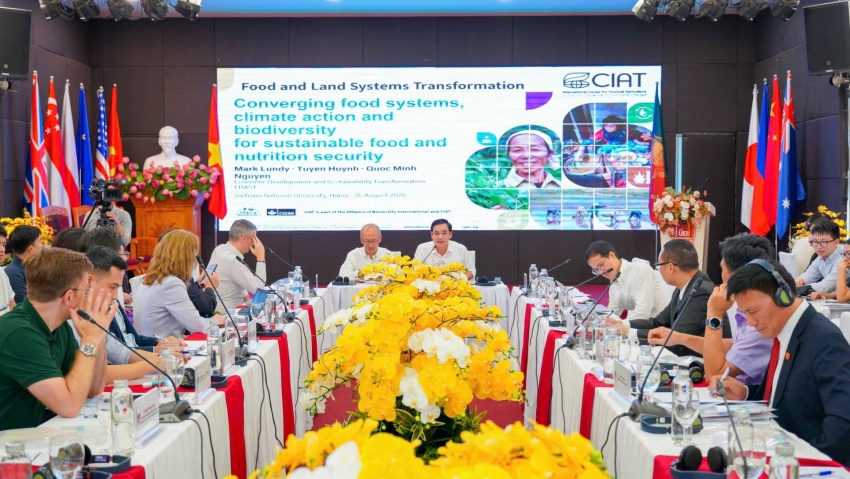
Mark Lundy of the Alliance of Bioversity International and the International Centre for Tropical Agriculture (CIAT) said Vietnam had already established a relatively comprehensive policy and partnership framework for food system transformation.
He said that Vietnam's National Action Plan for Transparent, Responsible and Sustainable Food Systems Transformation is supported by a partnership involving 49 signatories and five technical working groups. A review for 2023-2026 found that more than 260 activities were being implemented by 53 organisations, while provinces were developing their own plans and testing a monitoring indicator framework.
“We are not short of evidence or plans. The interesting question now is no longer ‘what should we do?’ but ‘why is there so little action happening on the ground?’” Lundy said and identified three conditions that need to be in place simultaneously to close this gap: policy, capacity and finance.
Vietnam already has a relatively clear policy direction, but needs stronger implementation capacity and a practical financial roadmap to translate priorities into concrete budget allocations. “Policy, capacity, finance. If you miss any one of those three, you get a better document, not a better food system,” Lundy said.
Capacity, he added, is one of the most important bottlenecks. Food systems span agriculture, health, trade, environment, education and finance, while institutional structures and training programmes remain largely organised around individual disciplines.
“We train excellent agronomists, economists and nutritionists, but then ask them to solve a problem that sits at the intersection of all those disciplines. We should not be surprised when collaboration does not happen naturally,” he said.
Vietnam and other Asian countries therefore need a new generation of food systems professionals who can look across the entire system, identify leverage points where interventions can deliver multiple benefits, and build long-term partnerships among different stakeholders.
 |
| Photo: University of Economics and Business |
Presentations also highlighted the challenges surrounding resource governance and the allocation of financial resources for sustainable transformation.
Resources ranging from critical minerals to natural capital such as water, land and carbon can become sustainable sources of wealth only when they are transparently governed, properly accounted for and linked to fiscal and institutional frameworks suited to the global energy transition.
Recent research on integrating food, climate and biodiversity systems shows that the three policy areas continue to operate largely in silos. Food system transformation has policy plans but lacks dedicated financial instruments, while climate finance flows remain insufficiently connected to food system objectives.
According to research presented at the conference, around $7 trillion continues to flow annually into activities with harmful impacts, while achieving cross-sectoral Sustainable Development Goals requires an estimated $4 trillion. Spending that contributes to biodiversity loss is also estimated to be 35 times higher than spending on conservation.
The commitment made by 160 countries at COP28 in 2023 to integrate food systems into national climate plans has yet to be fully translated into action. Against this backdrop, Vietnam is seen as one of the countries that has moved to institutionalise the commitment through Decision No.300/QD-TTg, approving the National Action Plan for Transparent, Responsible and Sustainable Food Systems Transformation through 2030.
After three years of implementation, the Food Systems Transformation Partnership has brought together more than 49 domestic and international partners and five cross-sectoral technical working groups, with more than 260 activities implemented during 2023-2026. Son La and Dong Thap are the two provinces pioneering pilot implementation at the local level.
In one session, speakers examined South Korea's experience through four stages of industrialisation, during which its per-capita income rose from around $100 to more than $33,000, drawing lessons for Vietnam as it enters a new stage of development.
The structural risks identified include slowing productivity growth, population ageing, shortages of high-quality workers, limited capacity among domestic enterprises, insufficient innovation capacity and institutional quality that has yet to keep pace with economic development.
Five strategic areas for transformation were proposed: productivity, human resources, domestic industrial capacity, Vietnam's position in global value chains and institutional quality. These priorities were discussed in the context of Resolution No.68-NQ/TW, which identifies the private sector as the most important driving force of the economy.
Another perspective, focusing on multilateral governance, stressed that sustainable transformation requires technical capabilities to be combined with the capacity for collaboration, while ensuring that economic activity remains within ecological limits and that environmental benefits and costs are distributed fairly.
A case study on the development of Cao Bang Province's master plan to 2050 illustrated how this approach could be translated into practice through a four-component growth structure involving the state, the private sector, communities and natural resources and the environment. The model aims to achieve real regional GDP growth of more than 10 per cent annually during 2026-2030 while preserving the province's ecological assets.
Discussions underscored that sustainable transformation is becoming a core requirement of development strategies. For Vietnam, the challenge in the coming period will be to turn policy directions, financial resources and cross-sectoral capacity into tangible changes in its growth model, creating a stronger foundation for rapid, inclusive and sustainable development.

What the stars mean:
★ Poor ★ ★ Promising ★★★ Good ★★★★ Very good ★★★★★ Exceptional
 Tag:
Tag:Related Contents





Latest News


More News
- JBIC considers new financing options for Vietnam’s energy projects (October 03, 2026 | 08:00)
- Vestas to supply 16 turbines for two new Vietnam wind farms (October 01, 2026 | 07:00)
- Inter-sectoral cooperation on Montreal protocol (September 30, 2026 | 17:20)
- EV battery recycling rate proposed at 8 per cent from 2029 (September 29, 2026 | 16:00)
- Bankability remains hurdle for Vietnam's JETP projects (September 29, 2026 | 12:08)
- Binh Minh Plastics extends clean water project to border communities (September 29, 2026 | 10:57)
- Coca-Cola Vietnam expands packaging collection programme (September 25, 2026 | 08:15)
- Pacifico Energy secures sea survey licence for offshore wind project in Lam Dong (September 24, 2026 | 18:02)
- Vietnam secures $221 million in UN development programmes for 2027-2031 (September 23, 2026 | 17:39)
- Carlsberg Vietnam shows how resource efficiency can shape green industrial growth (September 18, 2026 | 09:03)






 Mobile Version