
11 innovations showcased plastic waste management solutions in Vietnam

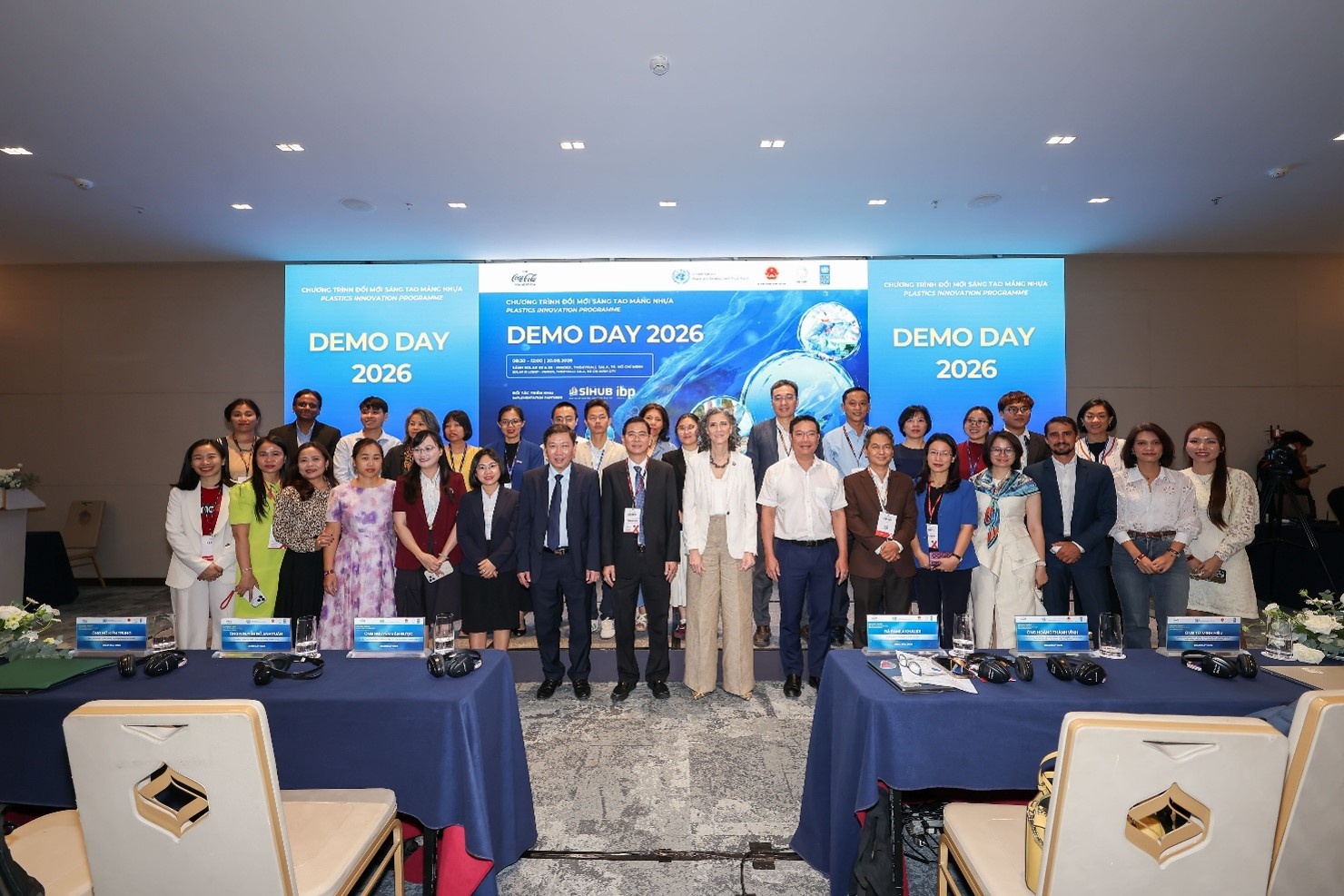
The innovations have gone through two months of incubation and nine months of acceleration under the UNDP-led Plastics Innovation Programme. Supported by the United Nations Peace and Development Fund's 2030 Agenda for Sustainable Development Sub-Fund and The Coca-Cola Foundation, the initiative addresses the plastic waste across various parts of the value chain, including collection, sorting, reuse, recycling, and behaviour change.
 |
| Photo courtesy of InnoEx 2026 |
Collectively, the pilot initiatives have helped prevent, collect, recycle, or properly treat more than 750 tonnes of plastic waste, while testing new approaches to alternative materials, digital data systems, circular business models, improved technologies, and innovative financing mechanisms.
These efforts also support implementation of the Law on Environmental Protection and to emerging regulations on waste management and plastics, particularly those related to Extended Producer Responsibility (EPR). Beyond environmental impact, these solutions also support the creation of fair, respectful, and dignified job opportunities for workers within the waste management sector, while protecting their rights and wellbeing.
The Coca-Cola Foundation views innovation as a key driver and essential enabler in addressing the plastic waste crisis and advancing a circular economy in Vietnam. Innovative solutions play a critical role in bridging waste management policies with real-world implementation while addressing practical environmental challenges. Through its partnership with the United Nations Development Program (UNDP), the Coca-Cola Foundation aims to help these initiatives grow beyond the initial support phase to become self-sustaining and scalable, generating lasting environmental, social, and economic value for Vietnam.
 |
| Photo courtesy of InnoEx 2026 |
The programme has also helped connect innovators with investors, businesses, and strategic partners, creating pathways for promising solutions to move beyond the pilot stage. The initial support allows innovators to test ideas, build evidence, and demonstrate feasibility, laying the foundation for these solutions to become self-sustaining, scalable, and capable of driving long-term environmental, social, and economic value.
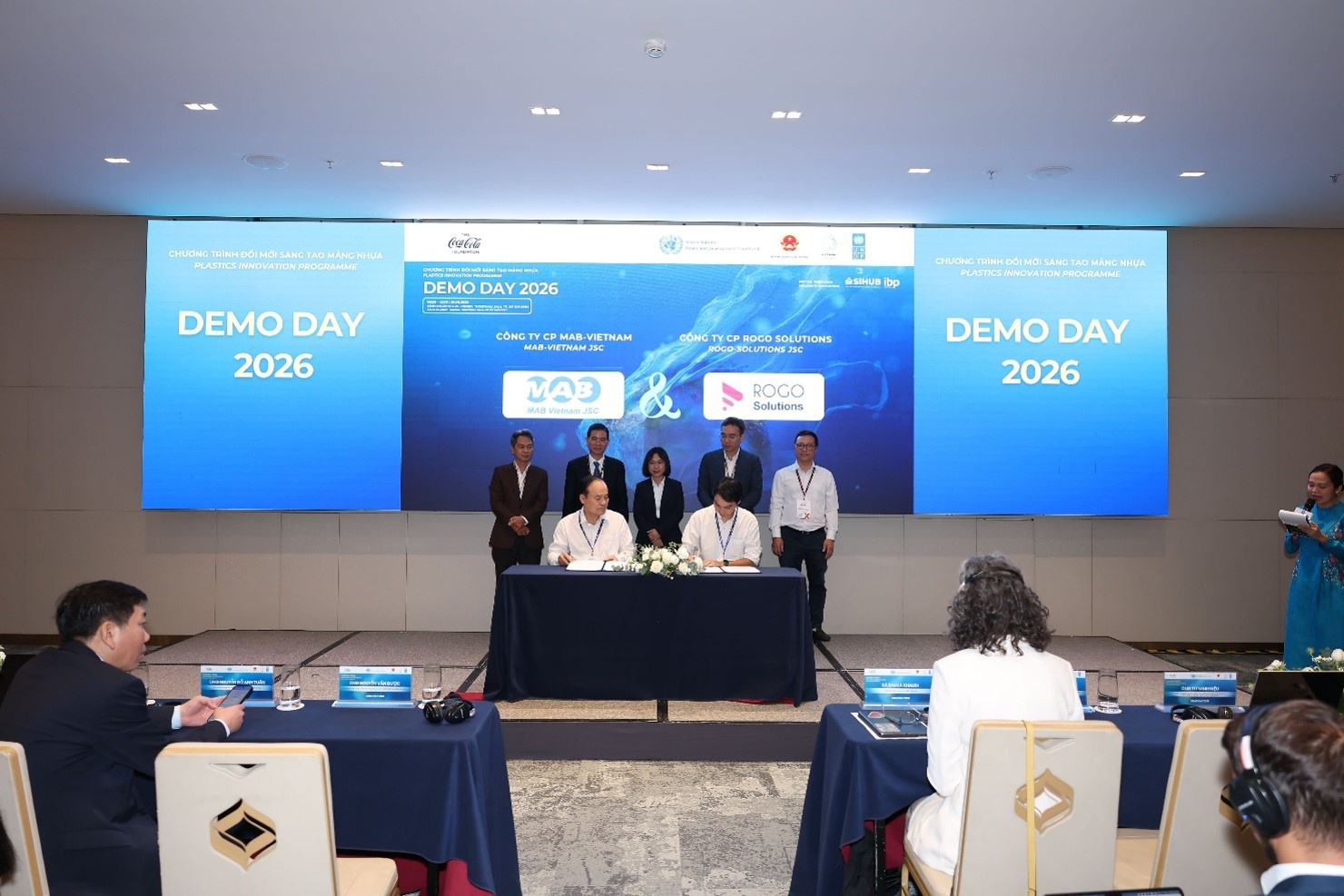
Demo Day highlighted this momentum through partnership agreements, including collaborations between CEL's LoopNet digital platform and TPC Distribution Vietnam, and between MAB's Cyan Truck model and Rogo Solutions.
With technical support from the Business Startup Support Centre (now SIHUB) and the Investment Business Partners, participating teams also gained access to the Green Innovation Fellowship and investment platform at InnoEx 2026. These connections can help innovators continue engaging with investors, ecosystem partners, and complementary support programmes beyond the acceleration phase.
The experience reflects a broader shift in how businesses are responding to environmental and market challenges. As pressures reshape markets and supply chain, businesses need to innovate, manage risks, and create value while addressing environmental challenges. The UNDP supports this transition by connecting businesses with policy, partnerships, investment and markets.
 |
| Photo courtesy of InnoEx 2026 |
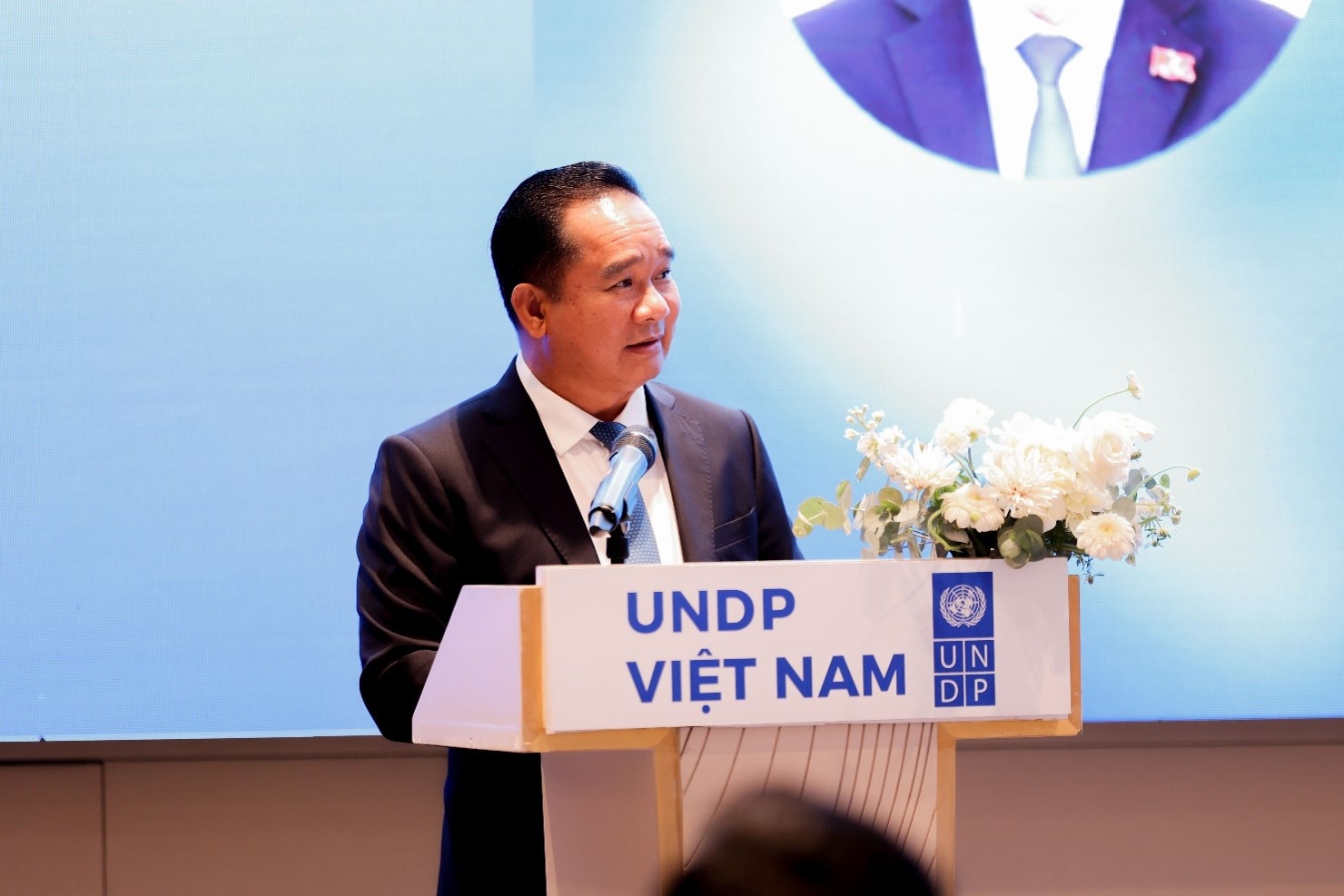
Speaking at the event, Nguyen Van Duoc, Deputy Secretary of the Ho Chi Minh City Party Committee, Chairman of the Ho Chi Minh City People’s Committee said, “With this consistent approach, Ho Chi Minh City stands ready to ‘lead the way and set an example’ by piloting innovative ideas and working alongside domestic and international organisations, businesses and scientists on solutions to strengthen the control and reduction of plastic waste and emissions. The city is ready to facilitate controlled trials of waste collection, recycling and material circularity models, selecting suitable areas for pilots at a sufficient scale to validate their effectiveness and gradually scale them up.”
UNDP Resident Representative Ramla Khalidi said, "These innovators have shown that environmental solutions can also create economic opportunity, strengthen communities, and accelerate Vietnam's transition towards a circular economy. But innovation alone is not enough. Successful solutions need to connect with investment, policy, and partnerships so they can move beyond pilots and deliver impact at scale,"
Nguyen Do Anh Tuan, director general of the International Cooperation Department under the Ministry of Agriculture and Environment added that the ministry was looking forward to continuing its collaboration with Ho Chi Minh City, the UNDP and partners to help connect innovative initiatives with policy development and implementation, while encouraging the engagement of businesses and investors.
As Vietnam advances its circular economy ambitions, the Plastics Innovation Programme has built a growing portfolio of home-grown solutions to address plastic pollution and strengthened connections between innovators, businesses and investors. By fostering innovation and creating pathways to partnerships and investment, the programme is helping lay the foundation for the next generation of circular-economy enterprises.
 | Global treaty in sight for plastics battle Vietnam is joining the world’s efforts to formulate a legally binding treaty about plastic pollution, which has become a big menace for the country’s national development. |
 | Localities join in efforts to fight plastics pollution Ten localities in Vietnam are taking actions to fight plastic pollution under Plastic Smart Cities (PSC), an initiative put forward by the World Wide Fund for Nature (WWF). |
 | AEON determined to fortify green lifestyle As many companies are trying to promote sustainable development and a greener world, AEON Vietnam is trying to contribute its share. Nguyen Bang Lang, in charge of Sustainable Development at AEON Vietnam, shared with VIR’s Tra My initiatives to reduce single-use plastics at one of the largest retailers in Vietnam. |
What the stars mean:
★ Poor ★ ★ Promising ★★★ Good ★★★★ Very good ★★★★★ Exceptional
 Tag:
Tag:Related Contents


Latest News


More News
- JBIC considers new financing options for Vietnam’s energy projects (October 03, 2026 | 08:00)
- Vestas to supply 16 turbines for two new Vietnam wind farms (October 01, 2026 | 07:00)
- Inter-sectoral cooperation on Montreal protocol (September 30, 2026 | 17:20)
- EV battery recycling rate proposed at 8 per cent from 2029 (September 29, 2026 | 16:00)
- Bankability remains hurdle for Vietnam's JETP projects (September 29, 2026 | 12:08)
- Binh Minh Plastics extends clean water project to border communities (September 29, 2026 | 10:57)
- Coca-Cola Vietnam expands packaging collection programme (September 25, 2026 | 08:15)
- Pacifico Energy secures sea survey licence for offshore wind project in Lam Dong (September 24, 2026 | 18:02)
- Vietnam secures $221 million in UN development programmes for 2027-2031 (September 23, 2026 | 17:39)
- Carlsberg Vietnam shows how resource efficiency can shape green industrial growth (September 18, 2026 | 09:03)


Latest News




 Mobile Version