

SBV excludes tourism and resort loans from real estate credit growth

Under the Official Letter dated, from January 1 through December 31, credit institutions are not required to include the increase in outstanding credit compared with the end of 2025 for restaurants, hotels, tourism and ecological resorts, and other resort properties in real estate credit balances when controlling credit growth in the sector.
The State Bank of Vietnam (SBV) also requires credit institutions to continue strictly and effectively implementing the directives set out in Official Letter No.11686/NHNN-CSTT dated December 2025 about regulations on controlling credit growth in the real estate sector, and other relevant documents.
This marks the second time in this year that the SBV has adjusted the calculation method to exclude certain types of credit with specific characteristics from real estate credit balances when controlling credit growth in the sector.
 |
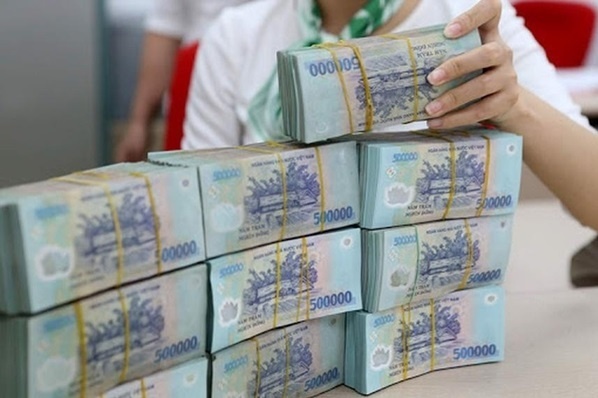
| Photo: tinnhanhchungkhoan.vn |
Previously, under Official Letter No.4551/NHNN-CSTT dated May 29, the SBV stipulated that increases in outstanding credit for social housing, industrial parks and export processing zones would not be included in real estate credit balances when controlling credit growth in the sector.
The adjustment to the calculation method does not mean that banks are being allowed to relax their lending conditions. Credit institutions are still required to comply with requirements governing real estate credit under Official Letter No. 11686 and other relevant directives issued by the SBV.
According to the list attached to Official Letter No. 8509, the document was sent to the following 25 credit institutions: VietinBank, Agribank, BIDV, MSB, SACOMBANK, Eximbank, Nam A Bank, ACB, Saigonbank, Techcombank, Bac A Bank, VIB, SeABank, BVBank, OCB, ABBank, VietABank, SHB, PGBank, KienlongBank, Vietbank, LPBank, TPBank, BaoViet Bank, and PVcomBank.
 | Foreign credit institutions to gain broader access to foreign currency accounts Vietnam’s new rules on foreign credit institutions’ accounts are set to ease cross-border payments and deepen the country’s integration into global financial and e-commerce networks. |
 | Banks begin tightening screws on property credit Huynh Quang Khanh invests in real estate by leveraging credit. Seventy per cent of his investment comes from banks. He has borrowed VNĐ1 billion at an interest rate of 9.5 per cent from a bank in Tan Phu District and also asked some of his relatives to borrow on his behalf from that bank. |
 | Home demand drives property credit As policy steers credit towards end-users, Vietnam’s property lending is increasingly anchored in real housing demand, with stable growth masking a deeper shift in how capital is allocated. |
What the stars mean:
★ Poor ★ ★ Promising ★★★ Good ★★★★ Very good ★★★★★ Exceptional
 Tag:
Tag:Related Contents





Latest News






More News
- VIB named Outstanding Retail Bank 2026, targets transaction banking (October 06, 2026 | 10:52)
- FTSE upgrade paves way for stronger stock market development (October 05, 2026 | 18:44)
- coLoan to empower women through inclusive green finance (October 05, 2026 | 18:42)
- Techcombank CEO: AI no longer a tool but a new operating foundation (October 05, 2026 | 18:11)
- Banks sustain profit growth as funding costs squeeze margins (October 02, 2026 | 22:22)
- Nam A Bank delivers strong breakthrough in 2026 (October 02, 2026 | 19:00)
- Policy credit builds sustainable livelihoods from the grassroots (September 29, 2026 | 07:48)
- VIB deploys Front Arena treasury and foreign exchange trading system on AWS (September 28, 2026 | 16:46)
- Nam A Bank receives $60 million loan from FMO (September 28, 2026 | 12:37)
- Vietnam’s finance sector moves to build an AI-driven digital ecosystem (September 25, 2026 | 10:58)


Latest News







 Mobile Version