
Property market seeks broader funding sources for sustainable growth

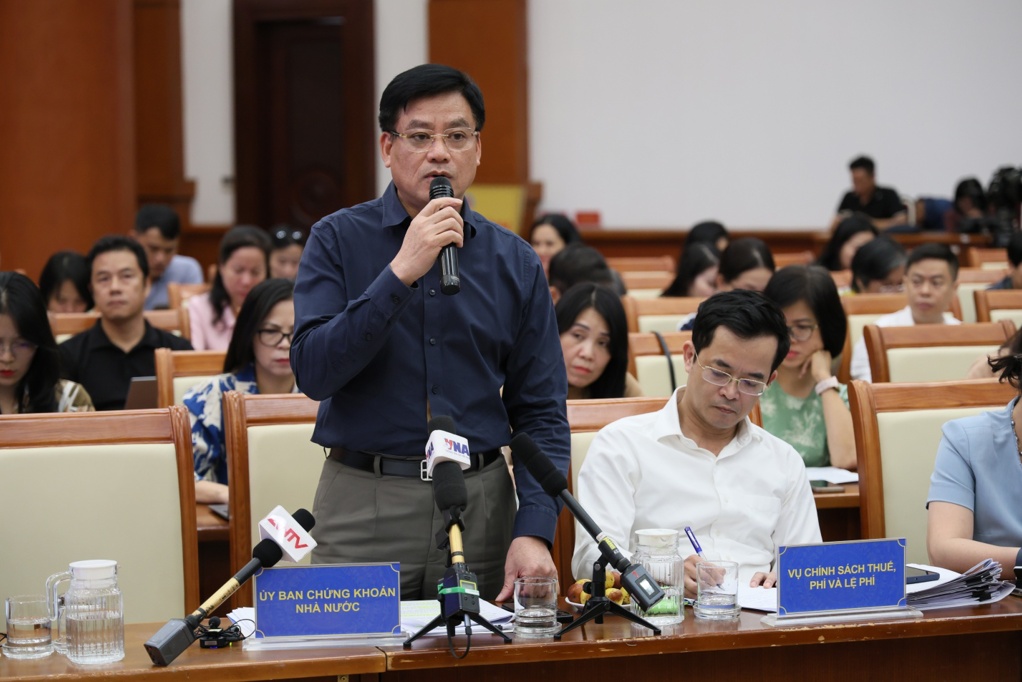
Photo: Huy Tuan Policymakers, regulators, bankers, property developers, and financial experts gathered in Hanoi on July 22 for the 'Unlocking Capital for a Sustainable Real Estate Market' conference to explore expanding funding sources, restoring market confidence, and supporting the sector's long-term development.
According to Dao Van Ha, deputy director-general of the Forecasting and Statistics Department at the the State Bank of Vietnam (SBV), the market is entering a new development cycle as legal frameworks continue to be revised and urbanisation maintains strong housing demand.
Nevertheless, he noted that several structural problems remain unresolved. Affordable housing continues to face severe shortages, while lengthy legal procedures for project approvals have delayed bank appraisals and disbursement processes. At the same time, fragmented market data and the limited financial capacity of some developers have created additional risks for the sector.
Ha said the underdevelopment of long-term financing channels, particularly the corporate bond and equity markets, had left the property sector overly dependent on bank credit.
"The issue today is not simply to unlock capital for real estate, but to ensure that funding is channelled into projects creating real economic value, enabling businesses to grow sustainably while giving more people access to affordable housing and limiting speculation," he said.
The SBV, he added, has maintained stable policy interest rates while requiring commercial banks to publish lending rates on their websites to improve transparency for borrowers.
To encourage lending to priority segments, the central bank has also assigned lower risk weights to social housing loans than to conventional commercial property lending. Looking ahead, overall credit growth is targeted at around 15 per cent in 2026, although additional lending to social housing and industrial park projects will not count towards banks' credit growth limits under new regulations introduced this year.
Ha added that the SBV had proposed that the Ministry of Construction establish a Housing Development Fund and develop a state-managed property transaction platform, alongside comprehensive housing and land databases, to improve property valuation and curb speculative lending.
Ha Quang Hung, deputy director-general of the Housing and Real Estate Market Management Agency under the Ministry of Construction, said Vietnam had established a relatively comprehensive legal framework to support social housing development through land incentives, tax reductions and preferential credit policies.
He noted that more than 103,000 social housing units were completed in 2025, exceeding the annual target, while 270 projects comprising more than 269,000 units are currently under construction during the first half of 2026.
According to Hung, projects completed, launched or approved have now reached 77 per cent of the target set under the government's one-million social housing programme.
Despite this progress, he acknowledged that supply-demand imbalances persisted, with an oversupply of high-end housing and an insufficient number of affordable homes. Housing prices remain significantly above the purchasing power of average-income households, while incentives for long-term rental housing are still inadequate.
"We have created a relatively complete and open legal framework that supports and encourages businesses to participate," Hung said.
The Ministry of Construction is currently preparing amendments to the Housing Law and the Law on Real Estate Business, which are expected to be submitted to the National Assembly later this year. The revised framework will prioritise affordable rental housing and introduce stronger incentives on land, taxation, finance and credit to attract long-term private investment.

What the stars mean:
★ Poor ★ ★ Promising ★★★ Good ★★★★ Very good ★★★★★ Exceptional
Latest News




More News
- Green Future Awards honour five leading industrial park developers (October 01, 2026 | 22:20)
- Green transition leaders honoured at Green Future Awards 2026 (October 01, 2026 | 22:10)
- Six developers honoured as Emerging Green Industrial Property Developers (October 01, 2026 | 22:00)
- Why logistics will define the next phase of growth (October 01, 2026 | 09:00)
- Urban Development Law takes effect on October 1 (September 30, 2026 | 17:49)
- Phu My Hung to demolish Lawrence S. Ting Building for new development (September 30, 2026 | 17:43)
- Industrial parks need comprehensive ecosystems to retain investors (September 30, 2026 | 14:09)
- Ready-built facilities gain favour as industrial competition evolves (September 30, 2026 | 10:49)
- Early planning keeps sustainable industrial park costs down (September 30, 2026 | 10:46)
- Vietnam faces sharper competition in global manufacturing reshuffle (September 29, 2026 | 15:00)








 Mobile Version