

Workshop advances low-carbon innovation in Vietnam’s cement sector

 |
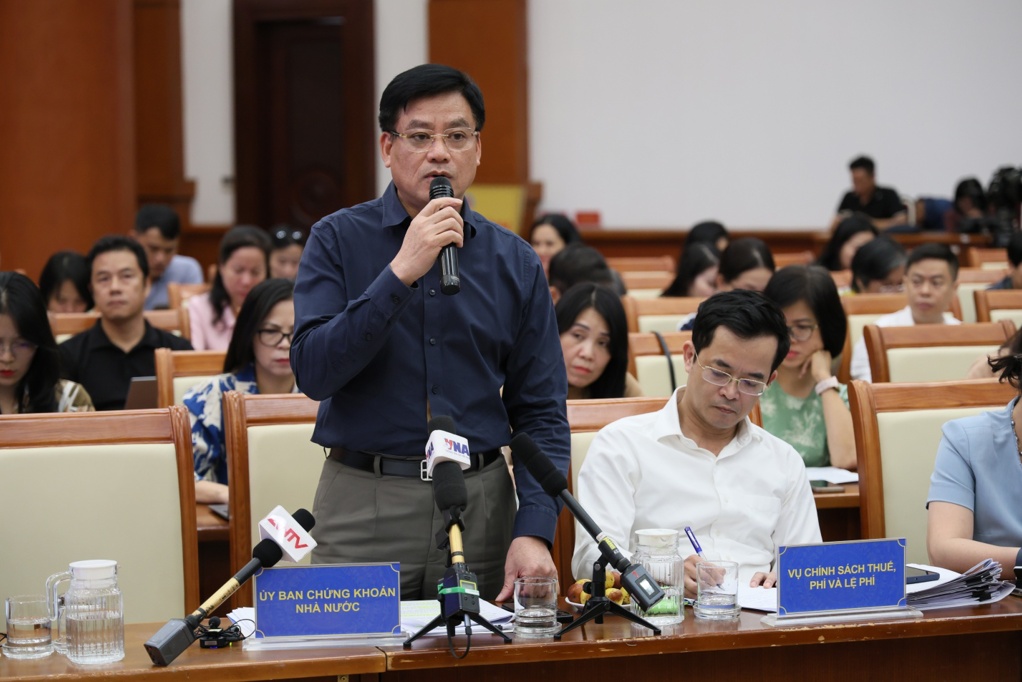
| Photo courtesy of UNIDO |
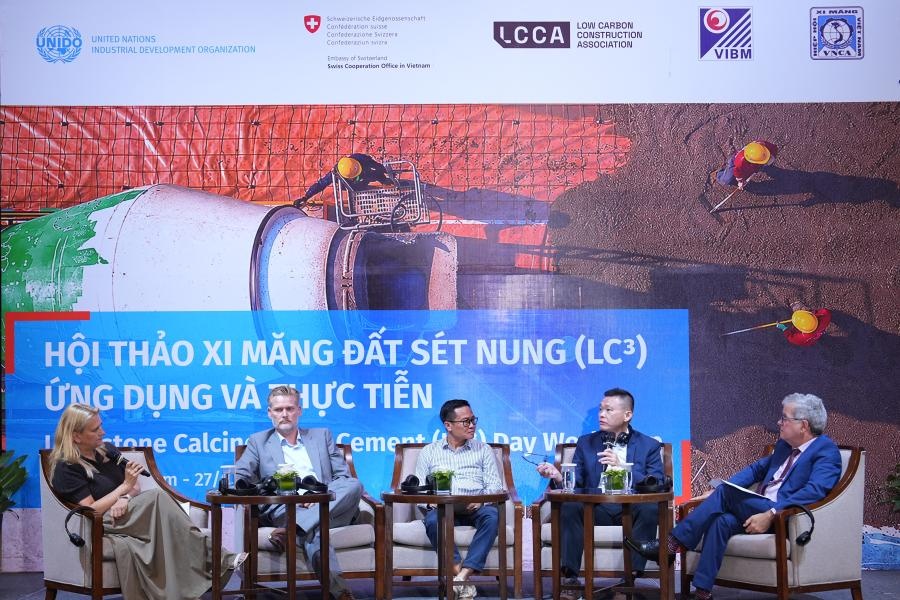
The United Nations Industrial Development Organization (UNIDO), the Vietnam Institute for Building Materials, the Low Carbon Construction Association, and others convened for the Limestone Calcined Clay Cement (LC3) – Applications and Practice Workshop to advance knowledge exchange on practical solutions for reducing the carbon intensity of cement production.
Government representatives, researchers, industry leaders, and others also took part.
“Industrial decarbonisation is a growing priority for Vietnam. The transition must support competitiveness and innovation. UNIDO plays a key role in bringing partners together and helping scale proven solutions. LC3 demonstrates how climate action can go hand in hand with industrial development,” said Le Thi Thanh Thao, UNIDO country representative in Vietnam.
Cement and concrete are essential to development, but cement production accounts for approximately 7–8 per cent of global CO₂ emissions. As the world’s third-largest cement producer, Vietnam’s cement industry accounts for around 16 per cent of the country’s total greenhouse gas emissions, making decarbonisation critical to achieving climate goals while maintaining the industry’s competitiveness.
LC3 offers a practical and scalable solution. Replacing part of the clinker with calcined clay and limestone can reduce CO₂ emissions by up to 40 per cent compared with conventional Portland cement, while maintaining comparable performance and durability. LC3 can also be produced using existing cement infrastructure with relatively limited investment.
Originally developed through research at École Polytechnique Fédérale de Lausanne in Switzerland, LC3 has evolved into a globally recognised low-carbon cement solution. For Vietnam, it offers an opportunity to advance the country’s net-zero 2050 commitments and green growth strategy, while making greater use of abundant local clay resources, strengthening domestic value chains and reducing reliance on increasingly constrained supplementary cementitious materials.
Luong Duc Long, vice chairman and secretary general of the Vietnam Cement Association added, “LC3 offers an opportunity for Vietnam’s cement industry to reduce emissions while maintaining competitiveness and meeting growing construction demand. Wider adoption will require supportive policies, appropriate standards, investment, and continued cooperation across the value chain.”
The LC3 Workshop provided a platform for government agencies, cement producers, technology providers, research institutions, financial institutions and development partners to explore practical pathways for LC3 adoption in Vietnam. Discussions covered global cement decarbonisation trends, LC3 technology, its relevance to the Vietnamese context, local clay availability, calcined clay production, standards and specifications, and the sustainability strategy of the cement sector. The workshop also examined technology choices and implementation pathways, helping bridge the gap between scientific research and industrial application.
Switzerland has played an important role in the development and knowledge exchange around LC3. Benjamin Müller, Chargé d’affairs at the Embassy of Switzerland in Vietnam, noted, “LC3 demonstrates how research, international cooperation and industrial innovation can come together to address the climate challenge. Switzerland is pleased to support knowledge exchange and partnerships that contribute to Vietnam’s sustainable industrial development.”
UNIDO’s Energy Systems and Industrial Decarbonisation unit supports cement sector decarbonisation through an integrated approach combining policy frameworks, technology deployment, financing and market creation. This systemic approach enables scalable transformation of the cement sector towards low-carbon production while maintaining industrial competitiveness and supporting national climate goals.
This is reflected in a UNIDO 2025-2028 programme in Vietnam on promoting a just transition to a green industry and circular economy.
 | TCMA and Chulalongkorn University sign MOU with Canadian partners to advance low-carbon cement roadmap The Thai Cement Manufacturers Association has signed a memorandum of understanding with Chulalongkorn University, supported by Canadian partners, to accelerate knowledge and technology collaboration aimed at decarbonising Thailand's cement industry by 2050. |
 | Vietnam charts new course for maritime industrial ecosystem Vietnam is moving to develop a fully integrated maritime industrial ecosystem under a new strategic direction that elevates shipbuilding beyond manufacturing into a broader driver of economic and national development. |
 | Cement producers sustain growth as construction demand holds firm Vietnam's cement producers delivered stronger first-half earnings as construction demand and infrastructure projects boosted sales, keeping the industry's growth outlook positive despite signs of slower market momentum in June. |
What the stars mean:
★ Poor ★ ★ Promising ★★★ Good ★★★★ Very good ★★★★★ Exceptional
 Tag:
Tag:Related Contents

Latest News



More News
- JBIC considers new financing options for Vietnam’s energy projects (October 03, 2026 | 08:00)
- Vestas to supply 16 turbines for two new Vietnam wind farms (October 01, 2026 | 07:00)
- Inter-sectoral cooperation on Montreal protocol (September 30, 2026 | 17:20)
- EV battery recycling rate proposed at 8 per cent from 2029 (September 29, 2026 | 16:00)
- Bankability remains hurdle for Vietnam's JETP projects (September 29, 2026 | 12:08)
- Binh Minh Plastics extends clean water project to border communities (September 29, 2026 | 10:57)
- Coca-Cola Vietnam expands packaging collection programme (September 25, 2026 | 08:15)
- Pacifico Energy secures sea survey licence for offshore wind project in Lam Dong (September 24, 2026 | 18:02)
- Vietnam secures $221 million in UN development programmes for 2027-2031 (September 23, 2026 | 17:39)
- Carlsberg Vietnam shows how resource efficiency can shape green industrial growth (September 18, 2026 | 09:03)







 Mobile Version