
Vietnam targets up to 17 GW of offshore wind capacity

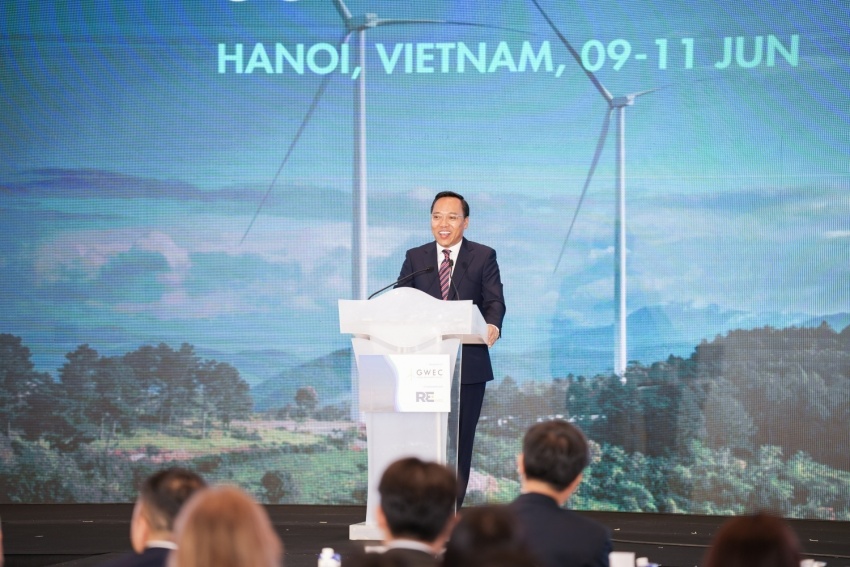 |
| Deputy Minister of Industry and Trade Nguyen Hoang Long |
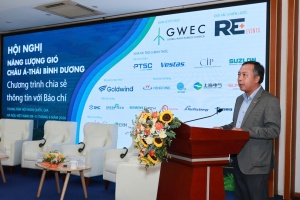
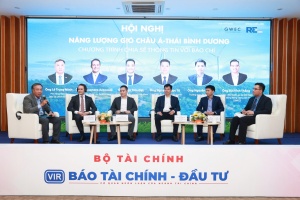
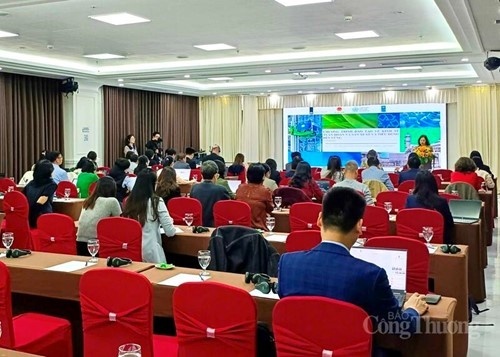
The event took place on June 10, with Vietnamese Deputy Minister of Industry and Trade Nguyen Hoang Long attending and delivering remarks at the plenary session.
Speaking at the event, Deputy Minister Long said Vietnam has approved the revised Power Development Plan VIII, which sets a target of developing approximately 6,000-17,000 MW of OSW power capacity during the 2030-2035 period. He described the target as highly ambitious and a significant challenge for Vietnam, while also creating the foundation for a vast new market for the business community.
In August 2025, the Politburo issued Resolution No.70-NQ/TW on ensuring national energy security through 2030 with a vision to 2045, in which OSW power was identified as a key priority. Later in 2025, Vietnam’s National Assembly also passed a related resolution, and the government is expected to issue a decree to implement the policy framework.
“OSW power continues to hold a particularly important position in the national energy strategy,” the Deputy Minister stressed.
According to Deputy Minister Long, the summit takes place at a particularly important moment as Vietnam enters a new stage of development and a new era of growth. Alongside the goal of achieving double-digit economic growth, the country must also expand its power generation capacity to support economic development.
"Vietnam requires additional energy sources and new projects to meet development demands, but the process must be implemented in a proper, efficient and sustainable manner," he said.
The conference also provides an opportunity for Vietnam to learn from the experiences and recommendations of countries, businesses and investors that are advancing rapidly in OSW development.
“To develop OSW power, it is necessary to develop the entire ecosystem, including supply chains, supporting industries, services and related sectors. We hope to cooperate and learn from all Vietnamese and international partners. This is the right time to jointly build an efficient and sustainable OSW market,” the deputy minister said.
 |
At the summit, Global Wind Energy Council CEO Ben Backwell said the world is facing increasingly visible impacts from fuel supply disruptions, shortages of refined petroleum products, and rising oil and electricity prices. This is not the first global energy crisis, but it is among the most serious in recent years. The difference today, he noted, is that countries are now better equipped to respond to market volatility.
Sharing his impressions upon returning to Vietnam, Ben Backwell said he was particularly struck by the country’s rapid pace of change. “The number of electric vehicles on the streets has increased dramatically. Compared to just three years ago, when I last visited Vietnam, the picture is entirely different,” he said.
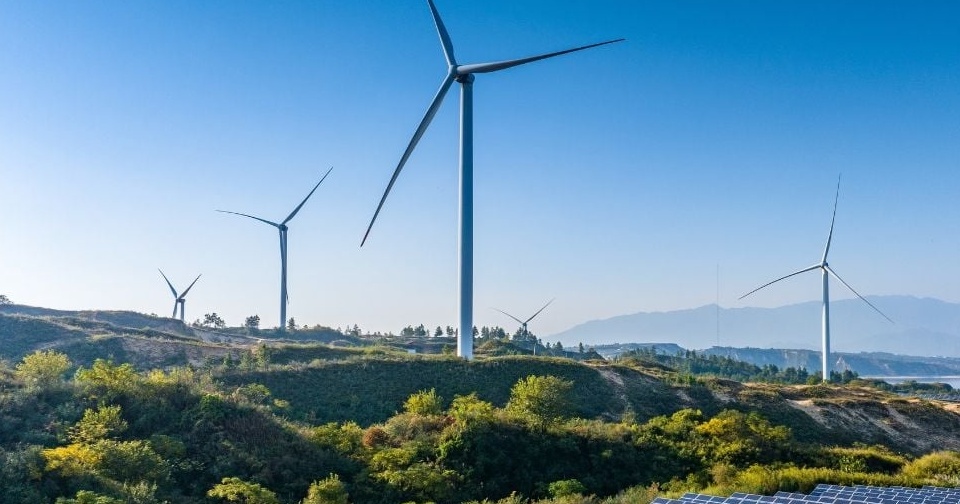
He added that Vietnam is in a highly favourable position to accelerate its energy transition thanks to its vast renewable energy resources, which are “almost unlimited.” OSW power alone has an estimated technical potential of up to 600 GW, representing a major opportunity for future development.
Beyond resource advantages, Vietnam also possesses a strong industrial base, a fast-growing economy and a skilled workforce. These factors could enable Vietnam to become a regional leader in renewable-powered electrification in Southeast Asia and across Asia more broadly.
Backwell also noted that an important foundation has already been established through Power Development Plan VIII, recent legal reforms, licensing frameworks and environmental regulations. In the coming years, wind power, solar power and manufacturing facilities are expected to continue expanding.
In particular, OSW is expected to become a dynamic industry capable of driving supply chain relocation, localisation of manufacturing, port infrastructure development and the creation of hundreds of thousands of high-skilled jobs.
 |
Meanwhile, Gauri Singh, deputy director general of the International Renewable Energy Agency, said that in an increasingly interconnected world, wind and solar power are contributing significant amounts of clean energy to electricity systems.
As end-use sectors increasingly participate in the energy transition, electrification has evolved beyond a climate strategy into a broader strategy for industrialisation, clean transport, cooling demand, digital transformation and energy independence, she said.
"This is the right moment to have a deeper look at the relationship between renewable energy and economic electrification to develop solutions that governments are seeking," she said.
A recent IRENA report on 24/7 renewable energy solutions shows that the combination of wind power, solar power and energy storage is creating a new trend in which the cost of reliable electricity supply is falling rapidly and becoming increasingly competitive with new thermal power projects in some countries.
With nearly 165 GW of wind power capacity added globally over the past year, global momentum for wind power development is becoming increasingly clear. With strong political commitment from countries such as Vietnam, this momentum could translate into national benefits while also strengthening regional cooperation.
“Regional cooperation is an essential foundation for realising ambitious energy transition goals. Wind power development can become the nucleus for interconnected and flexible electricity markets, helping unlock supply chain diversification. Therefore, wind energy is not only important for Vietnam’s energy market but could also play a significant role across the wider region,” the IRENA report highlighted.
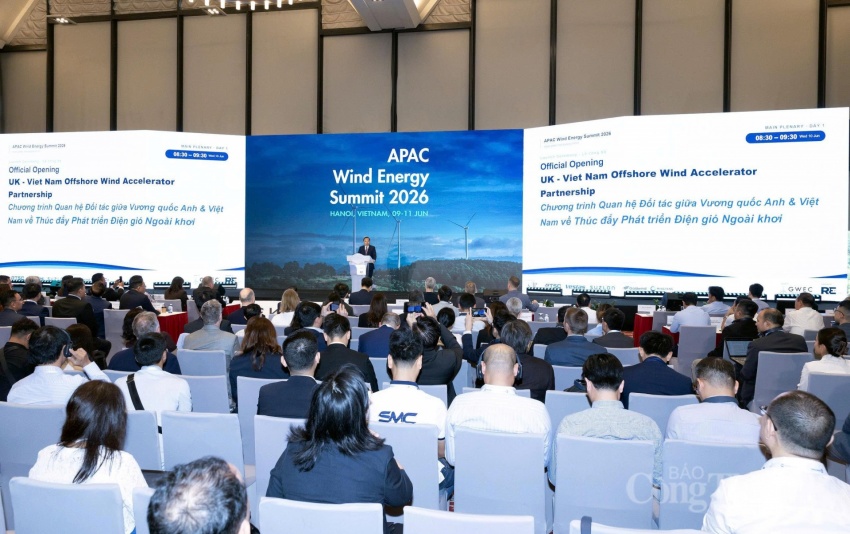
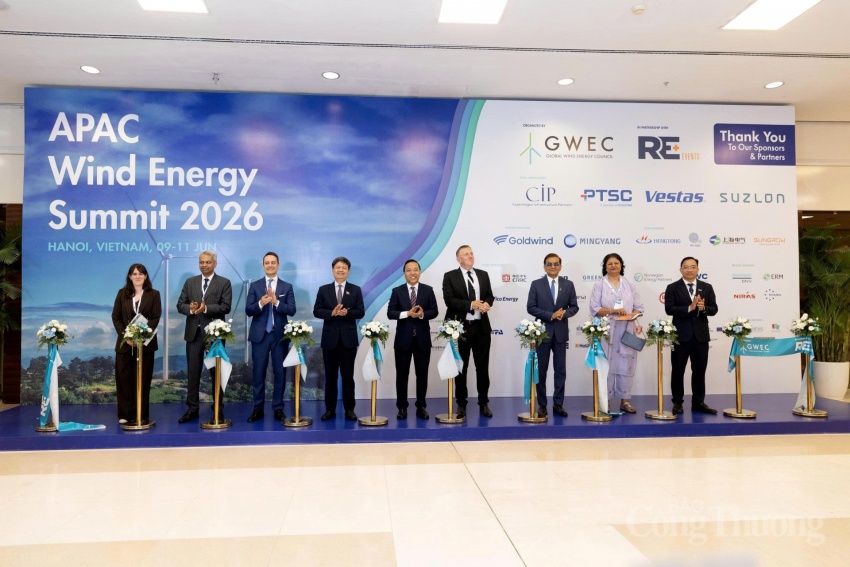
During the summit, Vietnam and the United Kingdom also launched a cooperation initiative to boost OSW development, establishing a new coordination mechanism to support the growth of Vietnam’s OSW market.
On this occasion, the Global Wind Energy Council introduced the publication “Vietnam Offshore Wind Development Guide”, an important industry reference aimed at supporting Vietnam in developing its OSW sector in a systematic, efficient and sustainable manner.
According to organisers, APAC Wind Energy Summit 2026 covers a full spectrum of issues related to wind power development and regional market potential, from high-level dialogues on finance, energy security, energy storage and electricity demand from businesses to specialised technical sessions on floating OSW, grid integration, digitalisation and supply chain industrialisation.
Held under the theme “Wind Powering Prosperity Across Asia-Pacific: Building an Electrified Economy Through Wind Scale-Up and Supply Chain Expansion,” the APAC Wind Energy Summit 2026 took place from June 9-11, featuring two days of conference and exhibition activities, alongside networking sessions and side events aimed at encouraging business connections.
 | COP28 Vietnam Business Forum discusses green transition The Global Wind Energy Council (GWEC), Vietnam's Ministry of Planning and Investment (MPI), and the Embassy of Vietnam in the United Arab Emirates (UAE) co-organised The Vietnam Business Forum on December 2 to discuss mobilising resources for the country's green transition, gathering 160 key stakeholders to participate. |
 | Wind industry leaders to convene in Vietnam for APAC Summit The Asia-Pacific Wind Energy Summit 2026 will take place on June 9-11 in Hanoi. |
 | Vietnam positioned to lead Southeast Asia’s wind power race Vietnam’s offshore wind ambitions are creating opportunities not only for clean power generation, but also for the emergence of an entirely new industrial ecosystem spanning manufacturing, logistics and energy services, according to experts from both domestic and international companies. |
What the stars mean:
★ Poor ★ ★ Promising ★★★ Good ★★★★ Very good ★★★★★ Exceptional
 Tag:
Tag:Related Contents





Latest News


More News
- Consultation workshop refines Vietnam's clean hydrogen strategy (October 04, 2026 | 08:00)
- JBIC considers new financing options for Vietnam’s energy projects (October 03, 2026 | 08:00)
- Vestas to supply 16 turbines for two new Vietnam wind farms (October 01, 2026 | 07:00)
- Inter-sectoral cooperation on Montreal protocol (September 30, 2026 | 17:20)
- EV battery recycling rate proposed at 8 per cent from 2029 (September 29, 2026 | 16:00)
- Bankability remains hurdle for Vietnam's JETP projects (September 29, 2026 | 12:08)
- Binh Minh Plastics extends clean water project to border communities (September 29, 2026 | 10:57)
- Coca-Cola Vietnam expands packaging collection programme (September 25, 2026 | 08:15)
- Pacifico Energy secures sea survey licence for offshore wind project in Lam Dong (September 24, 2026 | 18:02)
- Vietnam secures $221 million in UN development programmes for 2027-2031 (September 23, 2026 | 17:39)








 Mobile Version