
Vietnam must move beyond low-cost EV manufacturing

 |
Can Vietnam's infrastructure and supply chains keep pace with its EV ambitions, and what is the biggest gap between its goals and the reality of implementation?
It is important to consider Vietnam’s vehicle mix, which is dominated by two-wheelers. In the near term, the country’s infrastructure and supply chains are broadly capable of supporting EV growth. Home charging for electric two-wheelers largely avoids pressure on the power grid, as batteries with capacities of 0.5–2 kWh can be charged overnight without posing grid stability concerns.
Around half of all components are shared with internal-combustion engine vehicles, while Southeast Asia already has a well-established supply base for these parts. Battery localisation is also progressing, with CATL and Gotion assembling products in Vietnam.
However, a structural challenge could constrain the industry's long-term development. The market is being driven primarily by affordability rather than quality or innovation.
Around 60–70 per cent of VinFast's models are priced below $1,000, reflecting strong demand for low-cost products. While this supports rapid market expansion, it risks creating a commoditised, low-specification market rather than one characterised by technological differentiation.
If this trend continues, any significant product quality issues could undermine consumer confidence in electric two-wheelers over the medium term, slowing progress towards the government's decarbonisation goals. The growing focus among several manufacturers on battery-swapping solutions also suggests that competition is increasingly centred on affordability, reinforcing the risk that Vietnam becomes locked into the low-cost segment.
The country may achieve its sales targets, but volume alone will not create an innovation-driven or sustainably profitable EV industry.
How ready are Vietnamese consumers to adopt electric vehicles outside major cities, and what policy measures could most effectively encourage the shift from petrol-powered vehicles?
Adoption outside major urban centres is likely to remain slower. Consumers in these areas typically travel longer distances and face more varied road conditions, making range anxiety and charging availability more significant concerns.
However, policy should focus on where demand is concentrated. The majority of Vietnam's two-wheelers are located in major cities such as Hanoi and Ho Chi Minh City, where electrification is already gathering pace. These urban centres will continue to drive market growth.
Demand-side subsidies alone are unlikely to significantly accelerate EV adoption. Rather than providing temporary support for consumers, Vietnam should prioritise supply-side measures that strengthen domestic manufacturing. Battery localisation is already under way, but attention should now shift towards electric motors and controllers.
Developing local production through technology transfer partnerships with Chinese manufacturers, or increasingly export-oriented Indian suppliers, would substantially reduce production costs and strengthen the industry's competitiveness.
Vietnam faces a clear policy choice: continue subsidising demand and achieve only temporary gains, or reduce supply-side costs and deliver lasting structural change. The latter offers a more sustainable path for the industry.
How do you expect Vietnam's EV market to develop between 2026 and 2030, given volatile fuel prices and the government's green transition commitments?
Vietnam's electric two-wheeler market is expected to maintain double-digit growth through 2030, reaching approximately 171,600 units, with annual growth of around 11.4 per cent. This outlook is underpinned by continued urbanisation and rising household incomes.
Another important driver is oil prices. Vietnam imports around 70–80 per cent of its crude oil from the Gulf region, and recent tensions in the Middle East have pushed prices to between $80 and $120 per barrel.
Higher fuel prices immediately improve the economic case for electric motorbikes by reducing total operating costs relative to petrol-powered vehicles.
Should geopolitical tensions ease and oil prices moderate, this advantage would become less pronounced. However, ongoing uncertainty surrounding US-Iran relations, disruptions in the Red Sea, and the Organization of the Petroleum Exporting Countries's production strategy suggest that prices are likely to remain within the $70–100 per barrel range, supporting continued EV adoption.
Which parts of the EV value chain should Vietnam prioritise over the next three to five years to strengthen the competitiveness of its domestic industry?
Vietnam should prioritise investment in electric motor and controller manufacturing, one of the most overlooked yet strategically important segments of Southeast Asia's EV value chain.
While much attention has been given to batteries, motors and controllers are critical to improving both production costs and product quality over the long term. At present, these components are almost entirely imported, increasing costs and exposing manufacturers to lengthy supply chains. As Vietnam's annual EV production exceeds 100,000 units, this dependence will become an increasingly significant constraint.
Technology transfer offers the most practical solution. Several second-tier Chinese suppliers that collectively account for around 43 per cent of China's electric motor market. Following changes to China's subsidy regime in 2024, many of these companies now have excess manufacturing capacity and are actively seeking overseas opportunities. Vietnam's advantages under the Regional Comprehensive Economic Partnership, combined with its expanding manufacturing base, make it an attractive destination for new production partnerships.
Indian suppliers also represent an underexplored opportunity. Supported by years of government investment, India's electric motor manufacturers are increasingly export-ready and already have established relationships within the two-wheeler industry. They could establish assembly facilities or joint ventures in Vietnam relatively quickly.
To attract such investment, Vietnam should introduce targeted regulatory incentives, including tariff reductions, procurement preferences and faster certification procedures. Within 12–18 months, these measures could support the transition from import dependence to domestically certified motor production, improving profitability, product quality and industrial competitiveness. Without such reforms, Vietnam risks remaining a low-cost, commodity EV market. With them, it has the opportunity to foster genuine technological innovation.
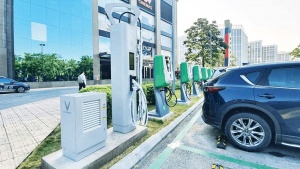 | Tax incentives set to accelerate EV adoption and curb pollution Vietnam is moving to extend tax breaks for electric vehicles, aiming to accelerate adoption, cut emissions and support industry growth as the country pushes forward with its green transition agenda. |
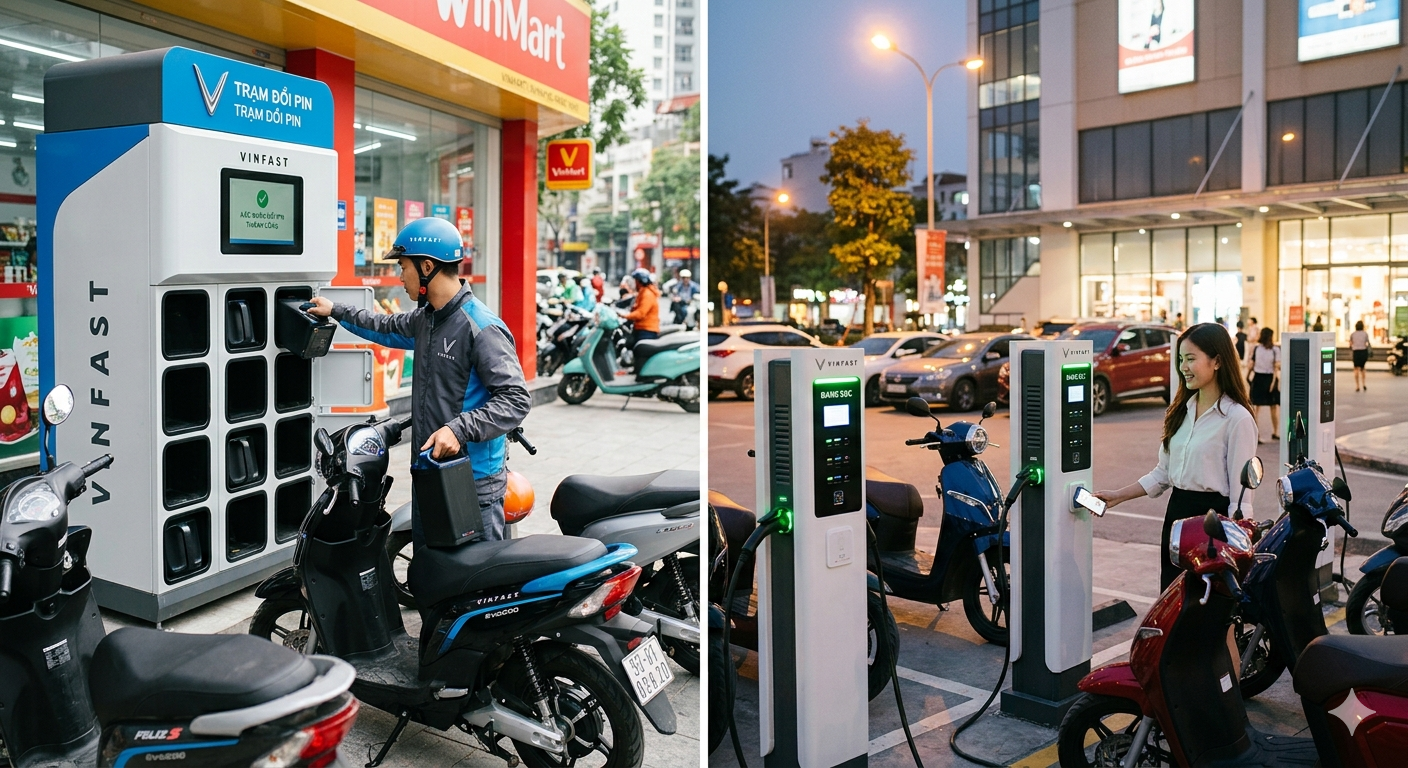 | V-Green, EVNHANOI to install 10,000 EV battery swapping cabinets in Hanoi V-Green Global Charging Station Development JSC and Hanoi Power Corporation have signed an agreement to deploy up to 10,000 electric motorbike battery swapping cabinets across the capital. |
What the stars mean:
★ Poor ★ ★ Promising ★★★ Good ★★★★ Very good ★★★★★ Exceptional
 Tag:
Tag:Related Contents







Latest News


More News
- GreenYellow and Vina Paper partner on rooftop solar project (October 05, 2026 | 09:00)
- Consultation workshop refines Vietnam's clean hydrogen strategy (October 04, 2026 | 08:00)
- JBIC considers new financing options for Vietnam’s energy projects (October 03, 2026 | 08:00)
- Vestas to supply 16 turbines for two new Vietnam wind farms (October 01, 2026 | 07:00)
- Inter-sectoral cooperation on Montreal protocol (September 30, 2026 | 17:20)
- EV battery recycling rate proposed at 8 per cent from 2029 (September 29, 2026 | 16:00)
- Bankability remains hurdle for Vietnam's JETP projects (September 29, 2026 | 12:08)
- Binh Minh Plastics extends clean water project to border communities (September 29, 2026 | 10:57)
- Coca-Cola Vietnam expands packaging collection programme (September 25, 2026 | 08:15)
- Pacifico Energy secures sea survey licence for offshore wind project in Lam Dong (September 24, 2026 | 18:02)



Latest News






 Mobile Version