

Ho Chi Minh City advances low-emission private vehicles

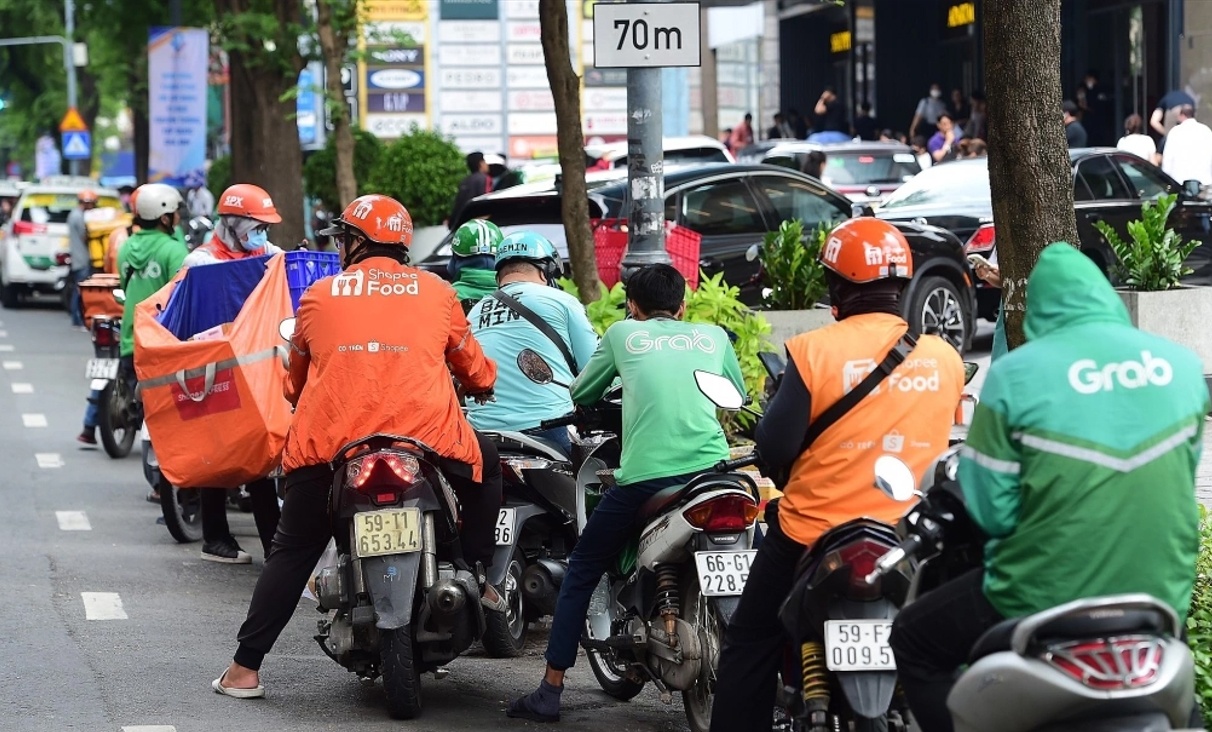 |
The southern metropolis is accelerating solutions to reduce emissions in the transport sector in response to climate change and to improve air quality. As a major economic hub with a population of over 13 million and travel demand largely dependent on private vehicles, the city is facing increasing pressure from traffic congestion, environmental pollution, and greenhouse gas emissions.
The workshop is part of the Climate Promise initiative, implemented by the United Nations Development Programme (UNDP) with support from the Japanese government. Under this initiative, UNDP has conducted a comprehensive technical study to provide a scientific and practical basis for policy measures, identifying investment priorities, and proposing feasible solutions to accelerate the transition towards cleaner private vehicles in Ho Chi Minh City.
Bui Hoai An, deputy director of Ho Chi Minh City Department of Construction said, “Green transport development is not only a trend but also a crucial foundation and driving force for socioeconomic development in countries around the world. In Vietnam, advancing green transport is not merely a requirement but a significant breakthrough."
"It is not merely about technology application but also represents a comprehensive transformation in institutions, human resources, and national governance. It also serves as a catalyst for building and developing a domestic industry with technological self-reliance, particularly in strategic technologies, while encouraging deep, effective, and substantive cooperation,” An said.
Speaking at the workshop, Francesca Nardini, deputy resident representative of UNDP in Vietnam said, “Through this initiative, we are working closely with the Vietnamese government to translate national climate commitments into concrete, evidence-based actions.”
“A key message emerging from this process is that there is no one-size-fits-all solution. A successful transition requires a comprehensive and integrated approach that combines policy, investment, and partnerships, while mobilising government leadership, private sector innovation, and public participation,” she said.
The workshop presented and discussed key topics, including comparisons of low-emission vehicle technologies, assessments of market and infrastructure readiness, analyses of user behaviour, and policy mechanisms and investment opportunities. Participants also exchanged views on priority actions and potential pilot models to be implemented in the near future, to encourage public–private partnerships and develop a clean transport ecosystem.
The outcomes and recommendations from the workshop will support Ho Chi Minh City in refining policies, guiding investment, and implementing concrete solutions to accelerate the transition to low-emission private transport in the future.
 | Green transportation paves path to net zero Environmental, social, and governance (ESG) responsibilities create competitive advantages and a sustainable development path for business as Vietnam aims to electrify 50 per cent of its public transport by 2030 and 100 per cent by 2050. |
 | VinFast sets record with 175,099 electric vehicles delivered in Vietnam in 2025 VinFast set a sales record in the Vietnamese automotive market in 2025, delivering 75,099 electric vehicles to customers nationwide. |
 | TVS invests $4 million in Dat Bike On March 5, Thien Viet Securities JSC announced a $4 million investment in Dat Bike, a Vietnamese electric motorbike manufacturer. |
What the stars mean:
★ Poor ★ ★ Promising ★★★ Good ★★★★ Very good ★★★★★ Exceptional
 Tag:
Tag:Related Contents



Latest News


More News
- JBIC considers new financing options for Vietnam’s energy projects (October 03, 2026 | 08:00)
- Vestas to supply 16 turbines for two new Vietnam wind farms (October 01, 2026 | 07:00)
- Inter-sectoral cooperation on Montreal protocol (September 30, 2026 | 17:20)
- EV battery recycling rate proposed at 8 per cent from 2029 (September 29, 2026 | 16:00)
- Bankability remains hurdle for Vietnam's JETP projects (September 29, 2026 | 12:08)
- Binh Minh Plastics extends clean water project to border communities (September 29, 2026 | 10:57)
- Coca-Cola Vietnam expands packaging collection programme (September 25, 2026 | 08:15)
- Pacifico Energy secures sea survey licence for offshore wind project in Lam Dong (September 24, 2026 | 18:02)
- Vietnam secures $221 million in UN development programmes for 2027-2031 (September 23, 2026 | 17:39)
- Carlsberg Vietnam shows how resource efficiency can shape green industrial growth (September 18, 2026 | 09:03)


Latest News




 Mobile Version