
30-year SCG backs green development as Vietnam enters next phase of net-zero journey

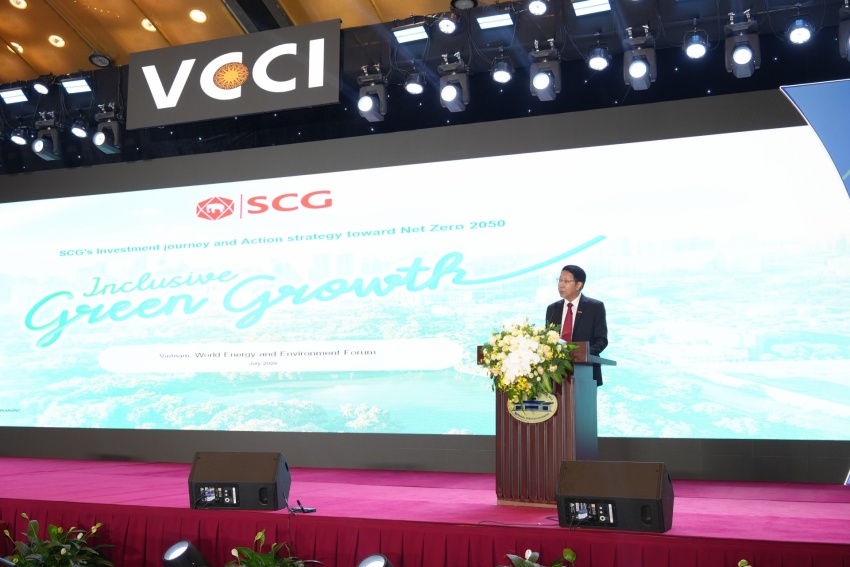 |
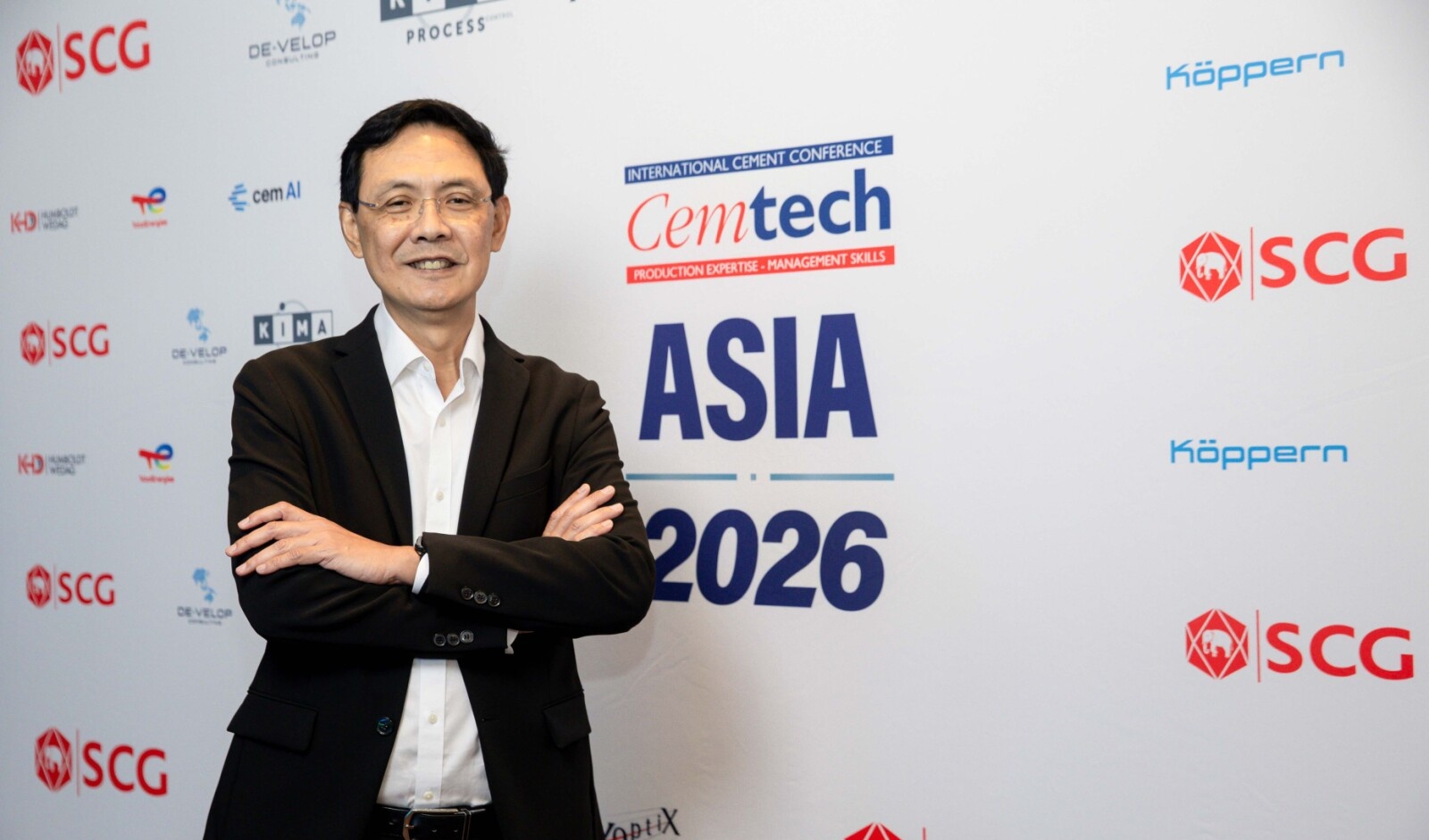
| Niwat Athiwattananont, vice president of SCG Vietnam and general director of Binh Minh Plastics JSC |
SCG’s green transformation must deliver environmental benefits as well as greater industrial competitiveness, as a blueprint for how business and government can work together to achieve that goal.
Vietnam has set an ambitious destination for its green transition. For SCG, this transition is more than a policy discussion. After more than three decades in Vietnam and with an investment portfolio exceeding $7 billion across more than 50 manufacturing facilities, the company has a direct stake in the country's green future.
Speaking at the inaugural World Energy and Environment Forum in Vietnam on July 8, Niwat Athiwattananont, vice president of SCG Vietnam and general director of Binh Minh Plastics JSC, shared how SCG is translating its sustainability commitments into practical business solutions through three strategic pillars: Green Innovation, Digital Transformation and Human-Centric ESG.
"Vietnam's commitment to achieve net-zero emissions by 2050 represents a clear and ambitious national direction," Athiwattananont said. "For SCG, this is an opportunity to reaffirm our role as a long-term sustainable investor and committed partner in Vietnam's green growth journey."
Making low-carbon manufacturing competitive
For SCG, achieving net-zero begins with transforming the way industrial facilities operate. Rather than treating sustainability as an environmental obligation, the company sees it as an opportunity to strengthen long-term competitiveness through technology, efficiency and innovation. "We believe that green transformation must create real business value. In other words, green must also be competitive," he said.
This philosophy underpins SCG's investments across its businesses in Vietnam. At Long Son Petrochemicals, one of the company's largest projects in the country, SCG continues investing in cleaner production technologies while transitioning towards ethane feedstock to improve feedstock flexibility, strengthen competitiveness and reduce carbon emissions per unit of output.
Across its manufacturing network, the Group has implemented energy-efficiency initiatives, renewable energy, alternative fuels, waste heat recovery and industrial waste recycling. These efforts are supported by SCG's circular economy approach through its 5R framework—Reduce, Refuse, Reuse, Recycle and Recover, helping optimise resource use while lowering emissions throughout the value chain.
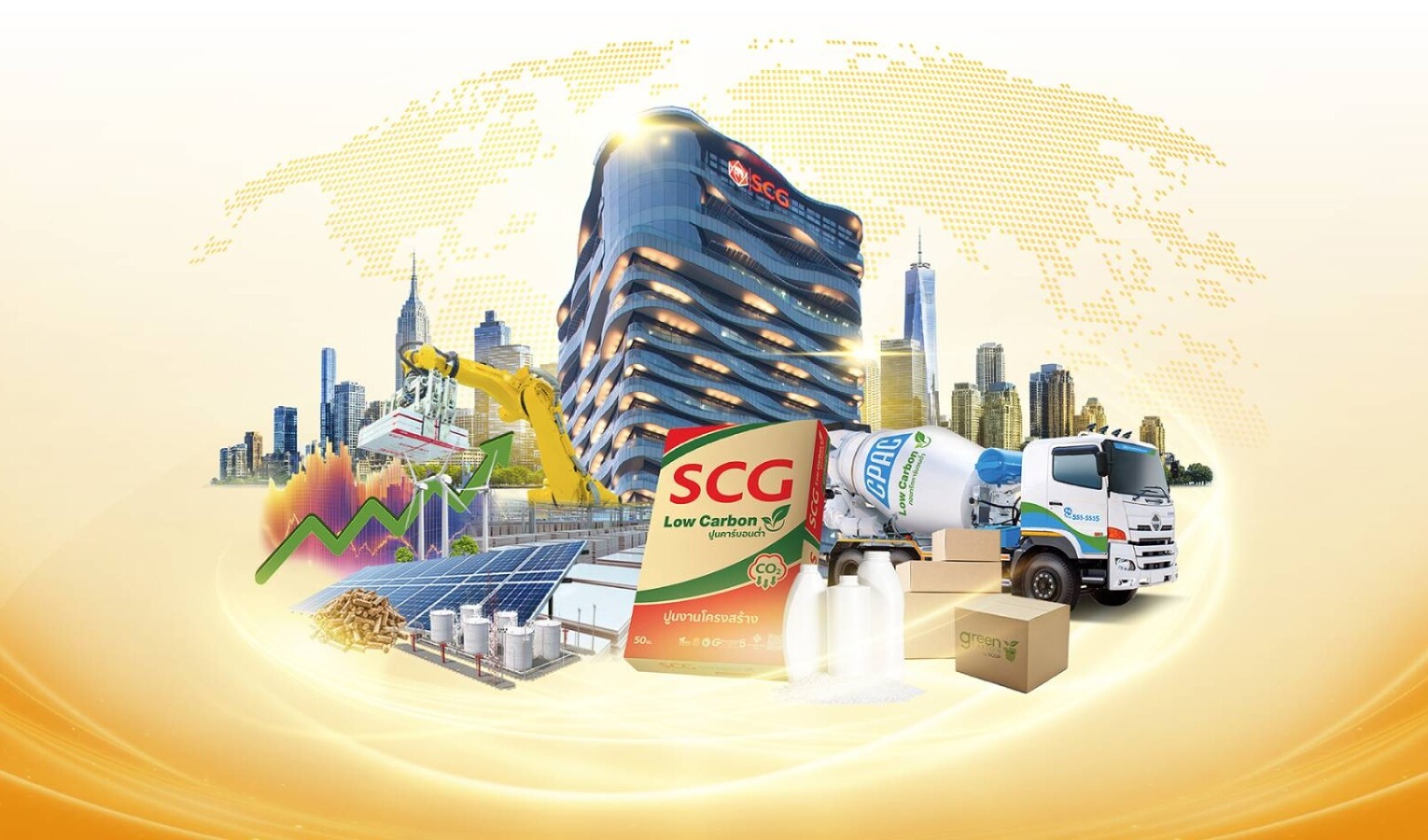
Green innovation also extends to products. SCG continues expanding its portfolio of low-carbon cement, environmentally friendly packaging, lead-free PVC pipes and other sustainable materials that support greener construction and manufacturing.
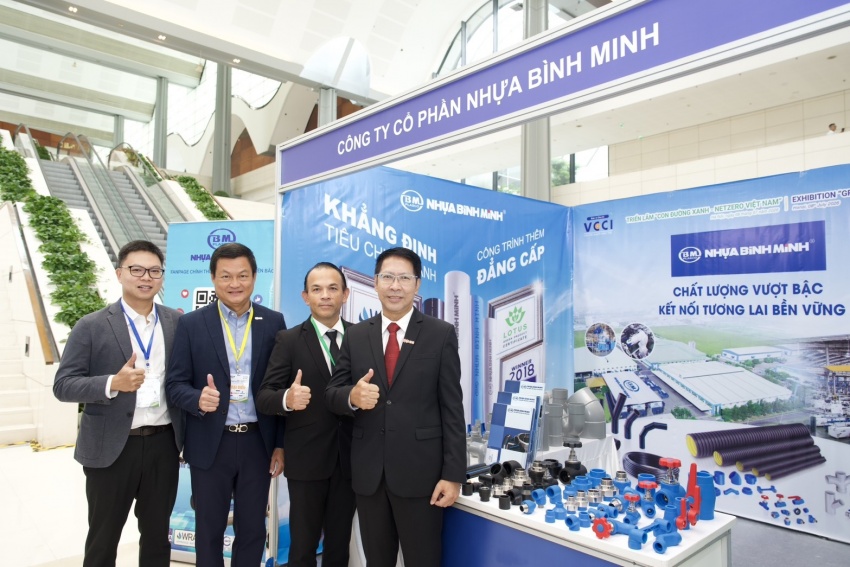
At Binh Minh Plastics, sustainability has been embedded into business operations through the establishment of a dedicated Sustainability Department. The company's PVC-U, PP-R and HDPE pipe systems have earned both Vietnam's LOTUS Green Product Certification and Singapore's Green Building Product Certification at the highest Leader (SGBC 4-Tick) level.
For SCG, innovation is about improving its own environmental performance, but also about helping customers and industries remain competitive as global markets move towards low-carbon production.
"Green innovation is not only about reducing our own environmental footprint," Athiwattananont said. "It is also about providing solutions that help customers, partners, and industries remain competitive in a low-carbon economy."
 |
Turning data into decarbonisation
While green technologies provide the foundation for decarbonisation, SCG believes digital transformation is what enables sustainability to scale. "Green transformation and digital transformation must go hand in hand. To reduce emissions effectively, companies must understand where energy and resources are used, where inefficiencies occur, and how operations can be optimised," Niwat said.
Technology has therefore become central to SCG's industrial strategy. Across its manufacturing operations, the company uses AI, automation, advanced process control and data analytics to improve productivity while optimising energy consumption and resource efficiency.
Binh Minh Plastics offers a practical example of this approach. The company has established an AI and Digital Management Council to accelerate digital transformation, while deploying AI and Internet of Things technologies to connect production equipment, analyse real-time operational data and support faster, more accurate decision-making.
Innovation is also taking place on the factory floor. Engineers and employees at Binh Minh Plastics have successfully developed and operated a robotic arm that automatically separates products from adhesive rolls. The solution enhances workplace safety, increases productivity and delivers more consistent product quality.
Another milestone is SCG's strategic partnership with FPT, one of Vietnam's leading technology companies. The collaboration brings together industrial expertise and digital capabilities to accelerate smart manufacturing and sustainable operations, demonstrating how green and digital transformation can reinforce one another rather than operate as separate corporate initiatives.
"This is how we make green become competitive," Niwat said. "Sustainability will be truly scalable only when it strengthens productivity, quality, cost efficiency, and long-term business resilience."
Building an inclusive green ecosystem
SCG's third strategic pillar recognises that achieving net-zero is ultimately about more than technology or infrastructure. A successful transition depends on people, the workforce, local communities, suppliers and business partners that together form the country's industrial ecosystem.
"A company cannot achieve sustainable transformation alone. Real progress requires people, partners, suppliers, communities, and the next generation to move forward together," Niwat said.
Within the organisation, SCG continues investing in workforce development through initiatives such as SCG Academy, equipping employees with the green skills and digital capabilities needed for the future of manufacturing. In Vietnam, BMP Academy complements this effort by connecting academia with industry, providing practical training for students, engineers, contractors and installation teams. By strengthening technical knowledge and professional skills, the programme contributes to developing a high-quality workforce for Vietnam's plastics and construction materials industries.
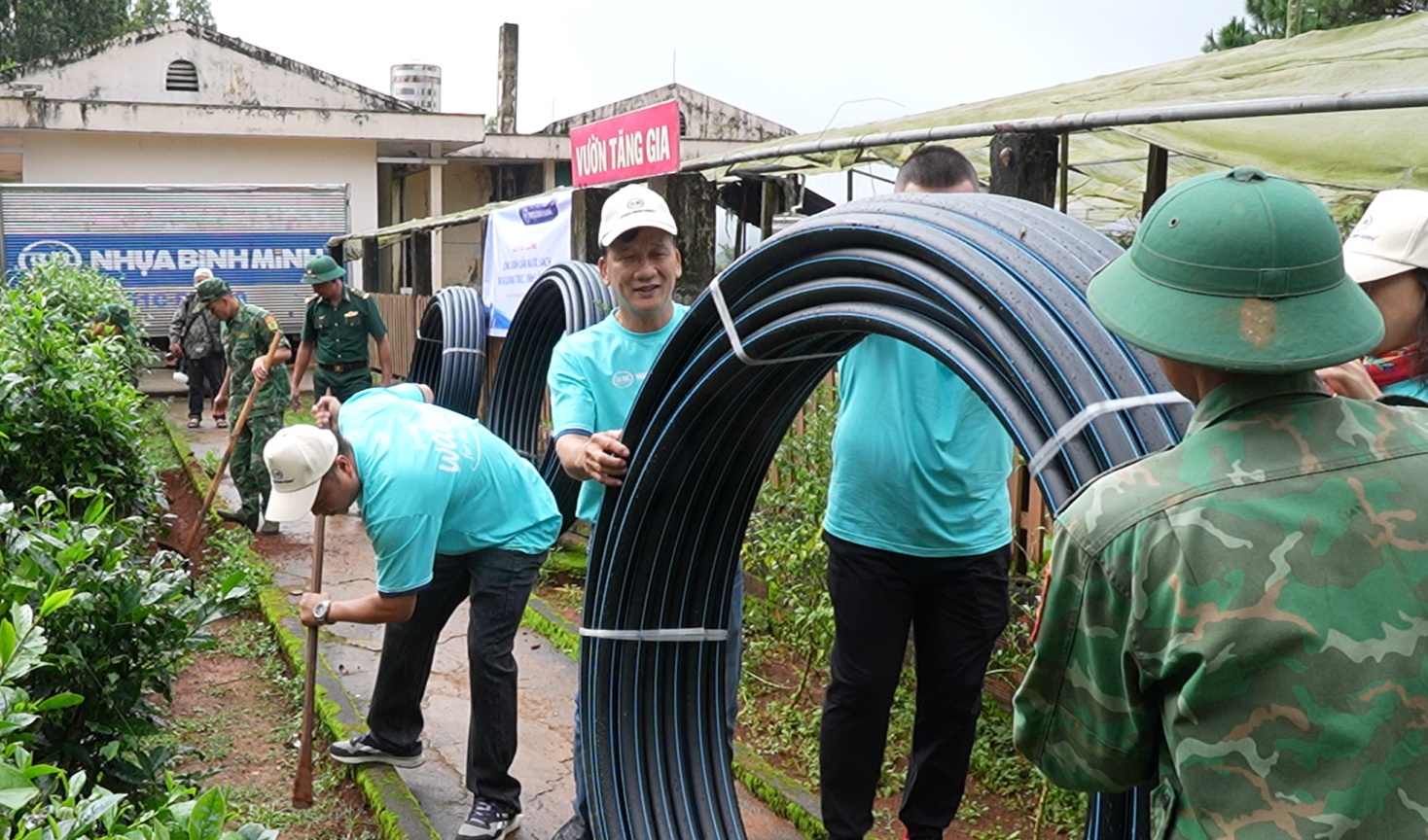
Beyond talent development, SCG continues supporting community initiatives focused on education, clean water and social wellbeing. Between 2021 and 2025, Binh Minh Plastics invested more than $680,000 in community programmes. Through its flagship "Loving Water for the Future" initiative, the company donated more than 89,000 metres of plastic pipes, helping bring clean water to over 24,000 people.
SCG also views supply chain development as an integral part of its sustainability strategy. As global buyers increasingly require suppliers to meet stricter ESG standards, carbon reporting and product traceability requirements, building ESG capabilities among local suppliers has become essential to maintaining Vietnam's industrial competitiveness.
Working with thousands of suppliers and vendors across the country, SCG aims to create what it describes as an "impact chain", enabling small- and medium-sized enterprises (SMEs) and business partners to access knowledge, technology and ESG expertise so that the benefits of green transformation extend well beyond the company's own operations.
"Our goal is to build an impact chain, where suppliers, customers, SMEs, and communities can access knowledge, technology, and ESG capabilities, so that the green transition becomes more inclusive and beneficial across the wider economy," Athiwattananont said.
 |
Partnering to accelerate net-zero
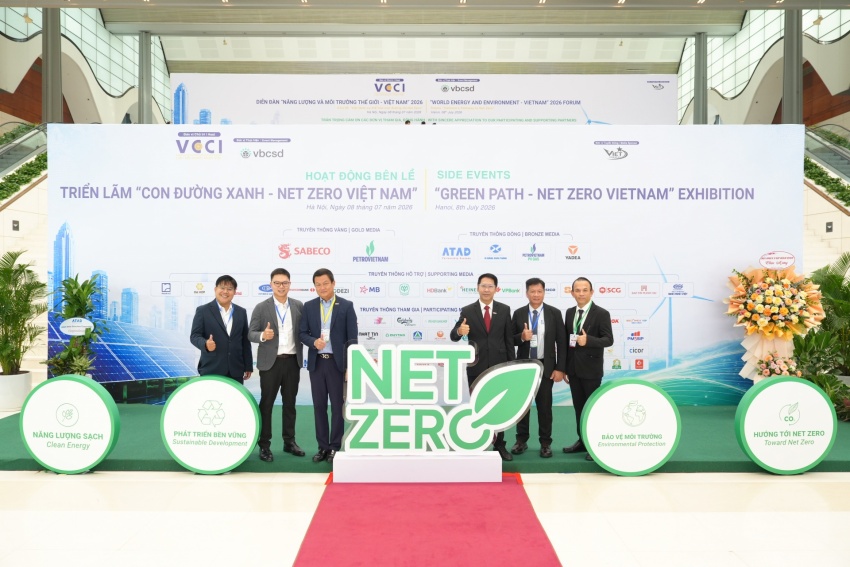
Drawing on more than three decades of experience in Vietnam, SCG believes achieving net-zero will require close collaboration between government, businesses and communities. Based on its own experience, the company identified three areas where stronger public-private cooperation could help accelerate Vietnam's green transition.
The first is energy transition and energy security. As manufacturers increase investments in low-carbon production, access to renewable energy, alternative fuels and enabling infrastructure will become increasingly important. Equally critical, Niwat noted, is a transparent and predictable policy framework that provides businesses with the confidence to make long-term decisions.
"Greater access to renewable power, alternative fuels, and enabling infrastructure, supported by a transparent and predictable policy framework, will help businesses decarbonise while remaining competitive," he said.
The second priority is ensuring a just transition for SMEs and supply chains. While larger manufacturers may have greater resources to adopt new technologies and comply with evolving ESG standards, many smaller businesses require additional support. Expanding access to green finance, digital tools, technical expertise and ESG capacity-building can help SMEs remain competitive as international markets continue raising sustainability expectations.
Finally, SCG sees climate adaptation and resilience as becoming increasingly important as climate risks reshape industrial planning and investment decisions. Building climate-ready infrastructure and strengthening collaboration across sectors will help businesses better manage disruption while improving long-term resilience.
For SCG, these priorities extend beyond policy discussions, they represent practical areas where businesses and government can work together to deliver meaningful progress. "These are not only policy matters, but areas for partnership. SCG stands ready to work with the government of Vietnam, local partners, suppliers, customers, and communities to translate ambition into practical progress," Athiwattananont said.
As Vietnam moves from climate commitments to implementation, SCG sees the next phase of the country's green transition as an opportunity to strengthen both sustainability and industrial competitiveness. With more than $7 billion invested over three decades, the group says it remains committed to investing in innovation, digital transformation, people development and sustainable manufacturing while continuing to support Vietnam's ambition to become a leading green industrial hub in the region.
"The journey towards net-zero 2050 is long and complex, but it is also a historic opportunity to build a more competitive, resilient, and sustainable economy," Athiwattananont said.
What the stars mean:
★ Poor ★ ★ Promising ★★★ Good ★★★★ Very good ★★★★★ Exceptional
 Tag:
Tag:Related Contents






Latest News


More News
- GreenYellow and Vina Paper partner on rooftop solar project (October 05, 2026 | 09:00)
- Consultation workshop refines Vietnam's clean hydrogen strategy (October 04, 2026 | 08:00)
- JBIC considers new financing options for Vietnam’s energy projects (October 03, 2026 | 08:00)
- Vestas to supply 16 turbines for two new Vietnam wind farms (October 01, 2026 | 07:00)
- Inter-sectoral cooperation on Montreal protocol (September 30, 2026 | 17:20)
- EV battery recycling rate proposed at 8 per cent from 2029 (September 29, 2026 | 16:00)
- Bankability remains hurdle for Vietnam's JETP projects (September 29, 2026 | 12:08)
- Binh Minh Plastics extends clean water project to border communities (September 29, 2026 | 10:57)
- Coca-Cola Vietnam expands packaging collection programme (September 25, 2026 | 08:15)
- Pacifico Energy secures sea survey licence for offshore wind project in Lam Dong (September 24, 2026 | 18:02)









 Mobile Version