

VCCI agrees with proposal to extend tax incentives for EVs

 |
| VCCI agrees with the proposal to extend special consumption tax incentives for electric vehicles |
In response to Official Letter No.4554/BTC-CST from the Ministry of Finance regarding comments on the draft resolution of the National Assembly concerning the extension of the special consumption tax (SCT) rate on motor vehicles under 24 seats powered by batteries, the VCCI, in mid-April, believed that the extension brings many overall benefits to the economy, society, and people.
The VCCI said that road transport is currently one of the major sources of CO₂ and fine particulate matter emissions in Vietnamese cities. Citing research published in 2020 by the National Economics University, the organisation states that air pollution causes economic losses of tens of billions of USD annually, equivalent to about 5 per cent of GDP, mainly through healthcare costs, reduced labour productivity, and decreased quality of life.
Continuing to apply the preferential tax rate will create momentum to encourage the shift in vehicle structure towards reduced emissions, contributing to improved air quality, reducing the burden of disease, and saving resources for healthcare.
This policy is also consistent with the state's major policy considerations, such as Resolution No.158/2024/QH15, Decision No.876/QD-TTg on the Action Programme for Green Energy Transition, and Decision No.43/2025/QD-TTg on the roadmap for controlling emissions,” the VCCI said.
The VCCI believes that Vietnam is still heavily dependent on petrol and oil imports, making the economy vulnerable to global energy price fluctuations. Encouraging EVs will contribute to shifting energy consumption in transportation from fossil fuels to domestically produced electricity, especially from renewable energy sources such as wind and solar power.
The policy will not only help reduce import pressure and improve the energy trade balance but also enhance the economy's resilience to oil price shocks, serving the goal of national energy security.
According to the VCCI, many countries have implemented tax and fee incentives to encourage the development of clean energy vehicles and have achieved positive results.
Specifically, China applies tax exemptions and reductions on the purchase of EVs and corporate income tax incentives for five to eight years for electric vehicle manufacturing projects. Thailand reduced the SCT from 8 per cent to 2 per cent and reduced import tax by up to 40 per cent. Norway previously exempted 25 per cent of the VAT on EVs from 1996 to 2021, after which it only applied tax to the value exceeding a certain threshold. The Netherlands also applies registration tax exemptions and reduced ownership tax for EVs.
Based on international experience, the VCCI shared that tax incentives in the initial phase are an effective tool to encourage green transition in transportation, bringing long-term benefits to society.
It acknowledges that extending tax incentives may reduce budget revenue in the short term. However, the overall benefits outweigh the drawbacks. Specifically, reduced air pollution will lead to lower healthcare costs and reduced economic losses due to illness.
Simultaneously, reducing imported fossil fuels will improve the balance of payments. The development of the electric vehicle market will also foster the formation of a supporting industrial ecosystem, such as battery production, charging stations, and maintenance services, thereby creating jobs and expanding the tax base in the medium and long term.
“The reduction in budget revenue during the incentive period can be seen as an investment in a greener, more sustainable, and more energy-reliant economy,” the VCCI said.
 | Kim Long Motor exports first buses to Thailand in regional push Kim Long Motor has exported its first batch of locally manufactured buses to Thailand, marking a significant step in the company's international expansion strategy. |
 | EKA Mobility reports fivefold volume growth The Indian electric commercial vehicle manufacturer disclosed substantial unit sales increase across its product portfolio. |
 | VinFast record sales day demonstrates EV mainstream adoption The Vietnamese automaker's single-day delivery achievement reflected electric vehicles becoming practical transportation choices for consumers. |
 | Vingroup set for $350 million international bond issuance Vingroup plans to issue up to $350 million in international bonds, with listing documents submitted to the Vienna Stock Exchange. |
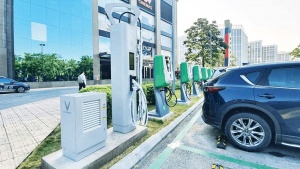 | Tax incentives set to accelerate EV adoption and curb pollution Vietnam is moving to extend tax breaks for electric vehicles, aiming to accelerate adoption, cut emissions and support industry growth as the country pushes forward with its green transition agenda. |
What the stars mean:
★ Poor ★ ★ Promising ★★★ Good ★★★★ Very good ★★★★★ Exceptional
 Tag:
Tag:Related Contents



Latest News



More News
- JBIC considers new financing options for Vietnam’s energy projects (October 03, 2026 | 08:00)
- Vestas to supply 16 turbines for two new Vietnam wind farms (October 01, 2026 | 07:00)
- Inter-sectoral cooperation on Montreal protocol (September 30, 2026 | 17:20)
- EV battery recycling rate proposed at 8 per cent from 2029 (September 29, 2026 | 16:00)
- Bankability remains hurdle for Vietnam's JETP projects (September 29, 2026 | 12:08)
- Binh Minh Plastics extends clean water project to border communities (September 29, 2026 | 10:57)
- Coca-Cola Vietnam expands packaging collection programme (September 25, 2026 | 08:15)
- Pacifico Energy secures sea survey licence for offshore wind project in Lam Dong (September 24, 2026 | 18:02)
- Vietnam secures $221 million in UN development programmes for 2027-2031 (September 23, 2026 | 17:39)
- Carlsberg Vietnam shows how resource efficiency can shape green industrial growth (September 18, 2026 | 09:03)


Latest News





 Mobile Version