
Regenerative agriculture helps Vietnamese coffee tackle green barriers

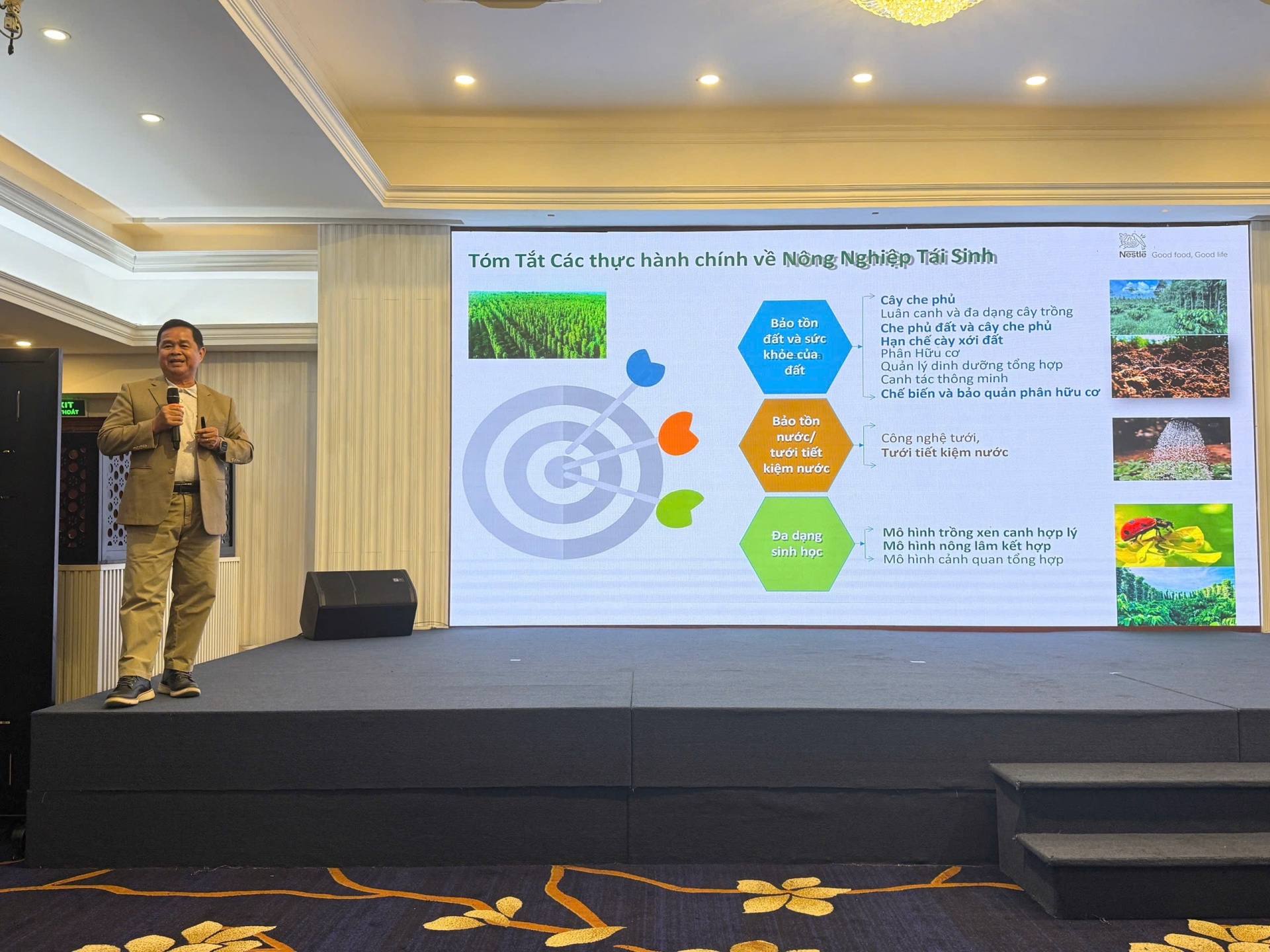 |
At the seminar “Regenerative agriculture – a Sustainable Path for Vietnamese Farming” on July 3, Wouter Melis Van Ravenhorst, managing director of Control Union Vietnam, said, “Despite being one of the countries with strengths in agriculture, Vietnam is facing increasingly stringent 'green barriers' in major export markets.”
According to Ravenhorst, regenerative agriculture is not a passing trend but an essential requirement of global agricultural supply chains. The model restores ecosystems, reduces emissions and enhances the value of agricultural produce.
Nguyen Van Thiet, country manager of the Rainforest Alliance Office in Vietnam, said. "It is the right time for Vietnam’s coffee industry to transform itself to meet the increasingly high demands of the markets. A regenerative farm not only creates green products, but restores and protects biodiversity. This helps build a more balanced relationship between people and nature.”
"Soil should not merely be regarded as a production resource but as a partner. Farmers should make investments to keep the soil healthy and fertile to ensure sustainable harvests for the future," Thiet said.
At the seminar, Pham Phu Ngoc, chief representative of the Nestlé Vietnam office in the Central Highlands and director of the Agricultural Development Programme, shared the NESCAFÉ Plan initiative in Vietnam. Nestlé is a pioneer in supporting farmers covert to a sustainable coffee cultivation model.
Since 2011, the NESCAFÉ Plan programme has advanced the transition from traditional cultivation to regenerative farming practices. The programme has delivered benefits for the environment and biodiversity as well as for household incomes and broader social development.
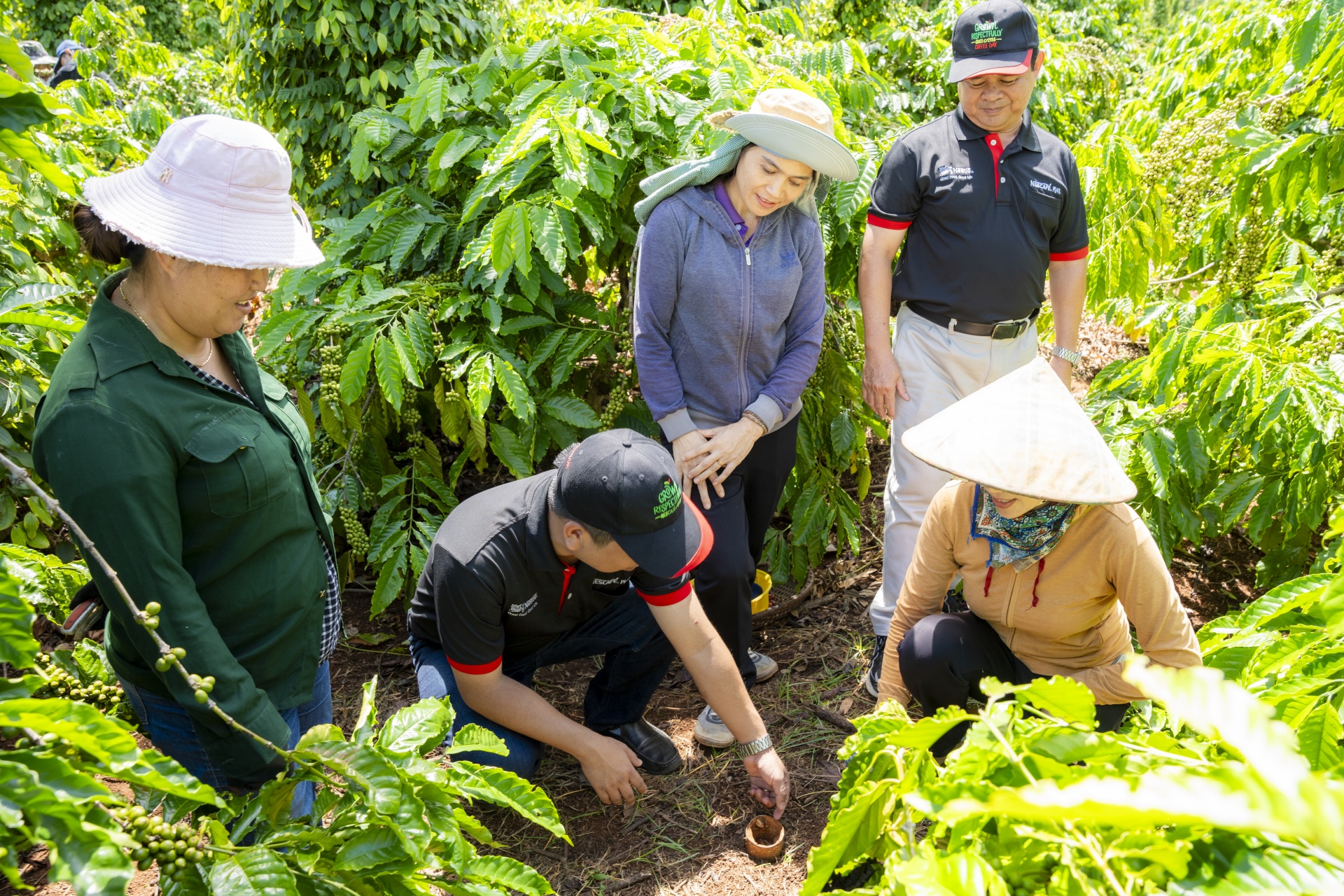 |
Ngoc said, “The greatest challenge doesn’t lie in technology but helps farmers to access new concepts in an easy and actionable way.”
To make the concepts accessible, regenerative agriculture principles are classified into three groups, including soil, water, and biodiversity.
For soil, farmers are guided to maintain ground cover, convert agricultural by-products into organic fertiliser and adopt balanced nutrient management. As a result, this initiative has helped reduce the use of chemical fertilisers by 20-40 per cent while improving soil quality and lowering production costs.
For water, the techniques also save up to 40-60 per cent of irrigation water based on crop demand, helping conserve water resources while reducing electricity and fuel costs for pumping.
For biodiversity, farmers also adopt an intercropping model of coffee along with pepper and other fruit trees to create shade, increase biodiversity, and diversify incomes.
 |
“The value of regenerative agriculture is reflected not only in environmental indicators but also in its economic impact on farmers,” Ngoc said.
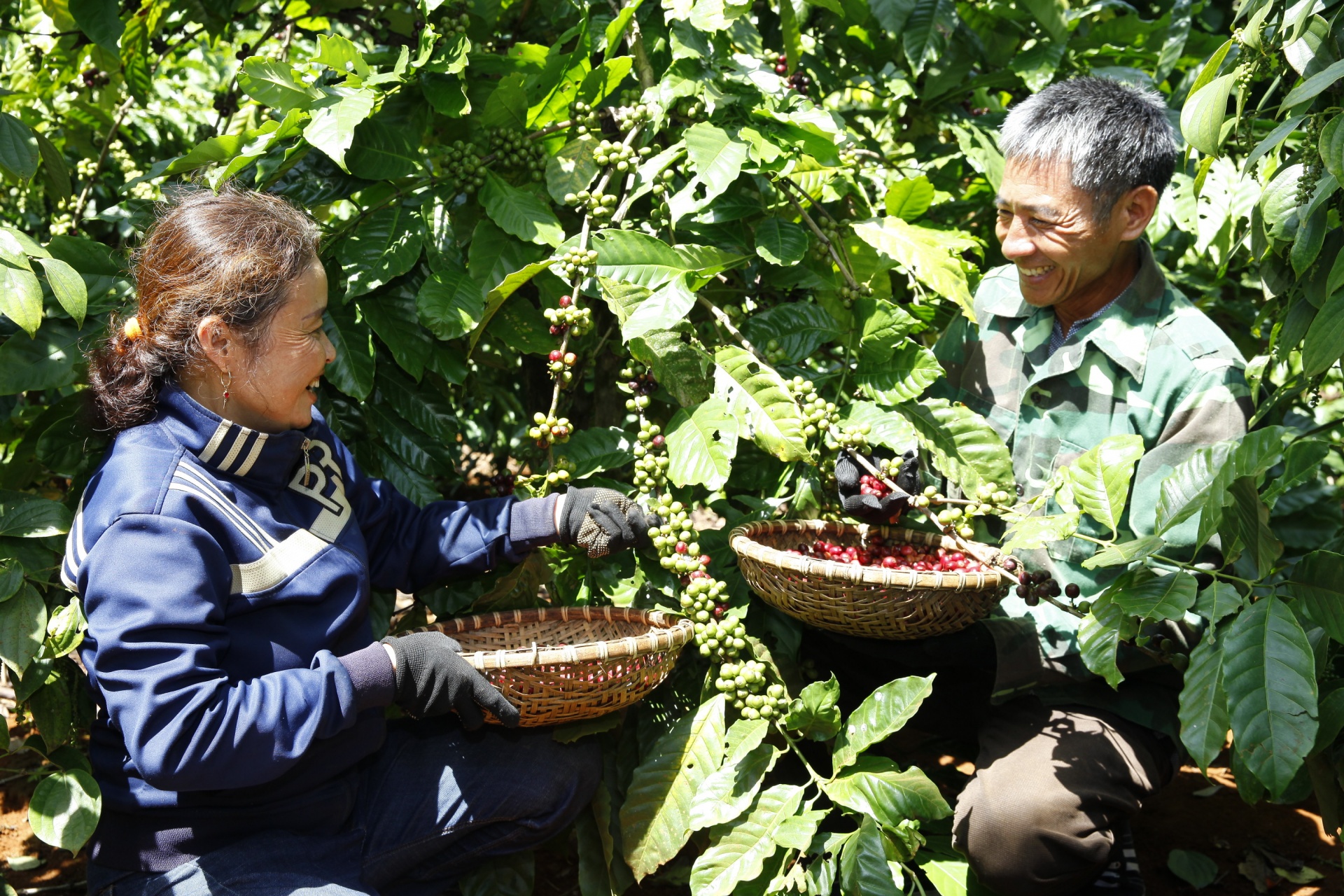
Programme data shows farmers have seen their incomes grow by between 30 and 150 per cent compared with conventional coffee monoculture, thanks to lower input costs and diversified revenue from intercropping.
Over the past 15 years, the plan has accompanied over 23,000 farming households, generating drastic changes in productivity, income and cultivation techniques.
Mai Thi Nhung, a farmer in Dak Lak, is cultivating a 2 ha garden of coffee intercropped with pepper and durian. With the adoption of regenerative agriculture and digital farm management tools, her family has generated over $46,000 per harvest.
Hoang Thi Thu Huong, senior project officer at GIZ, said, “The distinguishing feature of regenerative agriculture lies in its ability to restore natural resources.”
According to the Ministry of Agriculture and Environment's Low-Emissions Crop Production Plan, coffee has been identified as one of the crops with ample potential to minimise greenhouse gas emissions, alongside rice, sugarcane, cassava, and bananas.
Huong said, “The transition to regenerative agriculture will help the coffee industry comply with new regulations, such as the European Union Deforestation Regulation, but also pave the way for producers to participate in future carbon credit markets, creating additional income. This path will help Vietnam’s coffee industry to reinforce its position in the global agriculture landscape.”
 | Nestlé Vietnam pioneers sustainable development and promotes business connections As Vietnam pursues its green growth agenda and sustainable development goals, Nestlé Vietnam is affirming its role in responsible business practices and fostering stronger connections within the business community. |
 | Nestlé Vietnam rolls out its 2026 Lunar New Year campaign Nestlé Vietnam has unveiled its Lunar New Year campaign for 2026, centring on everyday moments of family togetherness rather than grand seasonal gestures. |
 | Nestlé accompanies Ho Chi Minh City's student sports event Nestlé's Milo brand has sponsored the opening ceremony of the Ho Chi Minh City Student Sports Competition for 2025-2026 to promote active lifestyles, health, and well-rounded physical development for Vietnamese students. |
What the stars mean:
★ Poor ★ ★ Promising ★★★ Good ★★★★ Very good ★★★★★ Exceptional
 Tag:
Tag:Related Contents




Latest News

More News
- GreenYellow and Vina Paper partner on rooftop solar project (October 05, 2026 | 09:00)
- Consultation workshop refines Vietnam's clean hydrogen strategy (October 04, 2026 | 08:00)
- JBIC considers new financing options for Vietnam’s energy projects (October 03, 2026 | 08:00)
- Vestas to supply 16 turbines for two new Vietnam wind farms (October 01, 2026 | 07:00)
- Inter-sectoral cooperation on Montreal protocol (September 30, 2026 | 17:20)
- EV battery recycling rate proposed at 8 per cent from 2029 (September 29, 2026 | 16:00)
- Bankability remains hurdle for Vietnam's JETP projects (September 29, 2026 | 12:08)
- Binh Minh Plastics extends clean water project to border communities (September 29, 2026 | 10:57)
- Coca-Cola Vietnam expands packaging collection programme (September 25, 2026 | 08:15)
- Pacifico Energy secures sea survey licence for offshore wind project in Lam Dong (September 24, 2026 | 18:02)



Latest News






 Mobile Version