
Coffee sector shifts to deep processing as export markets demand more

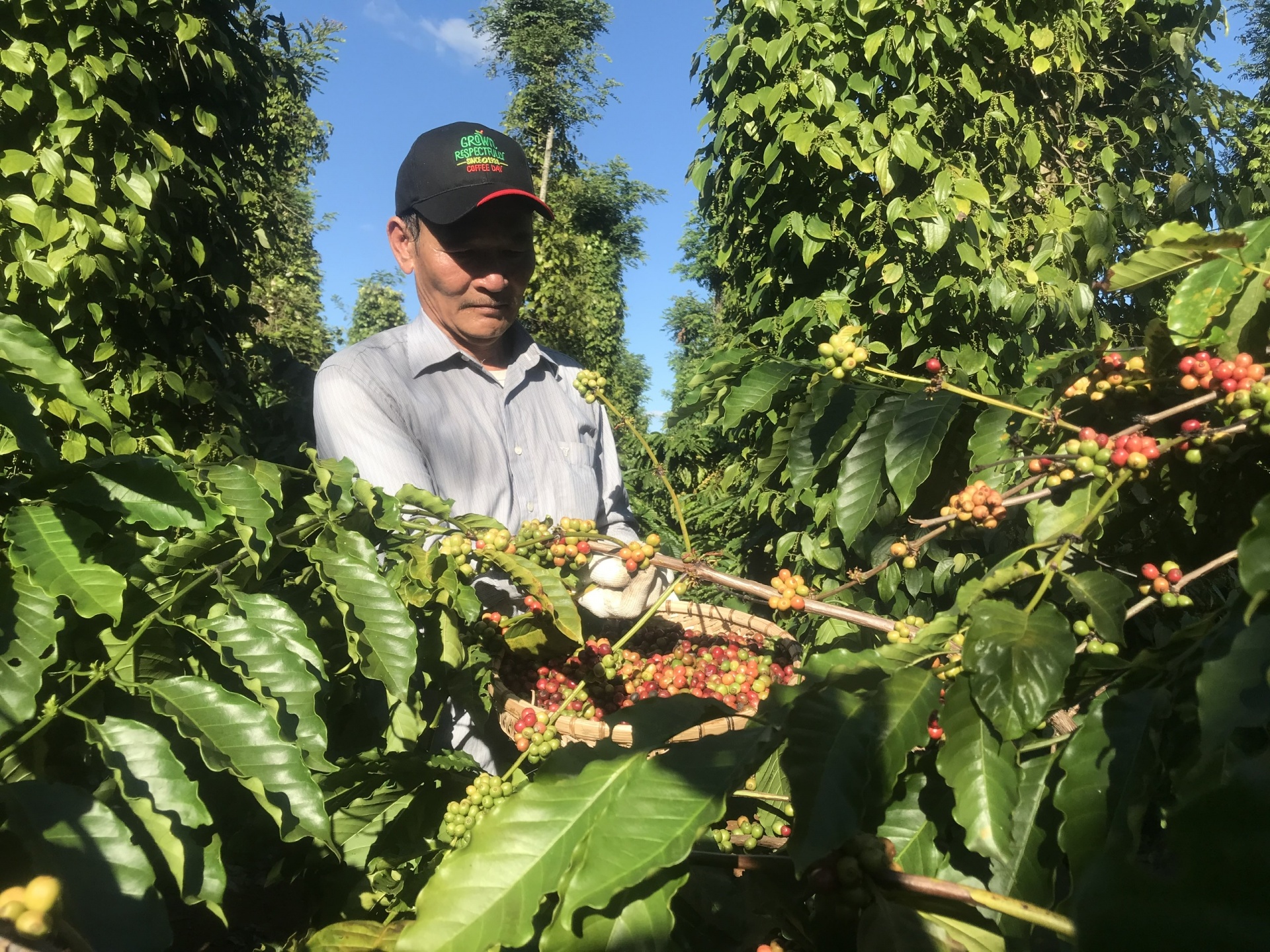 |
| Photo: Hoang Oanh |
The 2026 International Coffee Conference, held in Ho Chi Minh City in April, marked a significant turning point with the launch of the Global Coffee Alliance initiative, amidst the coffee industry's simultaneous challenges of climate change and market volatility.
Backed by 19 diplomatic missions and international organisations, including key coffee producers and consumers such as Brazil, Colombia, Indonesia, and the UAE, the alliance aims to build a technology-driven global coffee ecosystem and achieve net-zero emissions by 2040. Its roadmap prioritises digital transformation, deep processing, and raising incomes for around 125 million coffee farmers worldwide by at least 300 per cent.
Speaking at the conference, Xavier Depouilly, CEO of DXL Research and Consulting, said that coffee is one of the world's largest traded commodities, directly connecting Vietnamese farmers with global consumers. However, behind this impressive scale lie increasingly evident challenges. Climate change is making weather unpredictable, water shortages are directly impacting productivity, while global price volatility is diminishing the potential for long-term investment.
"In this context, utilising deep processing is an urgent requirement to increase added value and enhance the resilience of the entire industry," he said.
According to data from the Ministry of Agriculture and Environment, Vietnam currently has over 710,000 hectares of coffee plantations, ranking sixth in the world in terms of area and being the second-largest coffee exporter globally, after Brazil. This sector contributes approximately 2.5 per cent to GDP and provides livelihoods for over two million workers.
Coffee exports are projected to have reached around 1.6 million tons last year, with a value of approximately $9 billion, a record high. However, about 80 per cent of production remains green coffee beans, mainly robusta, limiting added value.
In the first quarter of 2026, exports reached nearly 590,500 tonnes, equivalent to $2.75 billion. Although production increased by 12.5 per cent, value decreased by 7.1 per cent due to falling export prices, once again demonstrating the heavy reliance on raw material markets.
Tran Van Cong, Vietnam's agricultural counsellor to the EU, said that Europe is the world's largest centre for coffee consumption, processing, and re-export, and a market with increasingly stringent requirements for quality, traceability, and environmental standards. Although Vietnam is the second-largest supplier to the EU, most of its products remain in raw form.
"The paradox is that export turnover is high, but the value generated is not commensurate because the product structure is still heavily focused on green coffee beans. This causes businesses to miss opportunities to participate more deeply in high-value stages such as roasting, extraction, or final consumer products," he said.
According to coffee expert Nguyen Quang Binh, investing in processing technology and brand building is the fastest way to export high-value coffee. Vietnam has begun investing in deep processing and speciality coffee development, but the processing rate remains modest. Compared to foreign-invested enterprises, many Vietnamese businesses still operate in a fragmented manner and have not yet deeply participated in the global supply chain.
Binh cited the example of Nestlé, which has achieved remarkable business results. “Nestlé’s 2025 financial report indicates that the Nespresso brand alone will generate $8.4 billion in revenue in 2025, equivalent to the export value of Vietnam’s entire coffee crop year combined,” he noted. “Meanwhile, Nestlé has many other billion-dollar brands specialising in coffee, such as Nescafé and Starbucks at Home.”
To address this situation, many domestic businesses have begun implementing large-scale deep processing projects.
Vinh Hiep Co., Ltd., a green coffee bean exporter, is investing $710 million in five key projects, including a freeze-drying and spray-drying processing plant with a capacity of 18,000 tonnes per year. The goal is to create high-end products and utilise by-products to produce organic fertilisers, meeting the clean standards of the EU and US markets.
“The project to build a microbial organic fertiliser plant using coffee by-products will regenerate soil nutrients, help reduce input costs for farmers, and ensure clean coffee standards for demanding markets such as the EU and the US,” said Thai Nhu Hiep, chairman of the board at Vinh Hiep.
According to Nguyen Tien Dung, deputy director of Simexco Dak Lak, the issues hindering businesses from engaging in deep processing include inconsistent raw material quality, high investment costs, and pressure to comply with international standards, particularly on traceability and supply chain transparency.
"Furthermore, the VAT mechanism, which involves collecting taxes upfront and refunding them later, has at many times created significant pressure on cash flow, making businesses hesitant to invest in deep processing models, which require much larger medium and long-term capital than raw material trading," Dung stressed.
Simexco Dak Lak has pioneered production according to EU standards on items that do not cause deforestation and reduce carbon emissions. The company has also developed a raw material area of approximately 50,000 hectares, linking with 45,000 farming households, ensuring complete traceability data.
Bui Hoang Yen, representative of the Trade Promotion Department under the Ministry of Industry and Trade, believes that while competing on quality with countries like Brazil presents many challenges, cultural factors can become a distinct advantage.
“Positioning Vietnamese coffee in the premium segment, linked to the story of its people, history, and geography, will help the product conquer the international market with its unique identity,” she assessed.
“In addition, free trade deals are becoming an important gateway, helping Vietnamese coffee reach further on the export map. Thanks to this, Vietnamese coffee could access larger consumer markets such as Japan, the EU, Australia, and China,” Yen added.
| Nguyen Nam Hai We have spoken extensively about corporate brands and individual products, but have yet to build a national brand for Vietnamese robusta, despite it being a unique product and the world’s largest export of its kind. The main reason is that Vietnam has too many key export sectors, resulting in a lack of focused resources for coffee. Meanwhile, other countries concentrate on their core industries, consistently developing and protecting their national brands without allowing others to surpass them. Therefore, to build a Vietnamese robusta brand, we must take the initiative to protect and develop it, rather than waiting until others have captured the market. Coffee is one of the most strategic commodities, with high liquidity and near-indispensable demand in global markets, where prices are constantly influenced by wars, tariffs, and global supply conditions. However, unlike in previous decades, Vietnam has gradually taken greater control of the market through the development of a robust ecosystem spanning production, processing, and exports. Over more than 40 years, the sector has evolved from small-scale production into a sustainable industry, becoming a strategic commodity that helps stabilise prices and improve farmers’ incomes. Nevertheless, coffee remains one of the most sensitive markets in the world, naturally balanced by supply and demand. The sector is now facing major challenges from climate change, extreme weather events, geopolitical tensions, and financial market fluctuations and speculation. A single major storm, political event, or instability in exporting countries can trigger sharp price volatility. In addition, global consumption patterns are shifting, particularly in key markets such as China, India, Russia, and the Middle East. The area under high-quality coffee cultivation is gradually declining, directly affecting supply. At the same time, international regulations such as the EU’s deforestation rules are imposing stricter requirements on origin and product standards, creating pressure but also offering an opportunity to enhance the quality of Vietnam’s coffee exports. |
What the stars mean:
★ Poor ★ ★ Promising ★★★ Good ★★★★ Very good ★★★★★ Exceptional
 Tag:
Tag:Related Contents



Latest News




More News
- Sojitz in Vietnam: 40 years from individual projects to a business cluster 'KATAMARI' (October 08, 2026 | 09:00)
- Coteccons targets 'Quality Growth' with 25 per cent dividend plan (October 07, 2026 | 13:00)
- Vietnam Education Forum opens UK Education Mission's Hanoi visit (October 07, 2026 | 12:27)
- Tax authorities deactivate TINs of nearly 180,000 businesses (October 07, 2026 | 12:08)
- World Bank raises Vietnam's 2026 GDP growth forecast to 7.4 per cent (October 07, 2026 | 11:41)
- Vietstock 2026 to spotlight livestock innovation and green transition (October 07, 2026 | 09:00)
- Vietnam’s GDP grows over 9 per cent in first nine months (October 05, 2026 | 18:45)
- Vietnam earns $56.3 billion from agro-forestry-fishery exports (October 05, 2026 | 18:32)
- DSV balances resilience and decarbonisation in supply chains (October 05, 2026 | 18:20)
- Electronics exports reach $175.4 billion in the first nine months (October 05, 2026 | 18:12)



Latest News





 Mobile Version