
French business delegation meets MoF to discuss investment cooperation

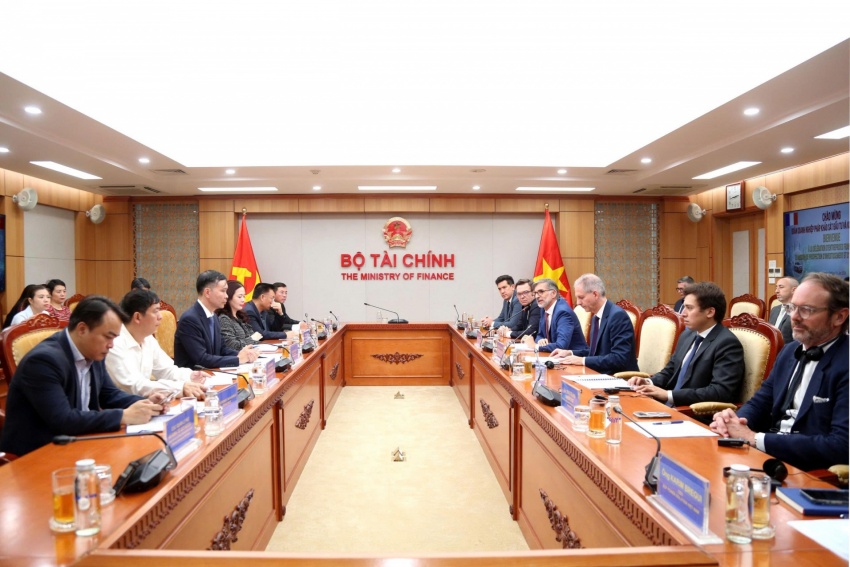
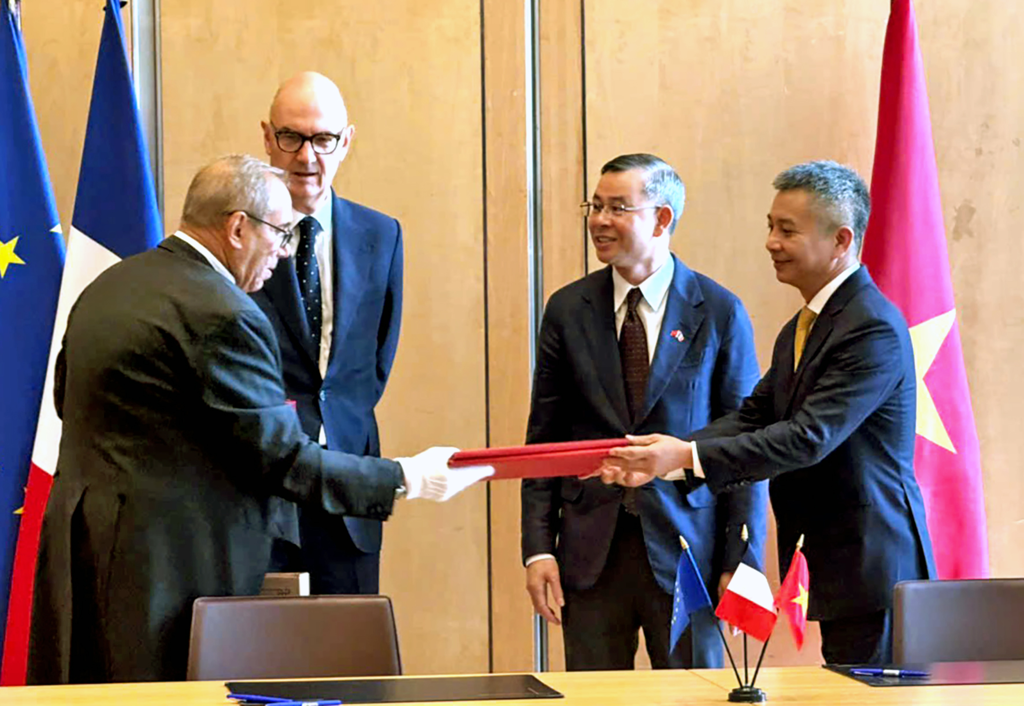
The meeting took place in Hanoi on October 13, one month after the high-level meeting in Paris between Party General Secretary and State President To Lam and French President Emmanuel Macron.
 |
| Photo: Duc Minh |
Authorised by Minister of Finance Ngo Van Tuan, Do Van Su, director general of the Foreign Investment Agency, along with leaders of relevant departments under the ministry, chaired the meeting. Jean-Alexandre Egea, economic counsellor at the French Embassy in Vietnam, also attended.
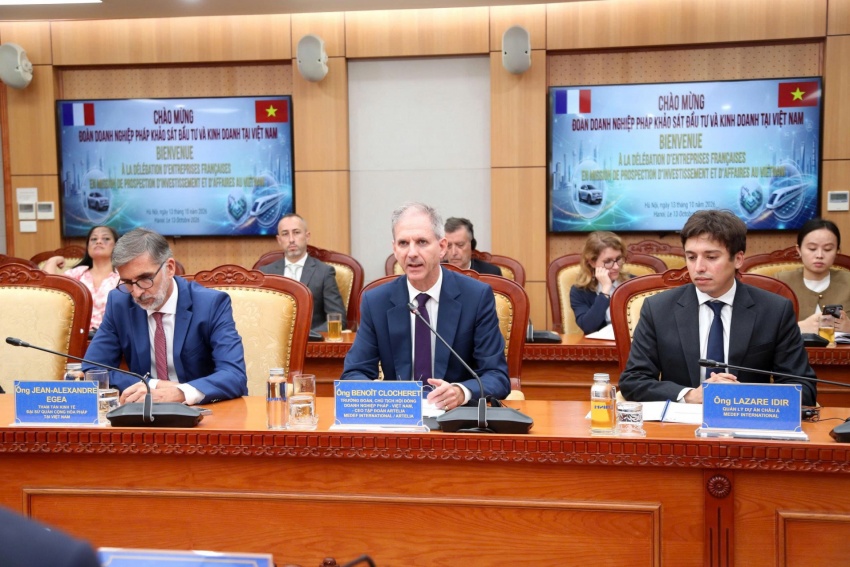
Speaking at the meeting, Benoît Clocheret highlighted the pivotal role of the Ministry of Finance (MoF) in shaping Vietnam's framework for public and foreign investment, development finance, and public-private partnerships (PPPs).
As Vietnam targets annual GDP growth of more than 10 per cent, French businesses are keen to gain a deeper understanding of capital mobilisation mechanisms and the legal framework governing large-scale infrastructure projects, including high-speed railways, metro systems and new energy projects.
The delegation focused discussions with the MoF on three key areas:
Capital mobilisation and financial instruments: The parties discussed effective ways to combine bilateral funding, export credit and multilateral financing for major infrastructure projects.
Contractor selection criteria: The delegation proposed placing greater emphasis on quality, safety, sustainability and whole-life maintenance costs, rather than focusing solely on initial investment costs. It also stressed the need to allocate funding for independent supervision from the project preparation stage.
Long-term investment legal framework: The delegation highlighted the importance of ensuring stable and predictable regulations for projects spanning several decades, alongside the effective implementation of policies supporting private-sector development under Resolution No.68/NQ-TW.
At the meeting, economic counsellor Jean-Alexandre Egea spoke highly of the recent official visit to France by General Secretary and State President To Lam. Bilateral financial and economic cooperation has recorded several notable achievements. The tax authorities of Vietnam and France have signed a tax cooperation agreement.
The Council of the European Union’s Economic and Financial Affairs configuration has removed Vietnam from its list of non-cooperative jurisdictions for tax purposes, moving the country from the 'blacklist' to the 'grey list'. This reflects the efforts and positive coordination between the two sides.
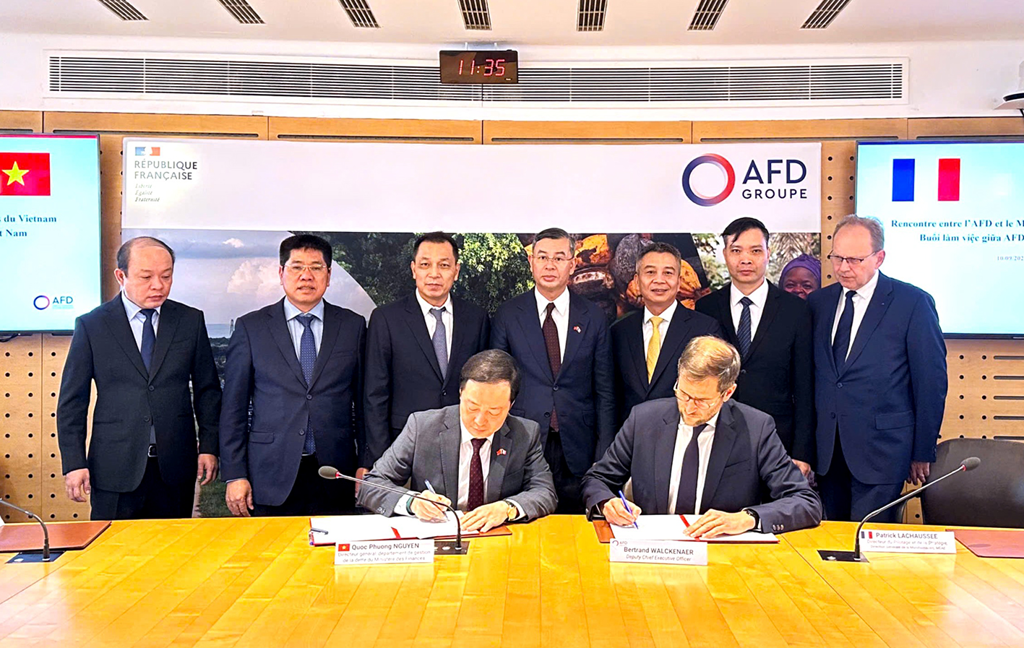
The MoF and the French Development Agency (AFD) have continued to sign financing agreements covering energy infrastructure, the power sector and cooperation in developing a new-generation Earth observation satellite.
Meanwhile, the ratification process for the EU-Vietnam Investment Protection Agreement is progressing actively in the French National Assembly, with completion expected by the end of 2026.
Around 250 French businesses are currently operating successfully in Vietnam, and their presence is expected to expand significantly in the coming years.
 |
| Photo: Duc Minh |
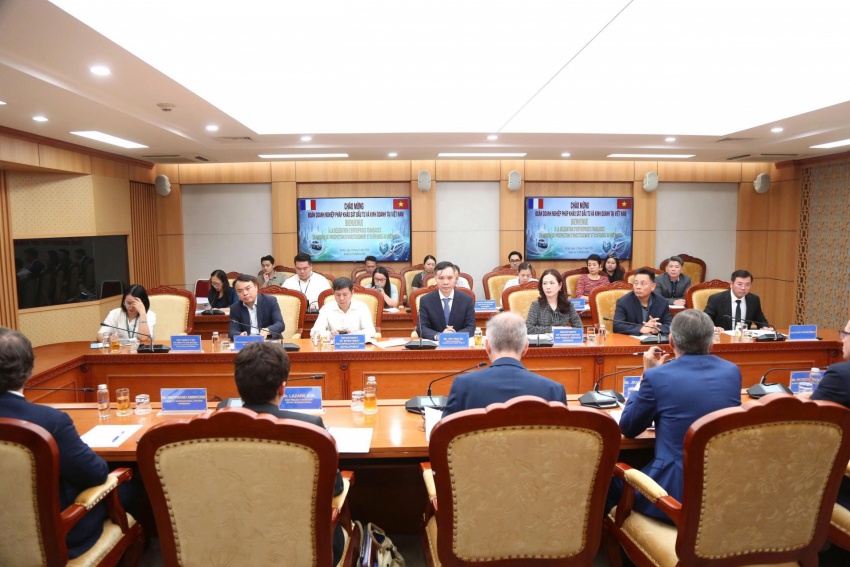
On behalf of the MoF’s leadership, Su acknowledged and appreciated the support provided by the French government and business community. In response to the delegation’s concerns, he outlined Vietnam’s development needs and institutional reform priorities.
Vietnam requires approximately $67 billion for the North-South high-speed railway and $63 to $65 billion for metro systems in Hanoi and Ho Chi Minh City. Total investment needs for railway infrastructure are estimated at $200 billion, while road infrastructure requires approximately $400 billion. To sustain annual GDP growth of more than 10 per cent, energy supply will need to increase by 150 to 200 per cent.
"Vietnam is therefore pursuing a diversified approach to capital mobilisation, combining public investment, private investment and PPPs, while developing a comprehensive and sustainable energy ecosystem," Su explained.
The MoF is submitting amendments to the Law on Bidding to the National Assembly, aiming to improve transparency, promote the application of IT and AI, and streamline procedures.
The reform process also incorporates amendments to the Law on the State Budget and the Law on Public Investment to comprehensively address existing delays and overlaps in the legal framework.
"Resolution No.68 and Resolution No.10/NQ-TW on foreign investment form two complementary pillars supporting economic development. Together, they aim to strengthen linkages between foreign-invested enterprises and domestic businesses," Su said. "Vietnam also places particular emphasis on technology transfer and local workforce training in high-tech and complex infrastructure projects."
 |
| Photo: Duc Minh |
Welcoming Vietnam’s positive progress in institutional reform, Clocheret stated that the Comprehensive Strategic Partnership between the two countries would continue to provide a solid foundation for organisations such as AFD to support key projects.
On this occasion, the French side proposed that Vietnam’s MoF join as a partner in organising the third Vietnam-France Business Leaders Forum in Hanoi in 2027.
Concluding the meeting, Su said the MoF fully acknowledged the delegation’s frank and constructive recommendations. The Foreign Investment Agency will take the lead, working with relevant units under the MoF, including the Department of Debt Management and External Finance, the Department of Infrastructure Development, the Department of Sectoral Finance and Economics, the Public Procurement Agency, the Agency for Private Enterprise and Collective Economy Development, and the Agency for State-Owned Enterprise Development, to examine the proposals in detail and report to the ministry’s leadership.
What the stars mean:
★ Poor ★ ★ Promising ★★★ Good ★★★★ Very good ★★★★★ Exceptional
 Tag:
Tag:Related Contents





Latest News
More News
- Friso promotes global scientific collaboration on children’s gut health in Vietnam (October 13, 2026 | 16:18)
- Germany and Vietnam look to expand strategic cooperation and investment (October 13, 2026 | 16:14)
- Vietnam-Australia forum boosts AI and digital technology cooperation (October 13, 2026 | 11:30)
- Digital transformation shifts focus to added value (October 09, 2026 | 18:00)
- Melatec Dental Clinic - accompanying international clients on their smile care journey (October 09, 2026 | 17:25)
- 12 localities achieve double-digit growth in first nine months (October 09, 2026 | 17:00)
- CYE 2026 announces top 5 finalists (October 09, 2026 | 16:55)
- Robotics inspires Vietnam’s next generation of engineers (October 08, 2026 | 15:18)
- Vietnam among fastest AI adopters, Pearson-AWS study finds (October 07, 2026 | 12:26)
- Ho Chi Minh City Oncology Hospital signs MoU with Novartis Vietnam (October 07, 2026 | 10:36)




 Mobile Version