
Finance Minister outlines Vietnam's growth path at APEC meeting

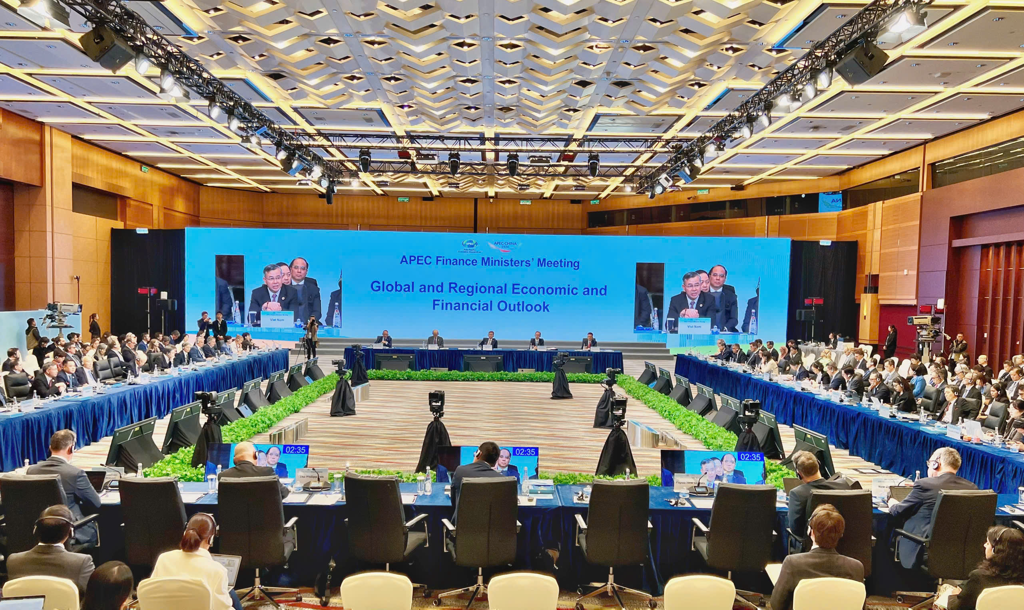 |
| 33rd APEC Finance Ministers’ Meeting taking place in Hong Kong. Photo: MoF |
As part of APEC 2026, the 33rd APEC Finance Ministers’ Meeting (FMM 2026) took place in Hong Kong on October 20-21. The programme included closed-door retreat sessions, a plenary session, and a range of bilateral meetings. During discussions on the morning of October 20, global developments and regional macroeconomic prospects amid mounting uncertainties emerged as key concerns for finance ministers and heads of delegation from APEC economies.
As Vietnam prepares to host APEC 2027, Minister Tuan was invited by Chinese Minister of Finance Lan Fo’an, the host of APEC 2026, to deliver a keynote address during the main session on macroeconomic developments, alongside senior representatives from China’s and the US’ finance ministries.
The invitation to deliver the opening address at this key macroeconomic policy dialogue reflected the host economy’s and other APEC members’ recognition of Vietnam’s standing and credibility. It also acknowledged the country’s notable achievements in macroeconomic management in recent years.
At the meeting, the global and regional economic outlook was a central topic of analysis by representatives of international organisations and member economies. According to assessments by the International Monetary Fund, the Asian Development Bank, and the Asian Infrastructure Investment Bank (AIIB), regional growth prospects were being shaped by a combination of geopolitical risks and technological drivers, particularly AI.
International financial institutions warned that conflicts in the Middle East could disrupt supply chains and energy transportation, while El Niño could threaten food security. These factors could put upward pressure on prices and push regional inflation to 4.2 per cent.
Meanwhile, the surge in AI investment and technology equipment exports continued to support growth, while also highlighting disparities in digital infrastructure development among economies.
Regarding policy priorities, the AIIB recommended stepping up investment in digital infrastructure and the energy transition, with public investment serving as catalytic capital to mobilise additional financing from the private sector.
During the discussions, representatives of member economies shared policy measures aimed at strengthening macroeconomic resilience. The US Department of the Treasury highlighted the role of technological innovation in stimulating investment flows and praised supply chain adjustments and inventory management measures that helped mitigate the impact of volatility in energy markets.
China’s Ministry of Finance outlined its goal of maintaining economic growth at around 5 per cent, accelerating the green transition, and reviving aggregate demand through a 30 trillion yuan ($4.5 trillion) public investment disbursement plan linked to strengthening the social security system.
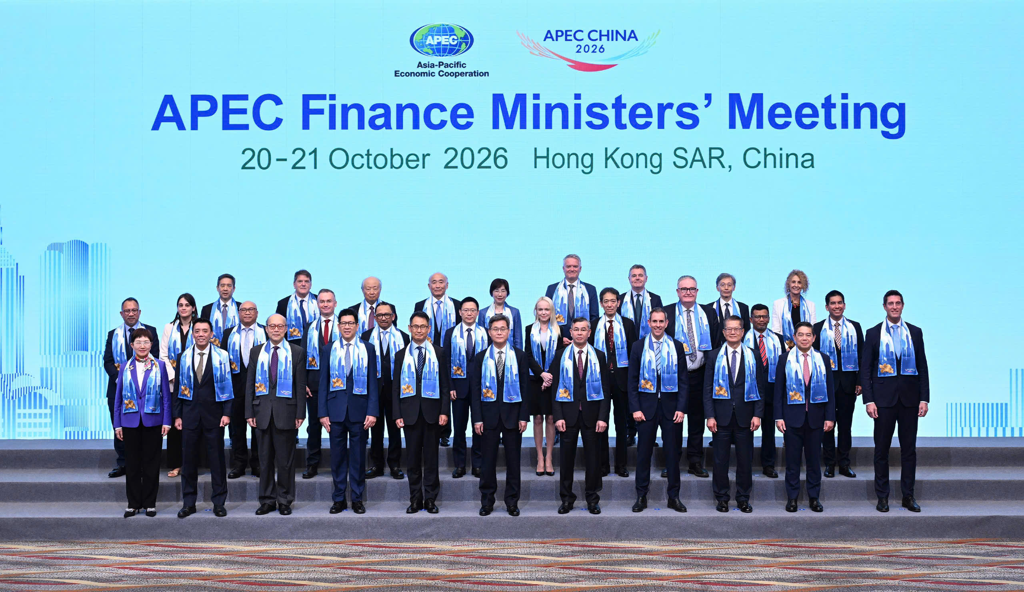 |
| Photo: MoF |
Speaking at the macroeconomic discussion, Minister Tuan shared his assessment of global and regional economic developments and presented Vietnam’s macroeconomic performance and outlook for the first nine months of 2026.
Global economic growth was projected at 3.1 per cent in 2026 and 3.4 per cent in 2027, supported by flexibility in energy markets and investment in AI. However, the global economy continued to face risks from geopolitical tensions, high interest rates, and technological gaps between economies.
Vietnam, meanwhile, recorded strong economic growth in the first nine months of 2026, with GDP expanding by 9 per cent and the consumer price index rising by 4.52 per cent.
The country also received several positive signals, including an upgrade to emerging market status for its stock market, an investment-grade credit rating, and its entry into the upper-middle-income country group. Foreign investment attraction reached a record high, with registered capital totalling $50.36 billion.
Public expenditure was also restructured to improve efficiency, with development investment accounting for approximately 40 per cent of total expenditure. Recurrent spending was reduced through the streamlining of the administrative apparatus. Public debt remained at a safe level of around 35–36 per cent of GDP, providing fiscal space for investment in strategic infrastructure and key projects.
Minister Tuan stated that these achievements had been underpinned by effective coordination between targeted expansionary fiscal policy, flexible monetary policy, and institutional reforms.
Looking towards 2027, Vietnam aims to achieve double-digit economic growth while safeguarding macroeconomic stability and renewing its growth model through greater reliance on science and technology.
On October 21, as part of FMM 2026, Minister Tuan and the Vietnamese Ministry of Finance delegation are scheduled to continue attending sessions and holding bilateral meetings. At the meeting’s closing ceremony, Vietnam will officially assume the role of host economy for APEC 2027.
 | Special mechanism approved to accelerate APEC 2027 projects in Phu Quoc The resolution on special mechanisms and policies to address problems for projects and works serving the APEC 2027 Summit in Phu Quoc Special Economic Zone will take effect from September 1. |
 | Vietnam prepares communications campaign for APEC 2027 On September 24, the Ministry of Culture, Sports and Tourism, in coordination with Khanh Hoa People’s Committee, held a nationwide training conference on communication skills for Vietnam APEC 2027. |
 | Phu Quoc Airport planning adjusted to serve APEC 2027 Phu Quoc International Airport’s revised planning adds critical aviation, technical and commercial infrastructure to meet APEC 2027 demands while creating capacity for long-term growth. |
What the stars mean:
★ Poor ★ ★ Promising ★★★ Good ★★★★ Very good ★★★★★ Exceptional
 Tag:
Related Contents




Latest News
More News
- Vietnam records fastest automotive sales growth among ASEAN-6 markets (September 25, 2026 | 13:53)
- Citi report: Corporates prioritise liquidity as supply chains mature (September 18, 2026 | 10:34)
- Hanoi to host AAAP 2026 animal science congress in October (September 15, 2026 | 14:17)
- Vietnam advances ASEAN qualifications framework (August 21, 2026 | 17:23)
- Regional cooperation crucial as Southeast Asia’s AI boom accelerates (August 13, 2026 | 17:50)
- Vietnam wins first-ever Super Gold Award at World Youth Economic Forum (August 04, 2026 | 17:12)
- MoF minister outlines priorities for international integration to support growth (August 03, 2026 | 23:24)
- AI adoption reshapes marketing across Southeast Asia (July 16, 2026 | 16:37)
- Vietnam leads region in using AI in academia (July 15, 2026 | 15:51)
- ADB maintains Vietnam's growth outlook amid Southeast Asia downgrades (July 10, 2026 | 14:48)








 Mobile Version