
Ageing population puts chronic disease prevention in focus across Asia-Pacific

Asia-Pacific's rapidly ageing population is creating an urgent need for more sustainable healthcare strategies, as the rising prevalence of non-communicable diseases (NCDs) places growing pressure on healthcare systems and economies.
By 2050, nearly 1.3 billion people in the region – around one in four of the population – are expected to be aged over 60. While life expectancy continues to increase, cardiovascular disease, stroke, diabetes, and cancer remain major challenges for individuals, families, and public health systems.
Against this backdrop, Bayer is calling for earlier diagnosis, effective treatment, and greater investment in disease prevention. The call was made at “Longer Lives, Better Years: Reimagining Healthcare for Asia-Pacific”, a media event hosted by Bayer alongside the Silver Economy Forum 2026 at the Kuala Lumpur Convention Centre in Malaysia on November 11.
 |
| Speakers at "Longer Lives, Better Years: Reimagining Healthcare for Asia Pacific", a Bayer media event held alongside the Silver Economy Forum 2026 in Kuala Lumpur. Photo: Bayer |
Healthcare and ageing experts attending the event highlighted the need for a shift in healthcare priorities – from responding to diseases only after they become severe to identifying risks earlier, improving treatment outcomes, and investing systematically in prevention.
“Asia-Pacific is going through one of the fastest demographic shifts in the world. We need to make sure that longer lives are also healthier lives,” said Simon Rosof, head of Asia-Pacific Region at Bayer Pharmaceuticals.
He noted that earlier diagnosis, effective treatment, and prevention should be recognised as investments in people, healthcare systems, and economies.
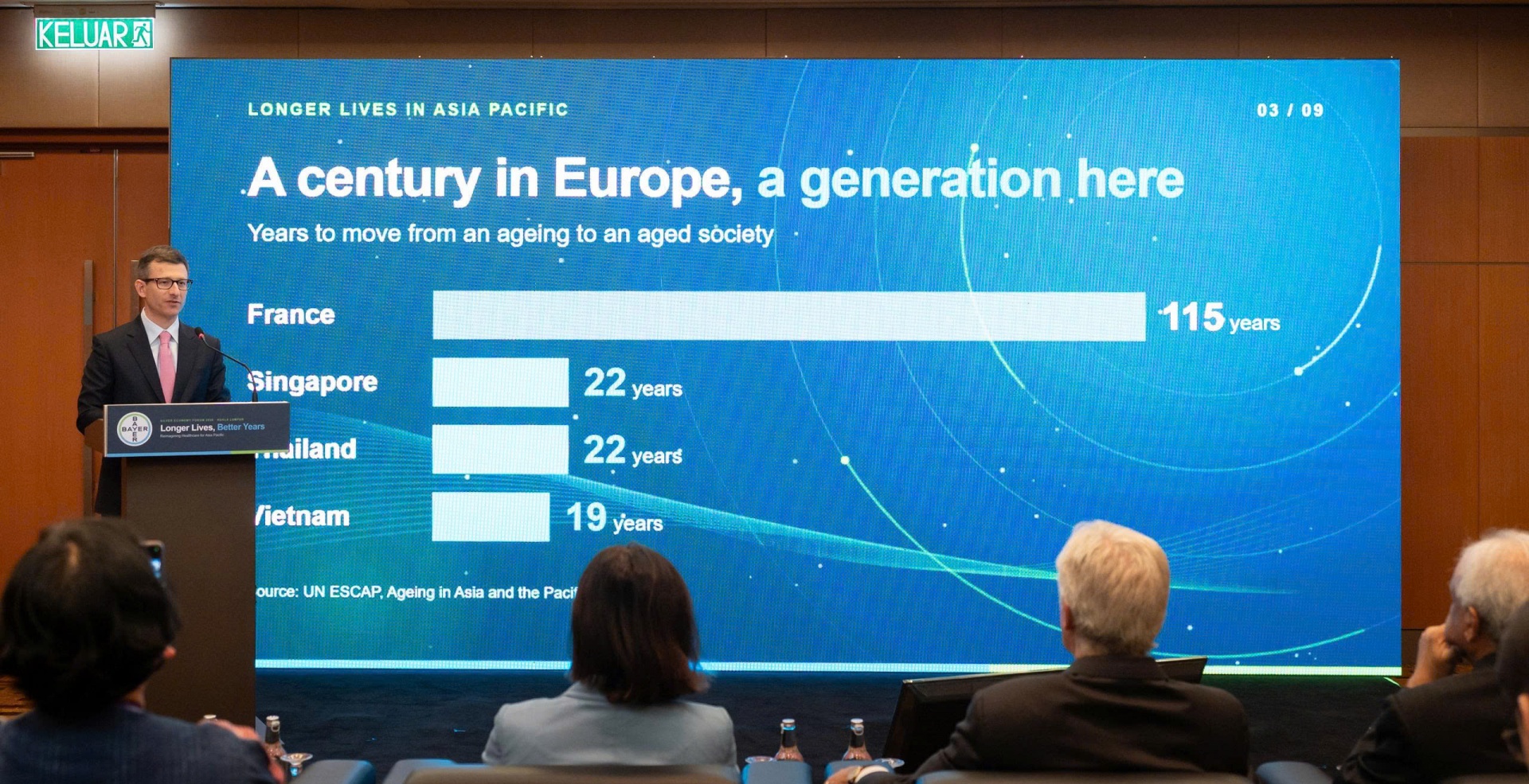 |
| Simon Rosof, head of Asia-Pacific at Bayer Pharmaceuticals, highlights the pace of change in the region: a shift from an ageing to an aged society that took France 115 years is happening in about 22 years in Singapore and Thailand, and 19 years in Vietnam. Photo: Bayer |
The growing economic burden of chronic diseases
The challenge of population ageing extends beyond increasing life expectancy. A critical concern is whether people can maintain good health and quality of life throughout their additional years.
A Global Burden of Disease study published in The Lancet Public Health in July 2026 found that people worldwide now spend an average of 10.7 years in poor health, up from 8.8 years in 1990. The gap between life expectancy and healthy life expectancy has widened in 203 of the 204 countries and territories studied.
Across the Western Pacific Region, cardiovascular disease, stroke, diabetes, and cancer account for nearly nine in ten deaths. Many of the underlying risk factors and conditions can develop over several years without noticeable symptoms, making early detection and intervention particularly important.
Stroke illustrates the scale of the challenge. Asia accounted for 61 per cent of global stroke deaths in 2020, equivalent to approximately 4.1 million deaths. This share is projected to rise to 69 per cent, or around 6.6 million deaths annually, by 2050.
High blood pressure remains the leading risk factor for stroke across Asia, followed by diabetes in many populations. Globally, one in four adults is expected to experience a stroke during their lifetime.
Beyond its impact on patients' health and independence, stroke also carries a substantial economic cost. The global economic burden of stroke currently exceeds $890 billion annually and is projected to reach $2.31 trillion by 2050.
Malaysia provides a national example of the economic impact of NCDs. These diseases cost the country approximately $16.1 billion annually, equivalent to 4.2 per cent of GDP. Notably, around 80 per cent of this economic burden comes from lost productivity rather than direct healthcare expenditure.
These figures underline why preventing and managing chronic diseases should not be viewed solely as a healthcare responsibility. It is also closely linked to workforce participation, productivity, and long-term economic competitiveness.
Michael Hodin, CEO of the Global Coalition on Aging, said, "The additional years gained through longer life expectancy must translate into healthier, more active, and productive years. Achieving this requires governments, businesses, and communities to make the right choices today."
 |
| Michael Hodin, CEO of Global Coalition on Aging, sharing a global perspective on healthy longevity during a panel discussion. Photo: Bayer |
Shifting healthcare priorities towards prevention
In response to the growing burden of chronic diseases, experts at the event identified four priorities for healthier ageing across the region: earlier detection, effective treatment, and follow-up, recognising prevention as an investment, and stronger collaboration among stakeholders.
Routine health checks from midlife, focusing on blood pressure, cholesterol, blood sugar, and kidney function, were highlighted as practical measures to identify health risks before complications develop.
As an immediate step, Bayer urged adults over 40 to know three key indicators of cardiovascular and metabolic health: blood pressure, cholesterol, and blood sugar. Understanding these indicators can help individuals identify potential risks and seek appropriate medical advice and management.
For people already living with cardiovascular disease, stroke, kidney disease, and other chronic conditions, access to effective treatment and long-term follow-up is equally important to maintaining quality of life and independence.
Maria Borentain, global vice president and head of Cardiovascular and Renal Clinical Development at Bayer, said, "Earlier diagnosis and stroke prevention can help people remain active at work, at home and in their communities."
She also highlighted the importance of effective treatment for people already living with chronic conditions, enabling them to maintain their independence and reduce the impact of disease on their daily lives.
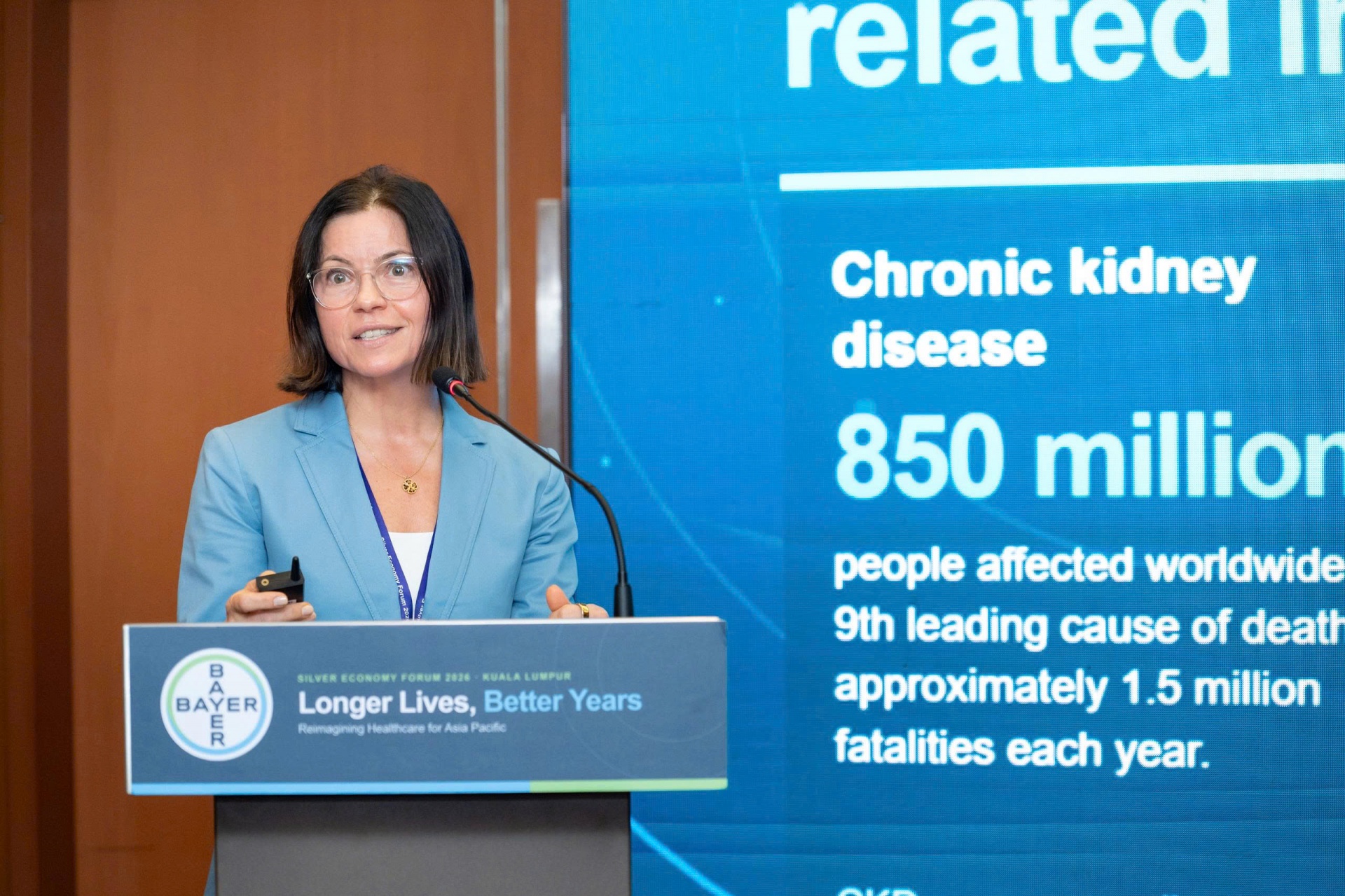 |
| Maria Borentain, global vice president and head of Cardiovascular and Renal Clinical Development at Bayer. Photo: Bayer |
Experts called for prevention investments to be assessed against the full economic costs of chronic diseases, including lost productivity, rather than solely through the lens of healthcare budgets.
Public-private collaboration key to sustainable healthcare
Strengthening collaboration among governments, businesses, healthcare professionals, and community organisations will be essential to translating prevention strategies into tangible outcomes.
Governments play a central role in establishing policy frameworks and setting healthcare priorities, while the private sector can contribute scientific expertise, technology, and innovation. Healthcare professionals and community organisations, meanwhile, help build trust and bring healthcare solutions closer to patients.
Bayer highlighted the importance of closer partnerships between governments, clinicians, and industry to accelerate the delivery of medical innovation to patients across Asia-Pacific.
At the individual level, experts encouraged adults to undergo regular health checks, understand their health indicators, and consult healthcare professionals about appropriate prevention strategies. For stroke survivors, awareness of recurrent stroke risks, and discussions with their doctors about secondary prevention are also essential.
As Asia-Pacific enters a period of profound demographic transformation, the goal of healthcare must extend beyond helping people live longer. The greater challenge is to ensure that people remain healthy, productive, and independent throughout their lives.
Investing in prevention and chronic disease management is therefore not only a public health priority but also a long-term investment in workforce resilience, economic productivity, and sustainable growth across the region.
 | Bayer and the National Hospital of Obstetrics and Gynaecology sign deal to improve women's healthcare Bayer Vietnam has signed a strategic partnership with the National Hospital of Obstetrics and Gynaecology to expand access to advanced therapeutic solutions for women. |
 | Bayer Vietnam launches Centre of Excellence for durian and coffee farming Bayer Vietnam and its strategic partners have launched a Centre of Excellence model for durian and coffee crops in the Central Highlands. |
 | Bayer Vietnam signs MoUs with three hospitals to advance diagnostic imaging Bayer Vietnam's Radiology Division has signed MoUs with Bach Mai Hospital, Hanoi Medical University Hospital, and Viet Tiep Friendship Hospital to strengthen diagnostic imaging capabilities and support the development of more patient-centred healthcare in Vietnam. |
What the stars mean:
★ Poor ★ ★ Promising ★★★ Good ★★★★ Very good ★★★★★ Exceptional
 Tag:
Related Contents






Latest News
More News
- Scam Ready ASEAN Resource Hub launched to build resilience against digital scams (November 11, 2026 | 18:01)
- C asean Vietnam forum highlights ESG skills for sustainable growth (November 02, 2026 | 13:42)
- Vietnam products in focus at branding seminar (October 29, 2026 | 08:00)
- Asia-Pacific business confidence dips despite encouraging economic indicators (October 27, 2026 | 16:05)
- Deeper ASEAN integration key to climbing global value chains (October 27, 2026 | 15:23)
- Vietnamese and Thai media seek common ground in changing news landscape (October 27, 2026 | 14:00)
- Vietnam sets out four priorities for 2027 APEC finance agenda (October 23, 2026 | 14:21)
- Vietnam and World Bank discuss priorities for APEC 2027 (October 21, 2026 | 15:04)
- Finance Minister outlines Vietnam's growth path at APEC meeting (October 21, 2026 | 12:03)
- Vietnam records fastest automotive sales growth among ASEAN-6 markets (September 25, 2026 | 13:53)







 Mobile Version