
Data centre growth sharpens focus on power supply

Speaking at the opening ceremony of an exhibition series in Ho Chi Minh City on November 4, Nguyen Thi Phuong Yen, deputy director of the Centre for Energy Information and Electricity Market Development under the Electricity Authority of Vietnam, said that as energy demand continues to rise, the challenge is to ensure an adequate, safe, and stable energy supply while gradually developing a modern and efficient energy system capable of adapting to changes in technology and the market.
The country's data centre capacity is projected to increase by more than 500 MW by 2030, underscoring how heavily the growth of the technology sector depends on the reliability of energy infrastructure.
“To achieve this goal, alongside improving institutions and policies and developing infrastructure, it is essential to focus on innovation, technology adoption, mobilising investment, and strengthening public-private cooperation,” Yen said.
 |
| Opening ceremony of the exhibition series held in Ho Chi Minh City from November 4 to 6. Photo: Organiser |
To address this challenge, solar and wind power sources need to be integrated with grid-forming technology.
Jason Wu, CEO of Huawei Southest Asia Digital Power said that energy is the foundation of economic development.
“As Vietnam’s economy continues to grow rapidly, its energy demand will increase accordingly. The global energy transition is gaining momentum, and developing new energy sources is an effective way to address the growing gap between power supply and demand,” Wu said.
“Compared with conventional energy sources, new energy projects generally have shorter construction cycles, lower costs and greater flexibility in deployment. They can provide sustainable power supplies while reducing dependence on fossil fuel imports. The development of new energy can also support Vietnam’s carbon neutrality goals and help businesses meet carbon-related requirements in international markets,” Wu added.
Wu added that as digital transformation has become a national strategy for Vietnam, the AI industry is developing rapidly.
“Vietnam’s data centre capacity is expected to increase by more than 500 per cent by 2030, further driving up electricity demand. Reliable power supply will therefore be critical to the sustainable development of the AI industry. The integration of computing power and energy infrastructure will be an important direction for future development,” he said.
James Yuk, Asia-Pacific vice president, said Vietnam’s dynamic economy and rapid industrialisation are driving growing demand for reliable, clean, and sustainable energy.
“With national targets focused on green transition and net-zero emissions, Vietnam is at the forefront of Southeast Asia’s renewable energy transformation,” Yuk said.
This transition, he added, is not simply an environmental responsibility; it is also a powerful driver of economic growth and long-term prosperity for future generations.
“We understand that energy reliability, grid flexibility, visibility, and cost efficiency are essential, particularly for the commercial, industrial, and residential sectors. That is why we continue to invest in technology, developing advanced low- and high-voltage energy storage systems, alongside our AI co-pilot intelligent monitoring platform,” he said.
More than 800 companies coming from 25 countries and teritories are attending in the 2026 Industrial Exhibition Series of Vietwater 2026, Vietnam Energy Week, The International Exhibition on Refrigeration, Air Conditioning and Smart Building Technologies Vietnam, the Vietnam Supporting Industry Fair, and Vietnam Data Centre and Cloud Confex.
In 2025, Vietnam commenced and inaugurated 564 projects, representing a total investment of more than VND5.14 quadrillion ($197 billion), of which private investment accounted for nearly 75 per cent.
The continued development of urban areas, commercial buildings, hotels, hospitals, educational facilities and large-scale infrastructure is creating new requirements for water supply and drainage systems, pumps, valves and pipelines, water purification and treatment, as well as wastewater treatment and reuse.
In the industrial sector, the expansion of industrial parks, industrial clusters and manufacturing facilities is also placing greater demands on water and environmental infrastructure.
Under the Industrial Cluster Development Plan for 2021-2030, with a vision to 2050, Vietnam is expected to have more than 2,100 industrial clusters by 2030.
However, only more than 225 industrial clusters have invested in and operated centralised wastewater treatment systems, while wastewater collection and treatment infrastructure remains inadequate in many localities.
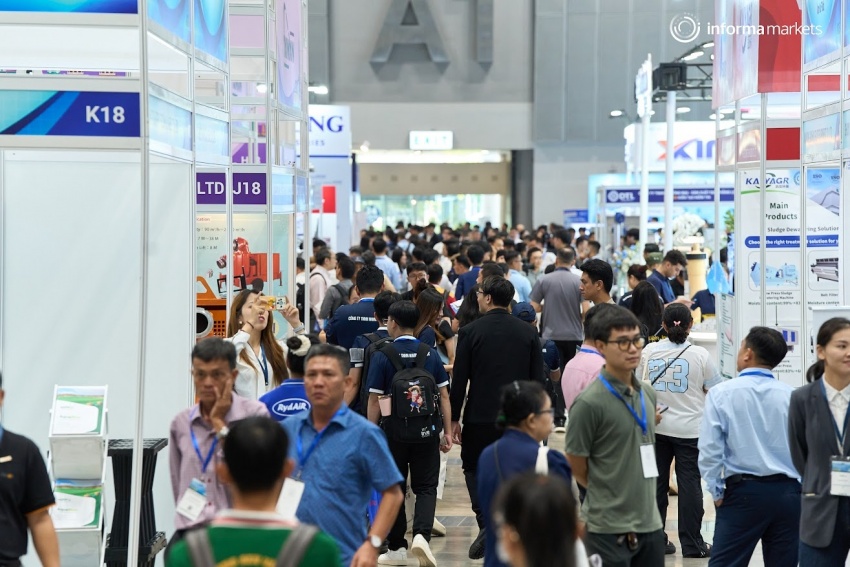 |
 | EICMA 2026 hosts 754 exhibitors across 300,000 square metres Organisers opened the 83rd EICMA motorcycle exhibition at Fiera Milano Rho, filling ten halls with 754 exhibitors representing 2,120 global brands from 52 countries. |
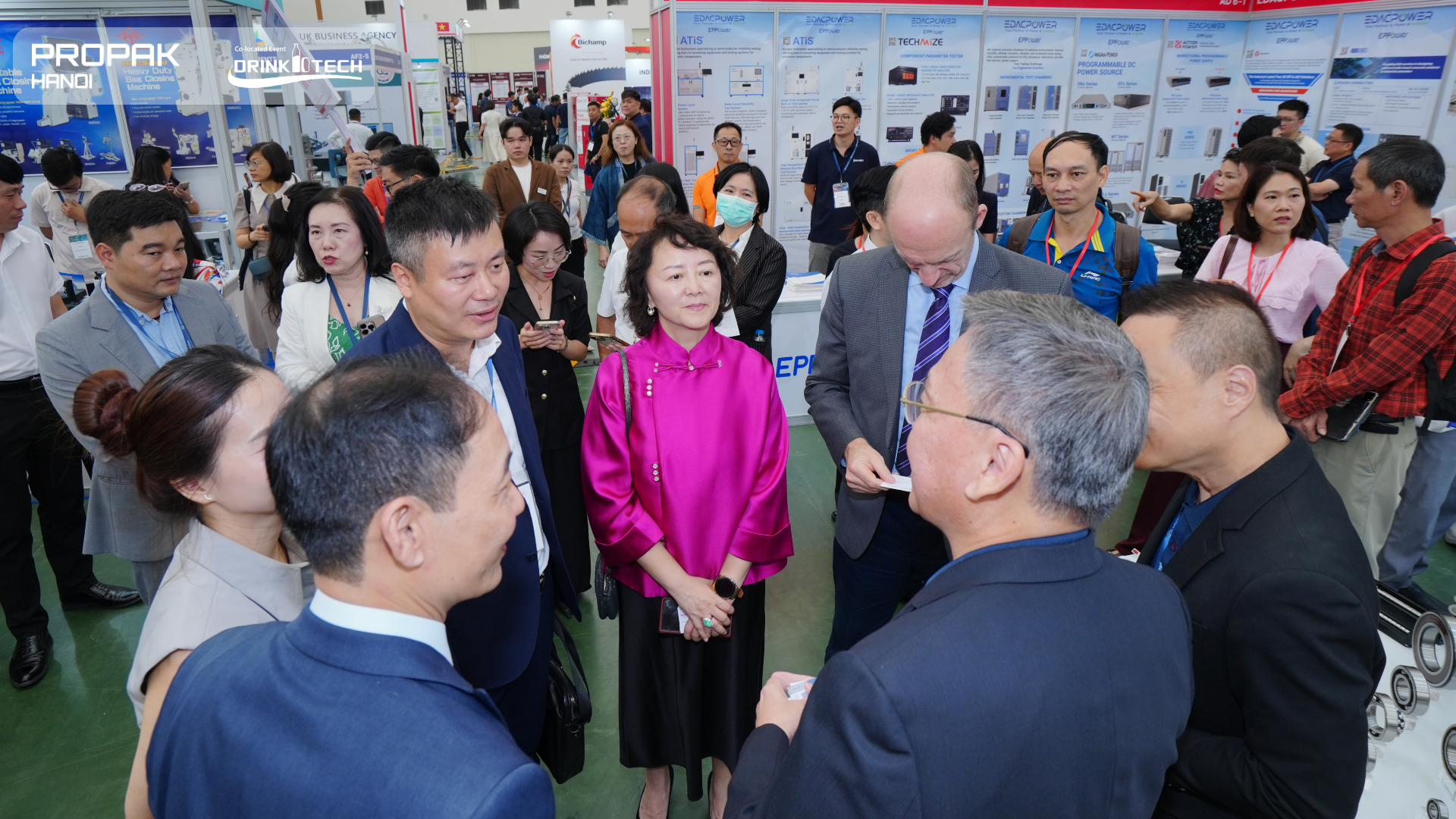 | Three international exhibitions open to boost industrial supply chain links Three international exhibitions taking place in Hanoi from October 13-15 are bringing together more than 300 exhibitors from over 20 countries and territories, creating opportunities for technology access and industrial supply chain connections. |
What the stars mean:
★ Poor ★ ★ Promising ★★★ Good ★★★★ Very good ★★★★★ Exceptional
 Tag:
Related Contents




Latest News
More News
- SCG highlights Vietnam's higher-value manufacturing role (November 05, 2026 | 12:06)
- Vietnam's FDI inflows hit highest level since 2009 (November 05, 2026 | 12:00)
- IIP grows 12.4 per cent in 10 months, highest since 2019 (November 05, 2026 | 11:59)
- Russia and Vietnam expand cooperation on nuclear energy (November 04, 2026 | 17:20)
- $2.28 billion Ca Na power project clears feasibility hurdle (November 04, 2026 | 17:17)
- Vietnam's first homegrown security chip unveiled (November 04, 2026 | 12:08)
- Danish footwear maker ECCO halts Vietnam factory operations (November 04, 2026 | 12:07)
- Shifting from attracting capital to building national investment platform (November 03, 2026 | 15:55)
- Ho Chi Minh City eyes chip design as US tech firms look to Vietnam (November 03, 2026 | 11:10)
- Hung Yen speeds up reform to boost investment appeal (November 03, 2026 | 11:02)









 Mobile Version