
Hung Yen shapes multipolar economy through expanded development space

Hung Yen is reshaping its economic landscape through three development zones, strategic transport corridors and industrial hubs, strengthening connectivity between manufacturing centres and the coastal economy to attract investment and drive growth.
The merger of Hung Yen and Thai Binh provinces on July 1, 2025 not only expanded the administrative boundaries but also created a new development space, connecting inland areas with the coastal region.
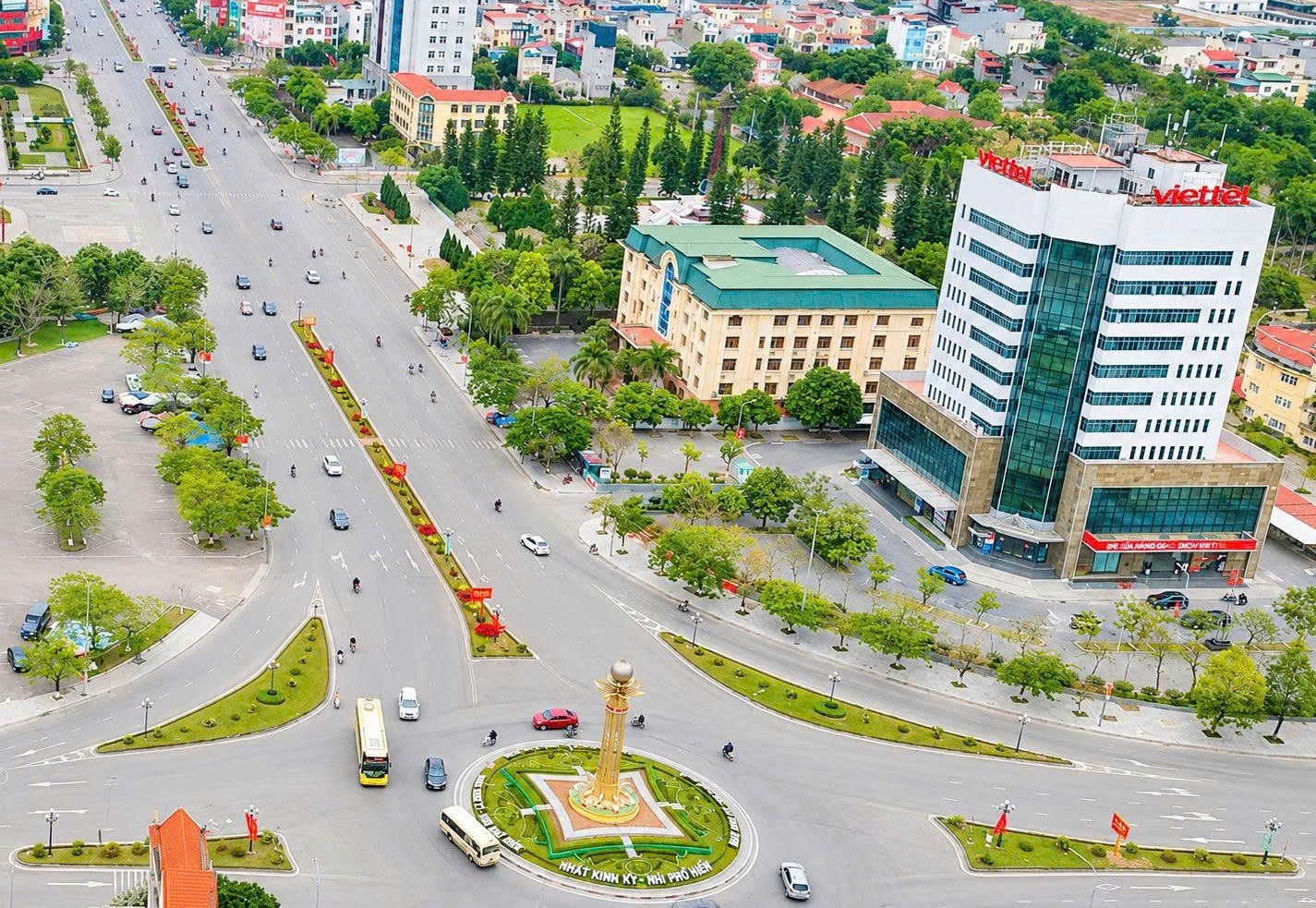 |
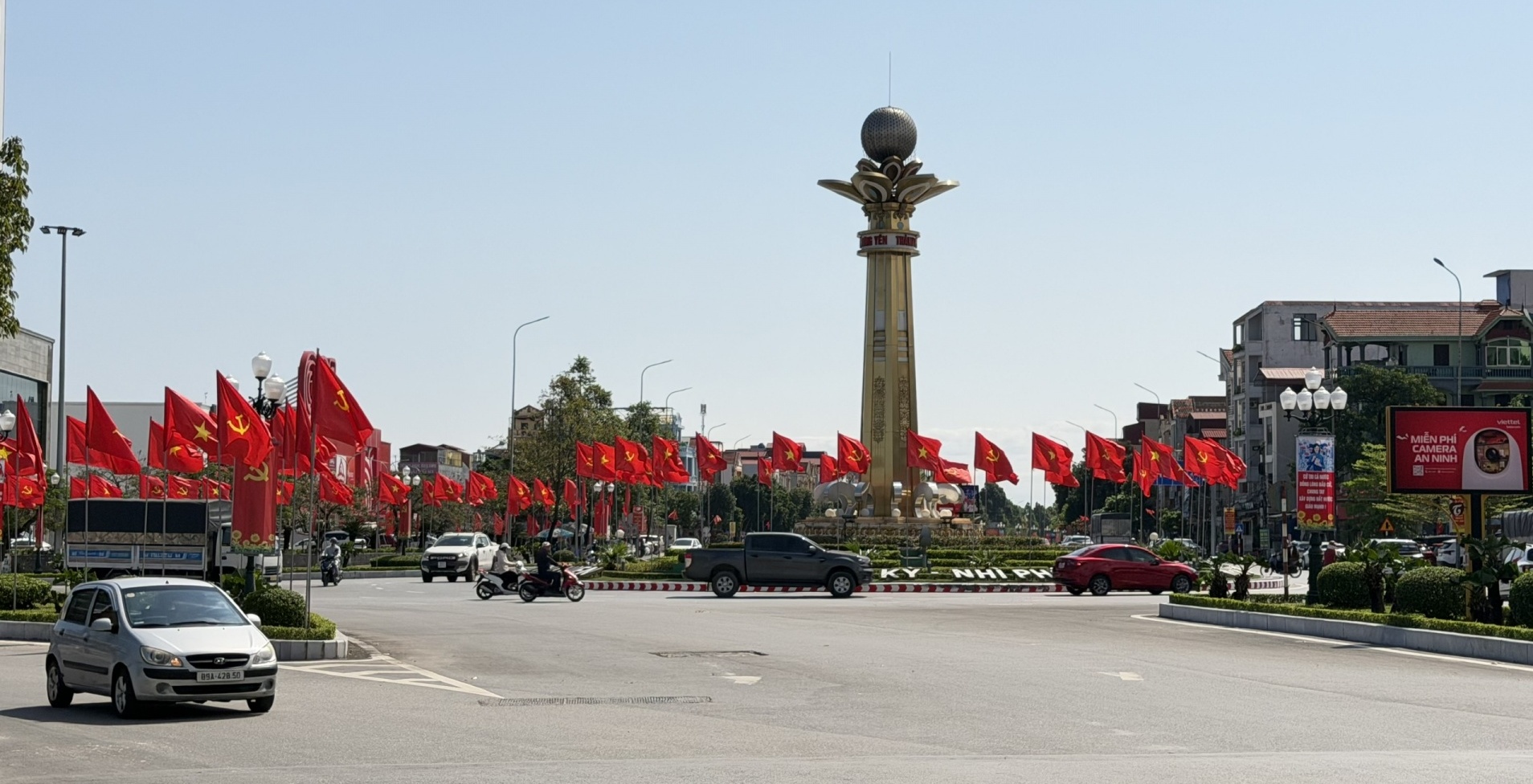
| Hung Yen is gradually shaping its growth zones and expanding its economic development space. Photo: Hung Yen |
With a natural land area of 2,638 square kilometres, approximately 487 square kilometres of marine area and a population of more than 3.5 million, Hung Yen is better positioned to reorganise its resources, leverage inter-regional advantages, and strengthen its role in the Red River Delta's economic structure.
The expanded development space calls for a reorganisation of economic zones to maximise the strengths of each area while strengthening intra-provincial connectivity.
The adjusted Hung Yen Provincial Planning for 2021-2030, with a vision to 2050, finalised and announced on October 12, identifies three development zones: the northern growth zone, the central zone, and the coastal zone.
Under the plan, the northern growth zone will focus on industry, urban development, services, logistics, and high technology, serving as a trade gateway between the Hanoi Capital Region and the coastal delta.
The central zone will accommodate administrative, urban, cultural, educational, commercial, and service functions. Meanwhile, the coastal zone is set to capitalise on its marine economic advantages, with a focus on industry, energy, logistics, seaports, and service-oriented urban development.
The functional division of these zones, combined with stronger connectivity through economic corridors, is intended to establish a multipolar development structure in which different areas complement one another in production, services, and markets.
Industrial and urban centres in the north can connect with manufacturing, logistics, and marine economic hubs in the south, forming an integrated development network.
At the planning announcement conference on October 12, Nguyen Manh Quyen, Chairman of Hung Yen People's Committee, noted that the merger had created a comprehensive development space, connecting inland areas all the way to the sea and shaping a new, dynamic and breakthrough growth pole in northern Vietnam.
To put this new development structure into practice, the province is conducting a coordinated review of its transport network, industrial parks and clusters, cargo ports, and logistics centres.
At a meeting on September 17 to review proposed sectoral development plans, the consulting unit proposed developing 66 industrial parks covering an estimated 23,068 hectares and 125 industrial clusters spanning 7,920 hectares.
Regarding transport infrastructure, the proposal includes six horizontal routes, three vertical routes, and four railway lines, alongside connections with Hanoi, Bac Ninh, Haiphong, and Ninh Binh.
The planned port and logistics network comprises 27 cargo ports, including 14 inland container depots, and 16 logistics centres. These are important components in organising production, transportation, and goods distribution, while strengthening links between the province's development zones.
Strategic connectivity drives new growth hubs
Bordering Hanoi, Bac Ninh, Haiphong, and Ninh Binh, Hung Yen enjoys strategic advantages in connectivity and participation in the Red River Delta's regional economic network.
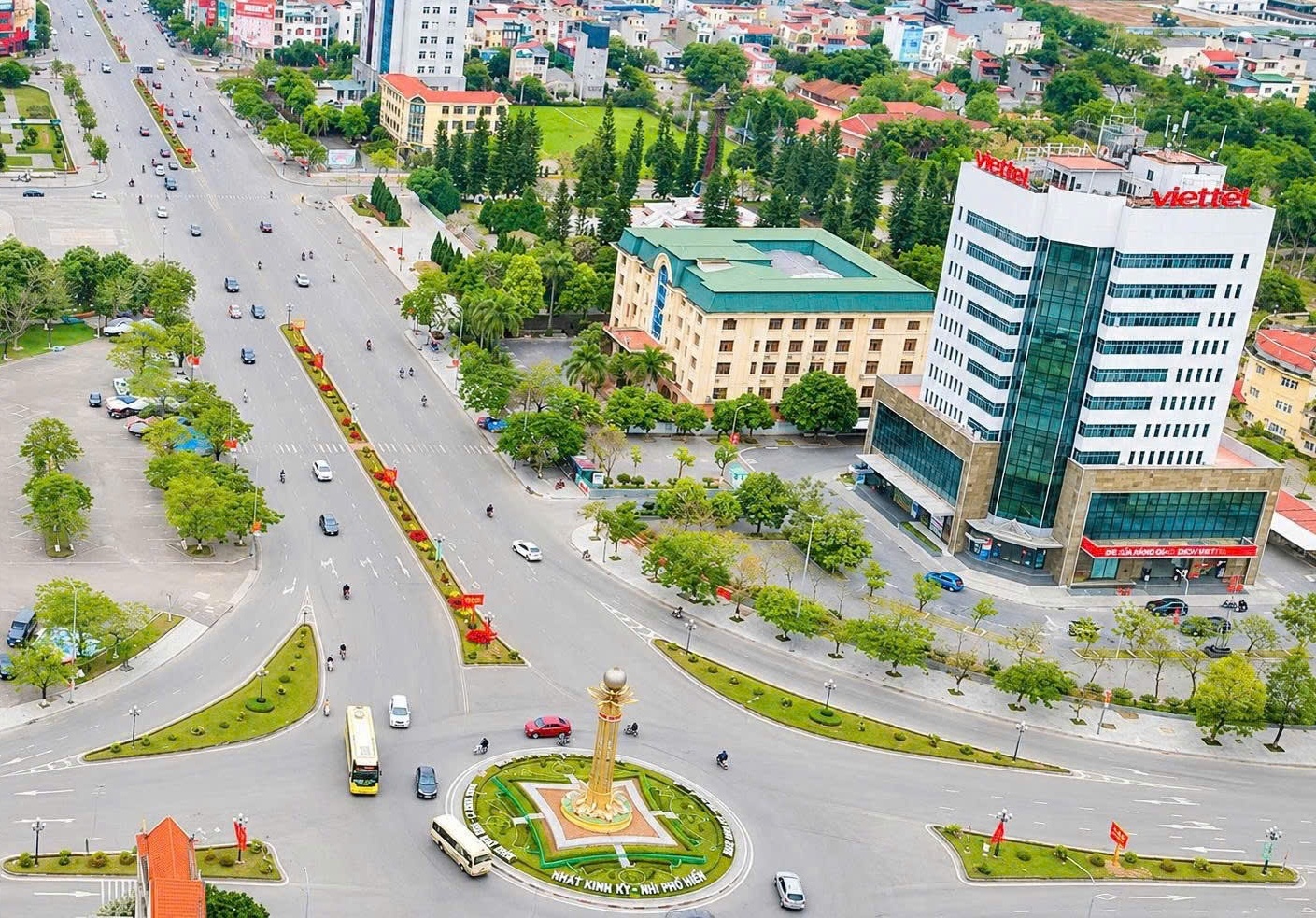
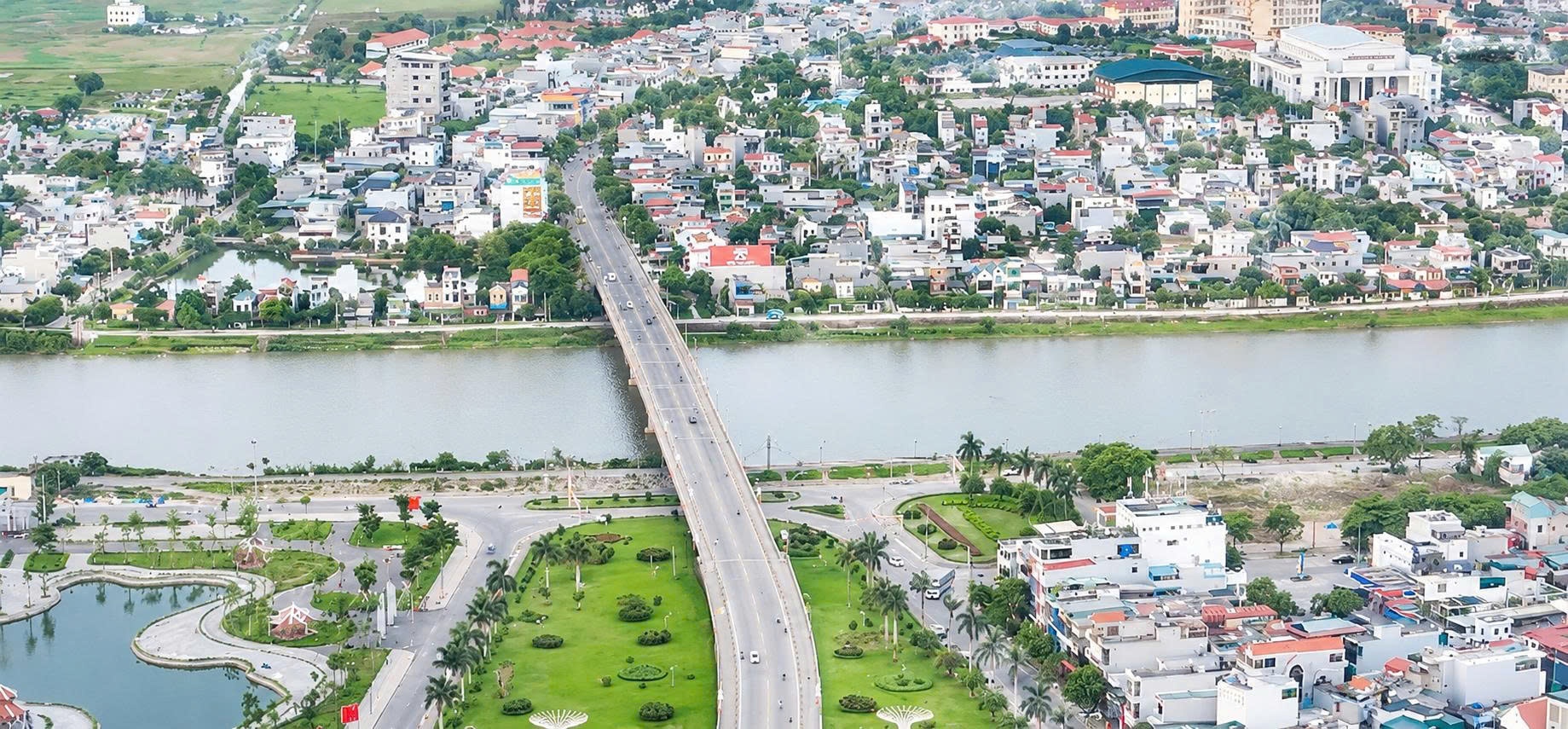 |
| Urban development is being aligned with stronger connectivity between the province's economic zones. Photo: Hung Yen |
The provincial planning identifies national, regional, and intra-provincial development corridors, notably the Lao Cai-Hanoi-Haiphong-Quang Ninh national corridor; the Quang Ninh-Haiphong-Hung Yen-Ninh Binh Red River Delta regional corridor; the Red River ecological, economic, and cultural corridor; and the industrial, urban, and service corridor.
These economic corridor development orientations are gradually being translated into key transport infrastructure projects.
At its fifth session on October 30, Hung Yen People's Council approved the investment policies for two projects: a road connecting the Hanoi-Haiphong expressway with Ring Road 5 of Hanoi Capital Region, and the north-south development axis, running from Nam Tien Hung commune to the coastal road.
The two projects are expected to strengthen connectivity among areas within the province and with external transport networks.
In particular, the north-south axis will expand links from the northern area and provincial centre to the coastal region, while the road connecting the Hanoi-Haiphong expressway with Ring Road 5 will provide an additional connection to the Hanoi Capital Region's transport network.
Earlier, on September 14, Hung Yen People's Committee held a working session with Deo Ca Group JSC regarding the company's proposal to invest in a road connecting Hung Yen with Gia Binh International Airport under the public-private partnership model.
Under the proposal discussed, the route would be approximately 34 km long, comprising a 10-lane expressway designed for a speed of 120 km per hour and two parallel roads, each with four lanes. The total roadbed width would be approximately 120 m. The proposal is currently undergoing further investment procedure preparations.
Alongside transport infrastructure, industrial park developments are helping to translate the province's move towards expanding production space into concrete projects.
On October 16, Viglacera Hung Yen JSC broke ground on Phase 1 of the Green One Industrial Park No. 01 infrastructure investment and development project, located across Yen My and Xuan Truc communes.
The project covers 216 ha, with a total investment of approximately $93 million. It is designed as a high-tech industrial park, prioritising electronics, telecommunications, pharmaceuticals, supporting industries, new materials, clean energy, and processing and manufacturing industries.
Green One borders Provincial Road 382B and connects to Hanoi-Haiphong Expressway via the Yen My interchange. Its access to major transport routes is an advantage in attracting investors, while also highlighting the close relationship between transport infrastructure development and the expansion of industrial land.
From spatial planning to the implementation of infrastructure projects, Hung Yen is gradually laying the foundations for a multipolar economic structure.
In the coming period, accelerating the progress of connectivity projects and ensuring synchronisation between transport infrastructure, production areas, and urban development will be crucial to unlocking the potential of each zone and strengthening intra-provincial links.
This will provide Hung Yen with greater opportunities to turn its expanded scale and geographical advantages following the merger into stronger investment appeal, expanded production capacity, and new drivers of long-term economic growth.
 | Hung Yen unveils adjusted master plan with three economic zones Hung Yen's adjusted provincial master plan for the 2021–2030 period, with a vision to 2050, establishes a development framework of three economic zones, two corridors, and seven development axes, providing a basis for reorganising economic space and mobilising resources in the new phase. |
 | Hung Yen boosts infrastructure to tap coastal growth potential Hung Yen is expanding its coastal economic space through transport infrastructure, seaport development, and logistics planning. Better connectivity between production hubs, industrial zones, and cargo networks will be key to unlocking new growth potential. |
 | Danish garment maker Spectre opens fourth factory in Hung Yen Danish garment manufacturer Spectre is accelerating its green investment in Vietnam, expanding production capacity while cutting carbon emissions, adopting advanced technologies, and strengthening its long-term commitment to sustainable manufacturing. |
 | Hung Yen speeds up reform to boost investment appeal Hung Yen province is accelerating administrative reform and improving public governance to reduce business costs, strengthen investor confidence, and enhance the efficiency of investment attraction as the province enters a new phase of economic growth. |
What the stars mean:
★ Poor ★ ★ Promising ★★★ Good ★★★★ Very good ★★★★★ Exceptional
 Tag:
Related Contents


Latest News
More News
- Meiko Group to pump additional $450 million in Phu Tho (November 17, 2026 | 17:05)
- Vietnam’s semiconductor ambitions must go beyond investment to mastering technology (November 17, 2026 | 16:54)
- Vietnam-South Korea trade exceeds $100 billion for first time (November 17, 2026 | 16:52)
- LS Electric expands its factory in Vietnam (November 17, 2026 | 16:49)
- Samyang Foods to build $164 million plant in Bac Ninh (November 16, 2026 | 12:05)
- Dong Thap shapes green and high-tech agriculture future (November 16, 2026 | 08:00)
- Hanoi requires preparation of routes and construction locations for five urban rail lines (November 15, 2026 | 20:42)
- Zhongce Rubber secures approval for $500 million plant (November 15, 2026 | 20:36)
- LITE-ON opens first phase of Quang Ninh factory (November 13, 2026 | 11:13)
- BOT contract for Nam Dinh I Thermal Power Plant Project signed (November 13, 2026 | 10:00)






 Mobile Version