
Vietnam’s semiconductor ambitions must go beyond investment to mastering technology

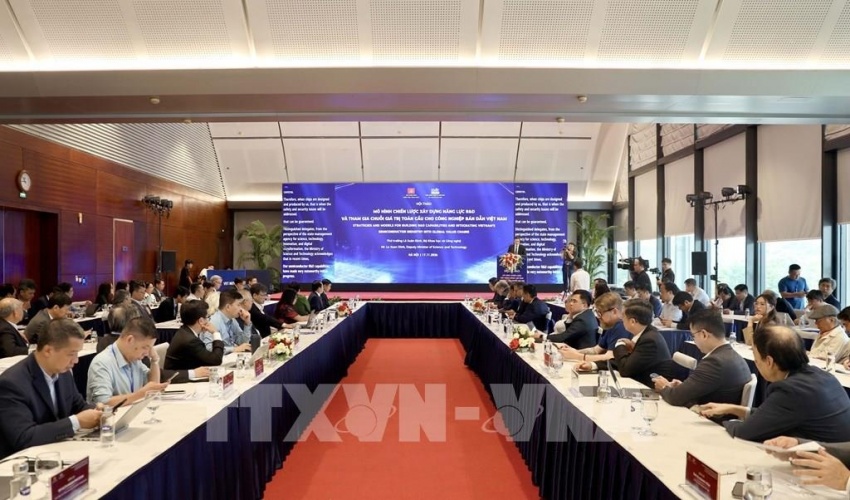
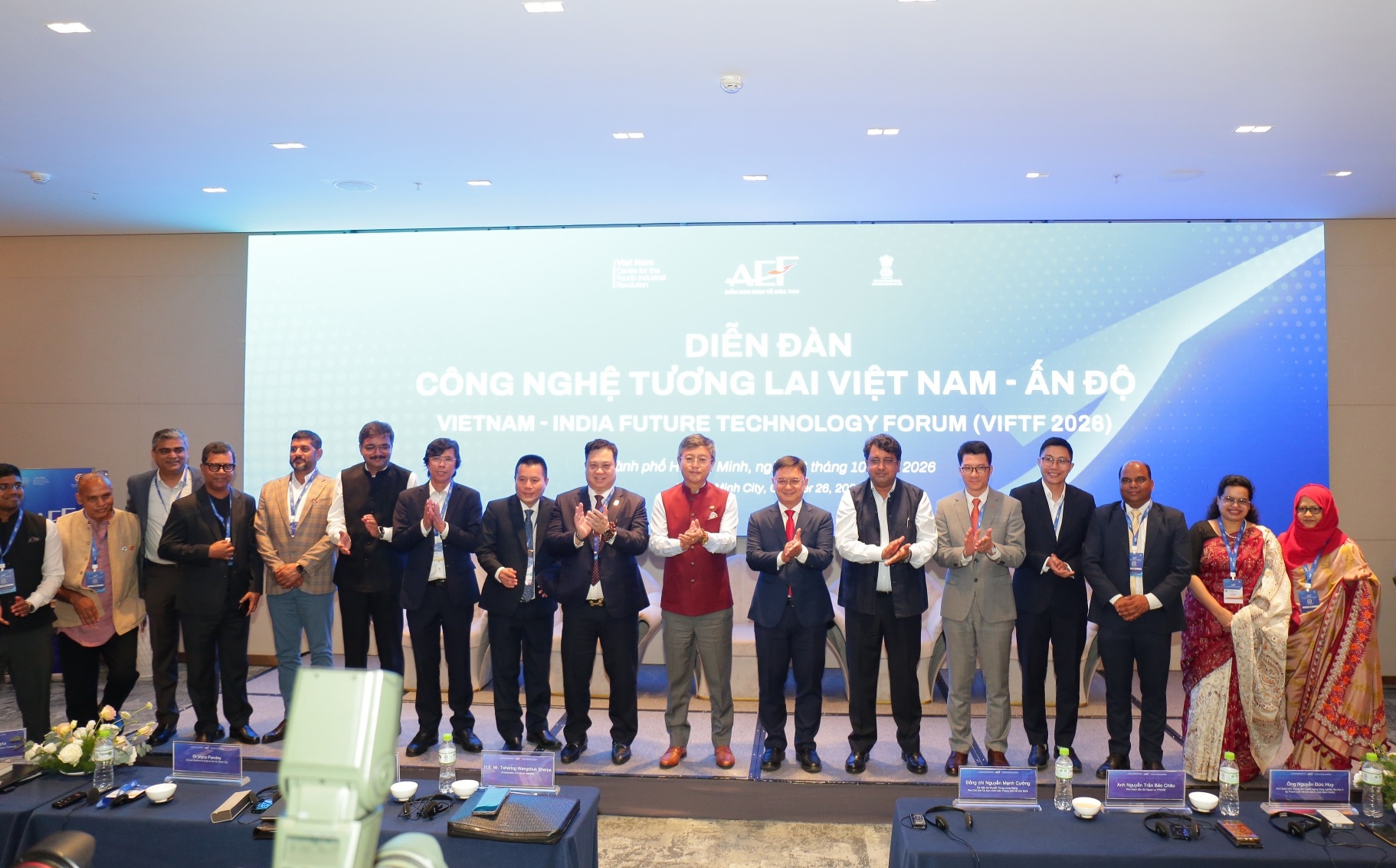
The scientific conference, was organised by the Central Policy and Strategy Commission in collaboration with the Institute of Generative Intelligence Technology and Education (IGNITE).
 |
| Photo: VNA |
Opening the event, Nguyen Hoang Giang, Deputy Head of the Central Policy and Strategy Commission, said semiconductors had become a foundational industry of strategic importance to economic development, technological autonomy, national competitiveness and international standing.
“For Vietnam, developing the semiconductor industry not only creates opportunities to participate more deeply in global value chains but is also strategically important to transforming the growth model, developing high-tech industries and improving the productivity and competitiveness of the economy,” he said.
In recent years, Vietnam has introduced major policies to advance science and technology, innovation and digital transformation. Politburo Resolution No.57-NQ/TW and Resolution No.19-NQ/TW dated July 28, on renewing Vietnam’s development model, identify science and technology, innovation and digital transformation as key drivers of productivity, competitiveness and economic autonomy.
Vietnam has made initial progress in developing its semiconductor industry, gradually building a workforce of chip design engineers, establishing research and training institutions, attracting businesses and securing investment projects.
However, Giang noted that domestic R&D capabilities, product development capacity, the scale of local enterprises and participation in higher value-added segments remained limited.
“These are bottlenecks that must be properly identified to determine an appropriate development model and avoid fragmented investment or participation confined to low-value-added stages,” he said.
He stressed that Vietnam needed a realistic assessment of its current position in the global semiconductor value chain, its genuine competitive advantages, and its technological gaps compared with leading countries and the segments where it could achieve breakthroughs.
Such an assessment should go beyond counting companies and investment projects to examine capabilities in research, integrated circuit design, specialised chip development, packaging and testing, human resources, R&D infrastructure and product commercialisation.
Building domestic R&D capabilities and a connected ecosystem
A major priority discussed at the workshop was improving the implementation of Vietnam’s semiconductor development strategy. With numerous policies and strategic orientations already in place, the challenge is to translate these commitments into tangible technological capabilities, commercial products and direct contributions to economic growth.
This requires addressing obstacles in resource mobilisation and allocation, as well as strengthening coordination among ministries, local authorities, research institutes, universities and businesses.
Giang added that foreign investment attraction must be closely linked to the development of domestic R&D and the technological capabilities of Vietnamese enterprises.
“Without mechanisms to connect investment projects with domestic research, training and technology development, Vietnam will find it difficult to improve its position in the global semiconductor value chain,” he said.
Accordingly, semiconductor development policies should be translated into priority programmes and specific tasks, with clearly defined implementing agencies, resources, timelines and performance indicators. Technological capabilities and actual product outputs, rather than policy formulation alone, should serve as key measures of effectiveness.
Participants also proposed studying a “five-party” cooperation model to mobilise and connect resources for developing a national semiconductor innovation ecosystem. The model brings together the State, scientists and research institutions, businesses, investors and banks.
Under this approach, the State would provide strategic direction, institutional frameworks and policies; universities and research institutes would develop research capabilities, technologies and skilled human resources; and businesses would connect R&D with manufacturing, commercial operations and market demand.
Investors and banks, meanwhile, would mobilise and provide financial resources to enable research and technology development projects to move forward.
The effectiveness of this model, however, will depend not simply on the participation of different stakeholders but on establishing practical coordination mechanisms, clearly allocating responsibilities and ensuring appropriate resource mobilisation.
Assoc. Prof. Nguyen Ai Viet, director of IGNITE, called for greater emphasis on substantive R&D capabilities and investment in human resources rather than simply purchasing equipment.
He also proposed reviewing and publicly disclosing existing semiconductor laboratories, while developing a shared laboratory network to avoid duplicated investment and improve the utilisation of research infrastructure. “When universities and individual businesses lack a common platform for regular interaction, even cooperation agreements signed to promote joint development can end up unused,” he said.
Vietnam therefore needs infrastructure developers for innovation ecosystems to create platforms where researchers, universities and businesses can regularly meet, exchange ideas and jointly implement research projects.
Proposed cooperation initiatives include developing shared R&D infrastructure, establishing Living Labs, implementing high-quality workforce training programmes and creating mechanisms to engage investment into semiconductor technologies.
Given the country's limited resources, prioritising shared research infrastructure could improve investment efficiency while strengthening connections between research institutes, universities and enterprises.
International cooperation and technology diplomacy were also highlighted as important channels for accessing advanced knowledge, management experience and technologies, while gradually building indigenous technological capabilities.
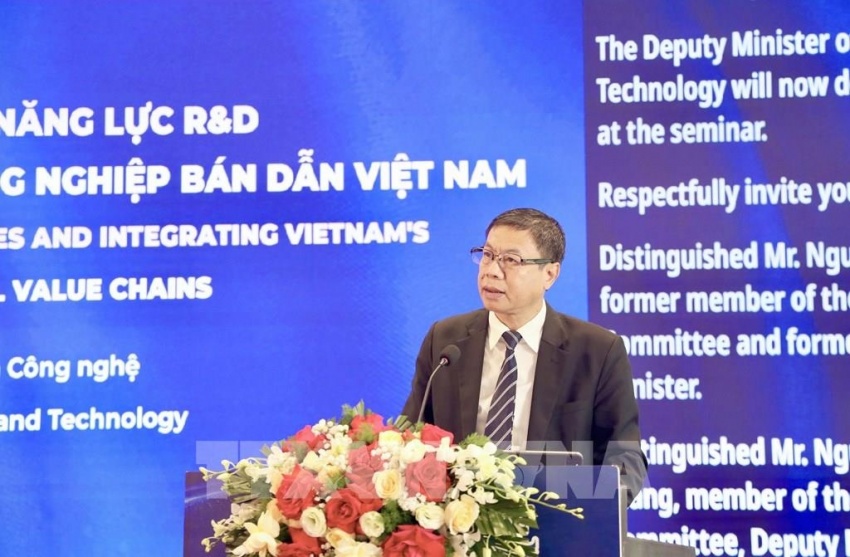 |
| Deputy Minister of Science and Technology Le Xuan Dinh. Photo: VNA |
Targeting strategic semiconductor segments
Providing an update on policies for strategic technologies and the semiconductor industry, Deputy Minister of Science and Technology Le Xuan Dinh outlined three key directions for removing existing bottlenecks and achieving qualitative improvements in the sector.
The first is to concentrate R&D resources on niche semiconductor segments associated with strategic technologies, including AI chips, Internet of Things chips, compound semiconductor power chips for green energy, and semiconductor technologies serving 5G and 6G telecommunications equipment.
These segments offer opportunities for Vietnam to generate higher added value through optimised algorithms, intelligent design architectures and customised solutions for specific domestic applications, areas where the country could develop competitive strengths.
The second priority is fundamentally reforming the financial mechanisms for sci-tech development. He called for shifting from conventional budget allocation and task assignment towards an order-based funding mechanism, in which priority research projects are directly linked to practical problems and business demand.
He also stressed the importance of accepting risks inherent in research and development, while developing high-quality R&D human resources through practical projects.
“The government and the Ministry of Science and Technology have recently introduced guidelines and key provisions under Decree No. 260 on strategic technology development. Semiconductor products will be eligible for support covering up to 100 per cent of the costs of domestic and international testing,” he said. "The government is also providing the highest levels of preferential treatment for corporate income and personal income tax arising from activities related to strategic technologies."
The third direction is to strengthen the infrastructure supporting semiconductor R&D, testing and pilot production. The deputy minister said the Ministry of Science and Technology would put into operation a National Centre for Semiconductor Chip Pilot Production Support in the coming period.
The centre is expected to provide high-performance computing systems, centrally procure licences for electronic design automation software and make them available to Vietnam's domestic chip design community at preferential costs.
It will also establish internationally standardised testing and measurement laboratories, offering shared services at preferential rates to research institutes, universities and businesses.
These initiatives are expected to address some of the major infrastructure and cost barriers facing domestic semiconductor developers, particularly smaller companies and research institutions.
Ultimately, Vietnam's semiconductor ambitions will depend on its ability to convert investment inflows, policy incentives and international partnerships into stronger domestic R&D capabilities and commercially viable technologies.
As competition in the global semiconductor industry intensifies, building a connected innovation ecosystem and developing homegrown technological expertise will be essential for Vietnam to move beyond its role as an investment destination and become a more influential player in the global value chain.
What the stars mean:
★ Poor ★ ★ Promising ★★★ Good ★★★★ Very good ★★★★★ Exceptional
 Tag:
Related Contents







Latest News
More News
- Vietnam-South Korea trade exceeds $100 billion for first time (November 17, 2026 | 16:52)
- LS Electric expands its factory in Vietnam (November 17, 2026 | 16:49)
- Samyang Foods to build $164 million plant in Bac Ninh (November 16, 2026 | 12:05)
- Dong Thap shapes green and high-tech agriculture future (November 16, 2026 | 08:00)
- Hanoi requires preparation of routes and construction locations for five urban rail lines (November 15, 2026 | 20:42)
- Zhongce Rubber secures approval for $500 million plant (November 15, 2026 | 20:36)
- LITE-ON opens first phase of Quang Ninh factory (November 13, 2026 | 11:13)
- BOT contract for Nam Dinh I Thermal Power Plant Project signed (November 13, 2026 | 10:00)
- Vinacomin seeks approval for $208 million bauxite project (November 11, 2026 | 14:38)
- MoF and JICA discuss expanded development cooperation (November 11, 2026 | 14:32)






 Mobile Version