
Green finance to power Vietnam’s energy transition

 |
| Photo: diendandoanhnghiep.vn |
The recommendations were made at the Energy for Sustainable Development Forum on November 19, held under the direction of the Vietnam Chamber of Commerce and Industry (VCCI).
Phung Xuan Minh, chairman and general director of PT Group and Saigon Ratings, argued that capital was available, but weaknesses in financing mechanisms were preventing investment from reaching energy projects.
"Domestic and international capital remains abundant, but the mechanisms for directing these resources into the energy sector are not functioning effectively. With bank lending under pressure and the green bond market lacking standardised assessment criteria, international investors remain cautious," Minh said.
He urged authorities to prioritise resolving legal issues affecting 172 renewable energy projects to restore investor confidence and unlock additional electricity capacity.
According to the Ministry of Finance, Vietnam's economy will require approximately VND38 quadrillion ($1.5 trillion) in investment during 2026-2030, including $77 billion for the power sector.
Bui Van Thinh, chairman of the Lam Dong Wind and Solar Energy Association, highlighted the gap between power development targets and actual implementation. While Power Development Plan VIII envisages approximately 15,000MW of additional capacity annually, annual additions remained below 2,000MW during 2022-2024, before reaching 6,400MW in 2025.
"Investor confidence has declined as 172 renewable energy projects face prolonged inspections and electricity payments have reportedly been withheld since January 2025. Meanwhile, low electricity price ceilings and long-term contracts denominated in Vietnamese dong expose investors to significant financial risks," Thinh said.
He recommended revising electricity tariffs, introducing exchange-rate risk-sharing mechanisms, encouraging battery energy storage systems (BESS) through peak and off-peak pricing, and accelerating offshore wind pilot projects.
Tran Thi Phuong Thao, country director of NEX Vietnam, identified a financing gap for clean energy startups seeking between $350,000 and $1 million, despite successful fundraising by several innovative businesses.
"Promising clean energy startups continue to face difficulties accessing intermediate financing. Domestic commercial banks have yet to participate meaningfully in this segment, limiting opportunities for commercial deployment," Thao said.
She proposed co-financing mechanisms, specialised credit assessment criteria, and partnerships connecting technology providers, industrial customers, and investors.
For liquefied natural gas (LNG) projects, Nguyen Duc Hien, Deputy Head of the Central Policy and Strategy Commission, highlighted difficulties securing international financing because of inadequate electricity offtake commitments and gas price adjustment mechanisms.
"Investors need long-term commitments on minimum electricity offtake and mechanisms to reflect imported gas costs in electricity tariffs. The state should share investment risks with businesses while coordinating shared LNG infrastructure to optimise costs," Hien said.
He urged faster administrative procedures for priority LNG projects scheduled for development before 2030.
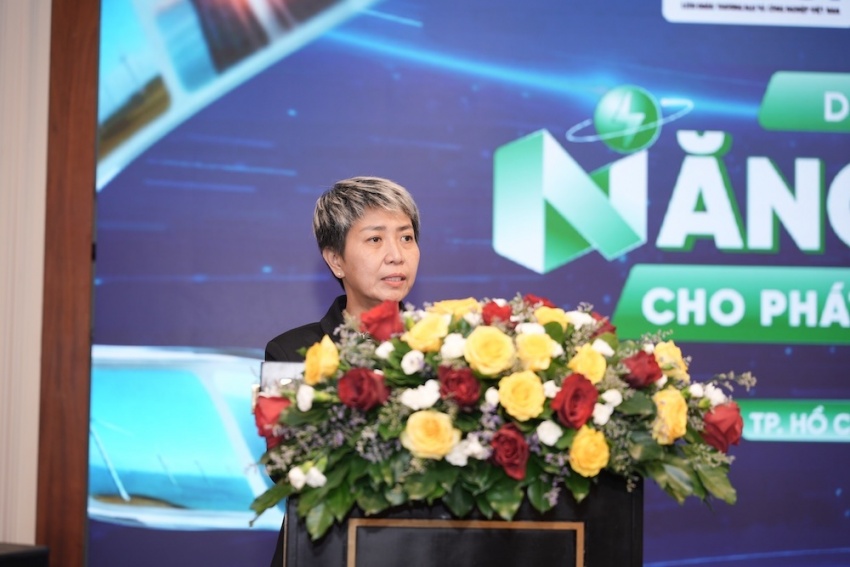 |
| Nguyen Ngoc Quynh, deputy general director of SolarBK |
Nguyen Ngoc Quynh, deputy general director of SolarBK, emphasised the importance of aligning energy security under Resolution 70 with private-sector development under Resolution 68.
Although recent regulations have improved the investment framework, she noted that complicated procedures continue to hinder physical and virtual direct power purchase agreements (DPPAs), particularly in industrial parks.
"Vietnam needs a one-stop mechanism with clearly defined processing deadlines to simplify DPPA implementation. A transparent, long-term pricing framework would provide businesses and investors with greater certainty when developing renewable energy projects," Quynh said.
She also called for mandatory technical standards for solar panels and BESS, alongside clearer producer responsibilities for equipment recycling.
Quynh further stressed that domestic technological capabilities should become a central pillar of Vietnam's energy transition, particularly in smart energy infrastructure and data management.
"Vietnam should prioritise domestic capabilities in smart energy infrastructure rather than relying excessively on foreign technology platforms. Standardised data, stronger local research capabilities, and clear technical requirements are essential to building a secure and sustainable energy ecosystem," she said.
Concluding the forum, Hoang Quang Phong, vice chairman of the VCCI, outlined five priority recommendations covering regulatory reform, green financing, electricity infrastructure, energy efficiency, and support for the green transition.
"Energy security must be closely associated with private-sector development, making energy a strategic industry for Vietnam's long-term growth. The VCCI will consolidate recommendations from businesses and experts for submission to the government and maintain regular reporting to the prime minister," Phong said.
The recommendations include resolving outstanding issues affecting 172 renewable energy projects, standardising power purchase agreements, and mobilising $77 billion during 2026-2030 and approximately $400 billion through 2050.
The VCCI also proposed expanding green bonds and blended finance, encouraging private investment in transmission infrastructure, introducing BESS pricing mechanisms, and piloting real-time DPPA trading platforms integrating green hydrogen and carbon certificates.
Other priorities include recognising energy efficiency as a strategic resource, establishing a just transition fund to support small and medium-sized enterprises, and preparing for the domestic carbon market's operation from 2029.
What the stars mean:
★ Poor ★ ★ Promising ★★★ Good ★★★★ Very good ★★★★★ Exceptional
 Tag:
Related Contents


Latest News
More News
- Ho Chi Minh City proactively adapts to climate change (November 19, 2026 | 12:39)
- MoF launches tool to accelerate digital and green transformation (November 17, 2026 | 16:57)
- Vietnam shares experience in climate adaptation monitoring at COP31 (November 13, 2026 | 09:00)
- VCCI proposes lower recycling targets for discarded mobile phones (November 12, 2026 | 16:00)
- Voith Hydro-led group secures Bac Ai equipment deal (November 12, 2026 | 15:31)
- Tokyo Gas and TTVN Group to develop nearshore wind power project in Vinh Long (November 11, 2026 | 18:02)
- Vietnam and JBIC discuss energy transition and investment cooperation (November 11, 2026 | 14:35)
- Goldwind marks decade in Vietnam with new energy solutions (November 11, 2026 | 14:06)
- EU-backed project to boost Vietnam’s sustainable coffee exports (November 06, 2026 | 16:17)
- Vietnam's climate tech startups face gaps in funding (November 04, 2026 | 17:02)








 Mobile Version