
AI helps pave way for autonomous banking

 |
| Bui Tri Hung, country manager of BusinessNext Vietnam. Photo: BusinessNext Vietnam |
You’ve mentioned that adopting more technology during digital transformation does not necessarily improve a bank’s operational efficiency. Could you elaborate on why this is the case?
In the early stages of digital transformation, many banks moved their traditional processes online. Customers could fill out forms digitally, and some processes that once took days could be completed in minutes. This was a major improvement, but digitising individual processes alone does not create a smooth, connected customer journey from start to finish.
The challenge is that the systems used for different banking functions often operate separately. Customer information may be stored in a CRM system, credit data in another system, and transaction records, collections, and customer service data in separate systems. When these systems are not connected, banks struggle to get a complete view of their customers, often called a “Customer 360” view, which is important for making better decisions.
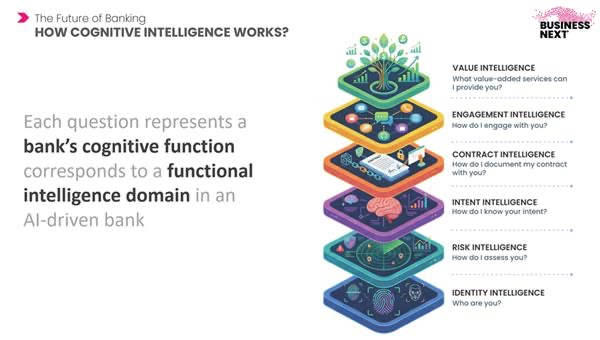
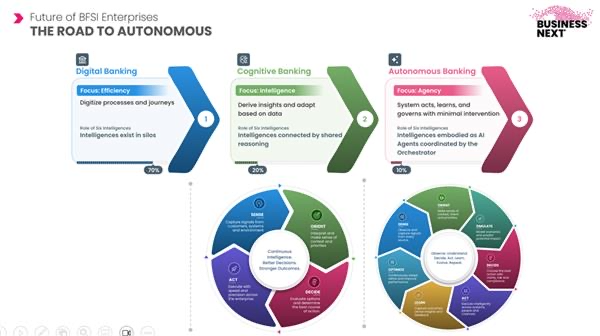
The second step is to move beyond digitising individual touchpoints and start connecting data across the bank. This leads to Cognitive Banking, where each function uses its knowledge and intelligence to understand customer needs and make better decisions. At this stage, the bank can use data to gain insights, learn, and adapt. All these functions work together by sharing information and reasoning, helping the bank operate more intelligently.
By bringing together a complete view of each customer, including their identification details, payment history, transaction behaviour, and product needs, banks can better understand their customers. Front-office staff can provide better advice, risk management teams can make better-informed decisions, and sales and service teams can identify customer needs and requests more accurately.
Banks are moving towards autonomous banking, where AI can help manage processes from the data integration stage onwards. However, using AI agents across disconnected systems and workflows may not deliver the expected results.
Despite significant advances in technology, AI alone cannot guarantee better business performance or deliver real value if a bank’s data and the four areas of Cognitive Banking are not ready. These areas may remain disconnected, making it difficult for the bank to get a complete understanding of each customer. As a result, AI may add to operational complexity rather than improve efficiency and performance.
As AI moves from assisting to proactively executing banking processes, which decisions should remain subject to human oversight?
AI can analyse data to identify potential customers and suggest opportunities to offer them additional products or services. For loan applications, it can check supporting documents, review application details, and bring all the relevant information together for credit officers to assess. AI can also provide a complete view of the products a customer already uses, helping bank staff better understand their needs and make more suitable recommendations.
However, it is important to distinguish between using AI to support tasks and allowing it to make decisions on its own. For decisions that can significantly affect customers, such as credit approvals, AI can collect, analyse, and summarise information, but authorised bank officials must review and approve the final decisions in line with the bank’s procedures. The level of automation should depend on the task, the risks involved, and the bank’s rules and controls.
As the number of AI agents grows, the challenge is not just what each agent can do, but also how the bank can monitor their overall activities. Banks need to know which agent took an action, when it happened, and why. All activities must be easy to track, review, and audit, with clear records to help identify and fix errors. Without a common system to monitor these activities, accountability can become unclear, making audits and reviews more difficult.
Staff can also ask the system questions in simple, everyday language, such as which potential customers are in a particular area or what the status of a customer group is. The system brings together the relevant data to provide answers, while ensuring that staff can only access information they are authorised to see.
AI innovation should not be measured only by how many tasks it can automate. Control, transparency, and accountability must be built into the system from the start. As AI takes on more responsibilities, proper monitoring, clear rules, and the ability to track its actions become even more important.
How can Vietnamese banks benefit from AI innovation while meeting data sovereignty requirements and maintaining control over cross-border data processing?
Banks need to consider two things: where their data is stored and where it is processed. Storing data in Vietnam does not necessarily mean that all data processing also happens within the country, especially when banks use AI models provided by external companies. Before choosing a technology, banks need to understand how their data moves, how the system works, and what rules apply to each use case.
There is no single deployment model that works for every bank. Depending on their business needs, existing infrastructure, and Vietnam’s regulatory requirements, banks can consider several options: hosting systems in their own data centres, using a private cloud, choosing a public cloud, or adopting a hybrid model that combines different approaches.
Our solution gives banks the freedom to choose the deployment model that best suits their needs while meeting applicable Vietnamese regulations. Before making a decision, banks should carefully assess data protection, access controls, risk management, and compliance requirements.
Another important question is whether to build a solution in-house or buy an existing solution from the market. This is not just a technology decision. Banks must also consider their available resources, the level of control they need, and how easily they can adapt to changes in business processes and regulations.
Platforms that allow banks to customise processes, interfaces, and workflows without changing the underlying source code can give them greater flexibility and control. BusinessNext follows the buy approach, providing banks with an existing platform that they can adapt to their operational needs. Whatever approach they choose, banks should consider their ability to manage, maintain, and control the system over the long term, rather than focusing only on how quickly it can be implemented.
Our experience across several Southeast Asian markets, along with discussions with prospective clients in Vietnam, shows that every bank has different needs and challenges. The starting point should not be choosing the most advanced technology, but clearly identifying the business problem, understanding how sensitive the data is, and defining the level of risk the bank is willing to accept.
Ultimately, AI should be judged by the business value it delivers, how well it supports daily operations, and how effectively risks are managed. A solution is truly useful when it fits the bank’s data, processes, infrastructure, and regulatory requirements. While adopting AI quickly is important, banks must balance speed with proper control and measurable results.
Three stages towards autonomous banking
 |
| Photo: BusinessNext Vietnam |
 |
| Photo: BusinessNext Vietnam |
 | Banks poised for Q3 profit growth amid margin pressure Many banks are forecast to continue growing profits in the third quarter of 2026, supported by credit expansion. However, rising funding costs and narrowing net interest margins are putting pressure on the earnings outlook for some lenders. |
 | VIFC-HCMC facilitates $325 million in international capital for Vietnam’s education development A prominent private education provider has partnered with leading international banking group Standard Chartered to mobilise up to $325 million for major education development projects in Vietnam, channelled through the Vietnam International Financial Centre in Ho Chi Minh City. |
 | FTSE upgrade opens door to $2 billion in passive fund inflows Vietnam's stock market reclassification by FTSE Russell opens access to new capital flows, but interest rates, valuations, and macroeconomic conditions will continue to shape the direction and pace of inflows. |
What the stars mean:
★ Poor ★ ★ Promising ★★★ Good ★★★★ Very good ★★★★★ Exceptional
 Tag:
Related Contents





Latest News
More News
- HSBC arranges EVNNPC's debut $105 million green loan (October 27, 2026 | 12:59)
- New liquidity rules set standards for banks (October 26, 2026 | 16:22)
- Policy credit helps women build economic independence (October 26, 2026 | 12:46)
- Citi wins approval for wholly owned securities firm in China (October 24, 2026 | 11:37)
- Banks face three-way test as AI reshapes digital finance (October 22, 2026 | 16:21)
- Techcombank posts strongest quarter on record (October 22, 2026 | 12:10)
- Digital asset exchange awaits completion of operational requirements (October 21, 2026 | 14:57)
- TPBank secures $50 million from DEG for green and SME lending (October 21, 2026 | 14:43)
- Citi set for record year across ASEAN Investment Banking (October 19, 2026 | 17:49)
- Vietnam and Switzerland to deepen financial cooperation (October 19, 2026 | 13:24)









 Mobile Version