
Women lead Vietnam’s shift to climate-resilient agriculture

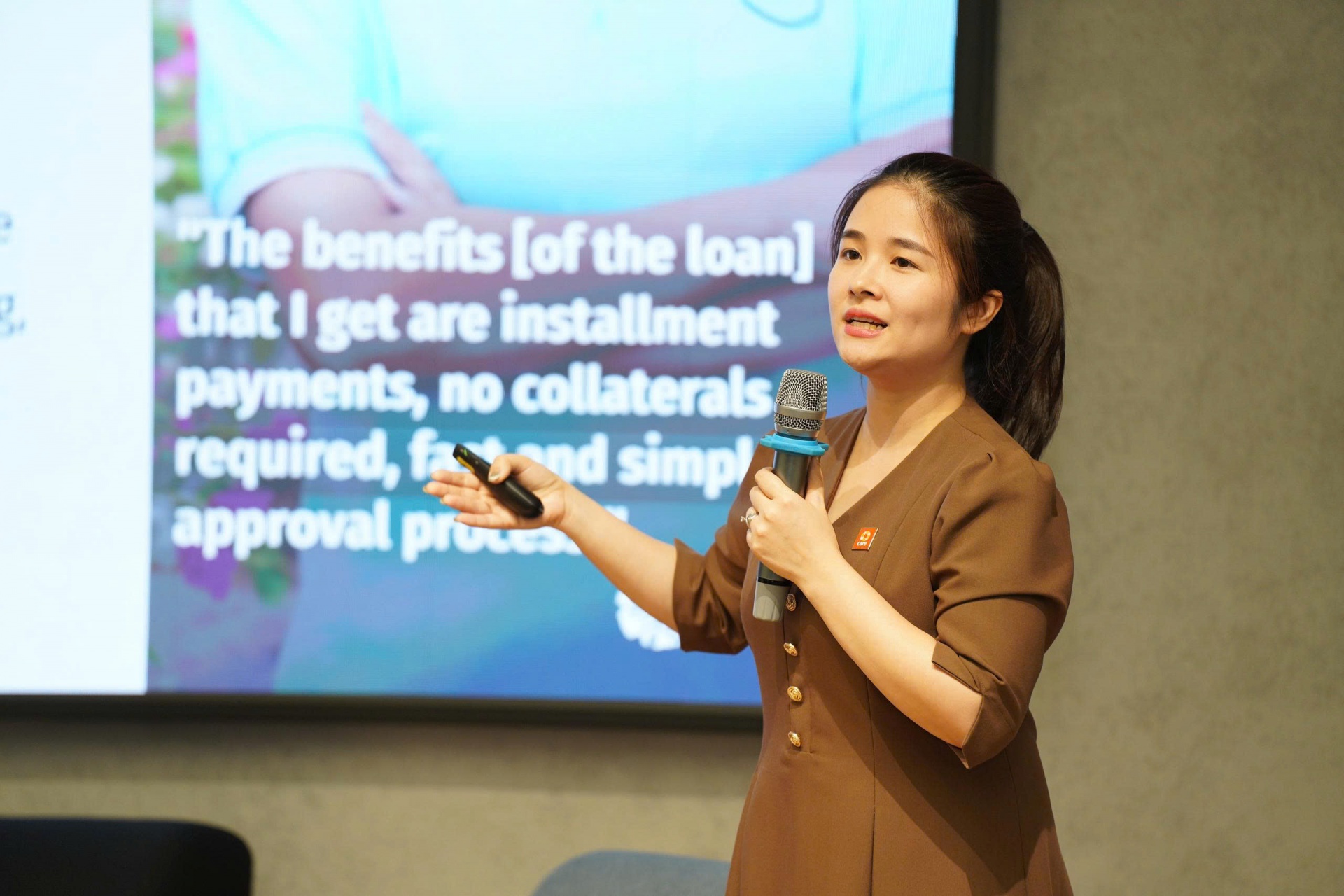 |
Women are the central agents of green transformation in agriculture, especially in communities vulnerable to climate change. CARE in Vietnam has for many years focused on climate-resilient livelihoods for ethnic minority women and poor households, through sustainable livelihoods, climate information services, and gender-integrated climate-smart agricultural value chains.
Projects like She Thrives in Dak Lak support smallholder farmers, especially women and ethnic minorities, to connect with sustainable farming techniques, finance, and markets, thereby improving their livelihoods and reducing pressure on resources. In Son La, the project to enhance sustainable and climate-resilient livelihoods for 1,500 ethnic minority women coffee growers also positions women as leaders in climate-resilient livelihood diversification.
Under the Strive Women framework, CARE has seen clearly that women play a central role in the integration of green practices into businesses, whether micro or small. Strive Women data across three countries, with Vietnam as a new deployment site, shows that women prioritise business decisions related to cost savings, resource efficiency, and family safety, factors that align with the logic of the green business model.
Many female business owners adopt green practices not as a long-term strategy, but rather as a result of reducing input costs, reducing weather risks, and increasing the durability of products or processes. This is the practical foundation for green agriculture to spread in communities vulnerable to climate change.
Beyond financial support, Strive Women highlights that women are often the primary decision-makers in managing climate risks within their households and communities. Women’s Village Savings and Loan Associations (VSLAs) and community-based business groups serve as important platforms where they exchange experiences, trial new farming models and effectively disseminate environmentally sustainable practices.
Scaling up women-led green business models in agriculture is becoming an urgent need as climate change and market pressures force the agricultural sector to shift towards more sustainable development. Experience from the Strive Women programme and other initiatives shows that success only comes when women are supported by a comprehensive intervention package, including appropriate finance, market connections, technical training, and an enabling policy environment. Among these are priorities that play a role in creating a foundation for the model to develop sustainably and scale up.
Financially, rural women often have difficulty accessing capital due to limited collateral and unstable incomes. Self-managed credit savings models such as VSLAs and inclusive financial products tailored to women’s characteristics help them access small, medium, and long-term capital to invest in green farming solutions and resource-saving equipment. With capital, women can proactively upgrade their production models and increase their resilience to climate risks.
Besides finance, market factors play a key role in ensuring stable output for green products. Connecting women with purchasing enterprises and processing units in sustainable value chains such as coffee or agricultural products in Dak Lak and Son La helps them increase product value and access green standards. Supporting branding and traceability expands the market and enhances the competitive value of women-led models.
Technical training and business capacity building are pillars of long-term sustainability. Women need to be equipped with practical knowledge of climate-smart agriculture, resource efficiency, and extreme weather risk management. Business, digital, and financial management skills help women become more confident in decision-making and improve production efficiency.
Policy also plays a decisive role in determining whether women-led green agribusiness models can scale sustainably. Green credit, agricultural development, and climate change responses need to have targets and resources dedicated to women-led models. The state also must recognise the role of women’s groups and women’s cooperatives in green agriculture and rural economic development.
Practice shows that no single factor is enough to create change; only when women are comprehensively and synchronously supported can green business models scale up, create far-reaching social impacts, and make sustainable contributions to the agricultural sector.
 | Vietnamese women taking flight in aviation industry Ahead of Vietnamese Women’s Day, the Civil Aviation Authority of Vietnam and Boeing co-hosted a seminar on sustainable human resource development in aviation, focusing on gender diversity and long-term workforce growth. |
 | Hanoi workshop targets market access for women-owned firms A workshop aimed at boosting the competitiveness of female-led businesses was held in Hanoi through a collaboration between the Vietnam Women Entrepreneurs Council and UN Women. |
 | New phase launched to support women-led ventures A nationwide conference reviewed a flagship initiative for female-led startups and launched a new decade-long support programme, with Prime Minister Pham Minh Chinh presiding. |
 | EuroCham to host green economy forum The European Chamber of Commerce in Vietnam (EuroCham) will host the Green Economy Forum (GEF) 2025 in Hanoi on November 27. |
 | From climate pressure to new urban mindsets As climate risks intensification, cities around the world are learning that the key to resilience may lie not in concrete, but in water. In this context, the idea of Blue-Green Infrastructure (BGI) – including “sponge cities” – has gained increasing attention. Ahead of the Green Economy Forum (GEF) 2025, Frank Pogade, EuroCham's Green Growth Sector Committee vice-chair, shared with VIR's Minh Anh why living with water should become a guiding principle for Vietnam's urban future. |
 | Phu Tho charts a green path for sustainable development Phu Tho province is advancing an ambitious green-transition strategy, aiming to enhance investment competitiveness, expand renewable initiatives and position itself as a leading growth engine in the north. |
What the stars mean:
★ Poor ★ ★ Promising ★★★ Good ★★★★ Very good ★★★★★ Exceptional
 Tag:
Tag:Related Contents


Latest News



More News
- HER2+ breast cancer carries $3.71 billion productivity burden in Vietnam (July 30, 2026 | 14:32)
- Party Resolution charts Vietnam’s development model through 2045 and beyond (July 30, 2026 | 12:29)
- STEM education evolves for AI era (July 21, 2026 | 09:38)
- Vietnam’s workforce ready for AI era (June 26, 2026 | 16:04)
- Why child online safety is now a business imperative (June 24, 2026 | 11:00)
- Hybrid work is reshaping Vietnam’s labour market (June 17, 2026 | 16:24)
- World's children exposed to at least three overlapping climate threats (June 17, 2026 | 15:54)
- Thai Nguyen event promotes safer food systems for World Food Safety Day (June 11, 2026 | 14:08)
- Vietnam emerges as rising hub for wealth creation (June 02, 2026 | 18:31)
- Danang launches DIFF 2026 with world-class performances (May 31, 2026 | 08:00)








 Mobile Version